by | October 1, 2026
Florida’s Great White Truffle Race
Every fall, one of the world’s rarest ingredients makes the journey from the forests of northern Italy to some of Florida’s most notable restaurants. Here’s how white truffle season unfolds—and where to experience it.
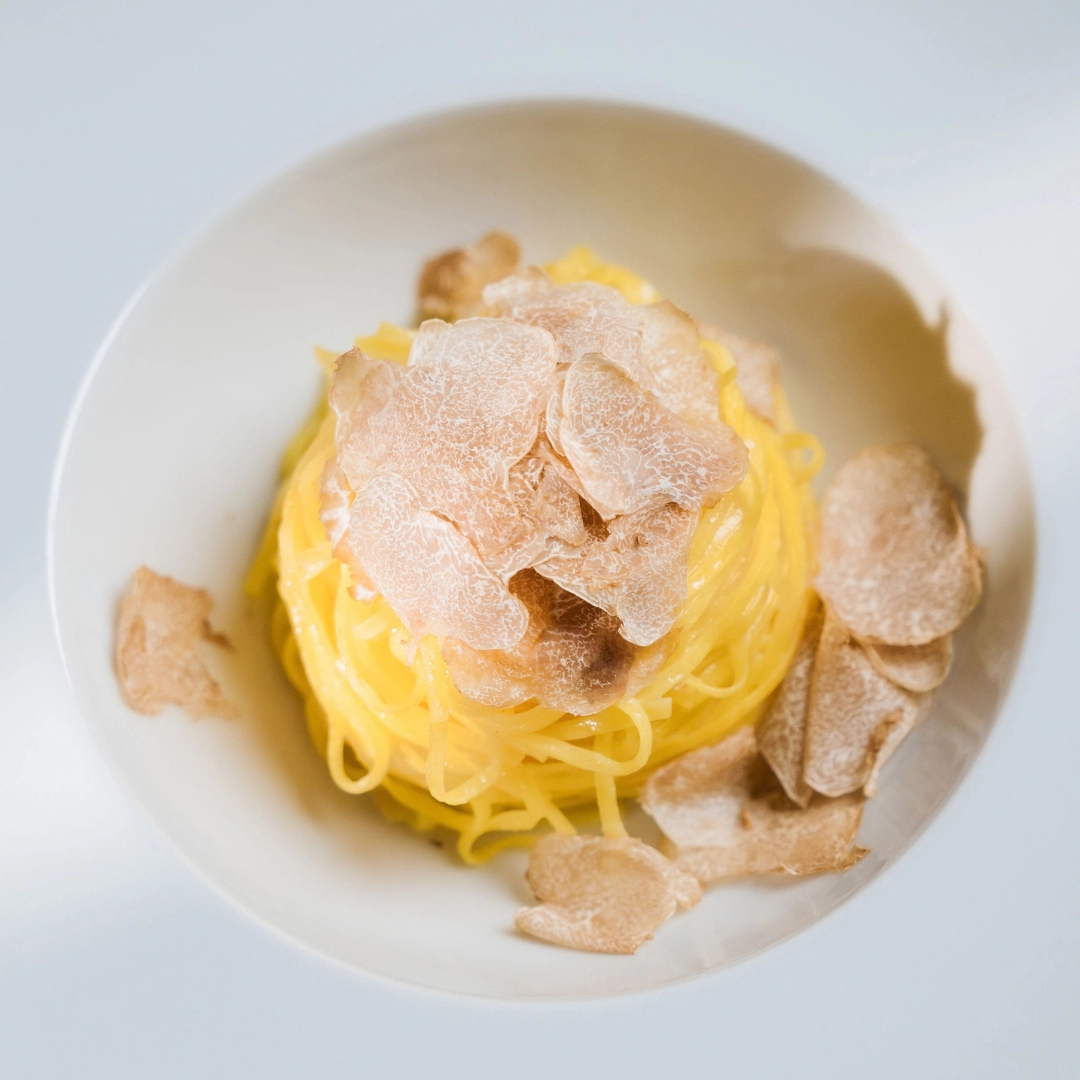
“There’s no such thing as too much truffle.” These words echo in my head as chef Giuseppe Iannotti hunches over a baking sheet and begins delicately shaving literal mounds of the rare edible fungus over crostini topped with melted caciocavallo cheese. Aptly named Truffle Vesuvius, the dish is impossible to look away from. An earthy, unmistakable aroma drifts through the room. Next, the Michelin-starred chef plates Fassona beef tartare with space capers, white truffle honey mustard and anchovy perlage. Every course seems to find a way to outdo the other.
I’m standing inside the new Tartuflanghe Loft in Wynwood, where CEO Paolo Montanaro welcomes guests for an intimate evening of Italian hospitality and truffle tasting. A third-generation truffle specialist and food technologist, Montanaro leads the Alba, Italy-based company, Tartuflangehe, his parents founded in 1975. Best known for harvesting the rare Alba white truffle, the family also produces other varieties, like today’s black jewels. Long regarded as a pioneer in truffle innovation, the family business chose Miami as the home of its first U.S. culinary outpost, further connecting Florida to one of the world’s most celebrated ingredients.
They’re a beautiful enhancement and a really wonderful sense of attainable luxury. It’s something opulent, and the shaving is very romantic.
–Giorgio Rapicavoli
Each of the eight dishes I sample showcases a different presentation. Think sea bass with truffle crumble and panna cotta drizzled with white truffle honey. With every bite, I can’t help but wonder how the odd-shaped funghi get to my plate in Miami in the first place.
This was back in late spring. Fascinated, I spent the next few months learning everything I could about white truffles ahead of their fleeting season this fall. I traced their path from Piedmont, Italy, to Florida and discovered an appetite that runs deeper than one variety. Along the way, I learned about centuries-old hunting traditions, carefully timed shipments, passionate chefs and specialty retailers keeping the obsession alive year-round.
Why White Truffles?

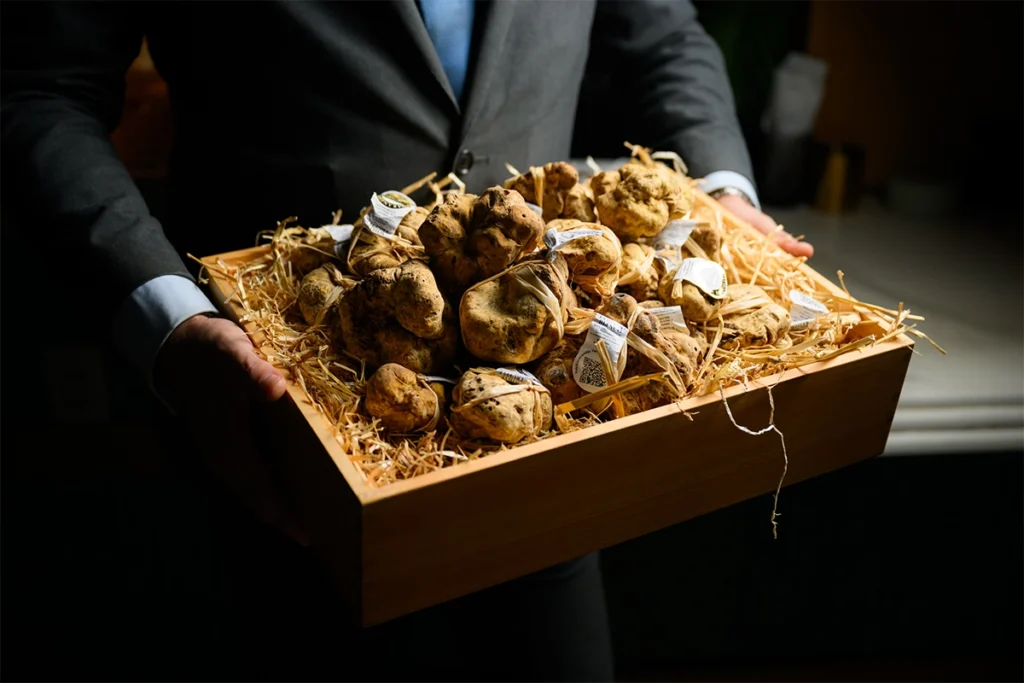
Known scientifically as Tuber magnatum Pico, the white truffle is a pale golden, garlicky fungus that grows wild for only a brief window, generally from October through January. The coveted designation “Alba white truffle” refers only to those varieties harvested in and around Alba, in Italy’s Piedmont region.
Unlike black truffles, which can now be cultivated in several countries, Alba white truffles have largely resisted commercial farming, relying instead on a delicate combination of soil, climate and symbiotic relationships with tree roots. “This truffle is the most expensive because, at the moment, it’s still not possible to grow,” Montanaro says.
Changing weather patterns have also begun to shift where white truffles naturally grow within the Piedmont region, prompting producers to adapt by creating more shade in vulnerable forests and finding new ways to protect future harvests. Once gathered from Alba, white truffles can sell for hundreds of dollars an ounce and are beloved for their flavor.
Because supply and pricing fluctuate throughout the short season, chefs often establish relationships with trusted importers and secure pricing before the first shipments arrive. Yet Florida’s truffle calendar does not begin and end with Alba; throughout the year, chefs also work with black winter, summer and other varieties grown in countries including Spain, Australia and the United States, adjusting each dish’s flavor and preparation.
The Hunt Begins in Piedmont
Framed by the Alps and Apennines, Italy’s Piedmont region is known for its vineyards, celebrated wines and fertile forests—the ideal habitat for one of the world’s rarest ingredients.
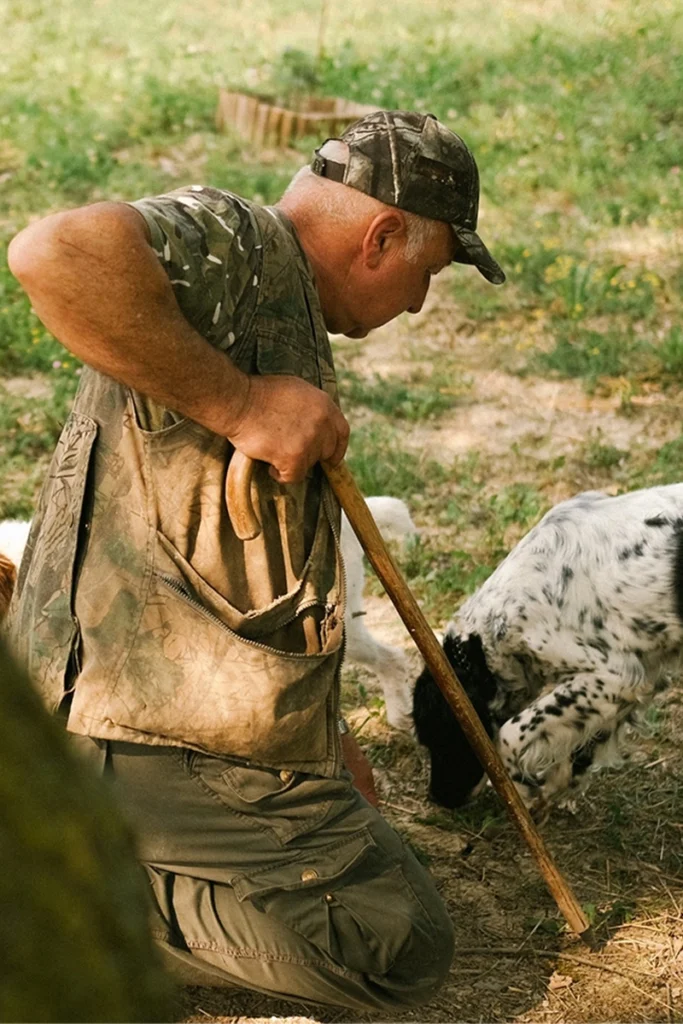
“Here in the area, I think 80 percent of the people have some uncle or someone in the family that goes hunting truffles,” Montanaro says. “The rest who do not have an uncle who goes hunting truffles are because they produce wines.”
The Montanaro family are hunters. “My first memory was as a child around 5 or 6 years old,” he recalls. “I moved to my grandmother’s house because my father was ending his restaurant business and starting the truffle business, so I started to go hunting with my great uncle.”
Accompanied by specially trained dogs that begin learning the scent as puppies through repetition and rewards, hunters quietly comb the forests in search of the fungi. Finding one is only half the challenge. Productive hunting grounds are guarded like family heirlooms, with locations passed from one generation to the next and shared only with a trusted few. In winter, some hunters even avoid venturing out after a snowfall since fresh footprints could reveal their secret spots to competitors.
Once collected, their value depends on how quickly they can travel.
The Race to Florida
The moment a white truffle is unearthed, the clock starts ticking. Unlike certain wines or cheeses, white truffles don’t improve with age. Their perfume begins fading almost immediately, leaving only a narrow window to get them from Piedmont to restaurant kitchens thousands of miles away.
Hunters typically sell their bounties to exporters the same evening they’re found. They’re sorted by size and quality in the wee hours of the morning, then delicately packed and rushed toward international airports. If customs processing runs smoothly, Florida restaurants can receive imports in about 48 hours from the first time the truffles were dug up.
That speed is one reason Miami has become an important gateway for fresh truffles entering the U.S. Its international flight connections and proximity to Florida’s restaurant scene help trim precious hours off the journey. It’s also part of the reason Tartuflanghe chose the Magic City as a hub to sell its truffles to those around the state and across the country.
White truffles require absolute confidence in their provenance, which is why our relationship with Tartuflanghe has been so valuable.
–Mario Carbone
Those extra hours matter to chefs and restaurateurs, like Mario Carbone of Major Food Group, who await Tartuflanghe’s harvest at restaurants such as Carbone and ZZ’s Club in Miami.
“White truffles require absolute confidence in their provenance, which is why our relationship with Tartuflanghe has been so valuable,” says Carbone. “Their access to authentic white Alba truffles allows us to work with the ingredient at its peak. Given the brevity of the season, we approach it with precision and restraint, allowing its singular character to remain the focus. Our annual white truffle dinner at ZZ’s Club is an expression of that philosophy.”
Florida’s Truffle Appetite
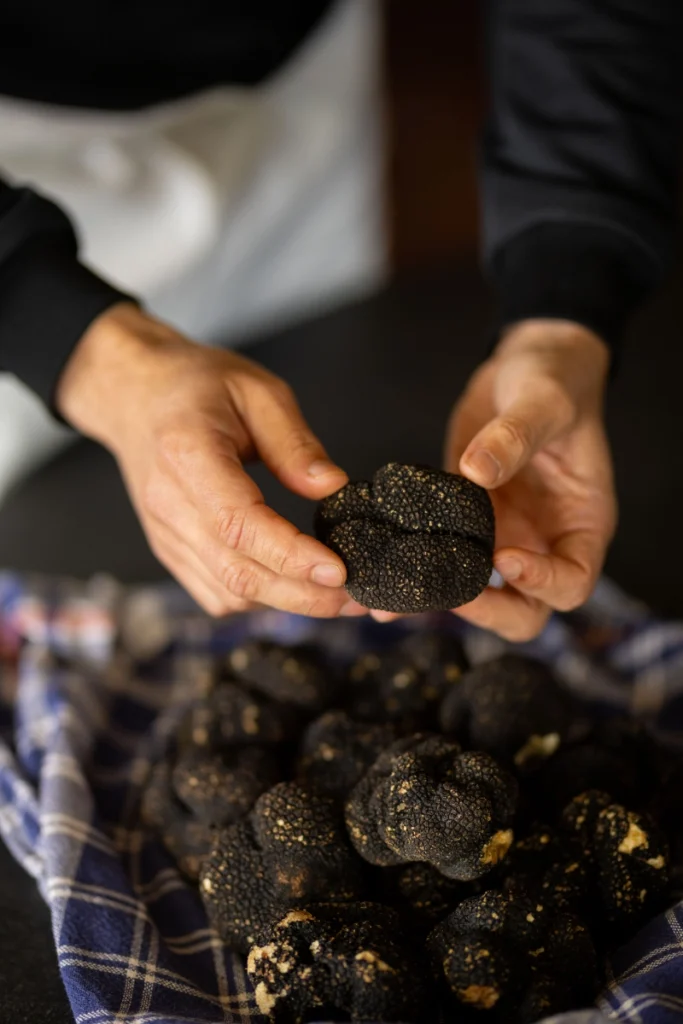
The arrival of Alba white truffles is an unofficial season of its own on Florida’s dining scene. Restaurants plan special menus, while guests anticipate limited-time dining experiences celebrating the prized ingredient.
For Miami-born chef and restaurateur Giorgio Rapicavoli, white truffles are also tied to family memories. The “Chopped” champion laughs when recalling his first taste around age 7 after a relative brought one from Piedmont. His grandmother, who didn’t own a truffle shaver, attempted to slice one on a tabletop meat slicer. While the pungent aroma and unique flavor were once overwhelming at the time, today white truffles rank among Rapicavoli’s favorite ingredients.
“They’re a beautiful enhancement and a really wonderful sense of attainable luxury,” he says. “It’s something opulent, and the shaving is very romantic.”
Rapicavoli showcases truffles year-round at his restaurants, from Eating House’s black truffle ragù carbonara to Luca Osteria’s signature Patata Fritte. While he works with several varieties throughout the year, Rapicavoli holds Alba white truffles in a class of their own. “What’s so amazing about the white truffle versus black is that black truffle really needs heat to bring out its beauty,” he says. “The white truffle is good raw or cold. It’s really perfect.”
Truffles are reason enough for Rapicavoli to build an entire seven-course New Year’s Eve dinner at Luca Osteria. One of his favorite pairings? Florida stone crab with butter and fresh white truffle.
The short Alba season inspires additional limited-time dinners across Florida that have become annual traditions. The beloved Casa D’Angelo in Fort Lauderdale and Boca Raton, for example, has introduced guests to Alba white truffles for more than 35 years via its annual dinner hosted by chef Angelo Elia. Over in Palm Beach, Daniel Boulud’s namesake Café Boulud hosts black and white truffle dinners, where Alba white truffles are layered over decadent dishes.
Experiencing Truffles at Home
Not every truffle experience needs to begin with a restaurant reservation. Specialty shops across the state are making it easier than ever for home cooks and curious epicureans to explore the ingredient.
For Eory Madera Miranda, founder of Truffle Temptations on Coral Way, that mission began after her honeymoon trip through Italy in 2023, where she saw firsthand how easily truffles fit into everyday meals. She realized how many Americans associated them almost exclusively with oil—or had never tasted the real thing at all.
Click here for the restaurants with special events deciated to white truffle season in Florida.
Madera works directly with Italian producers, like Savini Tartufi, a fourth-generation truffle-hunting family in Tuscany, carefully vetting the products she carries and visiting many of the families behind them before bringing them into her new boutique.
She’s aware of the ongoing challenge of consumers finding top-notch ingredients, as many products on the market rely heavily on synthetic flavoring. “Many customers come in saying, ‘I don’t think I like truffles,’ but what they’ve experienced is artificial flavor—not the real thing,” she says. “Once they taste a fresh one, their entire perspective changes.”
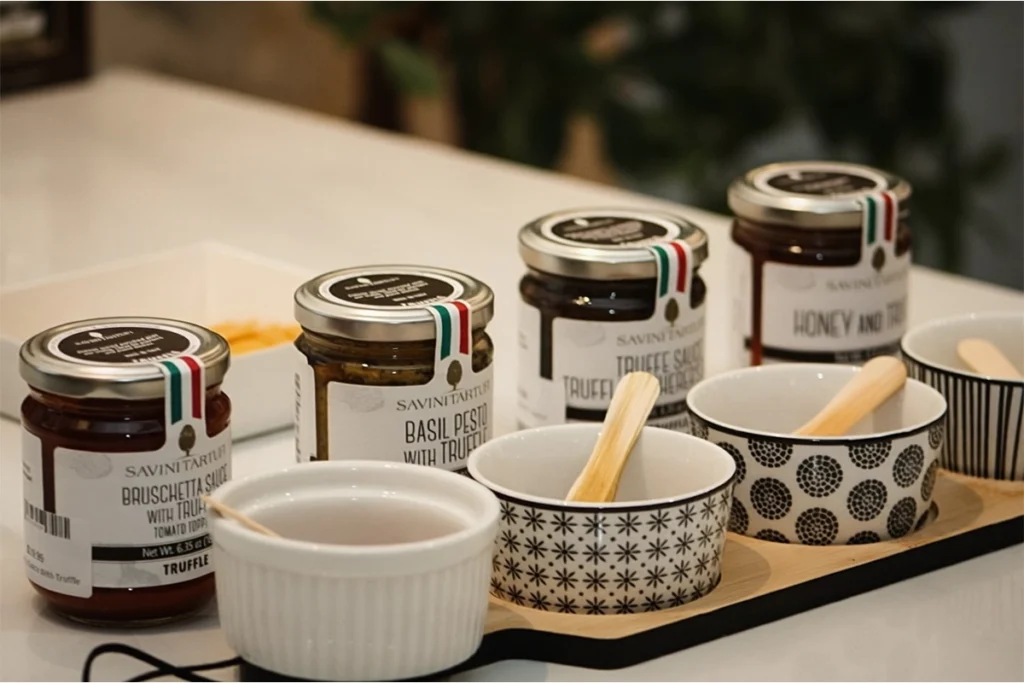
Her store focuses as much on education as retail, offering tastings, recipes and guidance for shoppers who might otherwise feel intimidated by the ingredients. She likes recommending the truffle honey for its versatility on cheese boards, pizza, desserts and even cocktails.
Heritage brands like Tartuflanghe have spent decades finding new ways to preserve truffles’ fleeting season through products inspired by the forests of Piedmont. The Montanaros are a bit like mad scientists, with innovations like the world’s first-ever truffle-infused pasta and creative pantry staples that bring the ingredient into everyday cooking. Those products become part of immersive dinners and tastings that introduce new audiences and keep the truffle’s story alive.
After weeks of immersing myself in truffle culture, I found myself back at the Tartuflanghe Loft in July for an aperitivo-style event that showcased the brand’s signature products and flavors. But this time, it wasn’t an introduction.
I could picture the hunter and his dog weaving through quiet forests before sunrise, and I marveled at how a single truffle transformed my meal, whether shaved over fresh risotto, infused in an oil or stirred into something as unexpected as truffle honey mustard.
Alba white truffle season lasts only a few months each year, yet its reach stretches far beyond the harvest. Every fall, hunters, importers, chefs and home cooks join a tradition that began beneath the forests of Piedmont generations ago. And for a few fleeting weeks, Florida is one of the places where that story continues.
Pro Tip:
Curious if you’re eating the real White Alba truffle, aka tartufo bianco? Tartuflanghe’s Barbara Bosini advises looking for the name Tuber magnatum Pico; other variations that aren’t pure would be called Tuber borchii and Tuber albidum Pico, more commonly known as the bianchetto. When shopping for items such as truffle oil, she suggests checking the following components on the ingredient list: Make sure it’s an Italian extra-virgin olive oil, that it contains real truffles and that there are no artificial aromas.
About the Author
Melissa traded Pittsburgh steel for Florida sunshine a decade ago to launch her editorial career. A former editor for South Florida glossies, Puppo has written for a range of outlets including Time Out Miami, Byrdie, Giadzy and Courant. An expert on what to do in her adopted hometown of Miami, Puppo covers arts and culture, culinary hotspots, travel, wellness and beauty.