by | November 2, 2026
At Rebel Farms, Families Are Turning Their Yards Into Connected Food Forests
Photographer Josh Letchworth captures the families of Rebel Farms cultivating food forests together while helping others grow their own in this personal photo essay.
Hundreds of fruit trees and bushes blanket less than an acre in the middle of a decades-old New Smyrna Beach neighborhood. What has grown here isn’t just a food forest—it’s a village.
I met Maggie Drayton about nine years ago at a personal-growth workshop. Our friendship has deepened over the years, and I’ve watched her and her husband, Tyson Cowles, turn their ideas about growing food and building community into a reality.
Rebel Farms is all at once a community, a business, a small urban farm and an experiment in permaculture and urban homesteading. Five families, each with two children under the age of 5, live in neighboring homes about three miles from downtown New Smyrna Beach. Each family grows different crops in a maze of interconnected fruit-tree orchards and vegetable gardens. They share the burden of raising these crops—and their children—in an environment that is altogether wild and productive.
I’m always impressed by people whose determination to succeed outweighs the obstacles in their way. With Rebel Farms, Maggie and Tyson are literally putting in the sweat for equity. Through hurricanes and freezes, maintaining the farm hasn’t come easy, but they’ve created something that draws people in.
They design and install gardens and food forests specializing in Florida native and food-producing plants, and they teach others to create “rebel gardens” of their own. More than 20 now dot New Smyrna Beach. At its heart, Rebel Farms offers a way to use and rewild land that has already been lost to development.
My camera often speaks louder than my voice. It’s my way of transcribing what I see into a picture. In the following pages, I’m grateful to share photographs of my friends that capture what they’re creating and just how far they’ve come.
rebelfarms.org
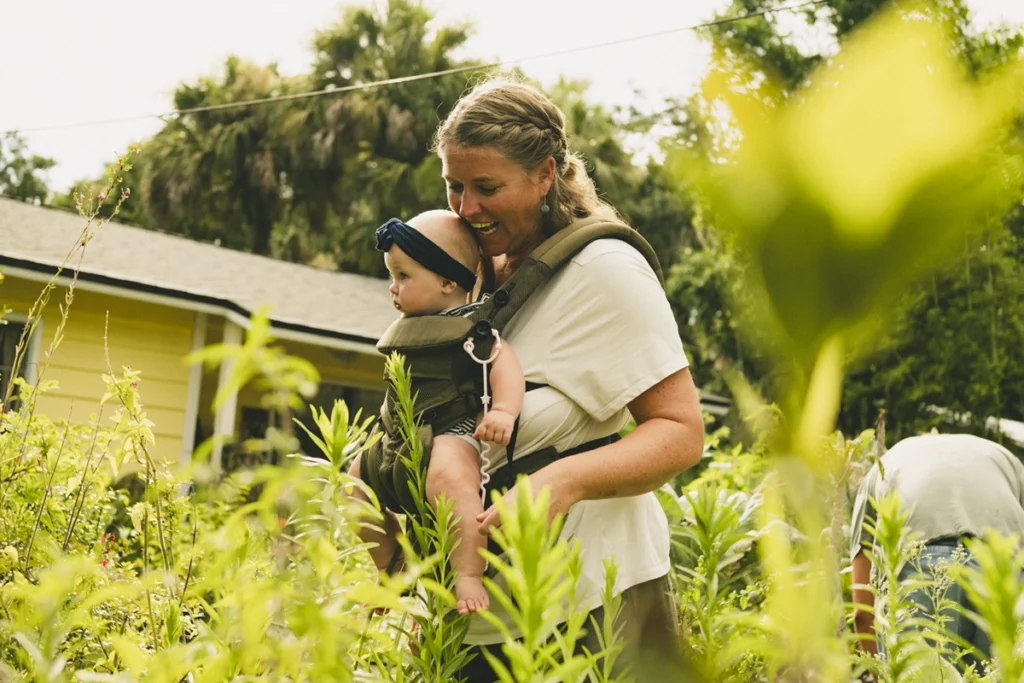
Agrihood co-founder Courtney picks crops with her daughter Winnie, 9 months. A force of nature, Courtney exudes positivity, humor and resilience while managing full-time work, child-rearing and farming.
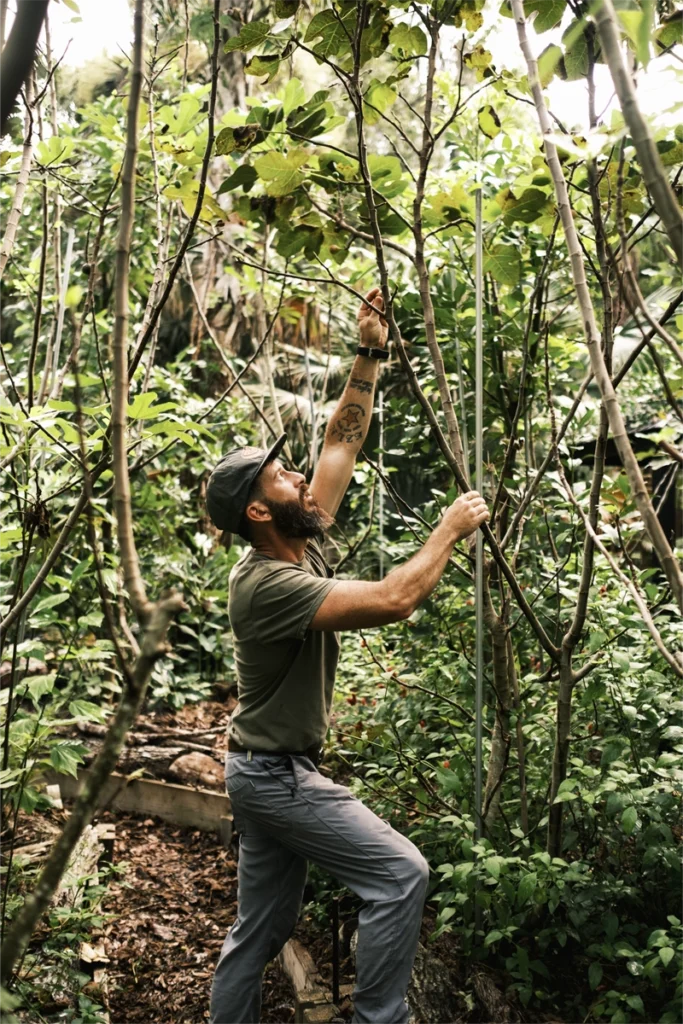
Tyson picks figs from trees planted in one of the sprawling food forests within the Rebel Farms agrihood. Over the last several years, Tyson and Maggie have planted more than 400 fruit trees and bushes on their 1/3 acre of suburban land, practicing a form of high-density permaculture.
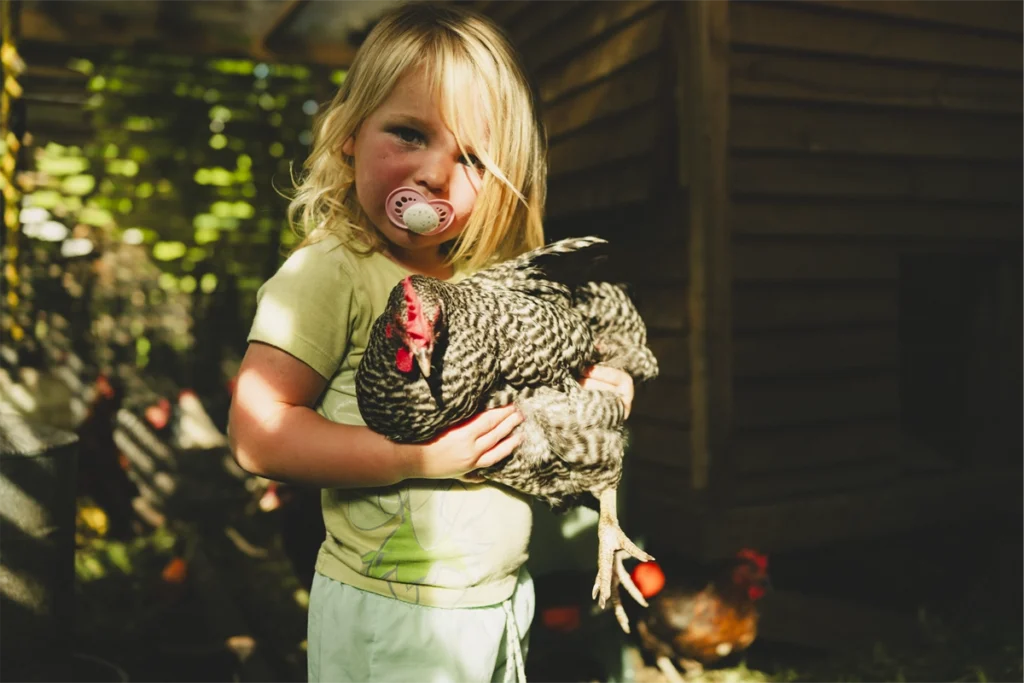
Two-year-old Paisley is the agrihood chicken whisperer.
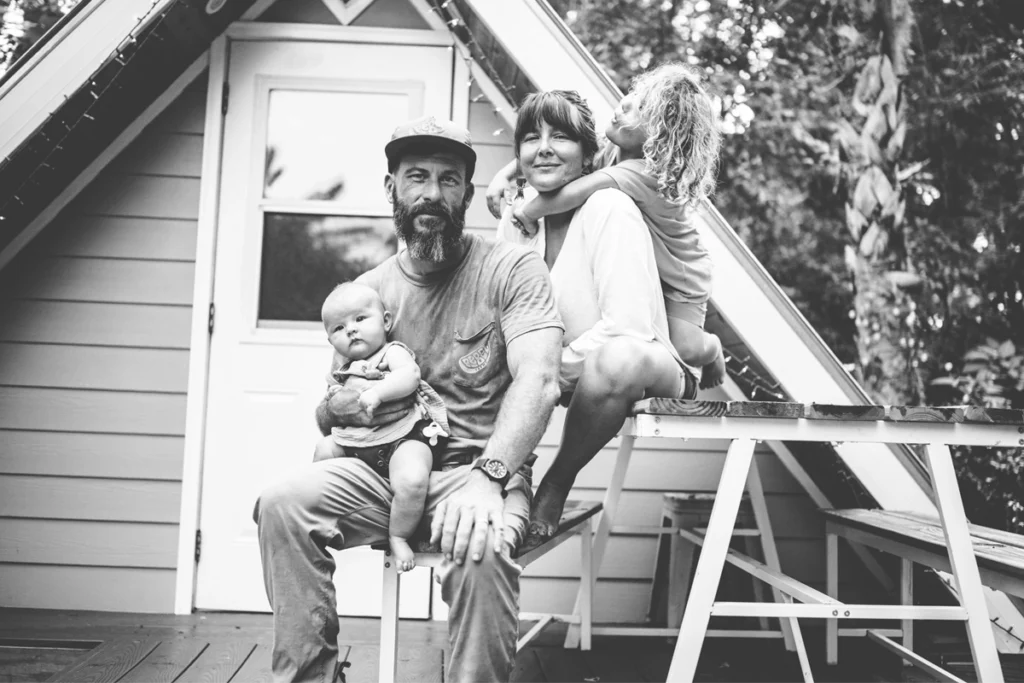
Rebel Farms founders Tyson and Maggie with their daughter, Etta-Louise, 4 months old, and their son, Quincy, age 3, in front of the A-frame guest house they built to accommodate visitors to the agrihood.
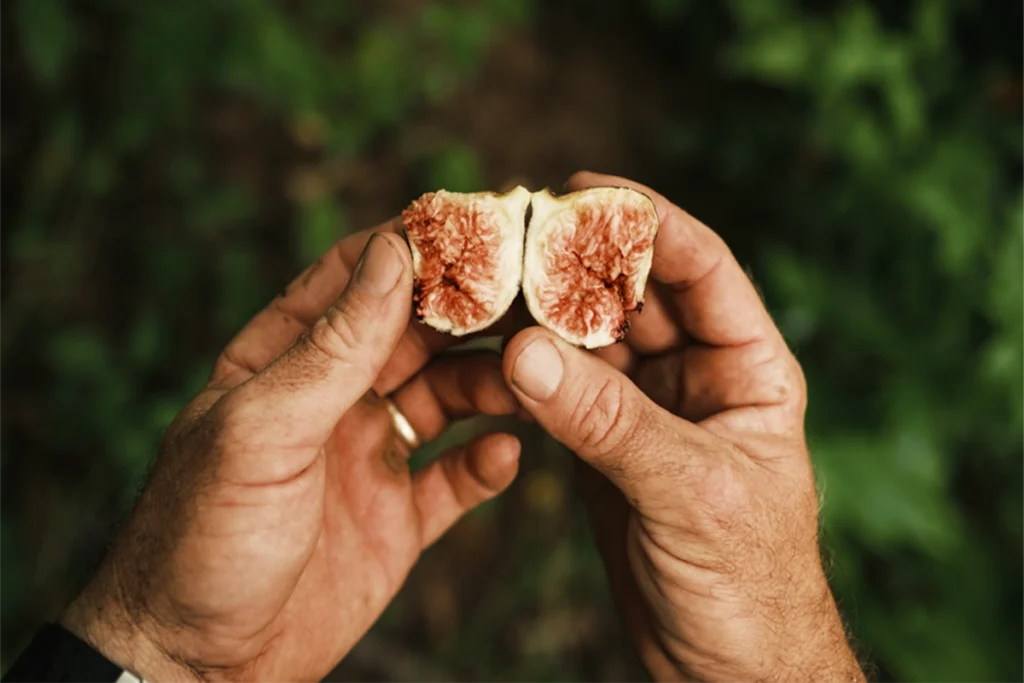
Tyson opens a fresh-picked fig, one of more than 30 different fig cultivars grown at Rebel Farms, before devouring it.
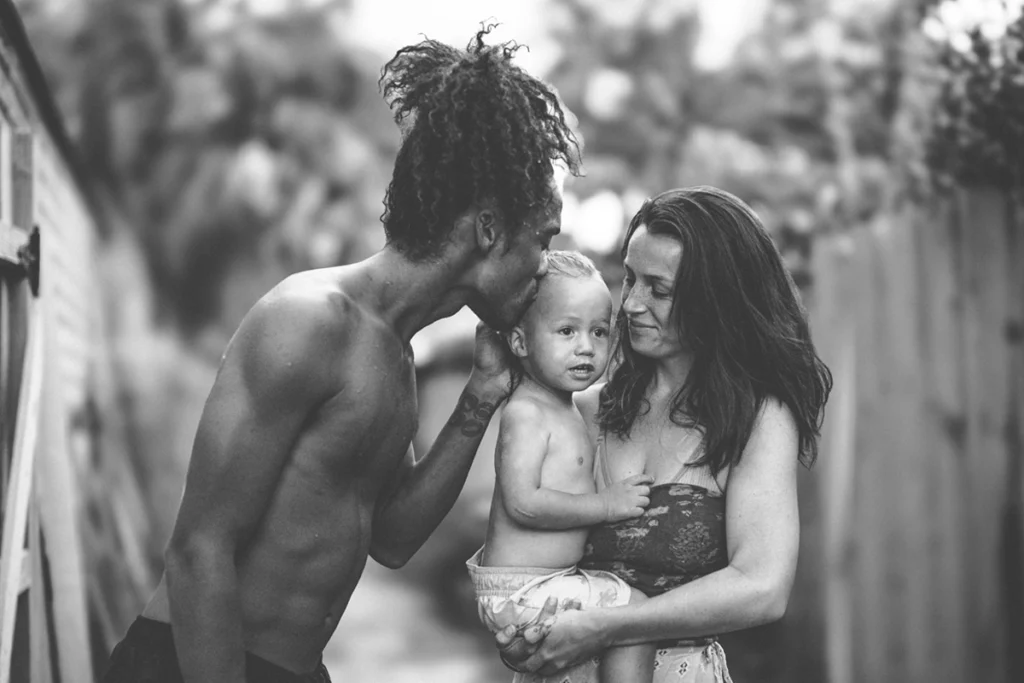
The newest agrihood members, Li and Willow, with their son Akoa. Willow is a gifted artist and experienced farmer, while Li is a talented musician and one of two martial arts teachers within the village.
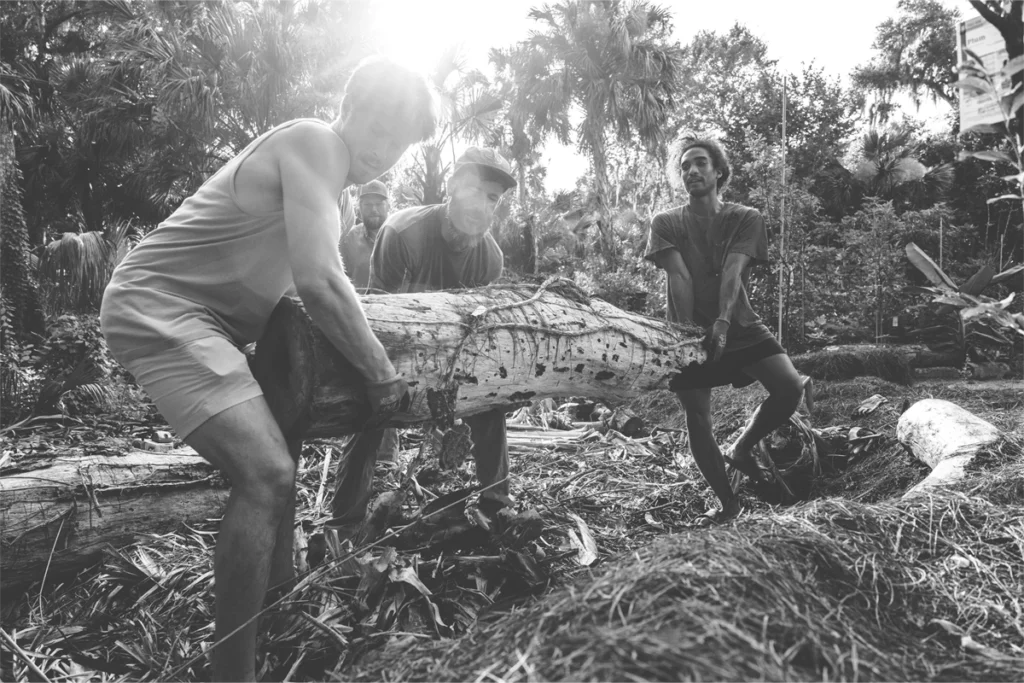
Agrihood members Cameron, Tyson and Li, along with volunteer Patrick, move logs to build new hugelkultur garden beds, burying wood beneath mounds of soil. The wood slowly breaks down to improve fertility and moisture retention in Florida’s sandy soil. The agrihood families frequently tackle large projects together while the kids play nearby.
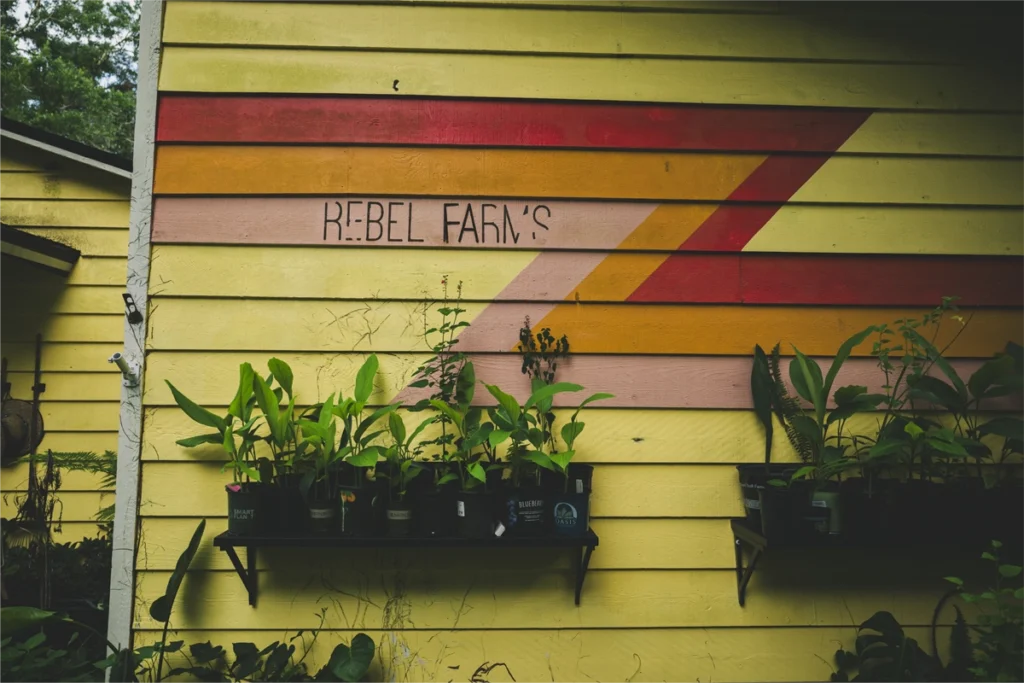
The propagation station is where Maggie and Tyson clone new crops and native plants. The pair have spent half a decade experimenting with new crops well-suited for Florida’s avenging climate.

Dirt—an integral part of the magic at Rebel Farms. Maggie and Tyson’s son, Quincy, playing on a pile in the front yard.
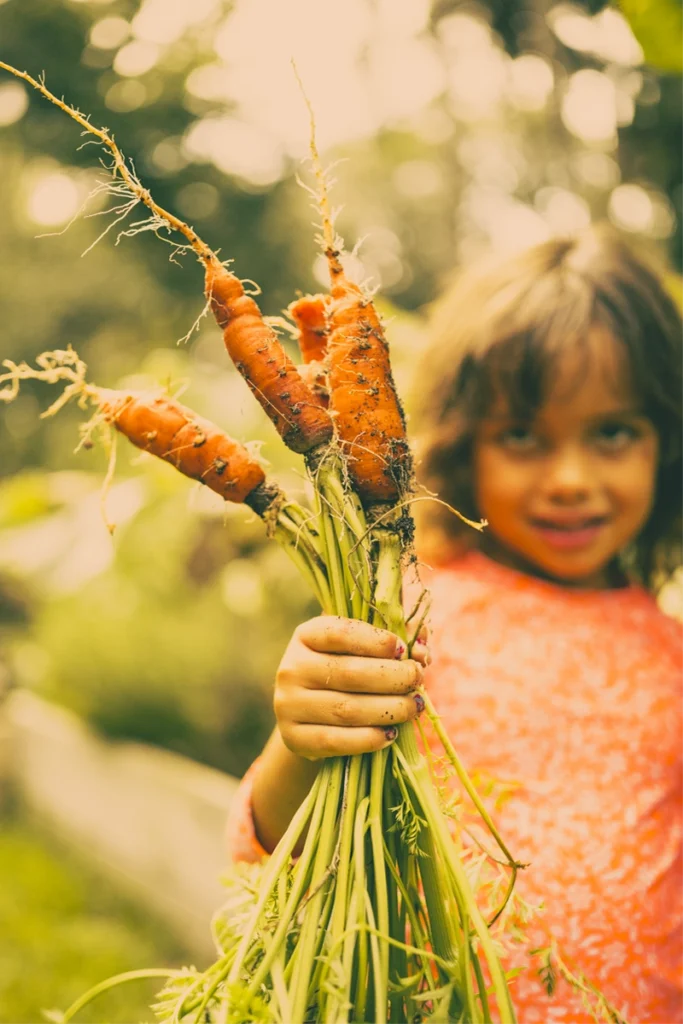
Agrihood member Aura shows off her perfectly imperfect carrots. Since many seeds are sown by toddlers with little technique, crops often grow in nontraditional shapes and sizes.
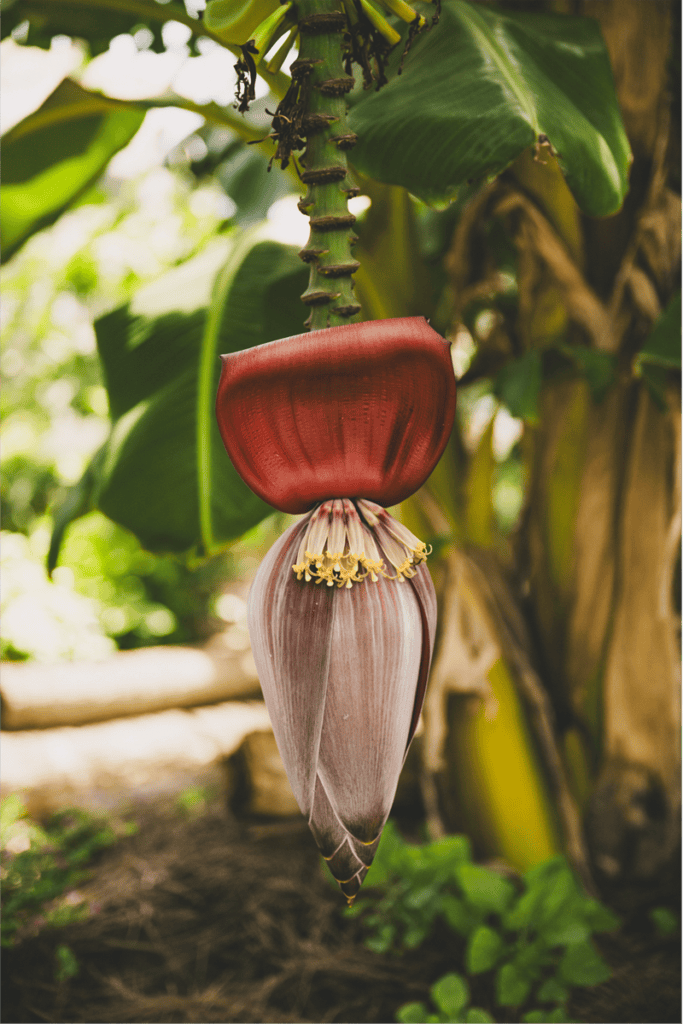
A fresh rack of bananas forms in a food forest installed by Rebel Farms at a beachside home. This cultivar, called the Dwarf Orinoco, thrives in Central Florida’s beachside climates.
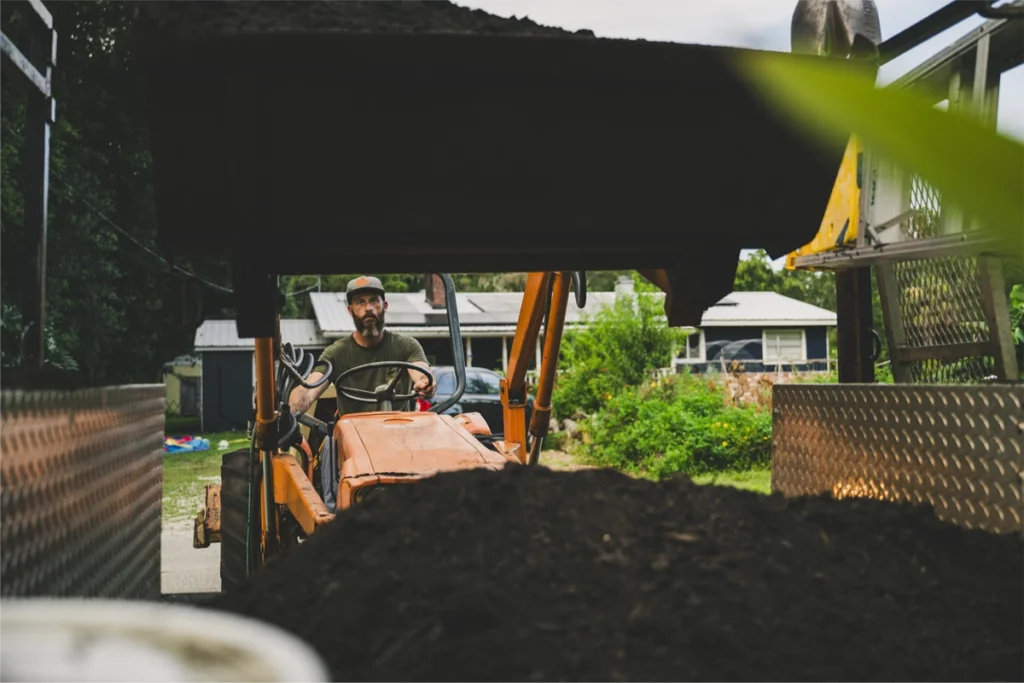
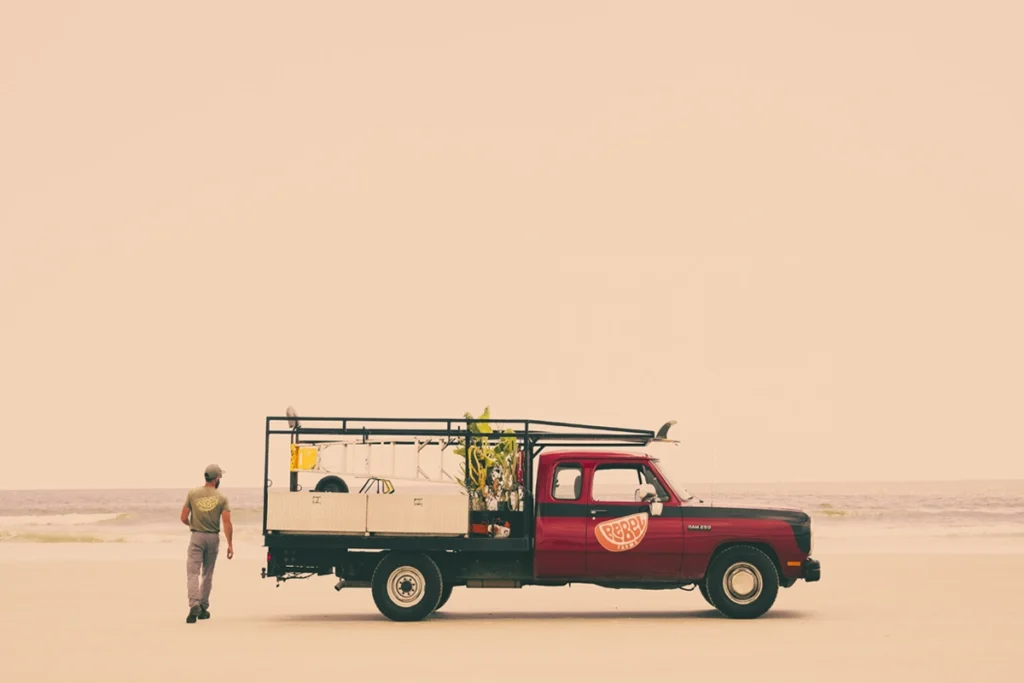
Tyson loads the farm truck with compost to prepare for the next day’s food-forest installation.