by | September 18, 2026
Saving Old Florida One Cattle Ranch at a Time
Cattlemen on ranches from Pasco County to the Treasure Coast are holding their land and livelihoods tight amid climbing costs and consumer challenges.
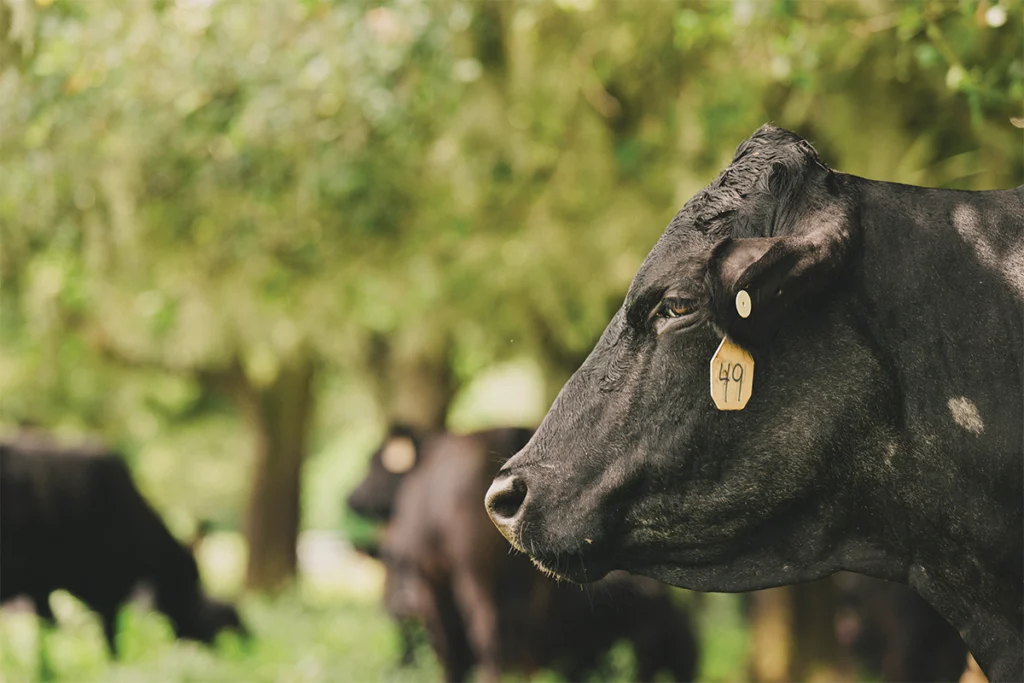
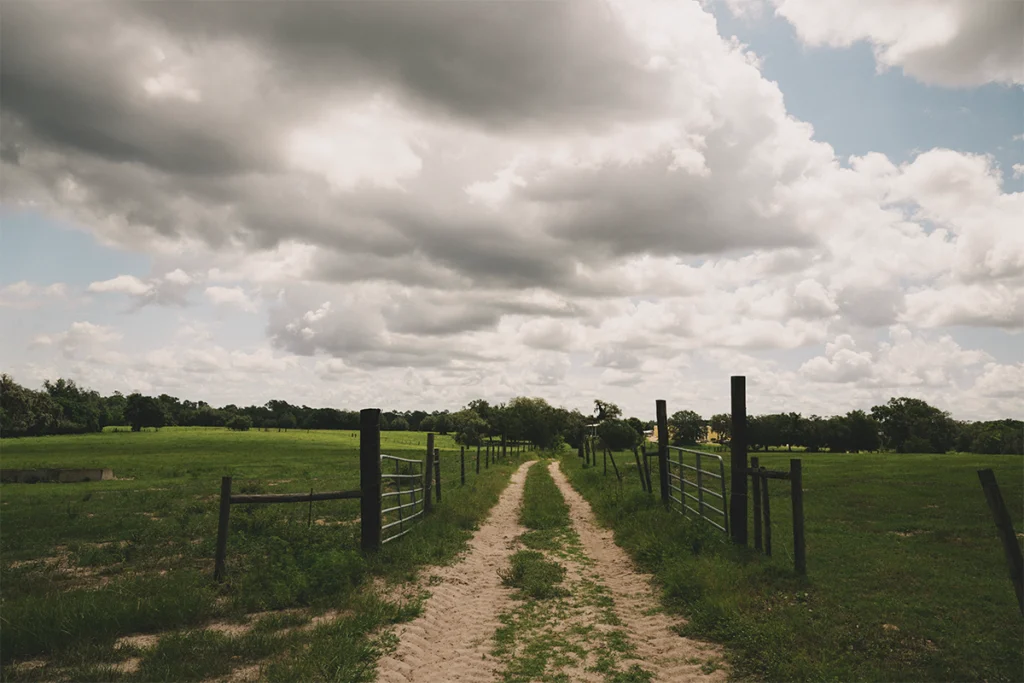
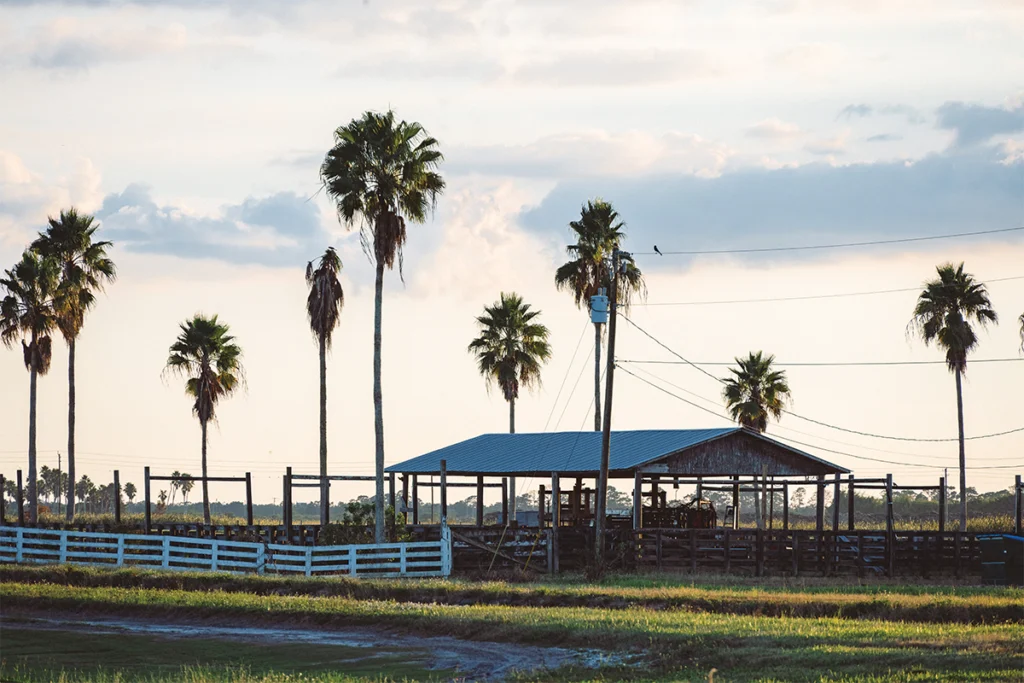
A drive along Pasco County Road 575 through Florida’s cattle country reveals a hidden world, one that the crush of development has almost buried along the state’s Interstate 75 corridor. Lonely State Road 575, so close to I-75 but seemingly a world away, skirts the Withlacoochee State Forest and briefly winds its way up and down through a landscape of mellow rolling hills that feels like Kentucky. I was looking for a bathroom on my way to visit Providence Cattle Company’s ranch, but the familiar sprawl of strip malls and gas stations was nowhere to be found. Instead, I passed humble homes hidden under Spanish moss with extravagantly patriotic bunting celebrating America’s 250th anniversary and signs advertising Hancock Farm & Seed, Pasco Honey, hay, cattle, horses and one that read, “Save Old Florida.”
Old Florida is a nebulous and hackneyed concept, one as slippery as a greased pig in a midsummer rainstorm. But a slow, time-traveling drive through Trilby, population almost 200, and its environs is an Old Florida experience by nearly anyone’s definition. Trilby is only 45 minutes northeast of downtown Tampa, but it is no exurb. This glorious patch of cattle country is deep enough in the woods that Google Maps, which was precise enough to tell me where scraps of debris on I-75 were, had no idea that Route 575 did not connect with 301 at the time due to construction.
After a detour along a gravel road that shadowed railroad tracks, I found the ranch. Joe Planz, owner, and his friend and employee Jolene Zambito waited for me in the shade by the side of the road. Planz, 70, didn’t grow up dreaming of becoming a Florida cattle rancher. After a childhood spent baling hay and milking cows on a small Pennsylvania farm a mile from his nearest neighbor (his grandma), he wanted a different life. “When I was 18, I couldn’t get away from there fast enough,” Planz says.
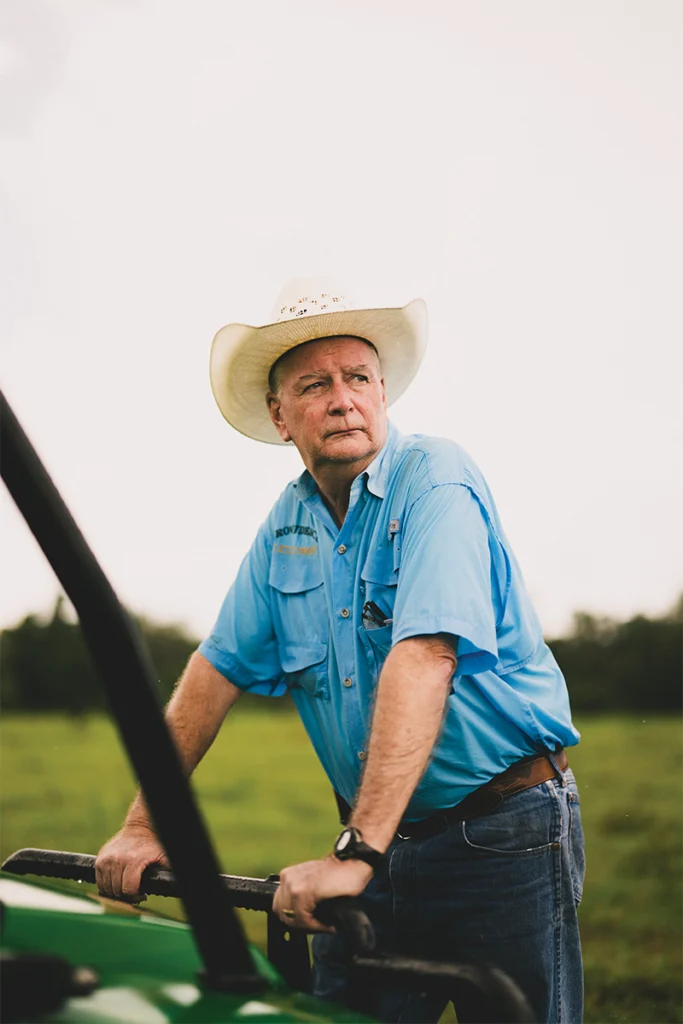
A three-decades-long career in the hospitality industry eventually brought him to Florida, where an unexpected encounter with Zambito, then a struggling dairy farmer, pulled him back toward the life he thought he had left behind.
For many Floridians, cattle ranching belongs to a romanticized vision of Old Florida that has largely been eviscerated by subdivisions, shopping centers and the relentless growth that has transformed much of the state. Yet Florida remains one of the nation’s leading cattle-producing states, with more than 1.5 million head of cattle spread across ranches that stretch from the Panhandle to the ranchlands south of Lake Okeechobee and beyond. As development pressures, rising costs, foreign competition and extreme weather challenge ranchers’ livelihoods, a growing appetite for locally produced food is creating new opportunities for operators such as Providence Cattle Company and multigenerational family ranches like SL Brown Ranch. Their stories reveal how one of Florida’s oldest trades is adapting to meet changing consumer demands.
From Cracker Cattle to Modern Herds
Florida’s cattle industry is one of the nation’s oldest, dating to 1521, when Ponce de León brought Spain’s Andalusian cattle to the territory—nearly two centuries before Texas cowboy culture took shape. Those free-roaming herds became the legendary “Florida Cracker” cattle. By the time of the Civil War, Florida supplied beef to Confederate troops. In 2025, it had the ninth-largest beef cow population among the states.
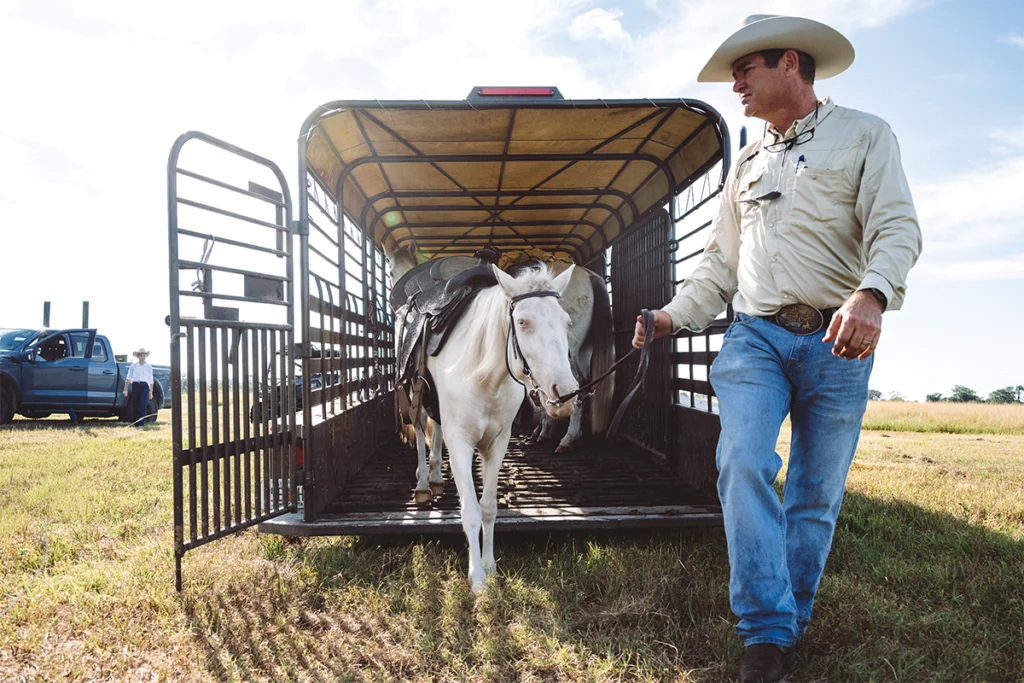
Florida’s cattle history isn’t just preserved in archives; it’s being reimagined on ranches like SL Brown Ranch in Fort Pierce, where Rollins Brown’s family has worked the same land since the late 19th century and now raises the cattle for their retail beef brand, Everglades Ranch. “Along the way, this business could have slipped away,” says Brown, the fourth generation of his family to run the ranch. “But every generation, at least someone in the family was willing to continue it.”
Where I’m from, neighbors just do things because you’re neighbors.
-Joe Planz
SL Brown Ranch has an old-school pedigree, but the ranch’s current mission is anything but old-fashioned. After estate taxes nearly forced the family to break up the property in the 1970s, the business evolved into a forward-looking operation built on soil science, regenerative farming practices and a commitment to producing nutrient-dense beef. Brown blends Wagyu and Angus breeds to create “American Wagyu,” finishes cattle on carefully managed grasses and preaches about the health benefits of micronutrient pastures. He’s so passionate about micronutrients that he’s starting tours of the ranch so he can educate the public about their benefits.
“People need to eat foods grown in regenerative soil for their health,” Brown says. “Because almost nothing we buy in the grocery store has micronutrients in it.”
The shift toward regenerative ranching began almost by accident in 2005 when a developer asked to dump mulch on Brown’s pastures instead of paying landfill fees. Ten thousand truckloads later, the buried organic matter transformed the soil into what Brown calls a “live microbiome,” turning the ranch into a carbon sink. And Brown believes, based on what he’s learned from his affiliation with the Bionutrient Food Association, the process has passed a cascade of micronutrients from soil to grass to cattle to customer.
Whatever the science, Brown keeps the pitch to customers simple. “We’re selling nutrition,” he says. “We will not sell a single item if it’s not something our family already eats.”
Brown isn’t the only Florida rancher betting that the old trade can be reinvented. About 150 miles northwest, near the town of Trilby, Joe Planz is blazing his own new path in an old trade with Providence Cattle Company. For generations, Florida ranchers sent finished calves out west because it was cheaper than finishing them at home. About 16 years ago, a rancher named Clifton Chapman, who runs Double C Bar Ranch near Yeehaw Junction with his brothers on roughly 6,000 acres, decided to try finishing cattle in Florida, on Florida grass, for Florida customers instead.
A Second Act in the Pasture
Planz didn’t plan on becoming a cattleman twice in one lifetime. He grew up in blink-and-you’ll-miss-it Abrahamsville, a speck of a town in northeastern Pennsylvania, baling hay and milking cows. After college, he worked in the hotel industry for the likes of Hilton, Hyatt and Marriott before spending a decade in sales for the Tampa Bay Convention and Visitors Bureau. Then the 2008-2009 recession hit, and Planz was among those let go. He started an event-planning business to stay afloat.
Around the same time, Planz’s son mentioned that a classmate’s father had died of cancer. The man had operated a small dairy in Hillsborough County with his sister, Jolene Zambito, leaving her alone to run it. Planz and his son drove down to see if they could help. “I sure could use the help, but I can’t afford to pay you,” Zambito told him. Planz stayed anyway. “Where I’m from, neighbors just do things because you’re neighbors,” he says. “You don’t expect anything monetary from it.” He milked cows alongside her for close to two years. In the second year, Zambito began giving him her bull calves, worth little on a dairy, and Planz started raising and selling them on the side.
A conversation his wife had with a friend who ran a hydroponic farm nudged Planz toward grass-fed beef. He sold off the small herd he had collected and started fresh, selling quarter, half and whole shares of grass-fed, grass-finished beef to customers. His processor mentioned another rancher chasing the same idea: Clifton Chapman, down in Osceola County. Planz drove to Kenansville to meet him, and the partnership that continues to anchor Providence Cattle Company was born.
Faith runs through that partnership too. Planz’s family has deep Jesuit roots. All three of his sons attended Jesuit high schools, and a cousin was a Jesuit priest. Every package of Providence beef carries the initials AMDG, short for the Latin phrase Ad Majorem Dei Gloriam, “for the greater glory of God,” the Jesuit order’s motto. Planz treats raising and harvesting cattle as an extension of that faith. “I am servicing God,” he says. “God has entrusted me (with) caring for his animals, and I care for them in the way that I think God wants me to care for them. Now, granted, we do harvest them at a certain point in their life, but we harvest them to feed other creatures of God.”
The Making of a Herd
Planz’s herd lives on 200 leased acres off the gravel road near Trilby, ground that was once a dairy and, at another point, an alligator farm. He keeps about 50 mother cows, 10 replacement heifers and a couple of bulls, a headcount that climbs each spring as those mother cows calve.
Most of the herd is Brangus, a genetic cross prized because Brahman heredity allows cattle to sweat and shake off Florida’s biting flies in ways British breeds like Angus and Hereford can’t. To keep the grass-fed label honest, calves are never fed grain, though nursing and pregnant mother cows still need supplemental feed for protein. Keeping the mothers fed without tempting the calves took some improvisation. Driving down Route 301 one day, Planz noticed a truck loaded with concrete burial vaults from a casket company. He called and asked whether they ever had blemished vaults that failed inspection. They did, for about $50 apiece—a better bargain than standard feed troughs, which can cost up to $400. “This is great because the cows can reach the bottom,” he says. “The calves can’t.”
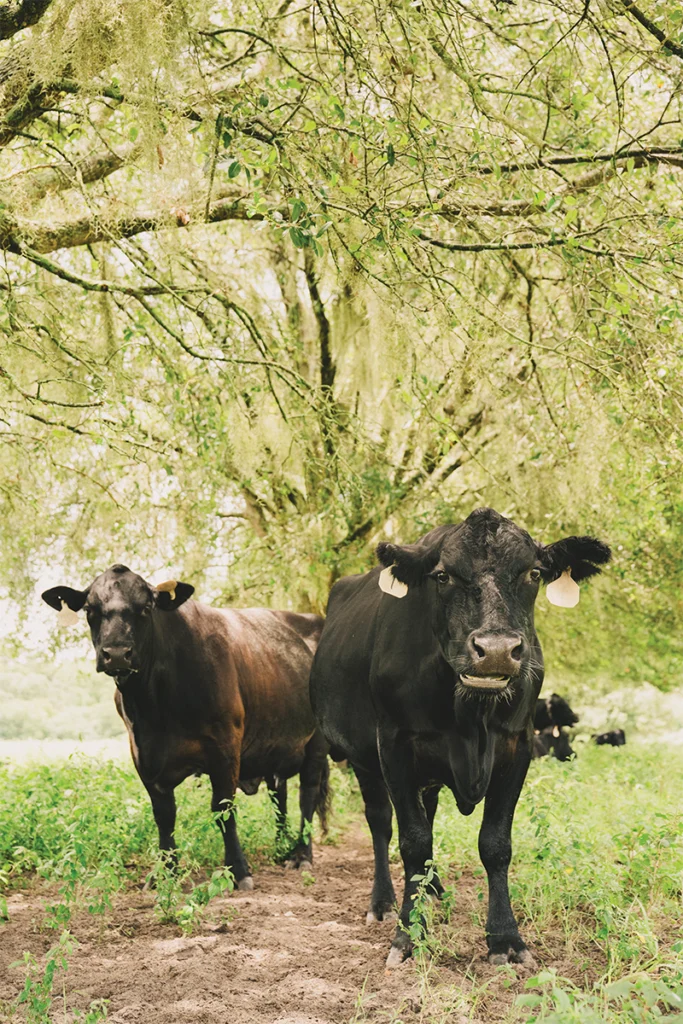
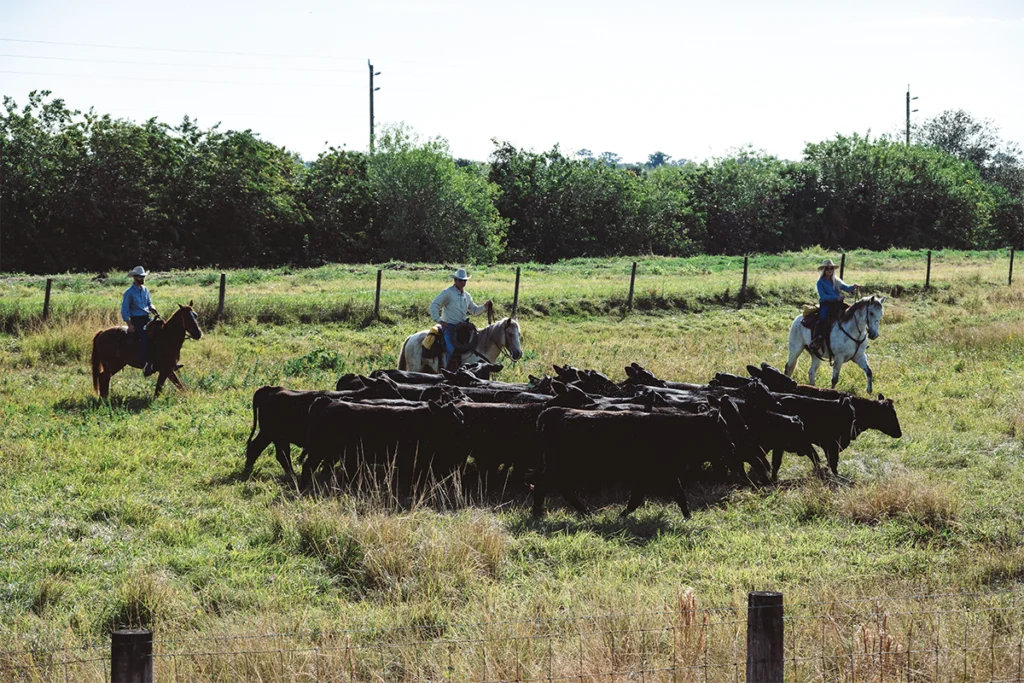
Once calves reach about 450 pounds, Planz and his crew sort them, an exercise in reading body types as much as anything else. The ones built “short and stocky” stay in the program; the ones with “long legs and a long neck and a skinny butt” go to the market instead. About two-thirds are accepted into their program. The keepers move to Chapman’s ranch to finish on the same grasses Planz’s herd grazes, so the beef tastes the same no matter which ranch the animal came from. Finishing matters too: Common Florida pasture grasses don’t have enough protein to properly marble a carcass, Planz says, so cattle raised on them stay tough. From conception to harvest, the whole process takes about three years: a nine-month gestation followed by 24 to 30 months on grass. The calves in Planz’s program start with Bahia and Bermuda grass and then transition to higher protein sorghum, aeschynomene and alfalfa.
After spending a day with Planz on the ranch, I bought two pounds of Providence Cattle’s beef at Rollin’ Oats, a health-food grocery store in St. Petersburg, to see if its 80/20 ground beef tasted different from the ordinary
supermarket beef we typically buy.
As I grilled eight quarter pounders, I thought they smelled better than the ground beef I usually grill. Apparently, this wasn’t just my imagination; elevated levels of omega-3 fatty acids and conjugated linoleic acid (CLA) found in grass-fed beef gives it a different smell that scientists say is distinct from the heavier, greasier aroma of standard burgers.
Now, granted, we do harvest them at a certain point in their life, but we harvest them to feed other creatures of God.
-Joe Planz
At $9.99 a pound, this beef was more expensive than what we typically buy. But as we tucked into our burgers, the consensus around my dinner table was that the cost was worth it. “It tastes cleaner, beefier, a little earthy, not as heavy or greasy as a typical burger,” my wife said.
I also liked eating food that came from somewhere I’d just visited, and I felt good about supporting a local entrepreneur rather than the big four processors (Cargill, JBS, National Beef and Tyson Foods) that dominate our grocery shelves. I’ve been eating a lot less red meat since having a minor heart attack and getting a stent a few years ago. But Planz and the taste of his beef had me wondering if this was necessary. He, too, has a stent and an agreement with his cardiologist.
“I’ll cut you a deal,” he told his cardiologist. “You keep me alive; I keep you in beef.” And so, Planz brings his cardiologist a cooler of his best cuts every time he goes for an office visit. He says people often fail to distinguish between healthy beef and unhealthy beef. “What (doctors are) really saying is don’t eat red meat with omega-6 fat in it,” he says. “Why do they say eat more fish? Because fish have omega-3s in them … my cows at my ranch, they graze off grass. They get all this omega-3 fat from eating our grass.”
The New Local Beef Economy
When Planz and Chapman started, they harvested one or two animals a week. Last year, Providence Cattle harvested 650 head, all without spending a dollar on advertising. Word spread the old-fashioned way. A restaurant group asked whether Providence could supply whole steers, and after Adam Putnam—then Florida’s agriculture commissioner—tasted the beef, he carried the story back to Tallahassee, calling the operation a template for farm to table.
That word of mouth eventually reached the Tampa Bay Buccaneers. An executive chef at One Buc Place, the team’s practice facility, called Planz after a staffer spotted the family’s delivery van. “This is exactly what we need,” he told Planz. The team wanted a clean, high-protein beef source for its players, raised without antibiotics or growth hormones. (Any animal that does need an antibiotic is pulled from the program and sold separately.)
The retail side of the business is run by Planz’s wife, who lost her job as an event planner for Raymond James during the pandemic. She used the moment to build Providence’s direct-to-consumer sales, at first for customers who simply could not find beef in grocery stores due to shortages. That side of the business is on track to grow 55% this year, Planz says. Increasingly, the customers are young. “The ones who are like 25 to 35, they’re the ones that are going to the farmers markets,” he says. “People are more conscious about where their food is coming from now.” Some restaurants now advertise the source outright, a courtesy most commodity beef never gets. “They have no idea what ranch that beef comes from,” Planz says of most grocery store labels.
Both ranchers describe a business squeezed from several directions at once. For Providence, development outside Tampa has crept closer to the ranch. Ranchers sell for enormous sums, Planz says, “but it turns into housing developments,” and the new neighbors rarely tolerate the noise and mess of a working ranch next door. Trespassers once opened a pasture gate onto State Road 54, apparently believing they were freeing the animals. Equipment theft is also a steady, low-grade cost of doing business.
We will not sell a single item if it’s not something our family already eats.
-Rollins Brown
Costs have climbed too. After the pandemic, fabrication fees at the processing plant Providence relied on doubled overnight. The specialty warehouse it still uses raised its own rates 115%. Diesel, which runs everything on the ranch, spiked at the same time. Over about seven months, Planz says, “the profit margin for our business dropped probably 90%.”
Extreme weather has hit just as hard. A prolonged drought has cost the ranch money, and Hurricane Milton left equipment underwater for two months near the Withlacoochee River, with flooded roads keeping calves from reaching market. State Sen. Jay Collins, a former Green Beret who had visited the ranch months earlier, called after the hurricane to check in. “I can get there if you need me,” he told Planz, who still marvels at the gesture. “When’s the last time anybody from the government ever called you and said, ‘How you doing? You need some help?’”
SL Brown Ranch has faced pressures of its own, dating back decades before Brown ever took over the ranch. Brown’s grandfather was killed before Brown was born, and the estate taxes that followed in 1974 drove the family to row-crop farming, leasing out pasture under Brown’s father, fresh out of law school, just to hold onto the land. Soon the ranch’s neighbor across I-95 will be the world’s largest Buc-ee’s.
Brown fields trespassers and litter along with a steady stream of would-be buyers.
Layered on top of all that is a newer threat—the New World screwworm, spreading north through Mexico, which forces ranchers to rope and physically inspect cattle every 10 to 14 days rather than rely on standard deworming, according to Brown. “The screwworm will change our industry overnight,” he says. “It is so incredibly labor intensive.” Nationally, the cattle herd has shrunk even as beef demand keeps climbing, part of why prices feel so high at the grocery store. The four biggest companies process about 85% of the country’s beef, Brown notes, which leaves him with little control over a market he still depends on.
In 1980, when Brown was 6, those top four companies processed only 36% of the nation’s beef. Per capita beef consumption peaked at 94 pounds per person in 1976; it is projected to be 60 pounds this year, a modest rise over 2025 consumption, according to the U.S. Department of Agriculture. Because the U.S. cattle herd is at a 75-year low, beef prices have hit record highs. Total annual consumer spending on beef and veal jumped by nearly 12% at grocery stores in 2025. In a bid to try to curb those record-high prices, President Donald Trump used executive authority earlier this year to drastically increase beef imports from Argentina, Australia and Brazil, bypassing restrictions that normally limit foreign meat from entering the United States.
“I get that because people are struggling nowadays,” says Planz of Trump’s motivation in signing the executive orders. “But the problem with that is you open up the market to the Argentinian beef and all of a sudden my livestock, instead of being $2,000 per calf at the market, is now only drawing maybe $1,200 at the market.”
Still Not Selling
Despite all the tribulations, neither rancher is ready to give up. If anything, they’ve both doubled down on giving back to their communities. During the pandemic, Planz and his wife asked Feeding Tampa Bay whether they could donate a cull cow, processed entirely into ground beef, to Trinity Cafe, the charity’s free restaurant for those in need of a healthy meal. One cow, it turned out, could supply all three Trinity Cafe locations with beef for five days. Other cattlemen joined in, and one day the group donated 20,000 pounds of ground beef in a single delivery. The effort helped spark a statewide partnership between the Florida Cattlemen’s Association and Feeding Florida, and this year’s state budget included $38 million for beef and protein donations for Floridians in need, according to Planz. “Whenever you’re part of a community, you always try to take care of your community,” he says.
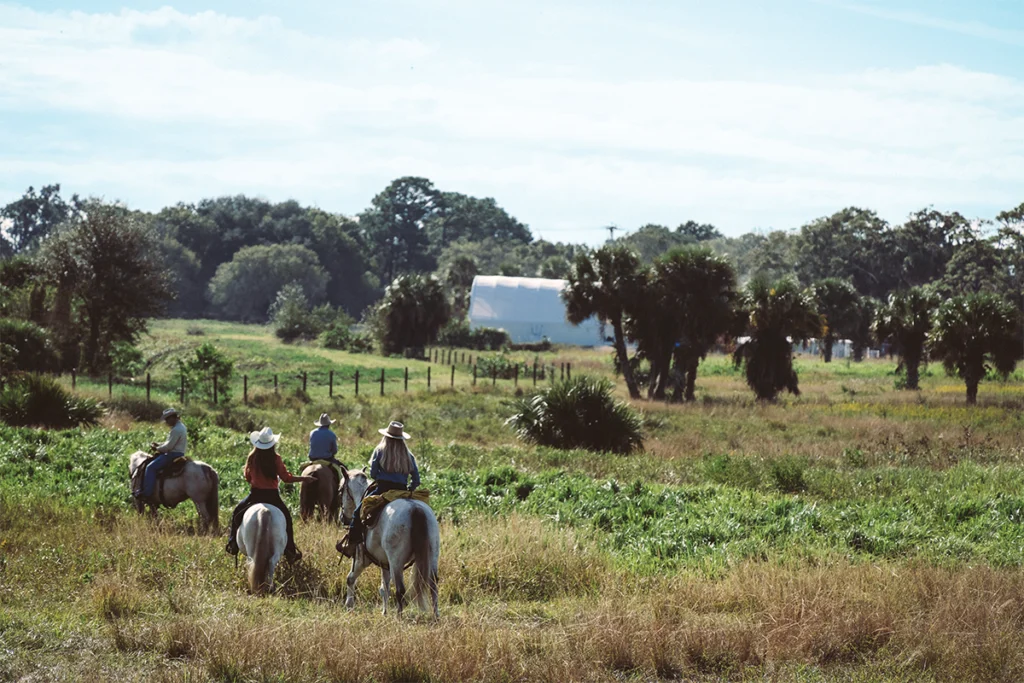
That statewide partnership, and the instinct behind it, is personal for Dusty Holley, executive vice president of the Florida Cattlemen’s Association, whose own family has ranched in Florida since the 1820s. “This is where the American cattle industry got its start,” he says. He is less interested in headlines than in advocating for people he considers unsung heroes. Ranchers, he says, are “hardworking, humble, salt-of-the-earth folks that are the real backbone of the state’s industry,” people who keep at it to be “the great stewards of the lands (that) they have been for over 500 years.”
Those humble and hardworking folks may be invisible to many of us. But they are still the backbone of communities like the ones that dot bucolic byways like Pasco County Road 575 and countless others like it around the state. Their connection to the land has nothing to do with money. Nowhere is that more evident than at SL Brown Ranch, where the offers never stop coming. “We get a call every week from a developer,” Brown says. The offers would allow him to sell out and buy several more ranches in the middle of the state, plus a couple in Montana. He still says no. “The land itself and every landmark on it … it’s part of us.”