Meet the Miami Artists Behind Broadway’s ‘Buena Vista Social Club’
The musical sensation arrives this fall with a Tony Award–winning Miami choreographer, a Hialeah-raised playwright and Cuba at its core.
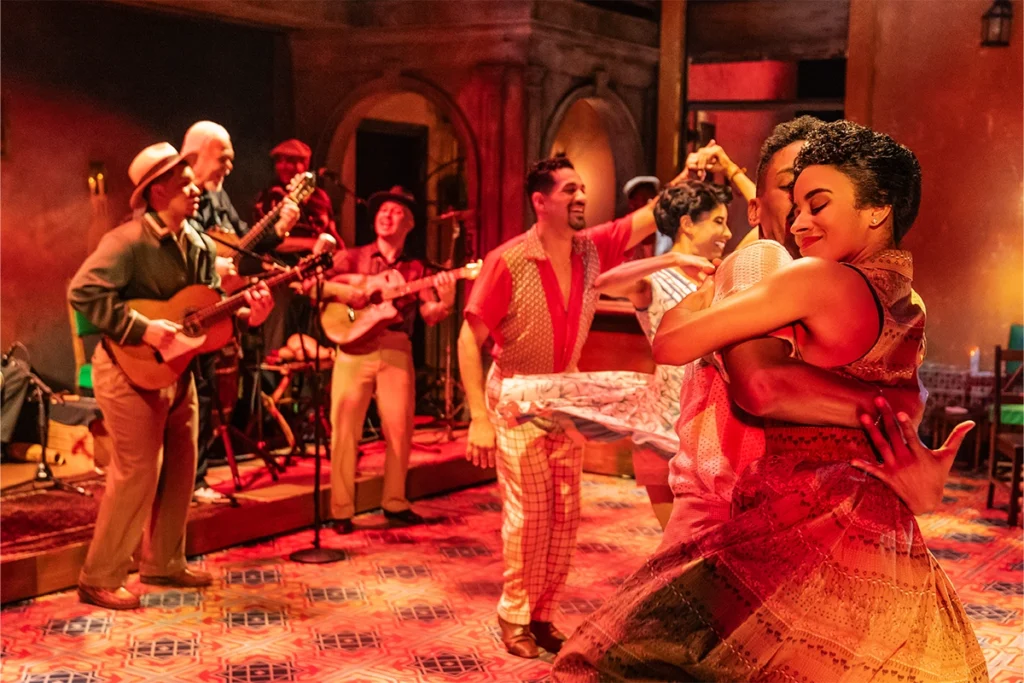
A live band playing acoustic guitars, maracas, the udu drum and other Cuban string instruments in the number “El Carretero” signals performers in the Broadway musical “Buena Vista Social Club” to gather ’round in chairs, swaying and stamping to the rhythm of the Cuban guajira.
Por el camino del sitio mío,
Un carretero alegre pasó,
Con sus canciones que muy sentida,
Y muy guajira alegre cantó.
The song’s opening lyrics paint a picture of a cheerful cart driver making his way down the road, singing a heartfelt Cuban country tune as he passes by. Soon, the audience will be plunged into 1940s and ’50s Havana, with its colorful streets and buzzy social clubs, where real musicians once gathered and played.
Buena Vista Social Club was the name of one of those clubs, a members-only haunt in Havana where the era’s best musicians helped define the sound of a generation. Decades later, a group of veteran Cuban musicians adopted that name, and their eponymous 1997 album introduced traditional Cuban music to millions worldwide. Now, the Broadway production reimagines the real-life stories of those musicians and the music that united them.
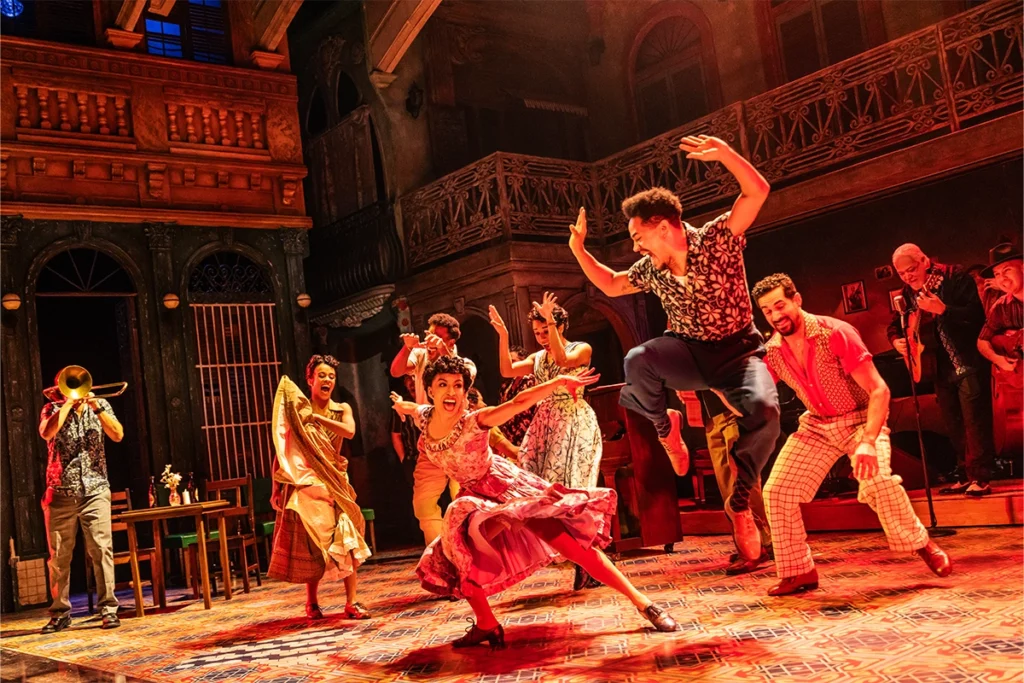
This Hispanic Heritage Month, the Tony Award-winning musical makes its way to Florida, kicking off its run across the state at Miami’s Adrienne Arsht Center for the Performing Arts in September, before continuing to Tampa, Fort Lauderdale and Orlando into October.
The Florida shows are especially meaningful given the production’s strong South Florida ties. Marco Ramirez, who grew up in Hialeah and is a Tony Award nominee, wrote the original book—musical speak for the script. Miami native Patricia Delgado, a former Miami City Ballet principal dancer, is behind the Tony Award-winning choreography. Through their writing and movement, they’ve shaped a Broadway hit around the Cuban culture they grew up with in Miami.
A Serendipitous Reunion
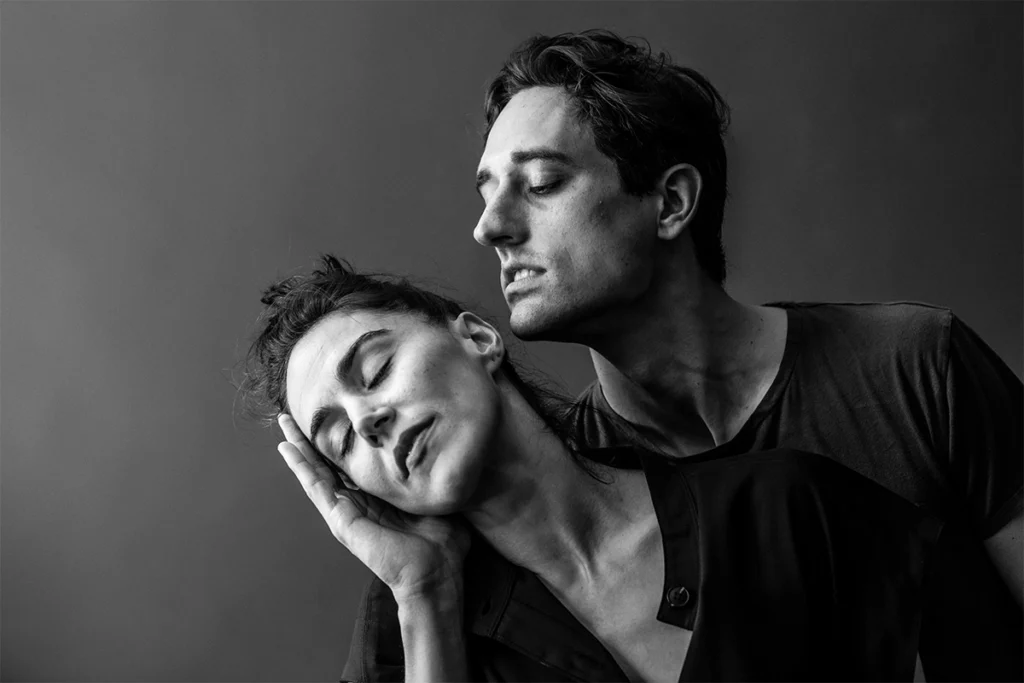
Delgado’s journey with “Buena Vista Social Club” began during the pandemic. Her husband, choreographer Justin Peck, saw an announcement that producer Orin Wolf had bought the rights to the “Buena Vista Social Club” documentary and was turning it into a musical. Peck, who had always loved the album, quickly called Wolf, whom he knew from another project, to find out more.
Peck also realized that Delgado’s Cuban background would be a great asset for the creative team. “You’re Cuban,” Delgado remembers her husband saying. “You need to be a part of this team.”
They later found out that Marco Ramirez wrote the storyline, dialogue, character development and stage directions.
It’s really hard to pursue art—it’s not like a straight line. There is no guarantee that you’ll even get a paycheck. Somehow our parents were like, ’Go do what you love.
—Patricia Delgado
“I was like, ‘Marco Ramirez is my high school buddy! Are you kidding me?’” says Delgado, who recalls reading an early draft of the script and immediately falling in love with it. “I said, ‘No matter what, even if we don’t get to be a part of it, this project is going to be amazing.’”
Delgado and her husband were later chosen as co-choreographers, giving her and Ramirez a chance to reconnect years after meeting as classmates at Coral Reef Senior High School in Miami. They were in the same graduating class but went on to pursue different corners of the arts: Ramirez studied playwriting at New York University and Juilliard, while Delgado joined Miami City Ballet.
“We never would have imagined getting to be on this together,” Delgado says about the musical, which moves through different generations and times to explore Cuba’s complex history through its music and people. “It was so important for us to be authentic.”
Delgado also feels a special bond between their paths. Both she and Ramirez were raised by immigrants who encouraged their dreams in the arts, even though they didn’t have those chances themselves.
“They supported us, and then we get to make a show that is kind of like a thank you to them,” Delgado says emotionally. “It’s really hard to pursue art—it’s not like a straight line. There is no guarantee that you’ll even get a paycheck. Somehow our parents were like, ’Go do what you love.’”
Capturing the Spirit of Havana
For Delgado and the creative team, honoring songs that meant so much to so many people was a big responsibility. Few songs were more challenging than “Chan Chan,” one of the album’s most famous tracks.
“‘Chan Chan’ was the hardest song because we knew it was the most popular and the one people would recognize immediately and would have a connection to,” she says. “It was really the effect of a challenge and a responsibility to hold up something that people feel really close to.”
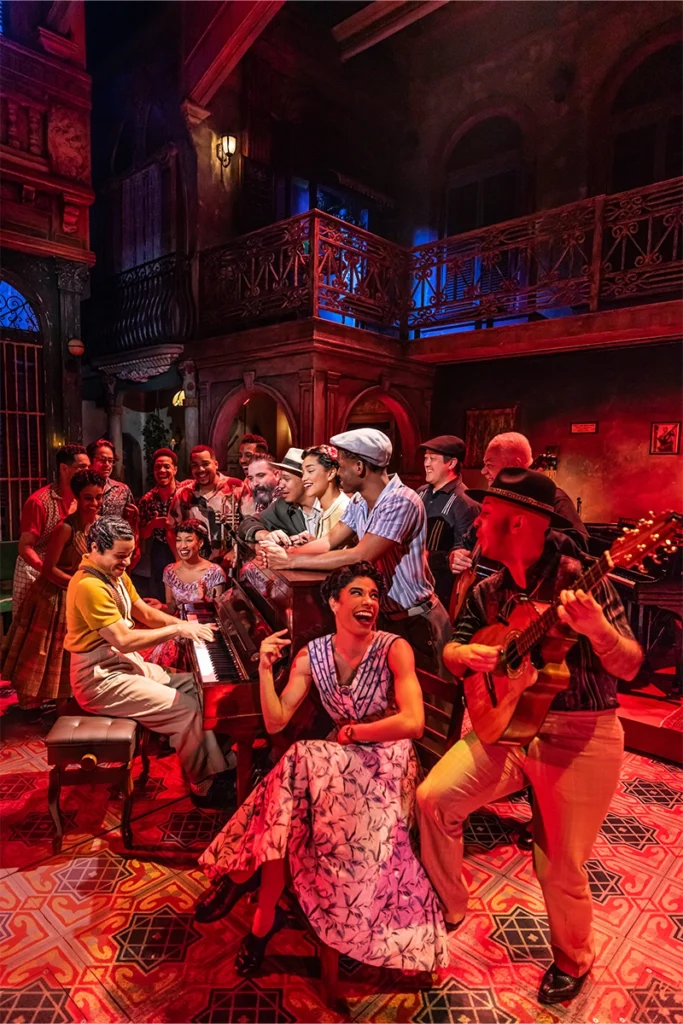
Still, she says it’s her favorite part, and surprisingly, it has no dialogue—just music and dance.
Aside from navigating the music, another challenge was figuring out what the real Buena Vista actually looked like in 1950s Havana. Since there’s no footage or photographs available, the team couldn’t capture the energy that filled the space. Rather than imagining it, associate choreographer Carlos Gonzalez, a Cuban-born artist whose family won the U.S. visa lottery when he was 15, invited them to explore the country as locals.
“It was important for us to go, not for research, but actually to live there and experience daily life on the streets,” she says.
Delgado recalls a vivid moment in her travels: climbing through a crumbling apartment to reach a rooftop where local musicians usually gathered to play songs from the “Buena Vista Social Club” album. A key to enter the building was lowered by rope. A cup of water, a cortadito and a bottle of rum sat beside the trumpet player as the musicians played, and Delgado danced in the sweltering heat.
“You couldn’t make this up,” she says, smiling at the memory. “It was really pure, really raw.”
A Cultural Homecoming
Bringing “Buena Vista Social Club” to Florida means something different for Delgado than any other stop on the tour. Throughout the creative process, she often thought about the people back home who truly understand the culture—her family, friends and their families in Miami. “I really need them to love this show,” she says. “It’s important to me.”
For audience members outside South Florida, Delgado encourages anyone with questions, curiosity or what she calls “tucked-away trauma” about their connection to Cuba to embrace the production fully.
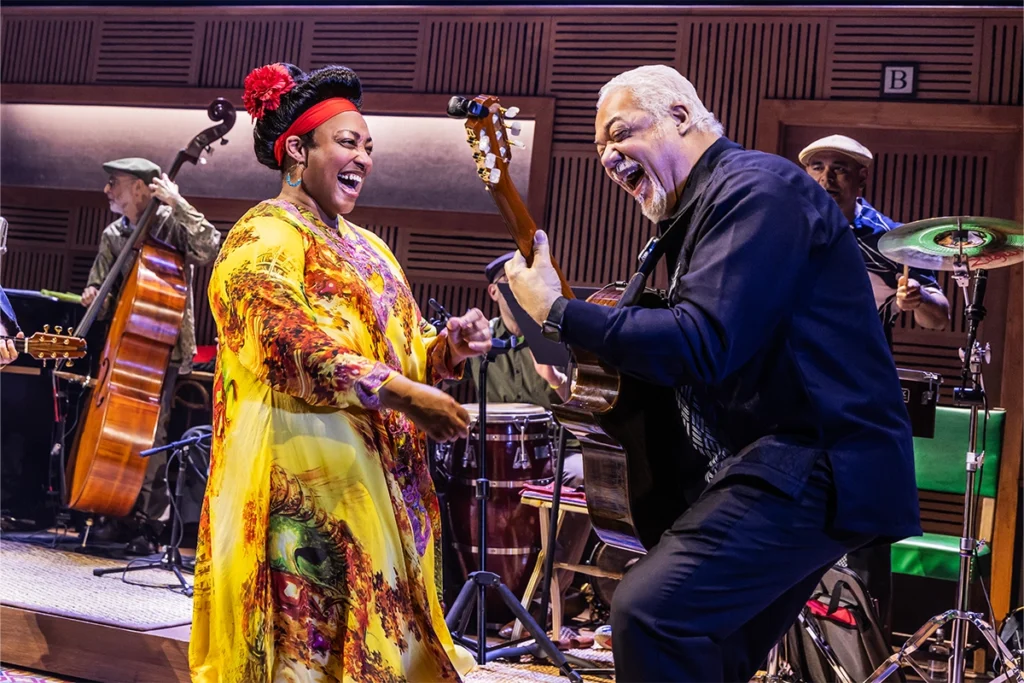
Working on the choreography for “Buena Vista” also helped Delgado connect more deeply with her heritage. “I felt like I was being healed,” she says. “I felt more Cuban than ever before. It changed me.”
Now, she hopes Florida audiences will find something similar. For some, it might mean rekindling their heritage; for others, it’s simply enjoying music that has reached far beyond Cuba. “I hope they feel healed and joyous and proud,” Delgado says.
She sees the success of “Buena Vista Social Club” as a realization that a cultural story doesn’t have to be watered down to resonate. The original album, entirely in Spanish, sold more than 8 million copies worldwide and won a Grammy.
“If this [album] changed the world, I feel like this musical can connect to people today,” she says.
Tickets for “Buena Vista Social Club” are on sale now. Check out the following dates when they’re touring in a city near you:
Miami
Sept. 29–Oct. 4
Adrienne Arsht Center
Tampa
Oct. 6–11
Straz Center
Fort Lauderdale
Oct. 13–18
Broward Center for the Performing Arts
Orlando
Oct. 20–25
Dr. Phillips Center for the Performing Arts
For more on Florida culture, click here.
About the Author
Melissa traded Pittsburgh steel for Florida sunshine a decade ago to launch her editorial career. A former editor for South Florida glossies, Puppo has written for a range of outlets including Time Out Miami, Byrdie, Giadzy and Courant. An expert on what to do in her adopted hometown of Miami, Puppo covers arts and culture, culinary hotspots, travel, wellness and beauty.