Meet the Florida Filmmaker Bringing ‘A Land Remembered’ to Life
Tampa native Todd Wiseman Jr. spent 43 days filming Patrick D. Smith’s epic novel across Florida for a new series.
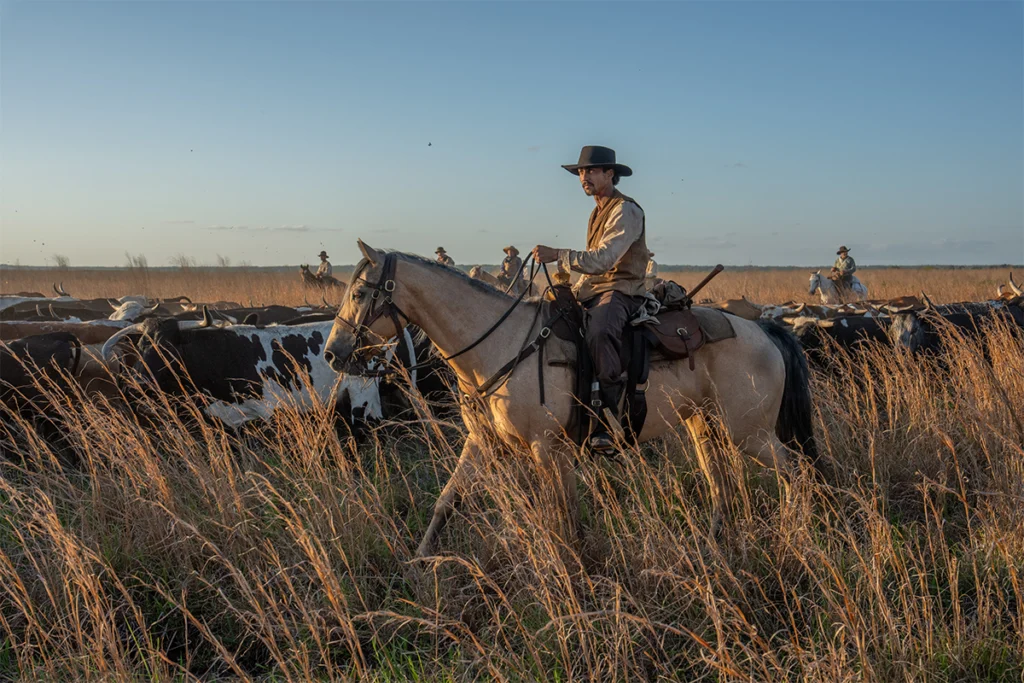
Recently wrapped after 43 days of shooting across the state, the $25 million production of Patrick D. Smith’s historical novel “A Land Remembered,” adapted as a multi-episode series, is an epic tale that traces the fictional MacIvey family across 100 years of struggle and triumph in the cattle business. Tampa native Todd Wiseman Jr. wrote, directed and produced the project, which looks to the 1989 miniseries “Lonesome Dove” as a touchstone in dramatizing the 1984 book, introduced to Florida schoolchildren in a special edition.
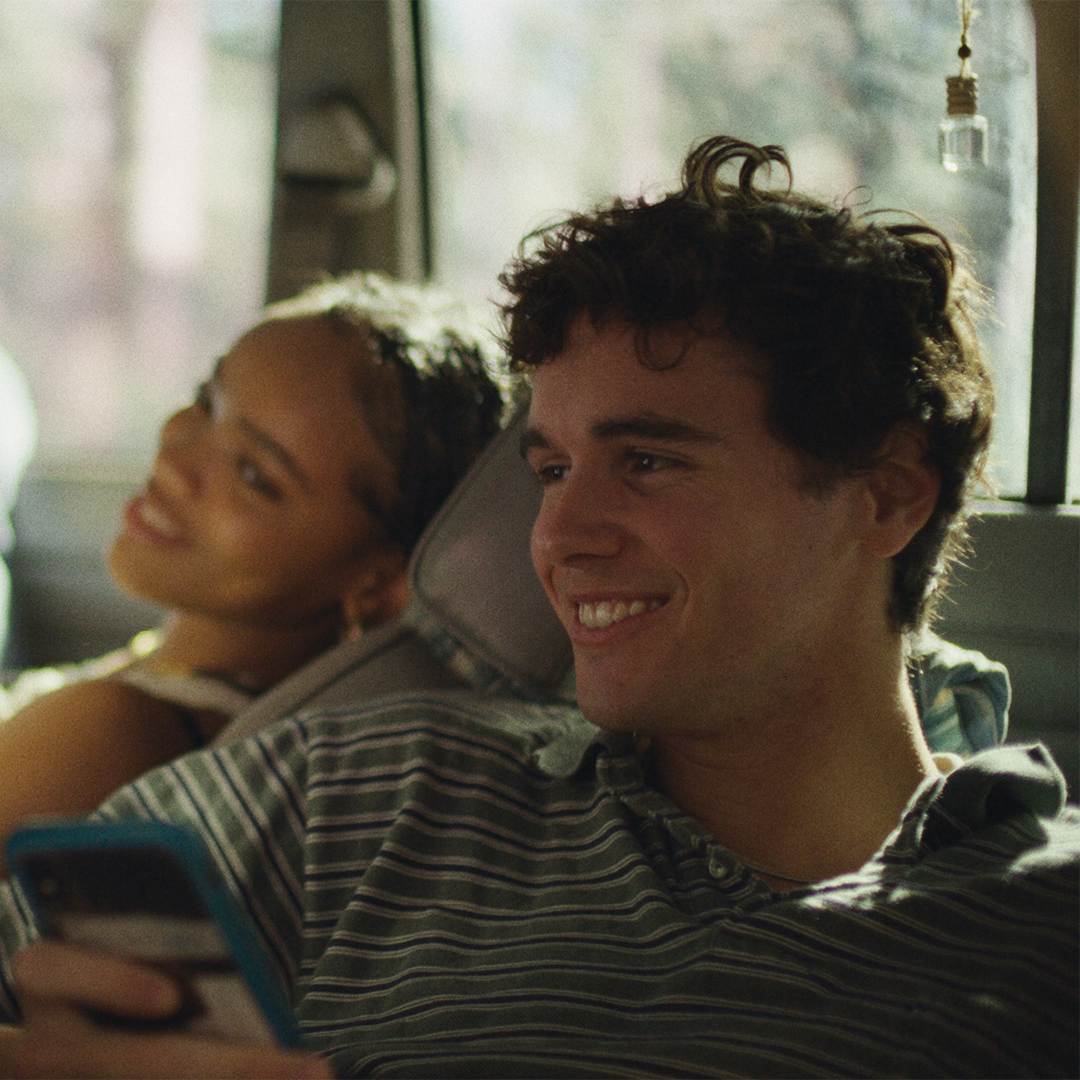
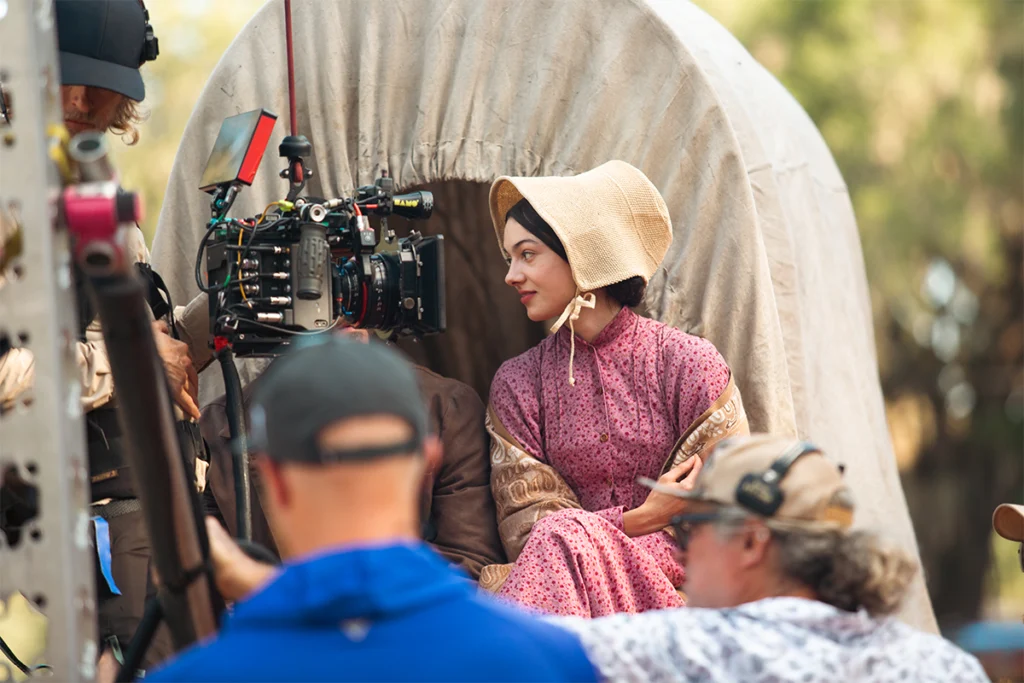
The cast features Philip Ettinger (“First Reformed”) as Tobias MacIvey, who leads his wife Emma (Lily McInerny, of “Palm Trees and Power Lines”) and son Zech (12-year-old newcomer Colby Harrison) out of Georgia into the Florida wild in 1858. William Catlett (“Charm City Kings”) plays Skillit, a formerly enslaved person who takes an important role in the family’s enterprise.
“It’s telling us the story of Florida that is undertold, the interior of Florida, the cattle history, the cowboys,” says Wiseman, who this fall will shoot the last two of four episodes planned for the first season, making the rounds to film markets.
Flamingo caught up with Wiseman recently over Zoom, where he talked about his personal ties to the book, how his Tampa high school teachers sparked his filmmaking career and why he loves making movies in Florida.
What is your relationship to the novel?
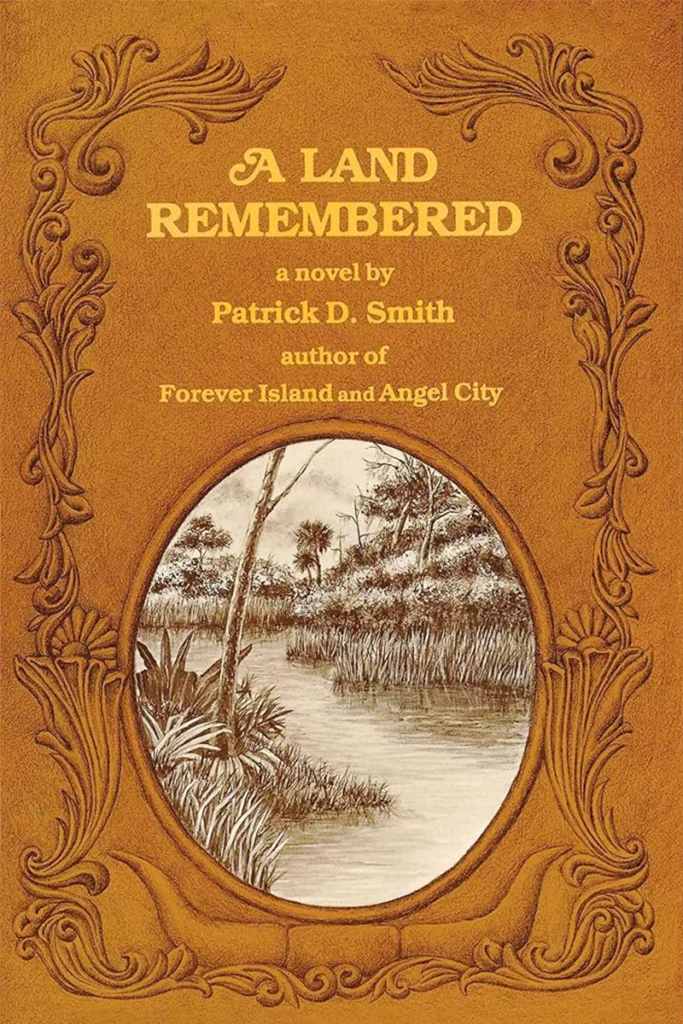
Todd Wiseman Jr.: I like to say I grew up in the end game of “A Land Remembered,” in these strip suburban homes which I loved. I grew up where this stuff would have taken place. I’m sure I read it as a kid. I lived in New York City for a long time and went to NYU film school, and one cold Christmas up there my brother gave me the book to read and I reconnected with my origin story. I decided that this needed to be a movie or a TV show. I was really surprised to find out that it had been under option since the ‘80s, various producers couldn’t seem to get it off the ground. A lot of them tried to make it into a movie and it’s too giant: 100 years, three generations. It needs a lot of character development that isn’t quite done in the book. It needs to be a show. I optioned it around 2020-21 and then developed it for a bit. The two people I reached out to first were the Seminole tribe—I went down to get their blessing—and my high school English teacher, Art Roberts, and I were like, “We need to break this thing down.” I didn’t want to go to my Hollywood peers to start that process.
You call this an origin story, how so?
TW: It starts off as this pioneer story, this Bible[-like] story, which I think is always exciting. What it manages to do really well is both play out the excitement and the goodness in that, but also what happens over the generations when we come to overexploit and underappreciate the things that got us where we ended up, which in this case is very wealthy. But the industrialization of the natural land ultimately has a bad consequence. The father and son’s story reminded me of some strong Steinbeck. Not quite as flowery and literary, but the story was strong.
That sounds like the story of Florida that is ongoing. Did you have trouble finding locations because so much of “old” Florida has been developed?
TW: Believe it or not, we have an abundance of places to film. It was really encouraging. I’ve seen vast stretches of untouched Florida. A lot of it is private land. We filmed on a lot of private ranches, where it’s just miles and miles and miles of nothing. Of course, when you finally get to the road, there’s a Wawa and a data center, but there is quite a lot left. That’s really encouraging to me. Initiatives like the Florida Wildlife Corridor, conservation easements and things like that are a bipartisan effort to preserve what we have left. We just got the conservation award at the Cattlemen’s Convention [the Florida Cattlemen’s Annual Convention & Allied Tradeshow] because these people recognize the importance in the story and the work that they still have to do.
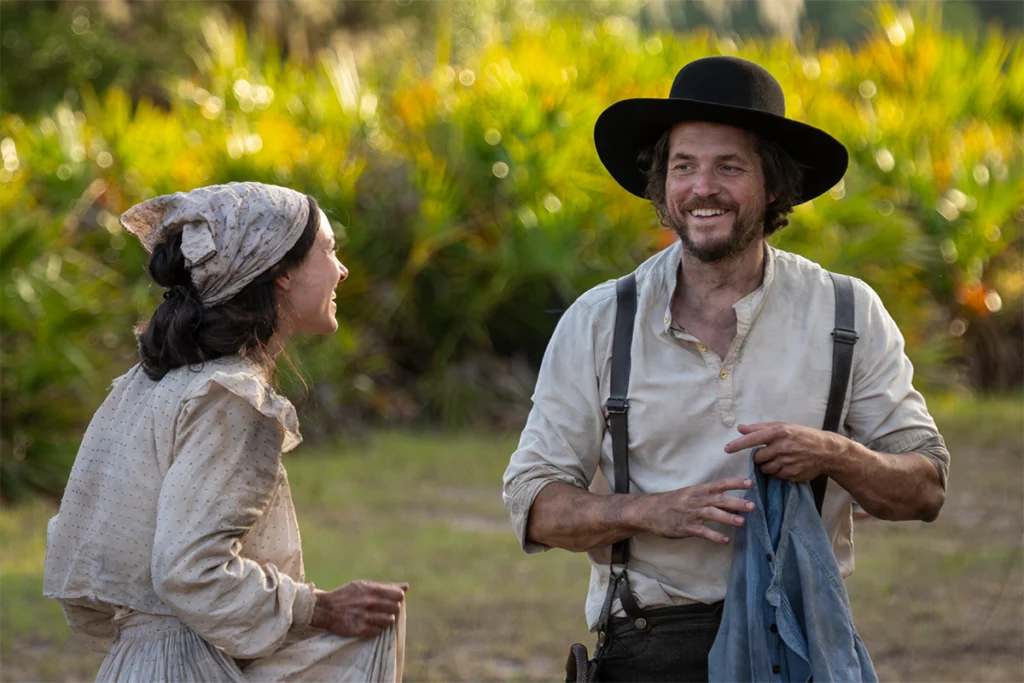
Tell us about some of those locations.
TW: We were all over Polk and Pasco counties and Hillsborough County. We were also down on the Peace River shooting a cattle crossing. We were up in Paynes Prairie. We were in Ocala. We were moving hundreds of people and hundreds and hundreds of cows all over the state to capture something very unique in terms of natural landscapes, so it’s truly epic and reflected in what we film.
You had your own cattle drive?
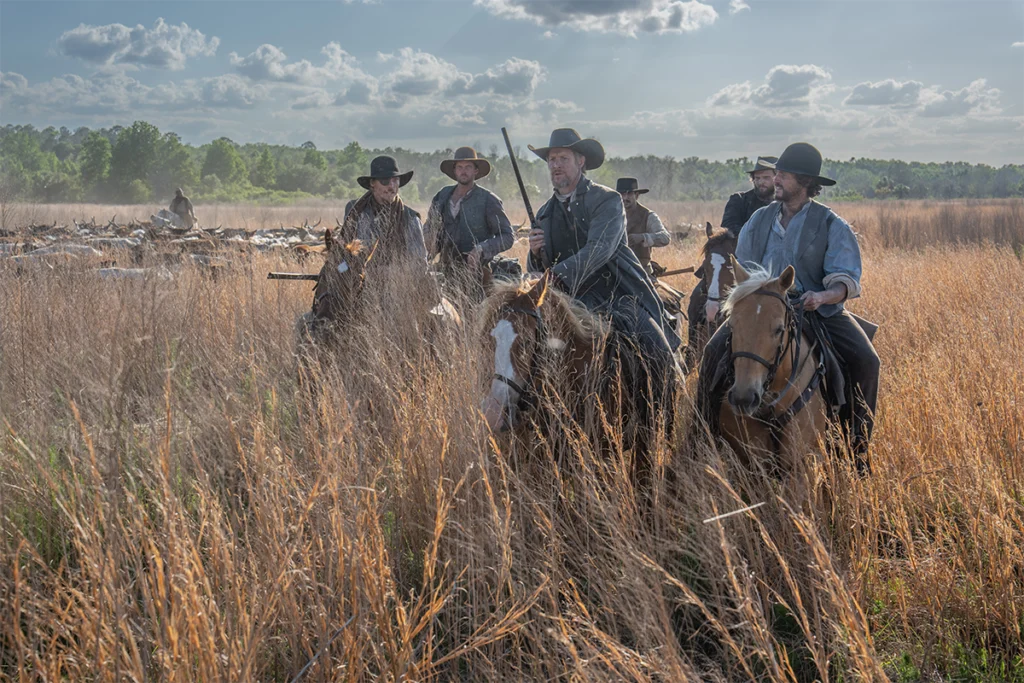
TW: Multiple cattle drives. We worked with David Hunt, one of the main organizers of the Great Florida Cattle Drive [a reenactment of the historic cracker cattle drives]. At one point we had 600 cows out on Paynes Prairie. Multiple herds had to come together. We had to think about vaccinations and water and food and transport, this giant logistical operation. It was the first time that’s been done in over 100 years.
Let’s talk about the human casting.
TW: When you think of Tony Soprano, [actor] James Gandolfini, you think of him for one thing, right? I think our actors will go on to do many other interesting roles as they already have, but I really didn’t want to cast a big famous name to be Tobias. I wanted new faces. Every one of our [leads] starred in a Sundance-winning film in the last three years. They are really accomplished.
What first drew you to filmmaking?
TW: I’m going to shout out all my teachers. My mother is a teacher, just retired from the Hillsborough County school system. She was Teacher of the Year this year. I had a great education at Freedom High School. I was always the kid with the camera, growing up making movies with my friends on VHS cameras. When I got to high school, it really got real for me. I had a teacher there. She was Miss Smith, and she became Mrs. Carbone. We had a TV production program, and she would let me keep the camera over the summers. She really encouraged me. Junior year, I Googled, ‘What are the best film schools,’ and it was NYU and USC. I got into NYU, and I left.
Were there films that strongly inspired you?
TW: My mom was a history teacher. She showed movies like “Glory” and “Gallipoli” and “Saving Private Ryan.” Those are the movies I was always drawn to. You can attribute the enormous war scene in “A Land Remembered” to that. In the book it’s two pages, and in the show it cost a million dollars and had 500 extras. Tobias is recruited twice from his homestead. I consolidate that into one conscription where he becomes a cattle drover, and then has to become a log cutter, where then the battle of Olustee breaks out, and the Confederates at the time were using Florida beef to feed the army. He’s caught in the crossfire. I did these series of long uncut shots where Tobias is running through this chaos. We bounce from killer to killed, killer to killed, killer to killed, until we meet Skillit. I decided to introduce Skillit at the battle because it had the largest contingent of Black troops during that time, and I found that a more interesting backstory for him.
We filmed on a lot of private ranches, where it’s just miles and miles and miles of nothing. Of course, when you finally get to the road, there’s a Wawa and a data center, but there is quite a lot left. That’s really encouraging to me.
–Todd Wiseman Jr.
Did you shoot at the actual site?
TW: We scouted the actual recreation that they do each year. All we needed was a big pine forest. I would have preferred it to be a really old growth pine forest, but those are very rare. We found this incredible location, Vogel Ranch. We had 500 extras and a giant crew, and we even had people from the 54th Massachusetts Infantry Regiment reenactors team come. It was really big. It was really fun.
Not to overstate the “Yellowstone” factor, but has that show’s success made productions like this a hotter commodity?
TW: There’s clearly an appetite for this sort of thing. Ours is very unique. It’s not the West. You think of a Western, you think of big beautiful vistas, you think of the 2.35:1 aspect ratio [widescreen]. I wanted this to be in your face and close and a little more square and a little more visceral and a little more violent. It was an unforgiving place back then. We don’t have mountains, we don’t have ranges, we don’t have 10 latitudes of light across some incredible thing, but we have beautiful, beautiful places. I just wanted it to be unique to our story, and how I think of experiencing the swamps and the forests here.
For more interviews with Florida filmmakers, click here.
About the Author
Steve, a Tallahassee native and Flamingo contributor since 2017, has written about film, music, art and other popular culture for publications including The Wall Street Journal, The Washington Post, the Atlanta-Journal Constitution, GQ, and The Los Angeles Times. He is the artistic director for the Tallahassee Film Festival and writes a monthly film newsletter for Flamingo, Dollar Matinee.