An Ode to the Good Ole Films: Florida’s Arthouse Theaters
As streaming reshapes how we watch films, Florida's independent cinemas are reminding audiences why seeing one on the big screen still matters.
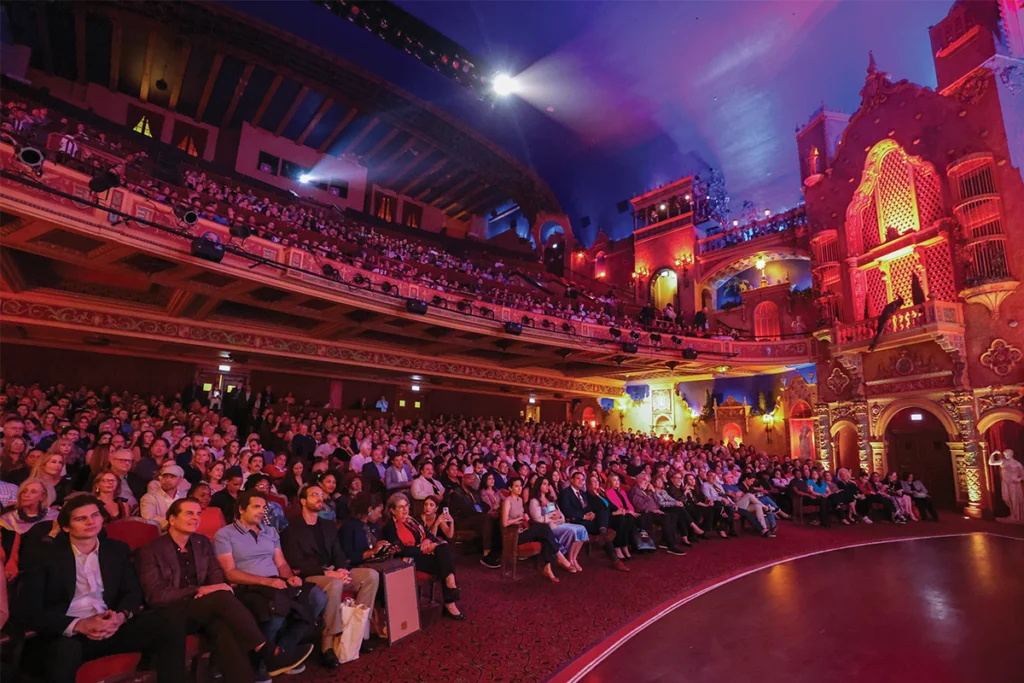
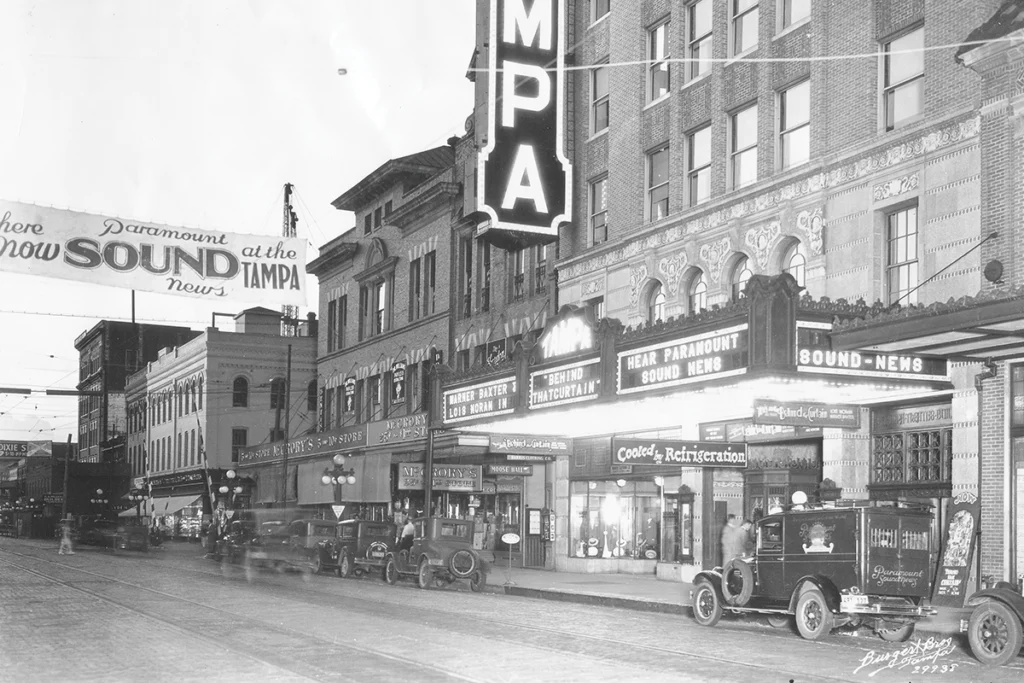
When a private equity firm bought their cherished Sun-Ray Cinema in 2024 and declined to renew the lease, millennials Tim Massett and Shana David-Massett weren’t about to let the curtains close on their arthouse dreams. The couple had 13 years invested in the historic venue, an Italian Renaissance Revival building in Jacksonville’s Five Points neighborhood that opened in 1927 as the Riverside Theatre, a vintage bijou with a unique status in the evolution of the cinematic medium. It was the first theater in Florida to premiere the “talkie,” a radical breakthrough that introduced dialogue and sound to the formerly silent movies.
A century later, technological innovations keep on coming: smartphones, social media, streaming, artificial intelligence. All these are remaking the way we watch films, just as the arrival of synchronized sound marked the end of one era and the beginning of a new one. Unlike past disruptions, these pose real, existential threats to the traditional theatrical experience. But never fear: Across Florida, there’s a lot going on in the dark as arthouse venues and those who run them fight to keep the spirit alive—including the Massetts and Sun-Ray Cinema.
We have free coffee and water. Like you might get at a busted church.
-Tim Massett
The Massetts had long been searching for a new space. As one screen went dark, several more lit up as the couple took out a lease on a failed multiplex at a Tampa shopping mall marked for redevelopment. They had lost a classic movie palace but now had a 57,000-square-foot blank slate to create new experiences. To celebrate the occasion, the Sun-Ray went back to cinema’s origins with a screening of F.W. Murnau’s silent classic from 1922, the German Expressionist vampire opus “Nosferatu.” The lute player Jozef van Wissem, a collaborator with filmmaker Jim Jarmusch, performed the soundtrack live.
The symbolism couldn’t be missed: Old-fashioned moviegoing wasn’t dead yet.
Catch the next film festival near you.
Sun-Ray’s journey is a lesson in perseverance, ingenuity and calculated risk-taking. “It’s a slog to turn around a place that people just abandoned,” Tim Massett says. “You’re growing the customer base one person at a time. That first year was not pretty.” Nonetheless, business has steadily grown as the complex became a mecca for the kind of Central Florida film buffs who log pithy reviews on Letterboxd after every show. The interior, once resembling a sports bar with multiple TV screens, was redesigned as a circus-hued version of “Pee-wee’s Playhouse,” equipped with pinball machines and a funky photo booth. “We have Chairry over there,” Massett says, pointing out a replica of the talking chair from the iconic kids’ TV show of the 1980s—and a popular spot for selfies. The theater’s box office relies on first-run Hollywood blockbusters to fill the 600-plus total seats across its eight active screens. But Sun-Ray still pays mind to showcasing independent features, documentaries and foreign films, which can also be projected on 16-, 35- and 70-mm film. Sun-Ray’s true metier, however, is its specialty programs and themed screening series. Guest filmmakers like John Waters (“Polyester”) and Kevin Smith (“Jay and Silent Bob Strike Back”) have flown into town to provide commentary on their own movies as they screen. Musical artists like the California-based experimental trio Xiu Xiu perform unique soundtracks to cult-favorite films like David Lynch’s “Eraserhead.” And then there’s the real outside-the-box stuff like Cinemass, with Sunday morning presentations of demanding titles like Béla Tarr’s eight-hour (with intermission) “Sátántangó,” a rite of passage for the most devout cinephiles.
“We have free coffee and water,” Massett says, “like you might get at a busted church.”
Not everything is for everyone, but the Massetts have keyed in on the idea of having something for anyone, across opposite sides of a generational and digital divide. “We’re doing our complete [Stanley] Kubrick retrospective, and it’s interesting to see how young some of the people are,” Massett says. “Older people say, ‘I want to see this movie in a format I saw when I was a kid,’ and kids are saying, ‘I want to see this movie in a format I never could before.’”
A ‘Third Space’
The film industry is facing challenging times and transitions, but the Massetts continue to engage audiences, cultivating adventurous tastes while delivering a good time at the movies.
They’re not alone. Sun-Ray is the newcomer to a Tampa Bay market that also includes the classic Tampa Theatre, a historic 1926 showplace run by a nonprofit, and the single-screen Green Light Cinema in St. Petersburg. Statewide, audiences can find independent theaters from Pensacola to Miami Beach. In some cases, the venues act as community cultural hubs. Independent theater gross revenue has been up 38% since 2019 (the year before the pandemic crushed the box office), according to a survey released this summer by Art House Convergence, reported in Variety. The survey also showed a surge in younger audiences under 45.
Older people say, ‘I want to see this movie in a format I saw when I was a kid,’ and kids are saying, ‘I want to see this movie in a format I never could before.’
-Tim Massett
Among these kindred spirits are Kevin Cole, 44, and Madeline Drew Giovannelli, 36, co-owners of Cap City Video Lounge in Tallahassee. The couple moved their popular movie rental shop/clubhouse/theater this summer to an expanded site near the Florida State University campus. They more than doubled the size of the screening room to 65 seats, upgraded the digital projection and plan to add more first-run movies from cool-kid independent distributors like Vinegar Syndrome, Yellow Veil Pictures and Oscilloscope to its ongoing repertory and midnight movie selections. Those screenings piggyback on a flourishing demand for physical media in an inflationary economy and a desire for cultural agency that streaming limits.
Find your third space at one of these Florida theaters.
“The price-gouging at the Googleplexes, they’re shooting themselves in the foot with [prices] so freaking high,” says Cole, a genre cinema enthusiast who founded the store in 2016, stocking its shelves with his own DVD collection—a natural progression from his work with the city’s Trash Cinema Collective, which continues to run events at a local oyster shack. “Something we pride ourselves on at Cap City is keeping our prices reasonable. That’s why I think there’s been this massive resurgence recently in micro-cinemas and video rentals.”
What Cap City offers its patrons goes beyond entertainment. “It’s a hot term right now, but it keeps coming up in all these conversations—it’s this want for a ‘third space,’” Giovannelli says. “A space that is not home, not work and that you don’t feel obligated to pay something to take up that space. So many of us who are struggling right now really don’t have the privilege of entertainment. We can’t afford socialization. I think that’s part of it too, the need to have anything outside of work and home, and the cinema is the place to have it right now.”

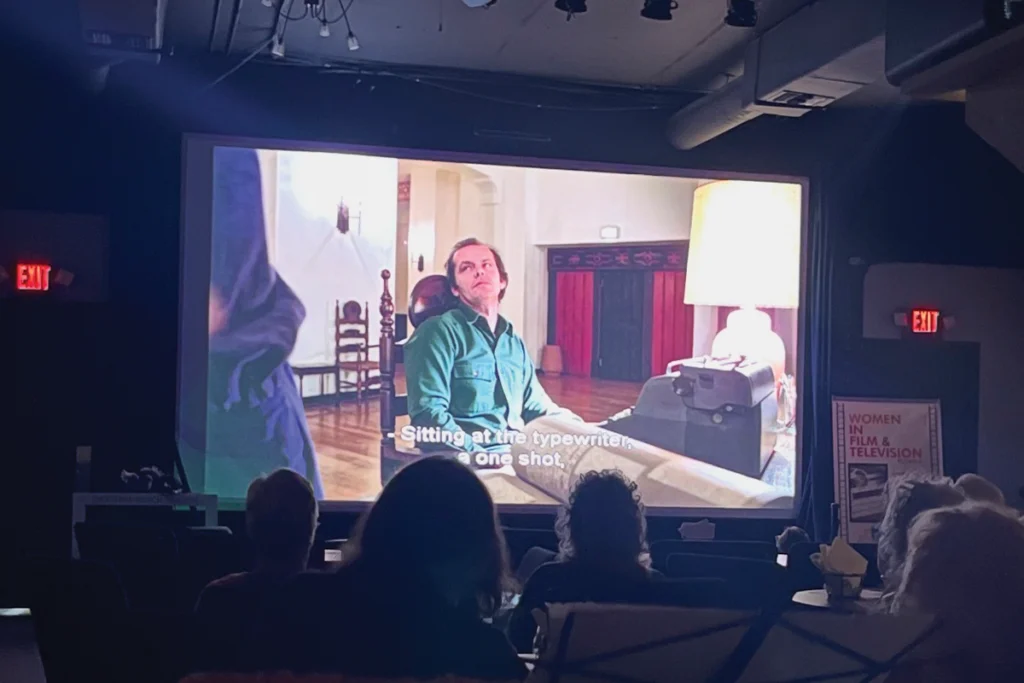
Challenger Learning Center of Tallahassee, situated downtown, has stepped up in similar fashion by offering its five-story IMAX screen to the Tallahassee Film Society for its weekend shows after a 2024 tornado wrecked the nonprofit’s previous space. CLC, an outreach facility under the wing of the FAMU-FSU College of Engineering, primarily programs educational films and Hollywood blockbusters made for IMAX’s maximized format. But since Alan Hanstein, 59, took over as director in 2022, the CLC has expanded its offerings. The venue hosts the annual Tallahassee Film Festival (full disclosure: I’m the artistic director) and the Tallahassee Filmmakers collective, as well as frequent one-off film events. The scale of its screen can render even non-IMAX projections into an emotionally powerful experience. The CLC showed the Academy Award-nominated “Nickel Boys” at a screening organized by FAMU, which filmmaker RaMell Ross attended while touring the film. “At the Q&A, he was in tears talking about how he saw things in the film he’d never seen before,” Hanstein says. When Alfred Hitchcock’s “Rear Window” showed as part of the venue’s own “Arthouse at the IMAX” series, Hanstein notes with pride, the apartment complex where a voyeuristic Jimmy Stewart witnesses a neighbor’s murder was presented in actual size.
Viable, But Not Easy
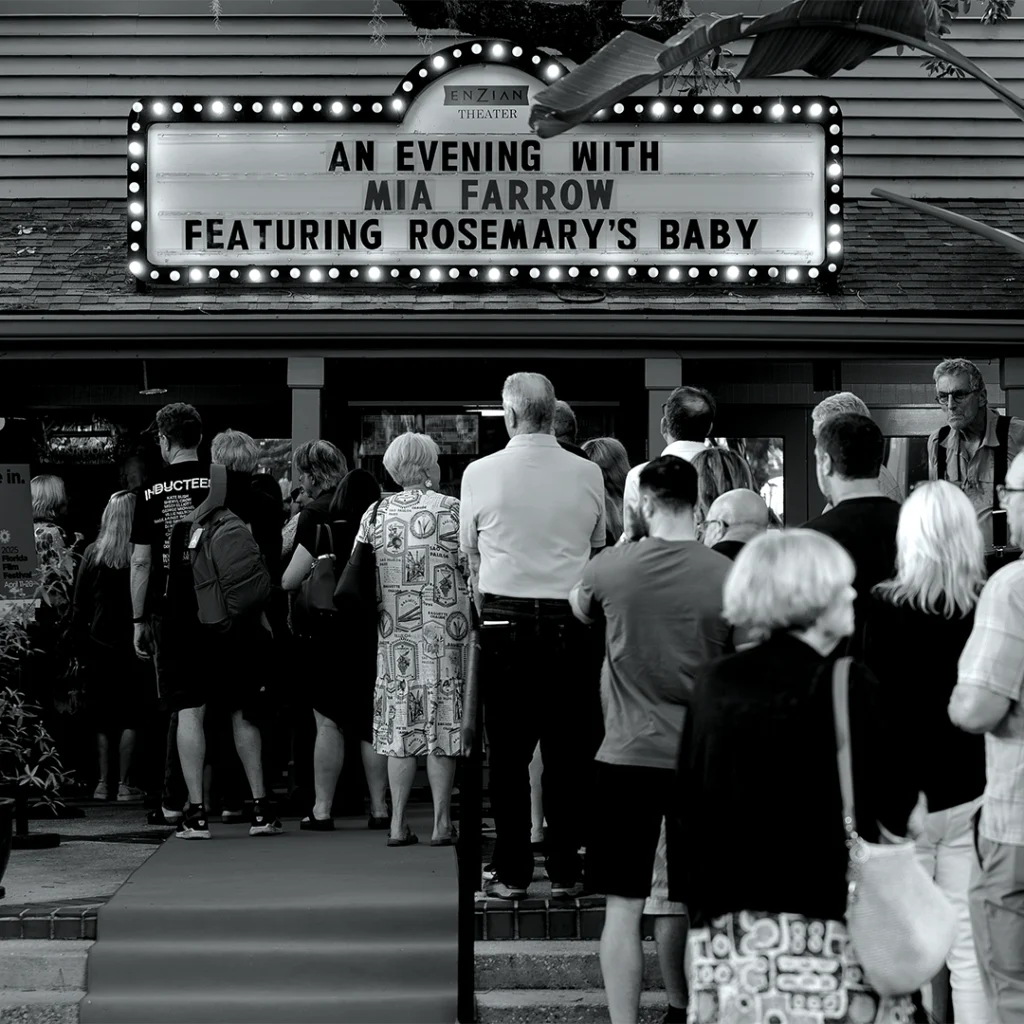
Clearly, not all venues have such an advantage, but the idea is to give audiences something bespoke despite all the challenges. “We are a single-screen arthouse that’s been around for 41 years, basically a miracle in itself,” says Matthew Curtis, 69, programming director for Maitland’s Enzian Theater, a nonprofit venue that hosts the annual Florida Film Festival each April. “Special programming has become the lifeblood of this theater,” says Curtis. Enzian recently upgraded its 35-mm projection system and can also screen 70 mm. “With new projectors, all of the studio libraries will be open to us,” he says. “We’ve been operating with a very limited pool of films all these years for cult classics.” The nonprofit has more than 1,700 members who are eager to consume Enzian’s programming. The arthouse regularly offers virtual and in-person Q&As with filmmakers, along with film series such as “Music Mondays” and “Peanut Butter Matinees” featuring family films. Enzian has also hosted events organized by the popular “Uncomfortable Brunch” film series founded by Josh Martin. Curtis characterizes the movies screened at the Sunday late-morning events as “things you would not usually see on Sunday mornings while you’re eating your French toast.”
“Enzian has a very loyal audience that is very adventurous,” says filmmaker Xander Robin, 36, whose wildly Florida-centric documentary “The Python Hunt” has drawn full houses at festivals and arthouses across his native state. “It’s hard, but it’s viable. The theaters need help themselves. They’re taking a risk on every film they’re showing. You have to convince them that there’s an audience you’re bringing.”
Cultivating that audience is about more than simply what’s on screen. It’s a social contract. “There’s a need for small, indie theaters like ours,” says Brenda Moe, executive director and programming director of the Coral Gables Art Cinema, a 141-seat nonprofit theater owned by the City of Coral Gables that has run since 2010. “What we are seeing is that people want to come to the movies … that large format, that immersive sound, sharing that experience with a community can’t be replaced. People don’t want isolation. They want togetherness.”
The theater, which has 2,500 members, is breaking ground on a second screen next door, coming off a successful 2025 that saw a 20% boost in box office. “Build what your audience wants, and you’ll have an audience,” Moe says. That audience includes an affluent “early retiree-aged” demographic that loves a night out at the movies with dinner and drinks. The venue’s 50th anniversary “Rocky Horror Picture Show” shadowcast screenings drew a younger crowd. “That demographic is so vast,” Moe says. “It’s so fun to see people in their 70s who have been doing this for 40 years and then having the really young audiences who are maybe doing this for the first time.”
A key driver in their success is giving patrons a sense of ownership. That could be letting the venue’s social media followers pick out a movie from a small selection or emphasizing one-to-one relationships with its members. As Moe explains, “We’re building a home that people know they will be comfortable in.”
Sun-Ray’s Shana David-Massett gets to the point.
“You’re not paying more for us to give a shit,” she says. “It’s some of the same movies, but we make sure they look and sound the way they’re supposed to, and the food is going to get to you hot and fresh. It has to be right. We don’t have the margin for error that these other operators have. The ecosystem for cinema exhibition is still alive. It looks a little different than it used to. But the ecosystem is here. We can choose what we put in and what we take out … I’m not bragging. We can’t afford not to.”
For more on Florida film, click here.
About the Author
Steve, a Tallahassee native and Flamingo contributor since 2017, has written about film, music, art and other popular culture for publications including The Wall Street Journal, The Washington Post, the Atlanta-Journal Constitution, GQ, and The Los Angeles Times. He is the artistic director for the Tallahassee Film Festival and writes a monthly film newsletter for Flamingo, Dollar Matinee.