by | July 3, 2026
St. Martin: Where French and Dutch Cultures Fuse
On St. Martin, French bakeries, Dutch harbors and Caribbean barbecues make a strong case for staying put.
As we parked under the banyan trees, a troop of nearby monkeys watched from the ledge of a wall built with field stones. Most of the creatures were munching on unripe mangoes, looking both cute and unnerving in the way only wild animals can.
The internet promised a trailhead would begin here, on a farm on the western coast of the Caribbean island of St. Martin. But “farm” doesn’t even begin to capture what my wife, Jill, and I encountered when we arrived. A restaurant was perched in the trees, zip lines stretched across the jungle and loungers and beds surrounded the pool where the evening’s party was planned. Up ahead, we saw our destination: the tallest point on the island, Pic Paradis, looming at a 1,391-foot elevation like a bright green skyscraper into the cobalt sky.
The trail to Pic Paradis ascends quickly, nothing more at some points than piles of rock that we scrambled over using both hands and feet. We hadn’t gone far when we heard a cacophonous rustling high in the trees. Something big, maybe—more than just a person making a racket. The monkeys, perhaps, giving us a warning. I’ve done my fair share of hiking, and over the years I’ve come across bears and gators and was even charged by a full-grown buck in the Everglades. But what are you supposed to do when approached by Caribbean monkeys? I clapped to announce our presence, and we ascended further into the unknown.
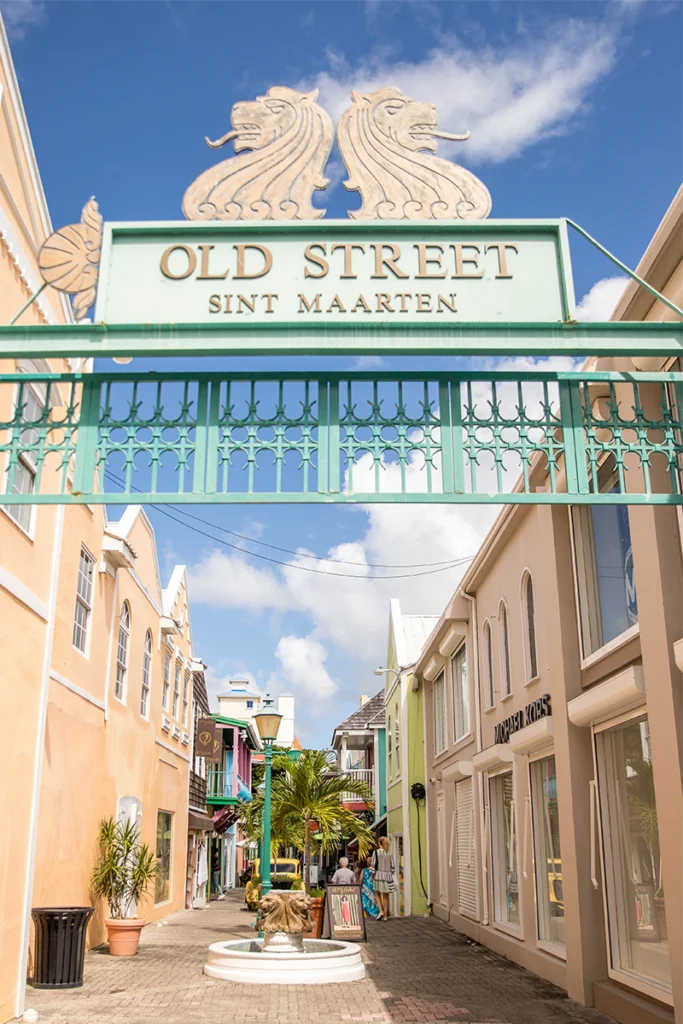
I suppose it’s always like that when we travel, that first mysterious step into something that’s new. For this trip, my wife and I came to St. Martin to decide for ourselves if this island in the Lesser Antilles is a destination of its own. It had been a stopover for many travelers in the past—the glamour of St. Bart’s just a ferry ride away, and the beaches of Anguilla easy to spot across the bay.
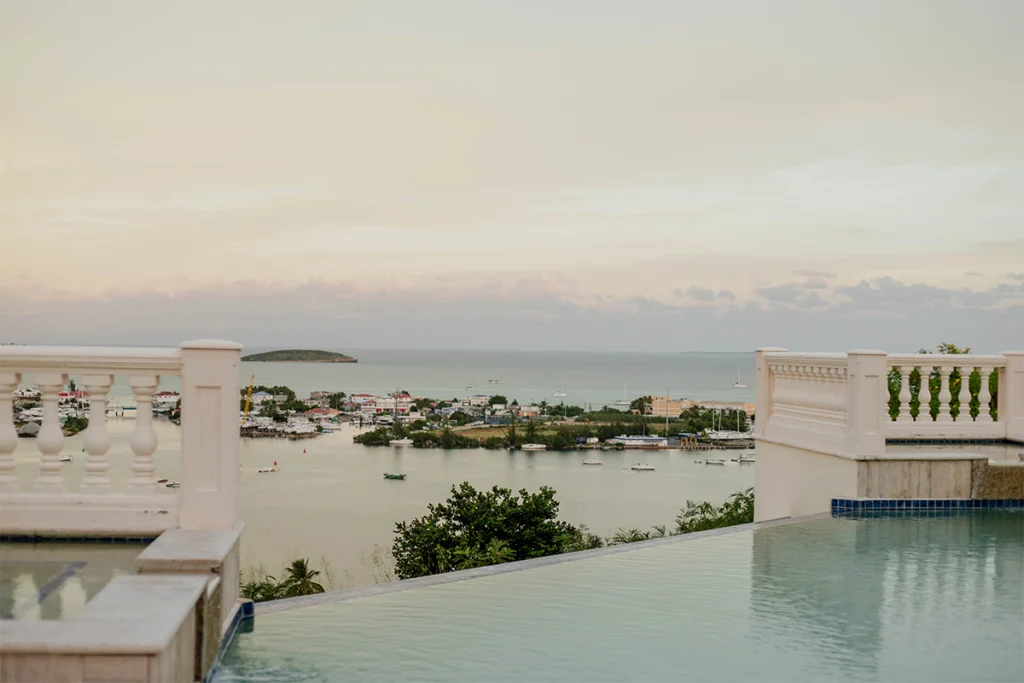
These days the volcanic Caribbean island bills itself as the main-event destination. In English, the island is known as St. Martin, but it’s split down the belly between French Saint-Martin and Dutch Sint Maarten. It’s the world’s smallest land mass shared by two countries. On an island not much bigger than Manhattan, two distinct European cultures meld with the locals, most of whom descended from Africans and the island’s Indigenous peoples. It’s a mix perhaps found nowhere else in the world.
French, Dutch and Entirely Its Own
The day before our hike up Pic Paradis, we arrived on a brilliantly sunny Monday. Flying in over the beach, our 737’s exhaust blasted tourists crowding below us, one of the odd signatures of this island. It reminded us of those viral videos of people standing so close below landing jets that it looks like they could reach up and touch the fuselage. After we rented a tiny Hyundai, we set out for the French capital of Marigot, a jumble of squat cinder block buildings adorned here and there with gingerbread trim and painted in the colors of sherbet. Narrow streets opened up to a harbor, with market stalls along the water. We grabbed pizza slabs with crunchy Asiago-cheese-covered crusts at a French bakery.
It’s a mix perhaps found nowhere else in the world.
-Eric Barton
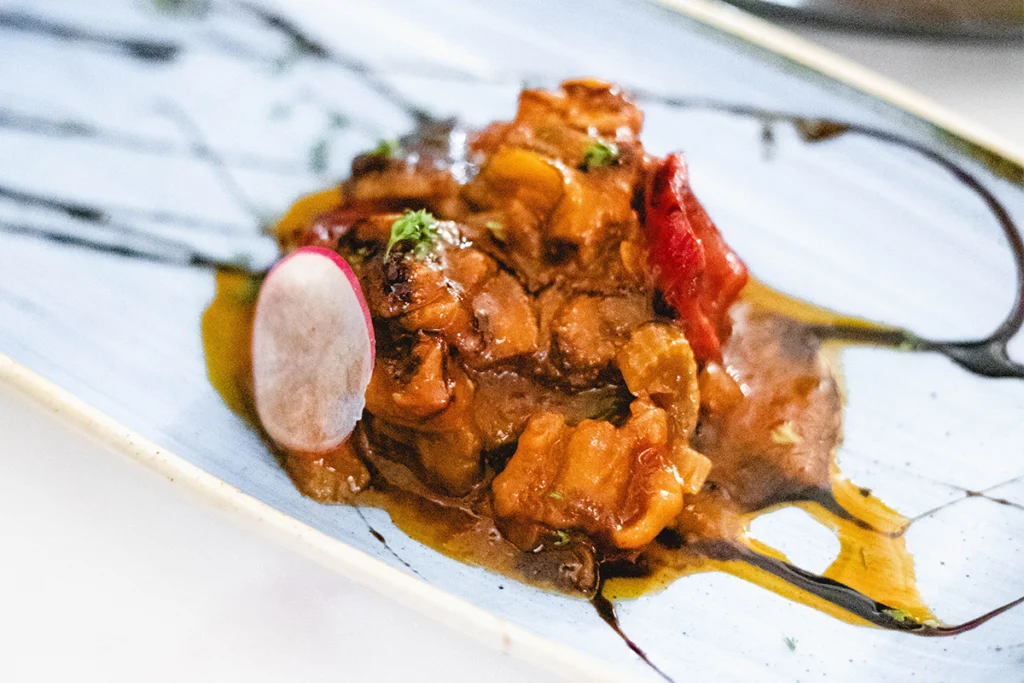
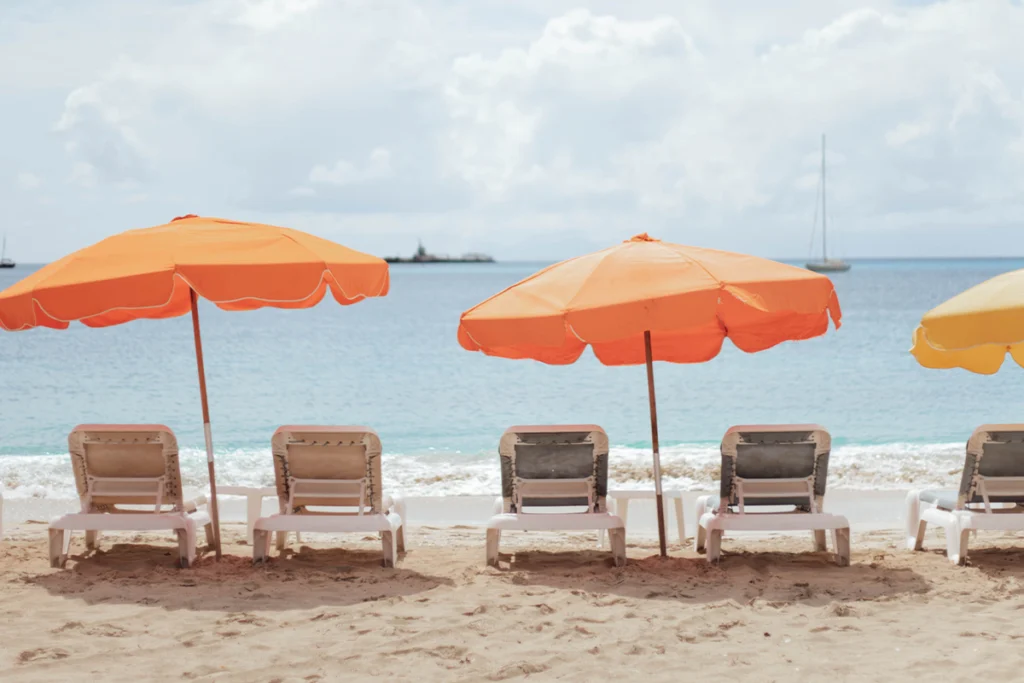
We drove below the remnants of the old fort that stands guard over Marigot and took the congested ring road to the JW Marriott, crossing from the French to the Dutch side. The JW is a gleaming white-on-white resort that opened two years ago, with a big double pool surrounded by palms. It opens up to a small beach. While we were there, the ocean pounded the shoreline, waves coming straight from Africa, a constant wind cooling things off. That night we ate steaks at the JW’s fine dining spot, Liguria, where we plotted the next morning’s attack of the mountain, not considering what creatures we might encounter.
We made it to the top of Pic Paradis in just over an hour and a half, unscathed by whatever rustled loudly in the jungle. The thumping tweets of a yellow-chested bananaquit punctuated our journey with what sounded like an ancient Morse code. At the top, we were rewarded with sweeping views. Whatever we heard in the trees never showed itself, just another rustle on an island that prefers a little mystery. Below, bleached homes clutched the foothills, overlooking an amber brackish harbor, and the water beyond extended in every shade of blue.
After a quick 30-minute trek back down, our monkey warning system had disappeared, and we got back to the car. For lunch, we stopped at Lolo’s in the French village of Grand Case. A couple dozen racks of spareribs browning on grills wafted pork-scented smoke into the air, but I splurged on lobster, negotiating the price with the chef. We settled on $45 for a half. She ran a knife down the center before cooking it shell-side-down with ample brushes of butter. It arrived with rice and beans, coleslaw and a creamy butter sauce for dipping.
Magic & Charm
The next morning, we played a quick game of pickleball on a court painted on the top of the JW’s parking garage before heading to the Dutch capital of Philipsburg. We went to the harbor and boarded a converted speedboat for a 15-minute trip along the coast to a marine park called Under SXM, where its organizers recently installed 300 concrete statues. As we floated above, the statues revealed themselves through the silty water below, angelic and ethereal, warriors clutching spears and natives blowing conch shells, as turtles and unknown fishes swam among them.
Afterward, we wound our way on foot through Philipsburg, the largest city on the Dutch side of the island, overrun as it is these days with T-shirt and jewelry shops for the cruise ship passengers who disembark nearby. We find a food shack on the edge of the city called Cindy’s Roti, where we eat buss up shut, a roti stuffed with vegetable and chicken curry.
That afternoon, we took a cocktail-making class at the JW, which uses a large space near the lobby to teach people how to make drinks and, on some days, Caribbean dishes. We made three concoctions in quick succession, taking sips from each as we went and leaving with one when the class was over. As Jill and I finished our cocktails in the lobby, a big group of Canadian tractor salesmen got ready to go to dinner.
We headed out too, driving just down the hill and around the harbor to Big Fish, a chic indoor space where Chef Leslie Martina mixes island spice with Asian ingredients into pretty dishes defined by the deeply flavorful sauces, like my red snapper in a lemongrass coconut curry.
Jill and I played one final pickleball game on the roof before we were set to leave the next morning. The sun rose across the sea as we headed toward the courts. A yoga class stretched out by the pool, and the smell of bacon drifted from the houses that hugged the cliffside above. A few raindrops fell from miniature gray clouds as they passed over us.
There will always be people who view St. Martin as a stopover to somewhere else. Then there are those, like us, who discover its charm. By the time we left, the island felt less like a waypoint and more like that first stretch of trail beneath the banyan trees—alive with movement, a little mysterious and impossible to understand from a distance. The only way to know St. Martin, it turns out, is to step in and let it unfold.
For more travel just a Stone’s Throw away from Florida, click here.
About the Author
Eric has been a journalist in Florida for two decades, including stints at newspapers in Fort Pierce, Stuart and Sarasota. His role at Flamingo includes everything from interviewing chefs to first-line editing on cover stories and penning our monthly culinary newsletter, Key Lime.