This Famed Artist Found Refuge on a Tiny Island in Florida
Robert Rauschenberg was guided by the stars to make Captiva Island his home.
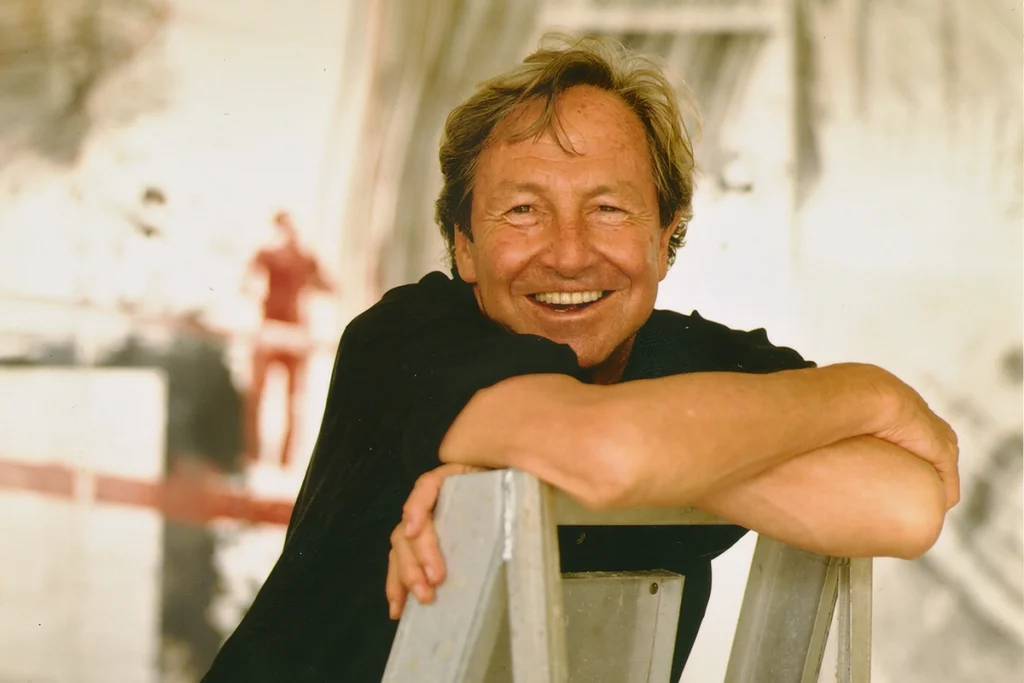
More than any of his legendary contemporaries, Robert Rauschenberg was a creative force who aspired to be everything, everywhere, all at once—painter, collagist, sculptor, photographer, print maker and avant-garde dance performer. “In the matter of influence, he is ranked with Duchamp and Pollock,” art critic Calvin Tomkins wrote in a New Yorker profile on the artist. “The open-ended attitude toward collage materials, photographs, reproductions of other art, performance activities and various aspects of popular culture has been so thoroughly assimilated by younger artists … that some of them might not even realize they’re quoting Rauschenberg.”
He was looking for a remote place that could be an escape.
-Jade Dellinger
Rauschenberg notably claimed South Florida as his home, making famous Captiva Island—an obscure speck of land off the coast of Fort Myers between Pine Island Sound and the Gulf of Mexico. Rauschenberg lived on the barrier island from 1970 until his death in 2008.
Throughout those decades, Rauschenberg became as symbolic of the state as alligators and oranges, and in some ways, he was just as ubiquitous. You could come across his work in the least expected places. During my college days, I stumbled on a poster-sized assemblage by Rauschenberg hung in an inauspicious corner along the back wall at a Black-owned roadhouse on the outskirts of Tallahassee called Smitty’s—there to be appreciated by anyone in the know. Around that time, Rauschenberg collaborated with the Talking Heads to create a limited-edition run of the band’s 1983 album “Speaking in Tongues,” which came packaged with multiple transparent plastic discs that created a kaleidoscopic collage when overlaid on top of the spinning vinyl. They originally sold for $12.98; faded copies can be found online for less than $100.
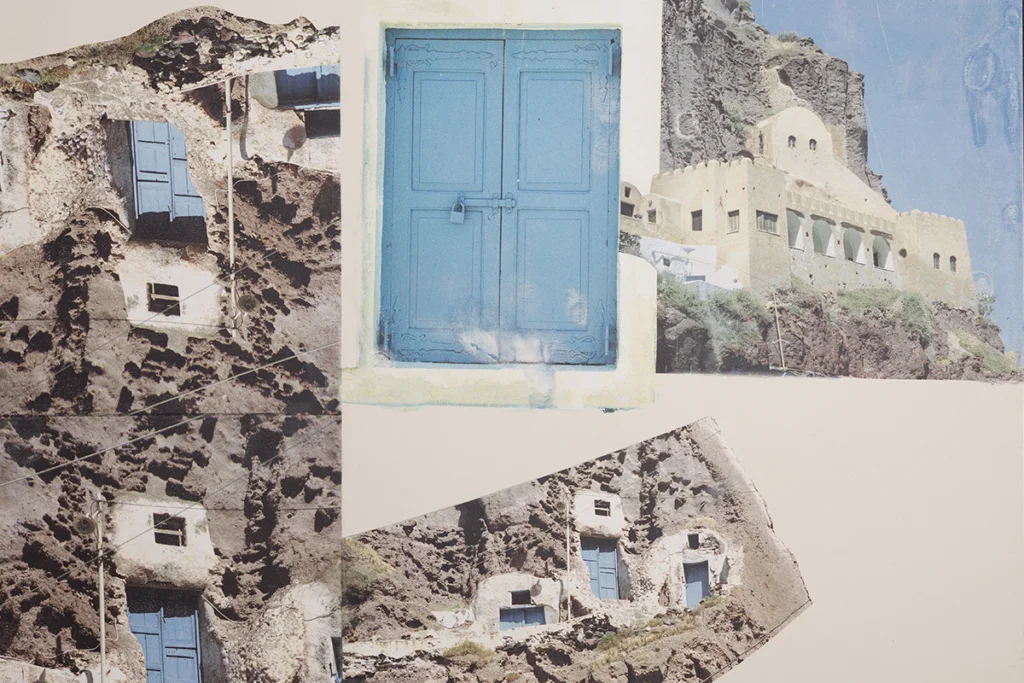
Florida hasn’t forgotten one of its most revered adoptive sons. Born on Oct. 22, 1925, Rauschenberg is being celebrated in a year-long centennial across the state. Art institutions throughout Florida are marking the occasion with exhibitions in various cities this summer.
“He would always joke that he would say, ‘I had to go through hell to move to Florida,’” says Jade Dellinger, director of exhibitions and collections at Florida SouthWestern State College in Fort Myers, where he heads the Bob Rauschenberg Gallery, which has enjoyed a long and fruitful relationship with its namesake that began over four decades ago. The gallery hosts an expansive exhibition, “Rauschenberg at 100: As Large as the World Is,” through Aug. 1.
Highway To Hell
One of the artist’s first excursions to the Sunshine State was in 1960. Rauschenberg had taken up the task of illustrating Dante’s “Inferno,” and while driving south off U.S. 19, he came across a fisherman’s wharf on Treasure Island, a dilapidated structure about to be torn down. Instead, the artist rented it cheaply. He spent the next few months at work on the drawings, one for each of the 34 cantos in the story, employing images of contemporary figures transferred from images on the pages of magazines like Sports Illustrated. They’re now part of the Museum of Modern Art’s permanent collection.
About a decade later, Rauschenberg bought his first home on Captiva Island, a 1.64-square-mile dot in the Gulf of Mexico, located 31 miles west of downtown Fort Myers. Rauschenberg was born in Port Arthur, Texas—the same hometown as Janis Joplin—and grew up by the Gulf. That he’d find his eventual home somewhere near those waters made sense, but required a decades-long odyssey to get there.
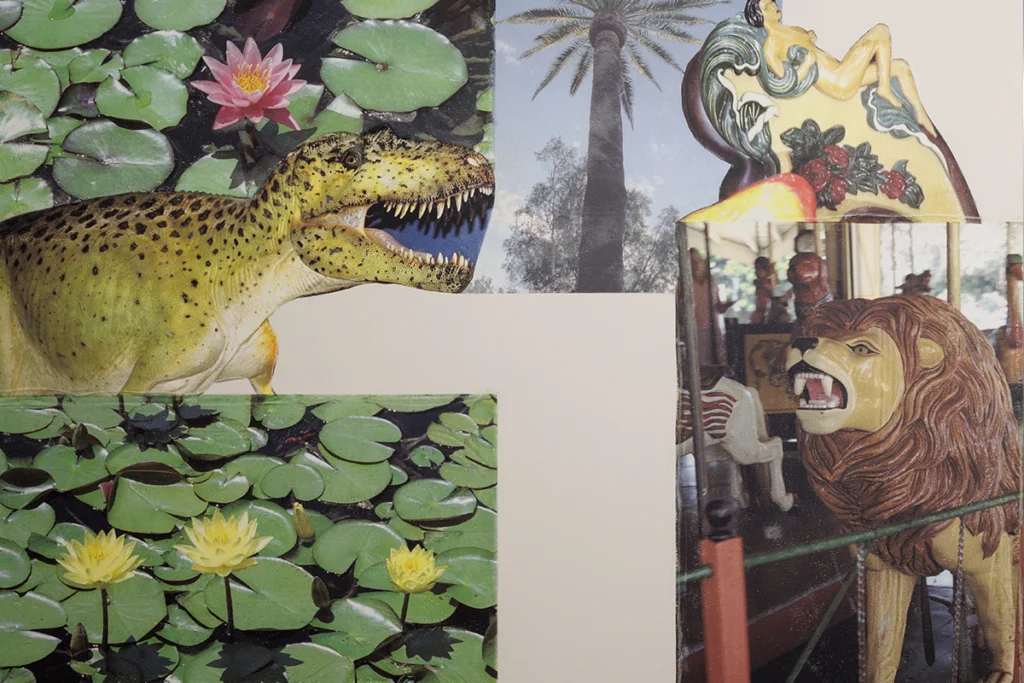
In New York, his career boomed after he won the grand prize at the 1964 Venice Biennale, the youngest artist (at 38) and first American to do so. But success had its price. “He was under a lot of pressure,” Dellinger says. Rauschenberg found deliverance in the form of a white Jaguar that he allegedly traded one of his paintings for. As Dellinger recounts, the artist’s road trips were mapped by a celestial guide. Zoltan Mason, the so-called “astrologer to the stars,” advised him to avoid the mountains and head for the coast, preferably the beach. “So Bob would take his Jaguar, and he would hit every stop on the way south,” the curator says. “He was looking for a remote place that could be an escape, that could be his home. Captiva could not have been more remote. You had to take a ferry to get to the island.”
Rauschenberg eventually owned 35 acres on the island, creating a compound adjacent to a lush tropical forest that the artist purchased to spare from commercial development. The site became a popular getaway for many of Rauschenberg’s contemporaries and admirers, including Merce Cunningham, Trisha Brown, David Byrne, William Wegman, Robert Mapplethorpe and Sharon Stone. The island’s South Seas resort has purchased 22 acres of that property, including the artist’s 8,000 square-foot studio, for $45 million. The Rauschenberg Foundation has cited hurricane damage and the cost of upkeep as key factors, while the Captiva Civic Association condemned the sale as “a grievous betrayal.” The island’s Rauschenberg Residency program will close in August, after hosting more than 500 artists since 2012.
The artist found great inspiration there. “I felt a magic that was unexplainable in its power,” Rauschenberg said. Working at such a seemingly removed locale, he made a global impact, a contrast that inspired the title of Dellinger’s exhibition: “He said, ‘Fort Myers is as small as your mind is, it can be just as large as the world is.’”
More Like Americana
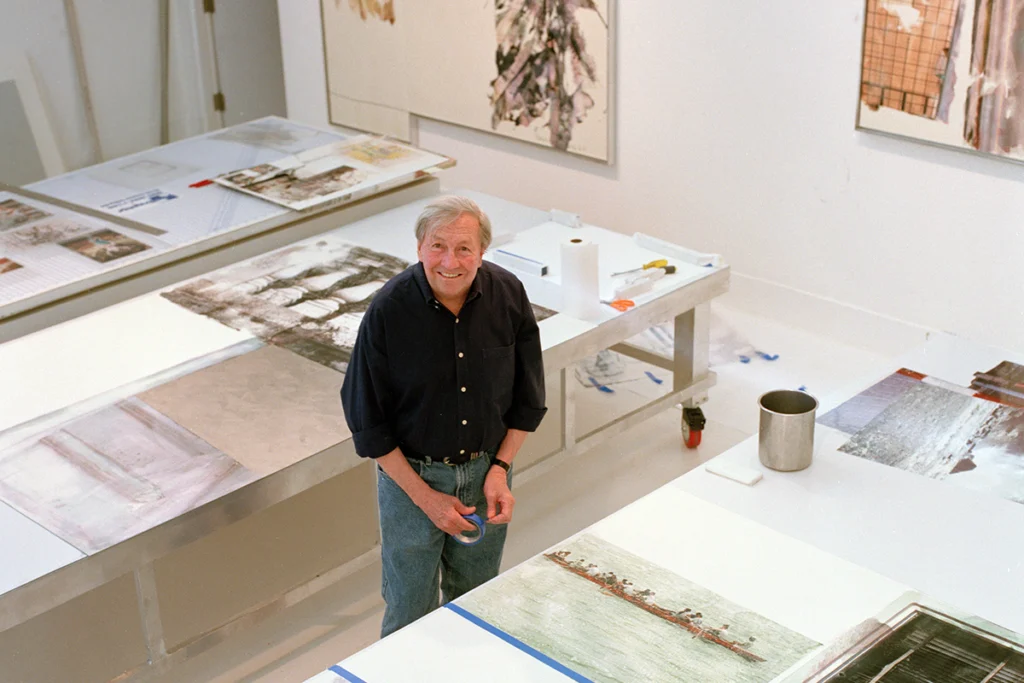
“Rauschenberg at 100” emphasizes the global reach of the artist’s practice, rooted in his profound connection to Southwest Florida, with almost all of the pieces never previously exhibited. “Most of the loans come from the collections of his most intimate circle of friends, but most continue to reside within a 5-or-10-mile radius of our gallery,” Dellinger says.
They include one of his most unusual works: the postage-stamp-sized contribution to a group effort called “Moon Museum,” a ceramic wafer that is said to have been secretly attached to the lunar module Intrepid, which landed on the moon during the Apollo 12 mission. Collaborators included Andy Warhol and Forrest “Frosty” Myers, the project’s mastermind. It’s the tiniest work Rauschenberg ever made. The exhibit also features one of the largest works, “Autobiography” (1968), at 16½-feet tall. The piece was one of the first fine art prints made using a billboard press—presented by the gallery as a triptych.
“It’s contemporary art, it’s historic art, but it’s also accessible, and in a funny way, it’s kind of Americana,” says Steve Keene, the Brooklyn-based artist whose factory-like production of more than 350,000 paintings over three decades has made him a New York legend and a favorite with indie-rock acts such as Pavement, the Silver Jews and the Apples in Stereo, among the many for which he has painted album covers. He sold his work for as little as $2, earning him praise from the likes of graphic designer Shepard Fairey, who hailed him as “a folk hero Warhol” in The New York Times. That’s more than enough to qualify Keene as a kindred spirit to Rauschenberg. “It feels like a news feed somehow. It’s art, but it’s also information,” Keene says.
Dellinger, who has worked with Keene since the 1990s and exhibited the artist in a 2018 tribute to Rauschenberg, invited him back to create 100 2-by-2-foot paintings to mark the centennial. “Steve Keene: Rauschenberg 100 – A Centennial Celebration” is now on display at Santa Fe College in Gainesville. The pieces draw on various sources, including scavenged images of Rauschenberg, his Captiva studio and some of his works like “Monogram”—a so-called “Combine” made between 1955 and 1959 consisting of a taxidermied Angora goat with its head thrust through a tire, which shocked the art world.
It’s contemporary art, it’s historic art, but it’s also accessible, and in a funny way, it’s kind of Americana.
-Steve Keene
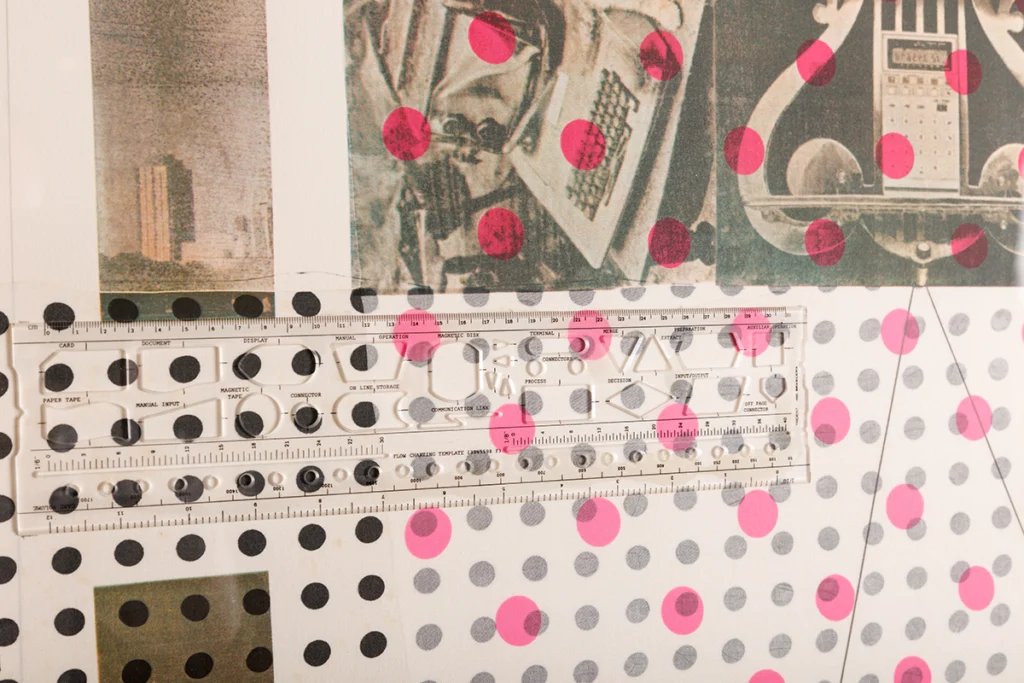
Asked to name an influential piece, Keene mentions “Booster” from 1967. “At the time, it was the largest lithograph ever made,” he says. The artwork features a life-sized skeletal version of Rauschenberg, created by laying end-to-end a series of X-rays of his own body. Rauschenberg covered the work with a screen-printed star chart made by the artist’s astrologer, completing his innovative self-portrait. “It’s like something carved in a memorial stone in a 14th-century cathedral.”Keene characterized Rauschenberg’s influence as inspiring freedom. “He doesn’t seem to judge himself very harshly,” Keene says.
Or as Rauschenberg once told critic Tomkins, “My career is unknown to me. Other people seem to understand it, but I’m not that interested. I think it’s sort of indecent to have things so worked out that they end up like you thought they should. You think I want to be what I am? You just have to expose yourself to more and see what the consequences are.”
For more on Florida’s art legacy, click here.
About the Author
Steve, a Tallahassee native and Flamingo contributor since 2017, has written about film, music, art and other popular culture for publications including The Wall Street Journal, The Washington Post, the Atlanta-Journal Constitution, GQ, and The Los Angeles Times. He is the artistic director for the Tallahassee Film Festival and writes a monthly film newsletter for Flamingo, Dollar Matinee.