by | July 28, 2026
I Came to Tallahassee a Stranger. I Left Calling It Home.
After arriving in the capital as a 12-year-old immigrant from India, Moni Basu navigated race, identity and belonging before finding home in the city she never expected to love.
In 2020, at the height of the pandemic, I bought a townhouse in Tallahassee, sight unseen.
At the time, I was teaching at the University of Florida in Gainesville and spotted the house on Zillow: two bedrooms, two bathrooms, a fireplace and a courtyard nestled under the shade of oversized crape myrtles. My friends called me crazy, and I admit the decision was impulsive—but it wasn’t entirely surprising.
Tallahassee was hardly unknown to me. It was where my family had landed nearly half a century earlier, when I was 12 years old, after years of moving across continents and cultures. It had once been a part of my life—long before I understood what it meant to belong.
In 1975, the Vietnam War ended, Steven Spielberg’s “Jaws” filled movie theaters and Bruce Springsteen released one of my favorite albums, “Born to Run.” That same year, my family boarded planes that carried us from Australia to the Fijian islands, then to Honolulu, San Francisco and eventually to Tallahassee.
My father, renowned in his field of statistical theory, had accepted a job at Florida State University to begin teaching in the fall quarter of 1975. My mother, brother and I did not know what to make of Baba’s choice. We had lived in a kaleidoscope of cities: Kolkata, India, where I was born; Beirut; Chicago; Albuquerque, N.M.; Manchester, England. And most recently, Perth, Australia, where we had moved a mere eight months before. Miami Beach was known the world over, but we had never heard of Tallahassee until the day my father pulled out an offer letter from his bag and informed us that we would soon be moving to Florida.
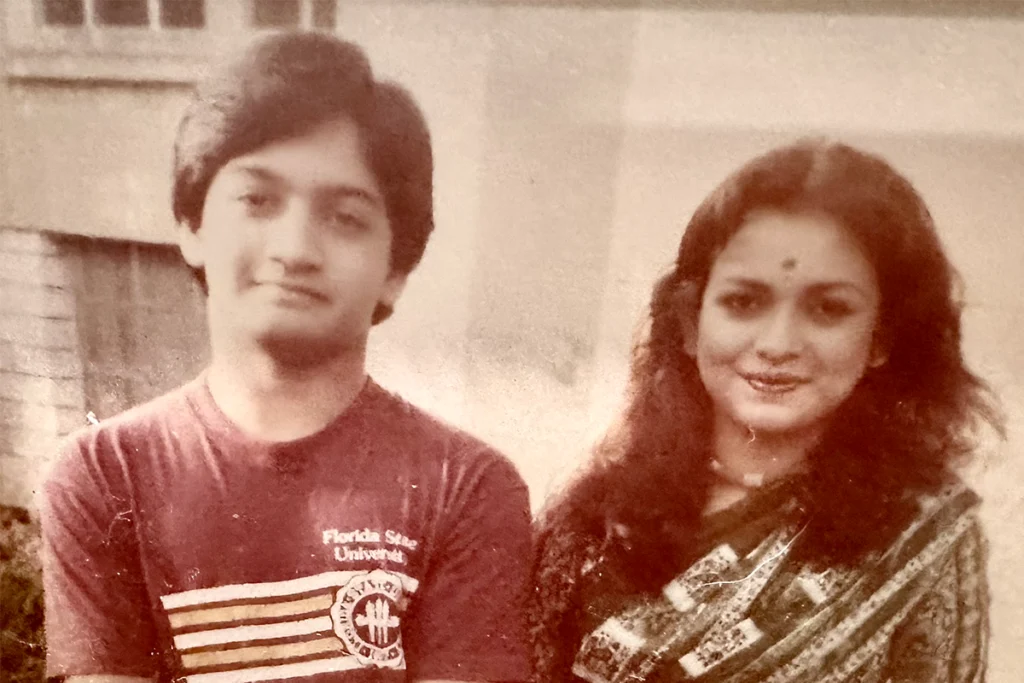
In the days before the internet, it wasn’t easy to learn about Florida’s capital from afar. But I was intrigued by its name—no one in my orbit knew anything about this place that we were about to embrace as home. A few trips to a Perth public library later, I discovered that Tallahassee was loosely translated from the Muscogee language as “old fields” or “old town.” In the years ahead, I would constantly be explaining or spelling that name to my friends in far-flung places.
I imagined Tallahassee looked like the Florida I’d seen in magazines and in the movies: the Sunshine State with its turquoise waters, swaying palm trees and manicured gardens brimming with birds of paradise and orange trees. I did not know then how loblolly pines and live oaks adorned the city’s streets and parks, silvery threads of Spanish moss hanging from branches. We would be within driving distance to Disney World and the white sand beaches of the Gulf of Mexico. I did not know then that the Georgia border lay a mere 18 miles north, and that our home-to-be bore the terrible scars of Jim Crow.
White, Black or Other
My father had chosen FSU for a couple of reasons. The statistics department, founded in 1959 under Ralph Bradley, had quickly climbed up the ladder of reputation and boasted well-known scholars on its faculty. It was where Jayaram Sethuraman, once a student of Baba’s at the Indian Statistical Institute, was teaching. He had been instrumental in making the arrangements for Baba’s hire. He leased us an apartment at a Tudor-style complex called Berkshire Manor and filled it with rented furniture.
On my first day at Amos P. Godby High School, I was asked: “Which one of your parents is Black?”
– Moni Basu
Sethuraman was waiting for us when our Eastern Airlines flight from Atlanta landed at the Tallahassee airport late one August night. I remember thinking I had never seen such an empty airport terminal before. A handful of people waited with us at the luggage carousel. We collected our bags—our entire lives packed into four suitcases—and stepped outside into a whoosh of sauna-like air. Sethuraman rushed us to a J.M. Fields department store to buy pillows and bedsheets and pots and pans. We must have stopped at a Publix or Winn-Dixie to buy groceries, though neither he nor I have any memories of that.
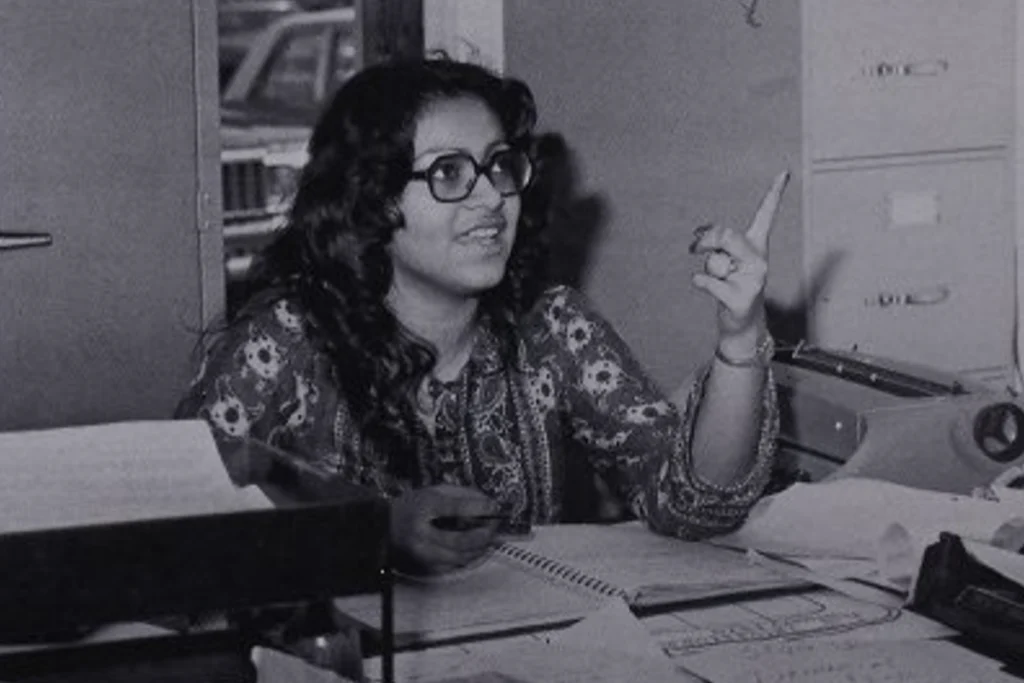
The next morning, when the sun blinded us through our curtainless windows, we began our new lives in Florida. I would take stock of that time only years later, long after the life I knew there ended abruptly with my mother’s illness, and long after I fled Florida in pursuit of a job. We had started anew as strangers in a strange land, only a decade after two landmark laws had reshaped America: the Civil Rights Act of 1964, which outlawed segregation, and the Immigration and Nationality Act of 1965, which vastly changed immigration laws and allowed greater numbers of Indians, like ourselves, to move to this country.
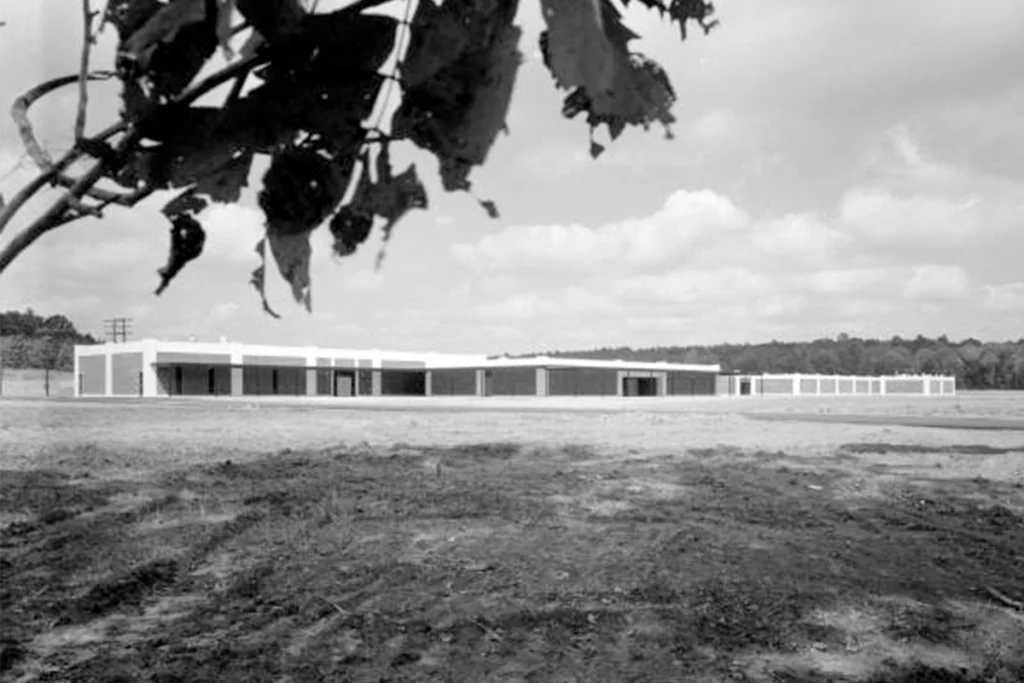
Tallahassee had yet to feel the full impact of the latter. Of the roughly 75,000 people who lived in the city at the time, three-quarters were white, one quarter were Black and only a handful were brown. While large numbers of South Asians had settled in America’s metropolitan areas, they were still a rare breed in smaller cities and towns. My family’s arrival increased their numbers exponentially in Tallahassee.
Back then, it was impossible to lunch at buffets offering all-you-can-eat tandoori chicken and chana masala. No grocery stores stocked garam masala, cumin or cilantro. No Bollywood cinemas played in theaters or on television. No shops sold sarees, and my mother, like other Indian women, frequented Hancock Fabrics to buy six yards of nylon, chiffon or georgette to make do. One of our early purchases was an electric sewing machine at the downtown Montgomery Ward’s so that Ma could turn cloth into wearable art.
It’s hard to imagine these days how isolated we were before the internet—before smartphones and WhatsApp and FaceTime suddenly shrank our world and made it feel like my loved ones were next door when they were nearly 9,000 miles away. We had little contact with our family and friends in India; a three-minute phone call could easily cost more than $300 in today’s dollars. Even a call to relatives scattered across the United States felt astronomical. Instead, we wrote letters home on pale blue foldable aerogrammes that took a month to reach their recipients. My mother forced me to write in Bengali to my aunts and cousins so that I would not forget our mother tongue.
School was the hardest. I was entering my teen years and I was desperate to find my groove.
But on my first day at Amos P. Godby High School, I was asked: “Which one of your parents is Black?”
“Neither,” I replied.
I could not foresee how devastating that answer would be. In that moment, I was hurled outside the circle and directly into a box of my own.
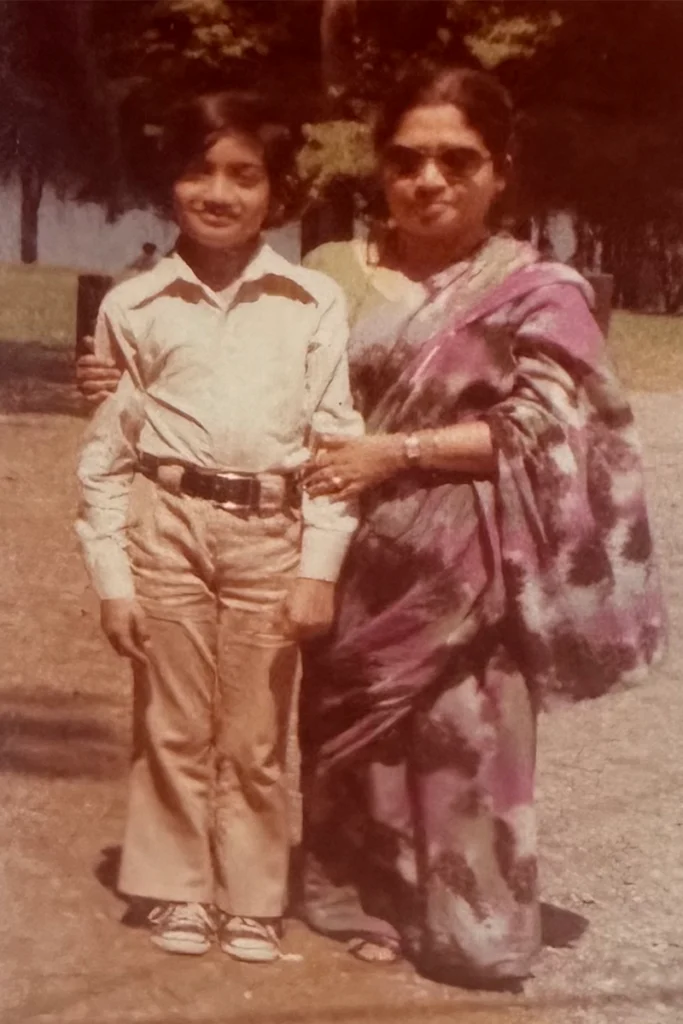
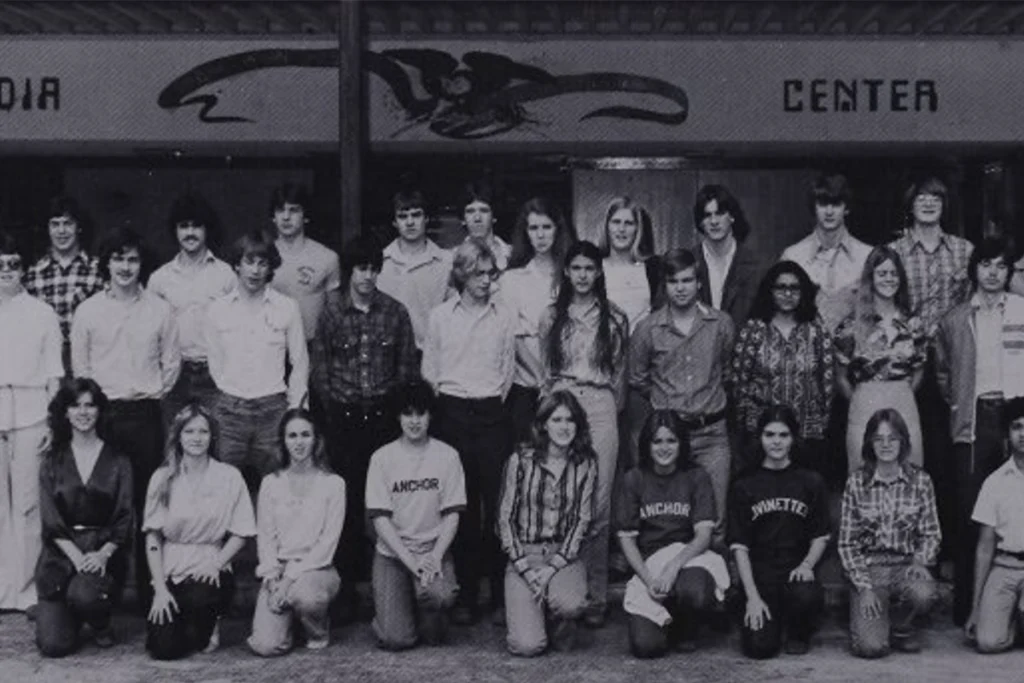
From then on, I did not belong. I was the only Indian kid in my class of around 400 students. No one could pronounce my full name, Monimala. My teachers and classmates called me Molly in my freshman year. When my brother, Shantanu, made it to high school two years later, the social studies teacher renamed him Bob, much to his consternation.
My mother drew hard stares when she came to fetch me at school wearing a saree. I ordered her to not get out of the car. I wanted her to be like my friends’ cool moms who wore smart dresses and heels and painted their lips the color of raspberries. I told her not to speak with anyone at school because her heavily accented English embarrassed me.
I tried desperately at school to fit in, to not feel different, but that is what I was. Forms that demanded to know my race had only three categories: White, Black or other.
I had lived all over the world, uprooted from country to country every 12 to 18 months. I had grown accustomed to being “different.” But in Tallahassee, I came of age confronting race, struggling with identity. In Tallahassee, I learned what it felt like to be “othered.”
Finding Home in Tallahassee
My father occupied himself with his teaching and research. He was at the pinnacle of his career and revered by his students and colleagues. He spent his days in his cinder-block office on campus, lost in statistical theorems. After macular degeneration in his eyes robbed him of a driver’s license, Baba decided to buy a house close to campus.
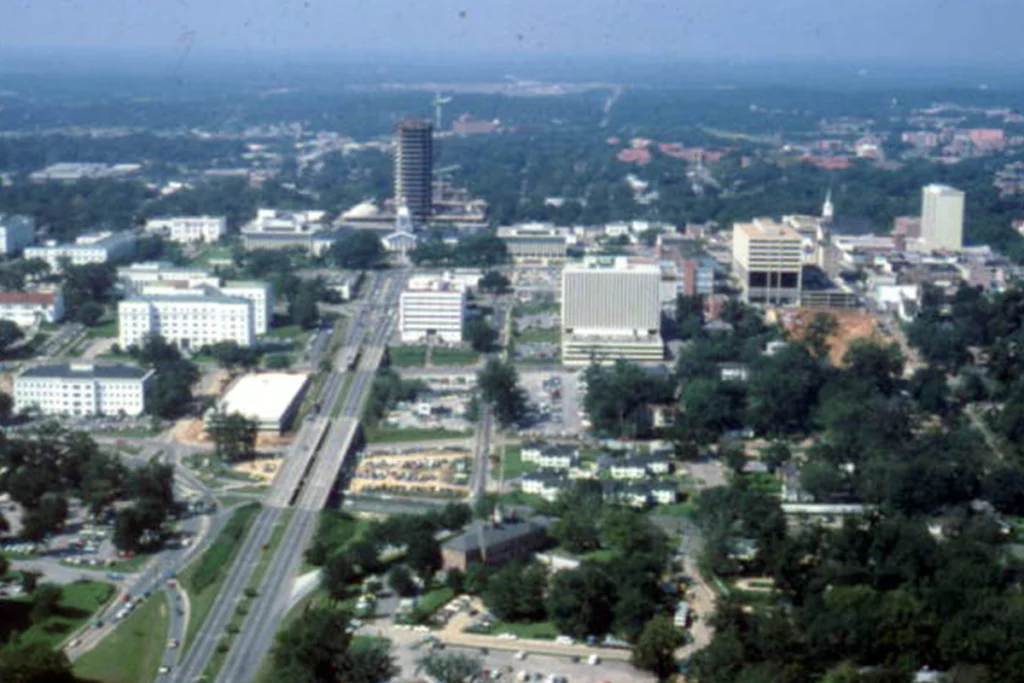
FSU had just hired a coach named Bobby Bowden to turn around its losing football program. The former coach, Darrell Mudra, was fired, as were all his assistant coaches. One, Deek Pollard, the defensive back coach, sold his four-bedroom house on Westridge Drive to my parents. The house was nondescript in so many ways, a standard 1960s split-level ranch with olive green appliances, faux wood panels and loud linoleum floors. It was painted garnet and gold, appropriate for a football coach. My mother yearned for the day that we would have it repainted, perhaps a lemon yellow. But when it came time, my father decided it would be easier to stick to the same color scheme. It made giving directions rather easy: Go up Chapel Drive, turn left and you’ll see the FSU house on the left.
My mother ran the household and often watched “Donahue” or “I Love Lucy” reruns during the day to sharpen her English skills. She wrote down unfamiliar words in her journal and looked them up in a dictionary. Words such as meticulous and opaque and umbrage. Words that had somehow slipped by her.
Sometimes, she gathered with the few other Indian women in town to look through crudely printed catalogs distributed by grocery companies like Patel Brothers—which had just opened its doors on Chicago’s Devon Avenue in 1974—or Kalustyan’s and Sahadi’s in New York. My mother and her cabal ordered cumin and coriander and different types of dals in bulk. Weeks later, when the spices arrived, the women gathered for tea, each bringing plastic containers to claim her share. They evenly divided the spices with a kitchen scale or measuring cup as though they were dealing in contraband. I could smell the heady aroma wafting from the spice packets even before I opened the front door.
I tried desperately at school to fit in, to not feel different, but that is what I was.
-Moni Basu
On weekends, we almost always ended up at one of our Indian friends’ homes. Or they would come to ours. There were the Dases, the Naths, the Desais, the Ollapallys. The gatherings were formulaic. Often, the men and women sat in separate rooms. The men drank whiskey and talked politics in English. They were all staunch Democrats who admired President Jimmy Carter. The women never drank and talked in the vernacular about the accomplishments of their children in school. Or they admired one another’s sarees and exchanged intel about the latest in Indian fashion. The kids played outside or in a basement den. I was often the oldest in the room—the few Indians who had settled in Tallahassee then were professionals starting their careers and were much younger than my father. I did not have much in common with the children of my parents’ friends, but I found their presence comforting. With them, I was not an “other.” They understood.
We feasted on 10-course meals consisting of dishes we craved and could not find anywhere in Tallahassee. Biryani. Fish curry. Homemade samosas. Occasionally, someone would serve lychees and mangoes they had brought back from Miami.
After the meal came music. My mother sang the songs of Rabindranath Tagore, India’s only Nobel laureate in literature. I accompanied her on the piano. Sometimes, we attended pujas (worship services) at the homes of other Indians. My father was not enamored with religion, but he went anyway. We celebrated Indian holidays together and would stay over late into the night talking about all that we missed being so far from home.
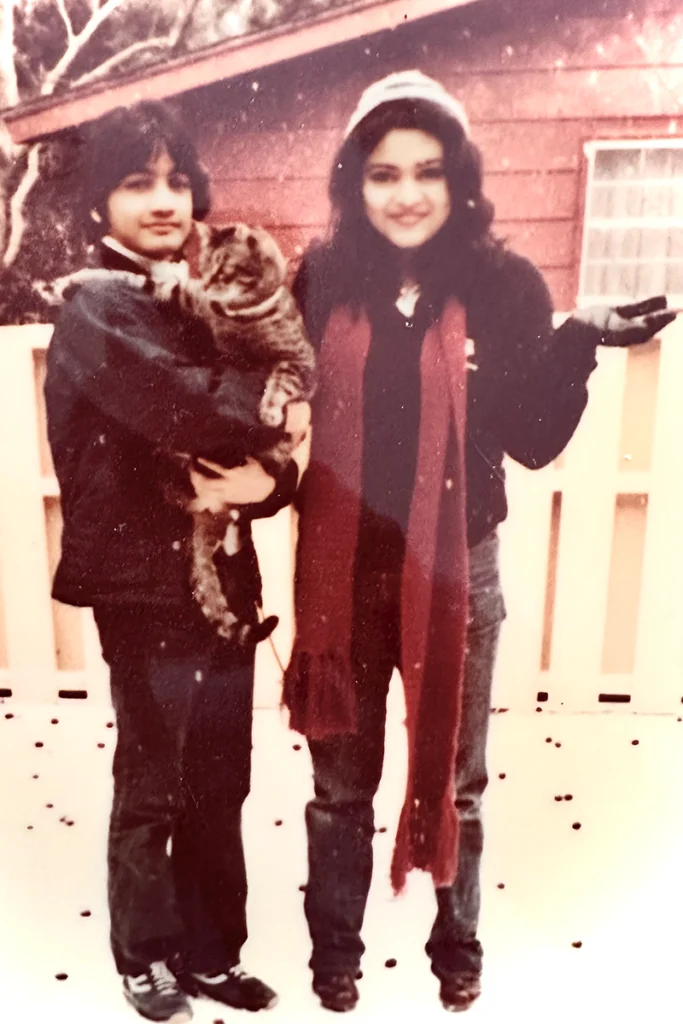
We settled and learned to navigate life in Florida. We leaned on one another; we leaned on our Indian friends. My parents came to love Tallahassee and had intended to remain there for a good chunk of their lives. But in 1982, my mother suffered a massive stroke. Her illness upended their plans for the future, and they returned home to India, where it was easier to find caregivers for my mother. My brother also uprooted himself for graduate school in Illinois. I was the last one to leave—in 1990—for a job at the Atlanta Constitution.
Over the years, the brown population of Tallahassee ballooned, thanks to FSU, Florida A&M and state offices. The city now boasts many Indian restaurants and groceries. Indian women no longer have to order garam masala from New York catalogs. And I am willing to wager that no high school teacher dares to change an Indian kid’s name to Molly or Bob.
I returned to Florida in 2018 to teach journalism at UF. When the pandemic erupted and loneliness took hold, I called a realtor and made an offer on a townhouse near Lake Ella.
“Are you nuts?” asked a close friend.
I knew I wasn’t because I knew Tallahassee. I knew the live oaks draped in Spanish moss, the neighborhoods where our Indian friends had lived, the high school where I first learned what it meant to be an “other.”
I knew I had not erred on impulse. Because in that moment, despite it all, Tallahassee felt like home.