by | March 25, 2026
How Gatorade Started in the Swamp
How Gatorade went from solving a small problem for a Florida football team to becoming a billion-dollar business synonymous with sports hydration.
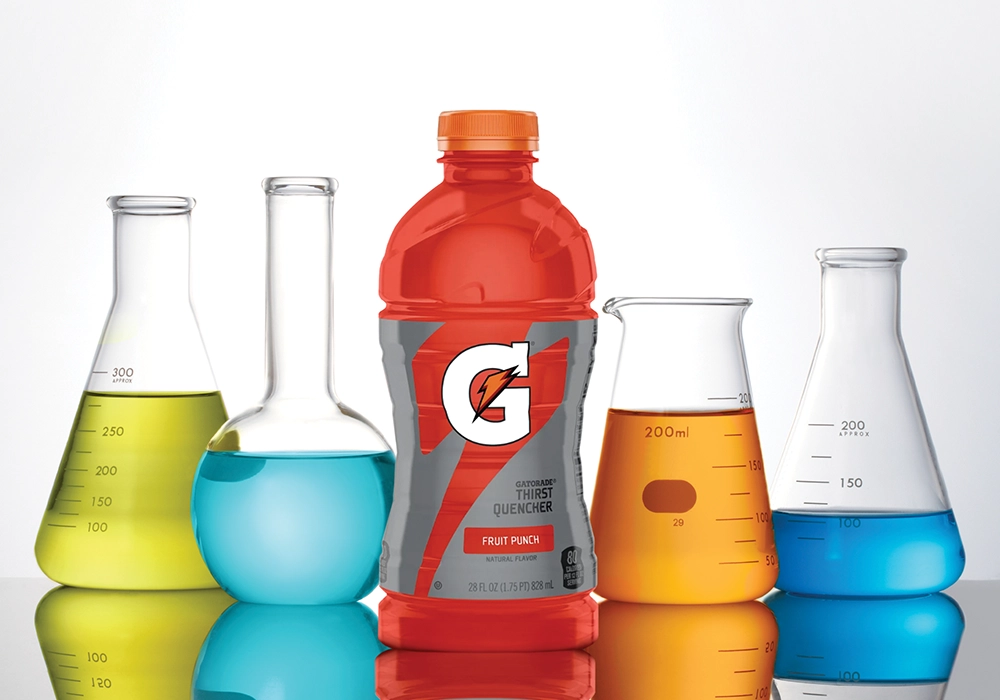
A question can change the world. In 1965, during punishing football practices at the University of Florida, the coaching staff noticed that players weren’t stopping for bathroom breaks. Over coffee, assistant football coach Dewayne Douglas asked UF nephrologist James Robert Cade why that might be. The question stuck in Cade’s mind. Little did either man anticipate the question would lead to a lab experiment, a lemon-infused solution and the accidental invention of Gatorade, the hydrating drink that helped launch modern sports nutrition.
Now arguably one of the most recognizable brands worldwide, owned by PepsiCo and valued at more than $6 billion, the beverage celebrated its 60th anniversary in October. But in 1965, the drink was not an overnight success.
“Really, (Gatorade) is the story of resilience and curiosity. So many things could’ve gone wrong along the way,” says Bradley Gamble, CEO of the Cade Museum for Creativity & Invention in Gainesville, taking a sip of water from a Gatorade-branded reusable bottle. The almost 26,000-square-foot museum named after Cade opened in 2018.
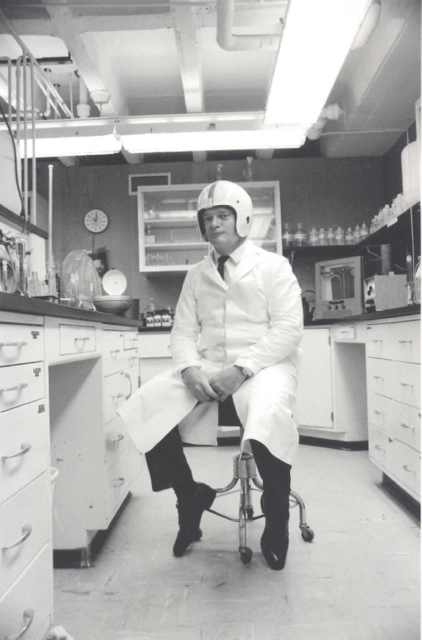
Despite the drink’s billion-dollar success over the past six decades, Gamble says Cade was not an entrepreneur and did not set out to change the world. The doctor considered himself a creator who delighted in solving problems.
“He was a scientist, musician, poet,” Gamble says. “He bred roses.”
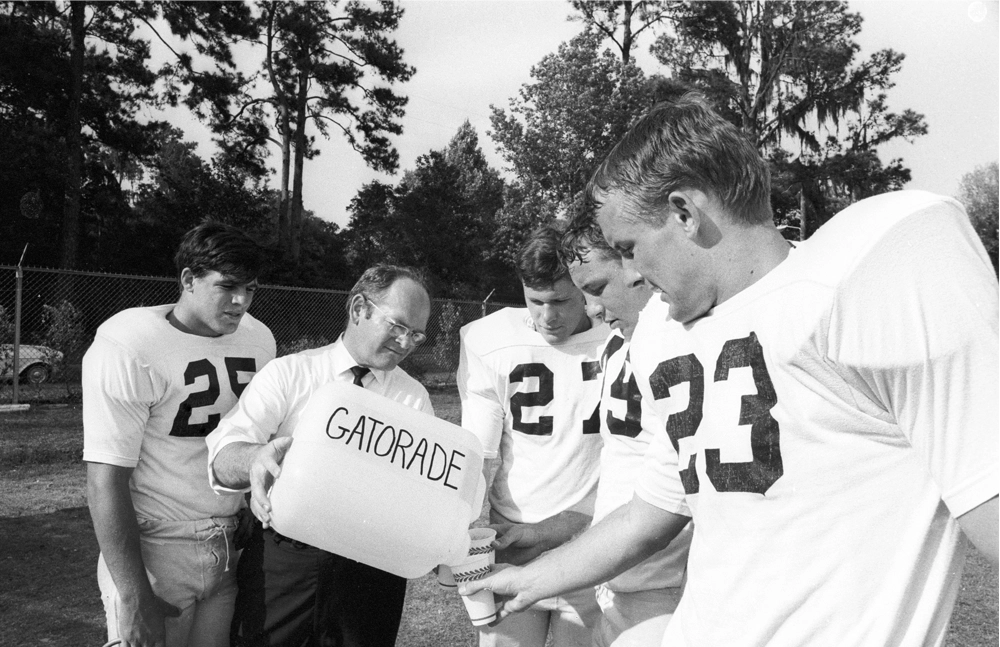
Florida’s infamous heat was sucking the energy out of players, dehydrating them during practice and making them lose important minerals. Cade and his team of medical doctors, which included Dana Shires, Jim Free and Alejandro de Quesada, figured the issue stemmed from an electrolyte imbalance. Then-UF head football coach Ray Graves would not let Cade and his team experiment on the varsity squad that included soon-to-be Heisman Trophy-winner Steve Spurrier. Graves did, however, let them run various tests on the freshmen. The researchers took temperatures and sweat and blood samples before and after practices from 10 freshman players. The tests confirmed the men were losing vital minerals such as sodium and potassium, which help maintain blood pressure and keep the body hydrated.
So, the researchers set out to create a concoction to refuel the footballers while on the field, consisting of ingredients such as sodium, potassium and—like for hummingbirds who rely on nectar to sustain their metabolism—sugar.
The medical team presented the drink to the freshman players. The footballers took a sip—and promptly spit it out.
“It tasted like sweat,” Gamble says. It was Cade’s wife, Mary, who solved this major hurdle in the drink’s invention. An excellent cook, she suggested he add lemon for flavoring. The freshmen not only kept the mixture down this time, but the younger team beat the varsity B team during an annual scrimmage.
Then, Coach Graves insisted the entire football team drink the beverage that would eventually be called Gatorade, named after the school’s alligator mascot, before the next game.
“So then the doctors are squeezing lemons in the lab,” Gamble says. The Gators beat the higher-ranked Louisiana State University Tigers the next weekend and went on to win more games. Cade pinched extra glucose supplies from nearby labs to meet the rising demand for the drink.
Two years later, when higher-ranked Georgia Tech lost to Florida in the Orange Bowl,
Coach Bobby Dodd told reporters, “We didn’t have Gatorade.”
Global Success Out of The Swamp
In six decades, Gatorade rocketed skyward to become one of the most successful sports drink brands in the world. But progress was still step-by-step.
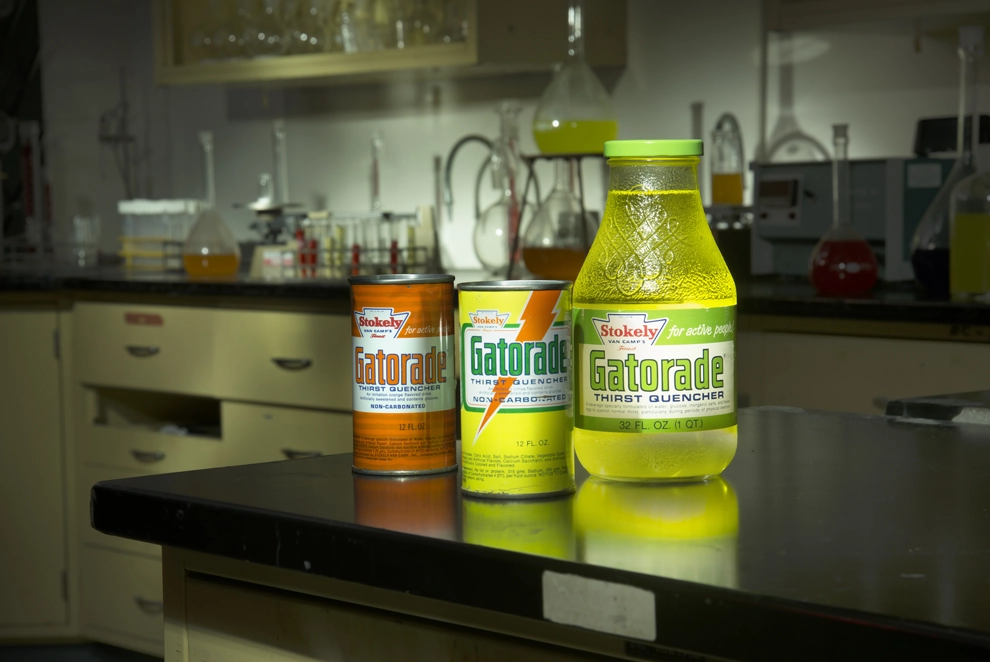
In 1967, food packaging company Stokely-Van Camp bought the rights to produce and sell Gatorade in the U.S. But the metal cans used to package the drink were rusting from the sodium content, so the distributor switched to a historic glass bottle. Over the next 15 years, Gatorade rolled out its orange flavor, branded itself with a lightning bolt and entered international markets. Quaker Oats bought Stokely-Van Camp in 1983 and introduced fruit punch as the brand’s third flavor. In 1991, basketballer Michael Jordan became a Gatorade spokesperson with the iconic “Be Like Mike” campaign, followed by soccer player Mia Hamm in the same decade.
Gatorade was born in The Swamp 60 years ago to solve real athlete problems and we’re still doing exactly that today.
—Jeff Kearney
Since PepsiCo bought Quaker Oats in 2001, the Gatorade brand has continued to expand. In 2024, Gatorade generated $7.3 billion in annual sales and accounts for more than 60% of the U.S. sports drink market.
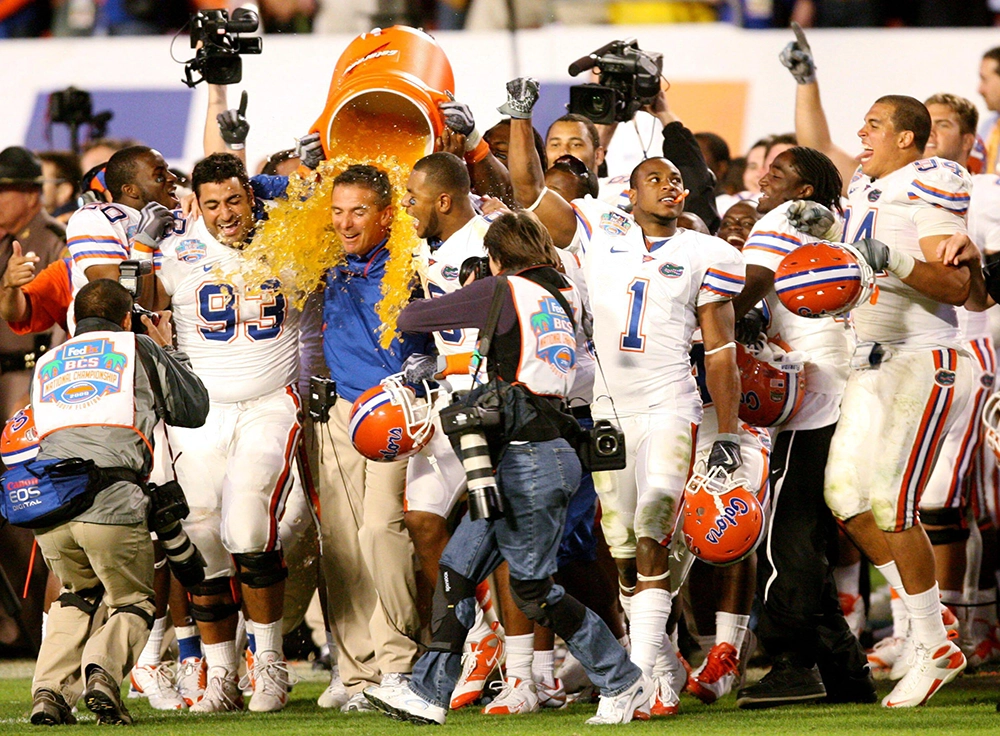
“Gatorade was born in The Swamp 60 years ago to solve real athlete problems and we’re still doing exactly that today. From the orange bolt on the sidelines to the Gatorade Dunk, everything we do is rooted in what athletes need to perform at their best,” says Jeff Kearney, Global Head of Sports Marketing at Gatorade.
“We’ve fueled legends like Michael Jordan and Serena Williams, and now we’re fueling the next generation—Caitlin Clark, Justin Jefferson and countless others at every level of sport,” Kearney says.
Yet Cade’s proudest accomplishment was not unlocking athletes’ endurance with Gatorade in its early years. Instead, it was an altered version of the drink that was given to dehydrated infants in the UF Health Shands Hospital’s NICU, and more recently, zoologists studying insects who have used Gatorade to rehydrate endangered Miami blue butterflies.
For Gamble, the real legacy of Gatorade is not the commercial success of the brand or the football team if first helped, but the chain reaction started by a casual conversation that led to a universal change. The coffee with Dewayne Douglas. A scientist asking, Why? A home cook’s intuition to add lemons. “So many things had to go right,” Gamble says. The lesson is simple: Big ideas don’t always arrive fully formed. Sometimes they start as a small curiosity—drawn out by the Florida heat.