by | March 9, 2026
Florida’s Culture Keepers
Meet 10 influential figures protecting our state's natural resources and cultural identity.
Benny Blanco: Hooked on Clean Water
The fishing guide and conservationist says that quality of life begins and ends with water.
By Dave Seminara

“The quality of water in the state of Florida is the culture of the state of Florida,” says Benny Blanco, 49, a professional fishing guide based in South Florida and the father of three college-age daughters. “Our water is under attack, and it’s the foundation of all that’s beautiful in the state.”
For decades, Florida’s water policy has been heavily influenced by Big Sugar, the powerful and well-funded sugar industry lobby. Critics say the industry has polluted waterways with phosphorus, obstructed the natural flow of water south from Lake Okeechobee and contributed to air pollution through cane burning, among other impacts. Blanco, who lives in Palmetto Bay, says he and other conservationists affiliated with the nonprofit Captains for Clean Water are now waging—and winning—a sustained fight against Big Sugar to restore the flow of clean water south into Everglades National Park.
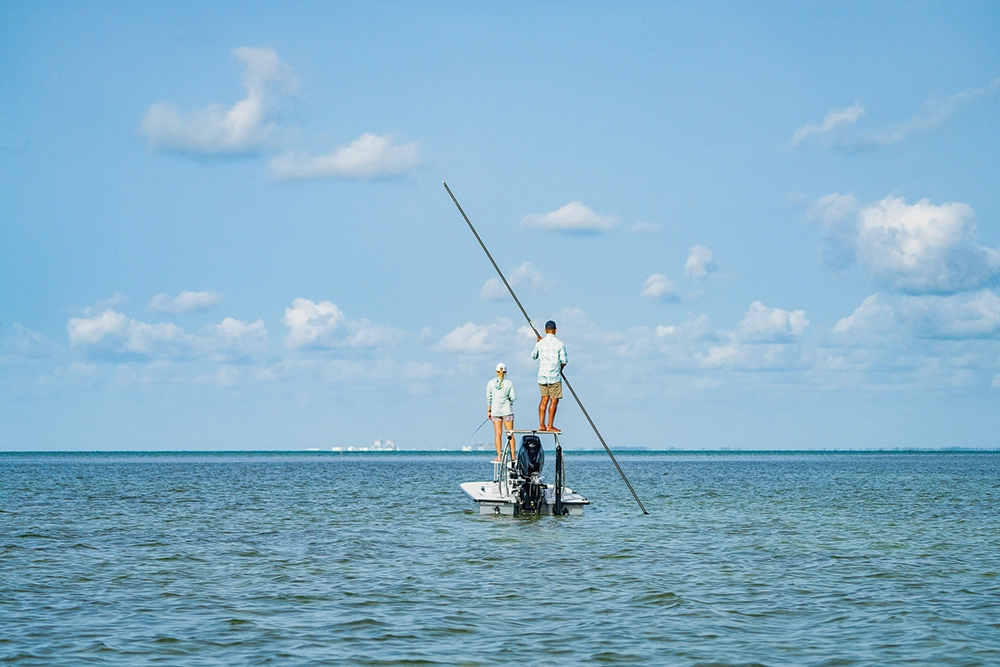
When Blanco became a fishing guide in 1998, he had no aspirations of becoming a lobbyist or activist. Out of a duty to the environment and his career, he became involved in 2015 when a drought combined with persistent south winds and a lack of freshwater releases from Lake Okeechobee triggered a hypersaline event in Florida Bay. The result was catastrophic: 40,000 acres of seagrass were wiped out, threatening fragile habitats and Blanco’s livelihood. In response, he and other fishing guides mobilized, transforming themselves into part-time advocates who have since secured significant legislative victories.
The quality of water in the state of Florida is the culture of the state of Florida.
—Benny Blanco
Among them was the passage of Senate Bill 10 in 2017, which authorized construction of a massive reservoir south of Lake Okeechobee—widely regarded as the crown jewel of Everglades restoration.
Blanco says Florida’s waters are in far better condition now than they were just a few years ago, and he believes they will continue to improve. When he first began traveling to Tallahassee to lobby lawmakers on water issues a decade ago, he was told repeatedly that he was wasting his time. Eventually, he learned how to command attention by clearly articulating the economic importance of clean water to tourism and fishing.
Even more encouraging, he says, is the growing movement behind the cause. Fishermen and outdoorsmen who once merely complained when the fishing was poor are now actively engaged in the fight for water quality.
“That’s what gives me the most hope,” Blanco says. “A fairly uneducated fishing guide in the Everglades can make a huge change just by speaking up.”
Kate DiCamillo: Creator of a Classic
The “Because of Winn Dixie” author explains how Florida shaped her work.
By Emilee Garber
For Kate DiCamillo, Florida wasn’t just a backdrop—it was the spark that ignited a lifetime of storytelling.
“I spent so much of my childhood on my bare feet,” laughs DiCamillo, who grew up running through citrus groves in the small town of Clermont. “I’ll horrify people when I say I was in the library (with) bare feet.”
The New York Times bestselling author spent her days roaming wild with other neighborhood kids in 1970s Central Florida: walking through the giant crocodilian jaws at Gatorland, watching mermaids swirl through crystal waters at Weeki Wachee Springs State Park and wading into the shallows of Pine Island to see pods of dolphins play. It’s clear from her writing that the magic and resilience in her children’s books are rooted in those formative years.
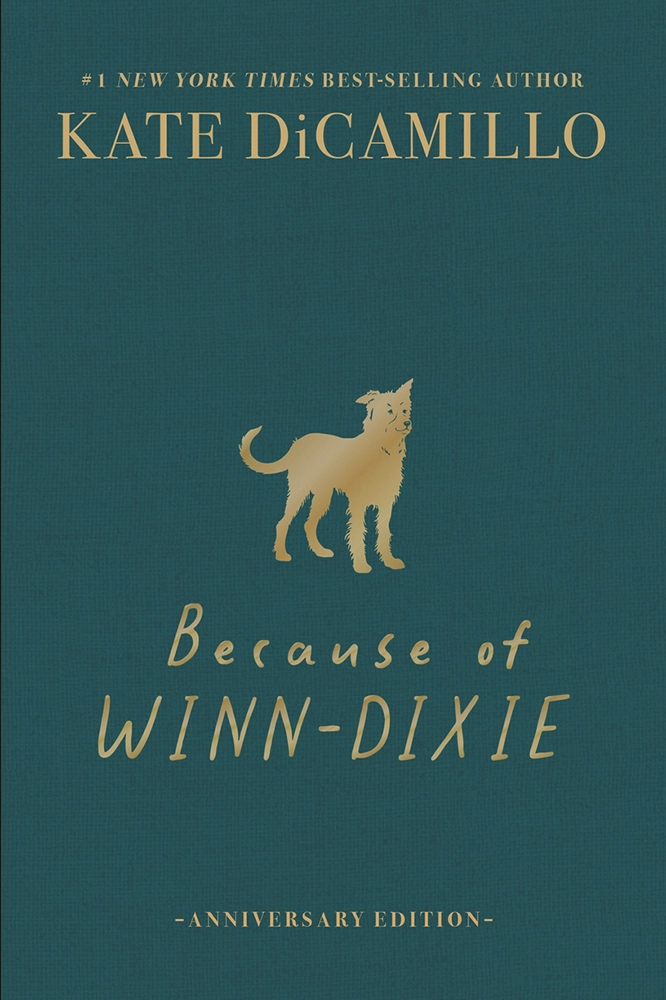
DiCamillo’s debut novel, “Because of Winn-Dixie,” about a young girl and her canine best friend finding friendship in a new town, won the John Newbery Medal and has become a Florida classic and required reading for many elementary students in the state. Set in a fictional town resembling
Clermont, the story delves into grief, forgiveness and the many forms a family can take—lessons that shaped DiCamillo’s own upbringing.
When I was a kid, there were nothing but orange groves in between. You could see there was a pattern to things. That had an impact on me.
—Kate DiCamillo
Originally published in 2000, the beloved story was recently reprinted in celebration of its 25th anniversary. Since the Sunshine State is ever-changing, both environmentally and socially, DiCamillo feels it is her duty to share the Florida of her childhood. She says that stories are windows into other people’s lives and sometimes mirrors to our own.
When DiCamillo, 61, talks to children about writing, she often draws on her memories of looking out from the top of Clermont’s Florida Citrus Tower, a 226-foot tall structure built in 1956 with once sweeping views of orange groves.
“Being up there on a clear day, you could see the Gulf of Mexico on one side and the Atlantic Ocean on the other,” she says. “When I was a kid, there were nothing but orange groves in between. You could see there was a pattern to things. That had an impact on me.”
DiCamillo says she taps into her “incredible childhood” in many of her titles, including “The Tiger Rising,” “Flora & Ulysses” and “The Tale of Despereaux.”
“That is the great gift Florida gave to me,” she says.
And although urban development has forever changed the landscape of Clermont, DiCamillo appreciates that “you can still wade out from Pine Island and see dolphins.”
Winston Scott: Rocket Man
The astronaut is making sure space science stays in the Sunshine State’s orbit.
By Helen Bradshaw
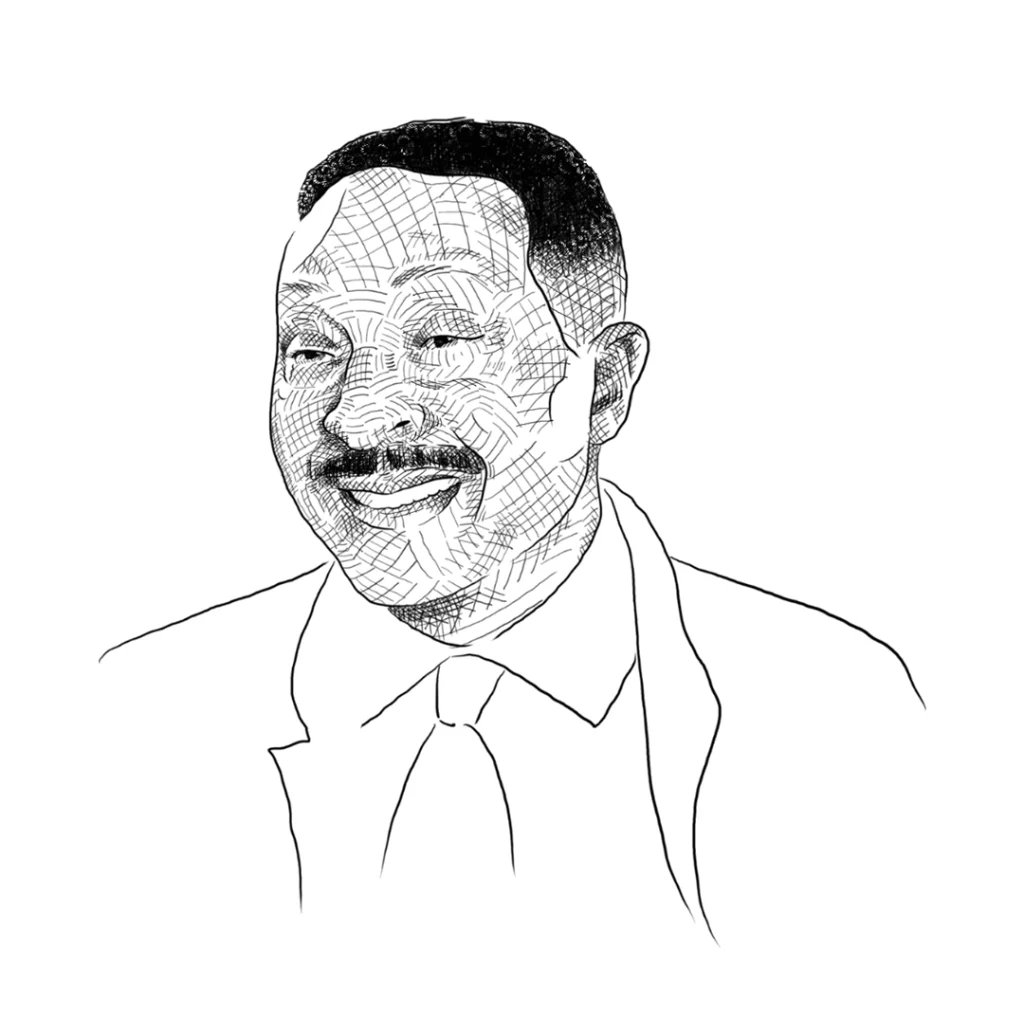
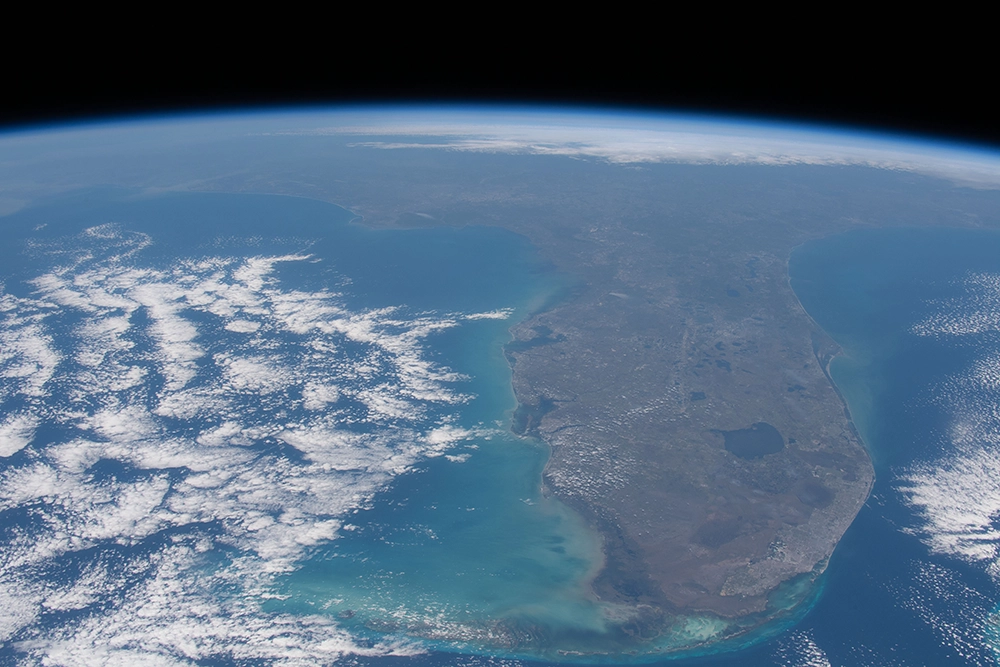
Winston Scott saw his home from a vantage few ever will: hundreds of miles above Earth, Florida glowing beneath him, as he orbited the planet.
“You can see the entire state of Florida outlined in city lights,” he recalls. “It was a totally different perspective seeing your home state from up there. It sets in how far you have come from being a little kid in segregated Miami up to flying in space in America’s space shuttle. It symbolizes not just how far I had come, but how far our entire country had come.”
Winston Scott was just a grade school student in Jim Crow-era Miami when Alan Shepard launched from Cape Canaveral to become the first American astronaut to enter space in 1961.
“There were no astronauts, period, in my early elementary years,” he says. “Certainly not minority astronauts. It wasn’t a reality to me. It was something that didn’t occur until many, many, many years later. And even then, it was far-fetched.”
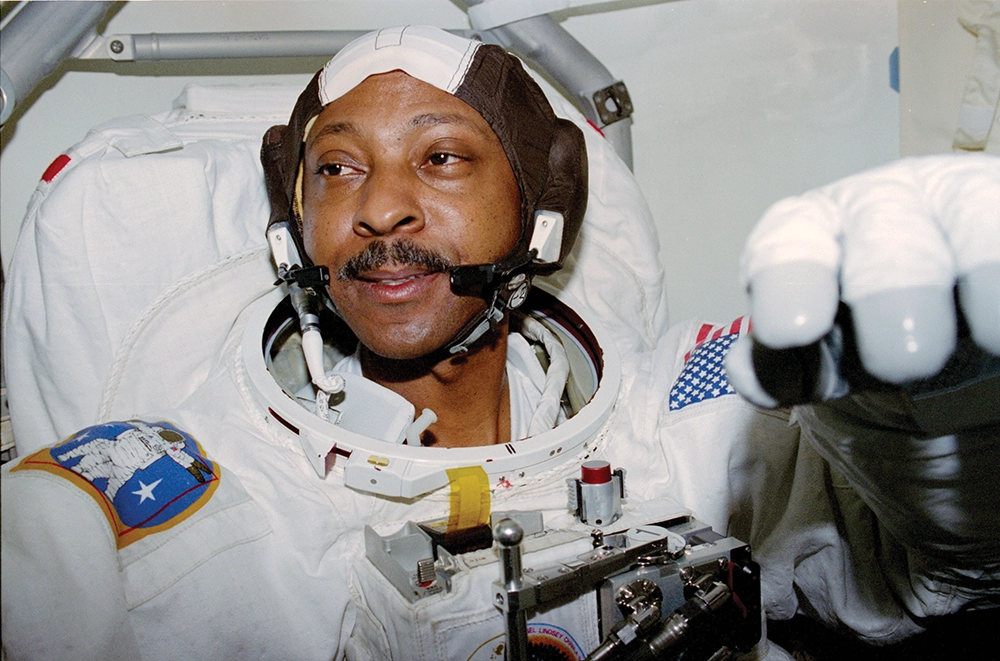
But even the most far-fetched dreams have a way of coming into focus. NASA selected Scott to become an astronaut in 1992 after he served as a pilot in the U.S. Navy. Four years later, he boarded the space shuttle Endeavour and watched his home peninsula shrink into the curvature of Earth. Over the course of two missions, he orbited Florida 394 times.
It symbolizes not just how far I had come, but how far our entire country had come.
—Winston Scott
Scott has since spent his career sharing space with all who are interested. As the current director of operational excellence at the Kennedy Space Center Visitor Complex, he now helps ensure there’s always an astronaut on-site each day the center is open (which is 363 days of the year) to answer questions from the public and inspire the next generation of space explorers.
Now at 75, Scott’s impact continues to shape Florida’s space boom—from being one of the first Black astronauts to orbit Earth to helping educate more than 1.5 million annual visitors at the Kennedy Space Center. The Sunshine State and the space industry are a natural fit in his eyes. Scott believes Florida has evolved into a place that embraces different cultural touchstones—from food and music and, over the last six decades, space exploration.
“What we do in space really belongs to everybody,” Scott says. “Those of us who had the privilege to fly, it was just that. It was a privilege, and we feel a responsibility to share our experiences with others, especially the younger generation, to inspire them to not only pursue science, but to do well at whatever they decide to do. The future is so bright to them. Youngsters don’t know anything about obstacles or limitations.”
Mary Proctor: Artist From the Ashes
The folk artist, whose work has appeared in the Smithsonian, turns pain into joy through painting.
By Moni Basu
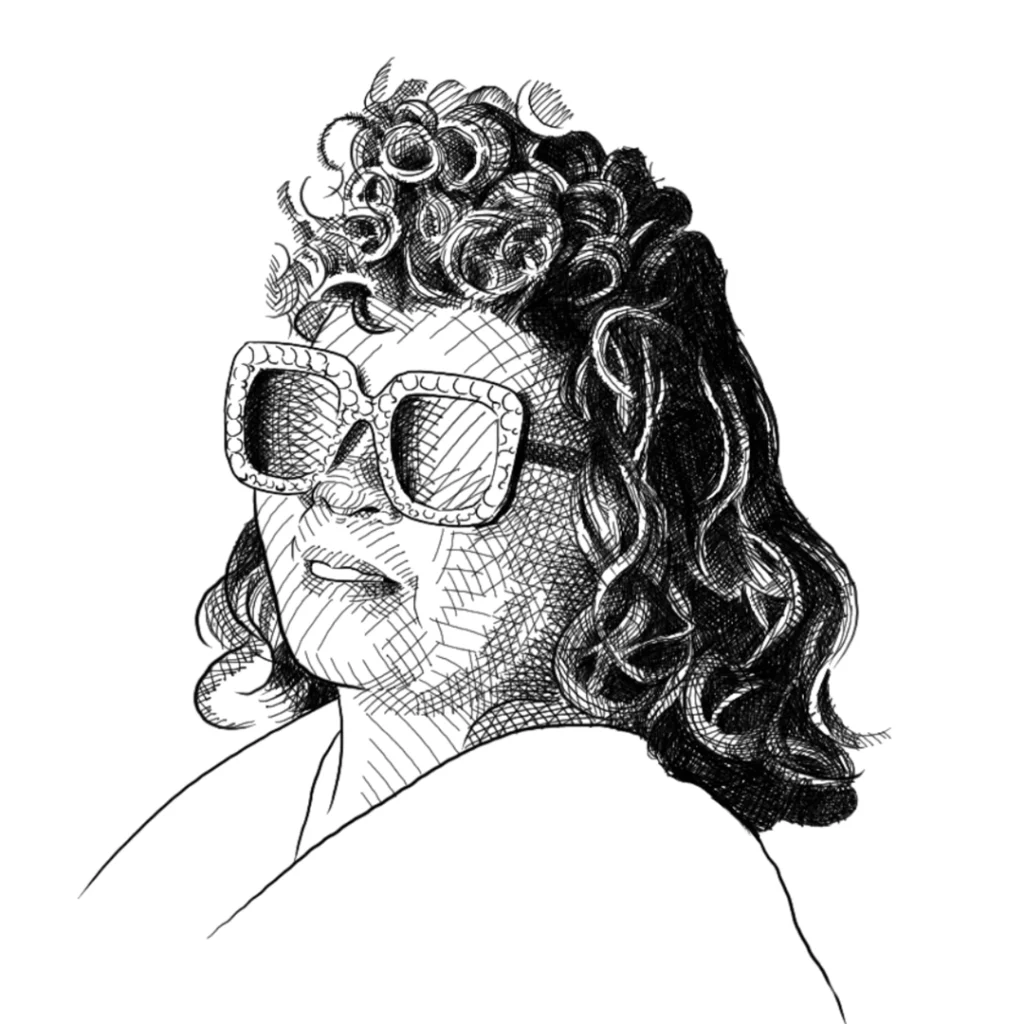
The door to Tallahassee artist Mary Proctor’s prolific creative life opened through fire—a catastrophic fire that burned the mobile home her aunt, uncle and grandmother shared to ashes. All three perished.
Proctor’s grandmother had been her world, the woman who raised her because Proctor’s mother was a teen when she gave birth to her. Hollowed by grief, Proctor fasted for 30 days. Then she had a vision. The spirit told her to paint.
She pulled abandoned doors from a scrap pile and painted portraits of the loved ones she lost, along with straight-talking words that conveyed the values her grandmother had taught her: Blessed are the hands that smile a little. To love is dance, to dance is love. A woman got to love herself. If she won’t who will? Proctor’s pieces read like both prayer and sermon, testimony and invitation. She felt guided, she says, by the words of Jesus in the Gospel of John: “I am the door; if anyone enters by me, he will be saved.”
“I painted things grandma said,” says Proctor, 65. “About forgiving. About power. Women. Grandma was powerful and strong, and she trusted in the Lord.”
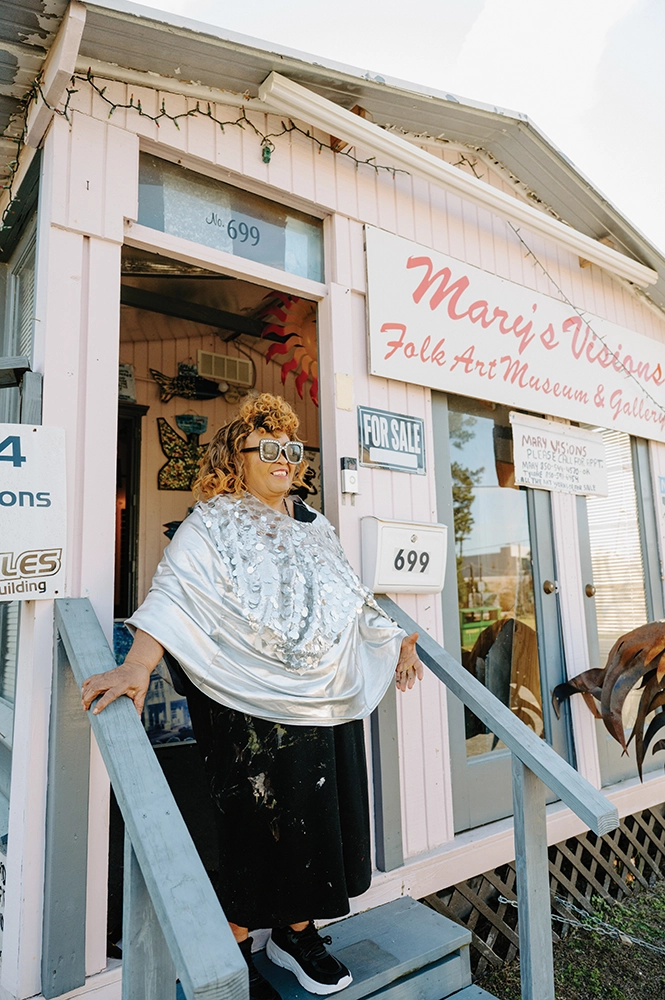
She found emotional release in her art; soon she had filled her yard with the painted doors. A gallerist from New York saw them propped up against a chain link fence and instantly offered her $5,000.
Her face “lit up like she’d found a gold mine,” Proctor says. “I thought there was something wrong with her mentally.”
It was the mid-1990s when work produced by untrained artists like Proctor had become the rage in the art world. Proctor had no idea what folk art even was. But her paintings soon graced the walls of some of the nation’s most prestigious museums, including the Smithsonian and the American Visionary Art Museum, where a solo exhibition opened last summer. And yet Proctor’s mission remains unchanged. She never painted for gallery walls; she painted to bring joy to people.
You put my art in any place, those who look at it, they lighten up. They feel joy.
—Mary Proctor
Her paintings, always rooted in her faith, are vibrant and childlike in their honesty. When she first started painting, she ran a salvage yard filled with objects cast aside by others—beads, buttons, old toys and trinkets—that found a second life in Proctor’s art. She likes to pick up junk, she says, and turn it into something good.
Proctor painted as though she were answering a call and began signing her name as Missionary Mary. She painted to get through her own struggles. She painted as though her survival depended on it. In 2011, her son Christopher died in a car accident. Proctor created a piece with toy cars and a message that riffed on Florida’s traffic safety slogan: “Drive to arrive alive so you can be all you suppose to be.”
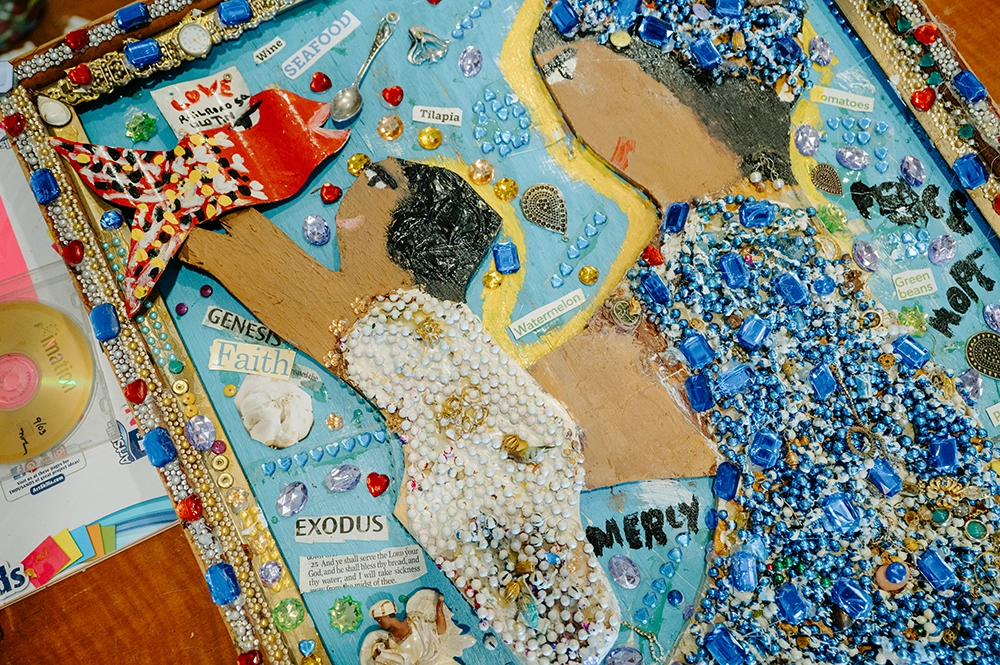
She keeps a studio in Tallahassee’s Railroad Square, where angels encrusted with old buttons and sparkly costume jewelry adorn the walls. “Look and see the angel is you.”
She feels compelled to make people see goodness in a time of divisiveness in America.
“I want people to see good in this world. That is my mission,” she says. “You put my art in any place, those who look at it, they lighten up. They feel joy.”
Derek Trucks: Southern Strings
The guitarist along with his wife, Susan Tedeschi, take up the mantle of Florida’s music scene.
By Steve Dollar
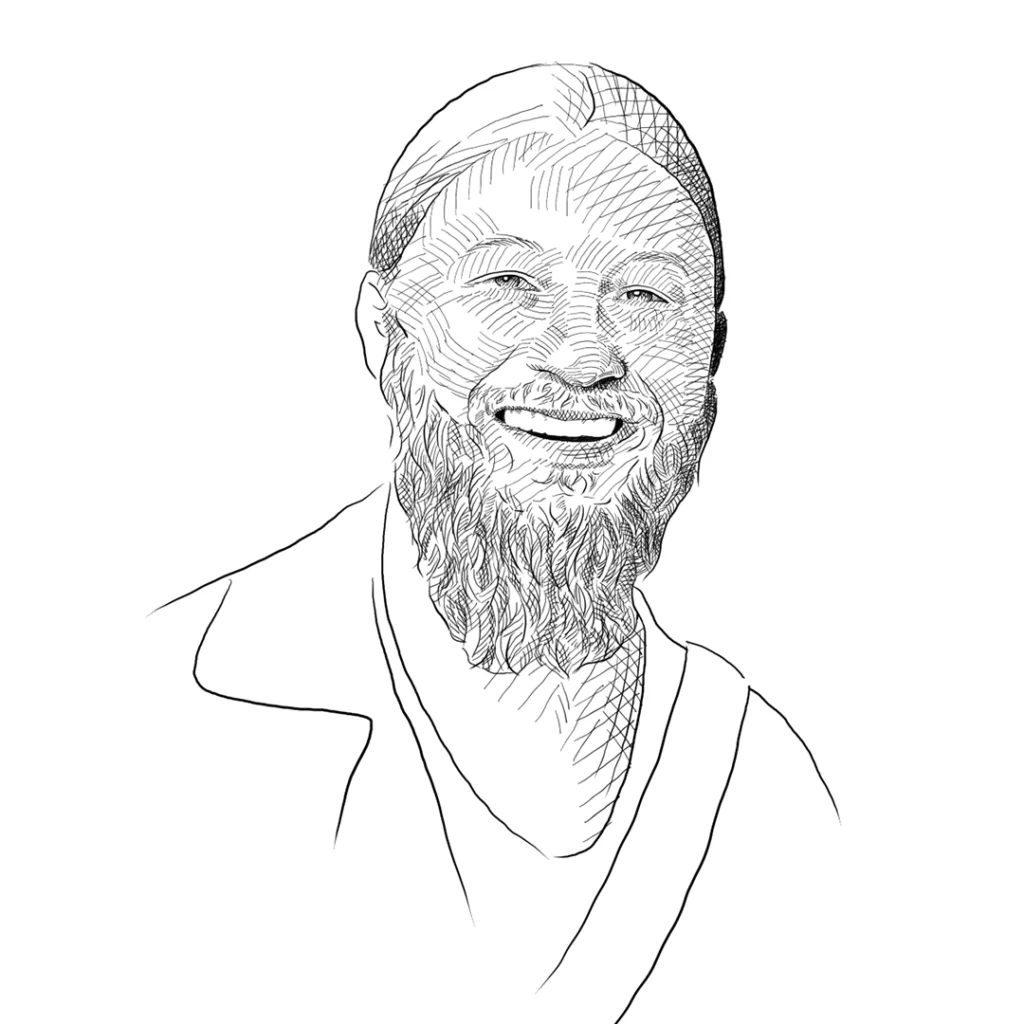
Torchbearers for American blues and rock in all its hybrid promiscuity and testifying glory, Derek Trucks, 46, and Susan Tedeschi, 55, along with their fellow travelers in the dozen-strong band that bears their names, have staked it all on honoring the generations of great artists that have preceded them. Not least in that pantheon is the Allman Brothers Band, the founding fathers of Southern Rock and, like Trucks, favorite sons of Jacksonville, where the band formed in 1969. The guitarist is also connected to that legacy by blood—through his uncle Butch Trucks, one of the group’s two drummers and a founding member—and as a latter-day brother of the road himself, joining up in 1999 at age 20, and playing guitar until the ABB’s final gig in 2014. (Both Butch Trucks and Gregg Allman, whose gravelly baritone was the band’s emotive voice, died three years later.)
When I think about those great Allman Brothers records, what they had over all the bands of that era (was that) Gregg could sing his ass off.
—Derek Trucks
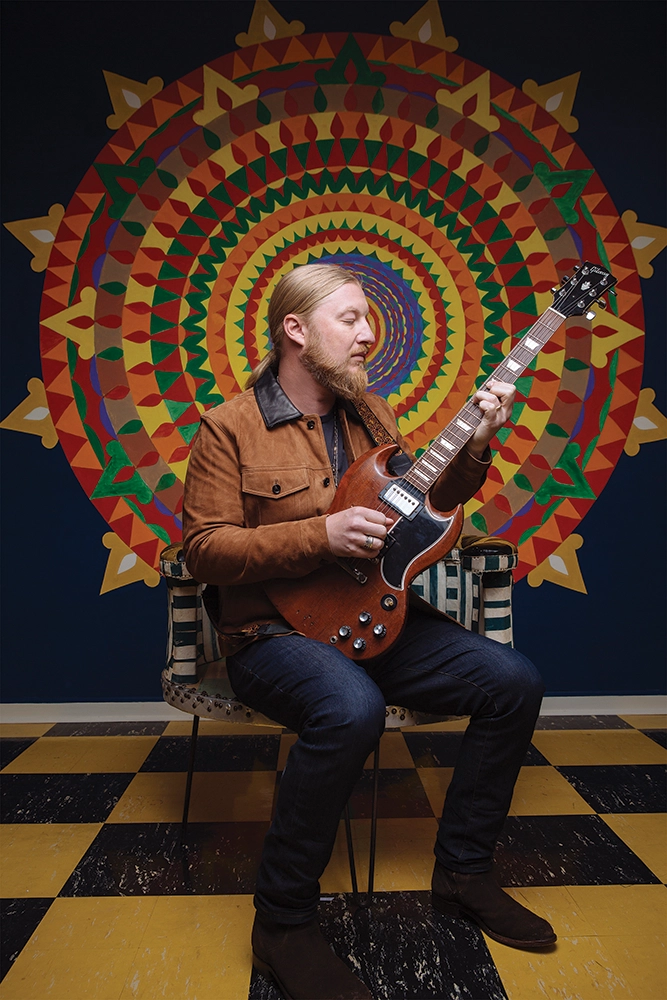
Trucks and Tedeschi, married since 2001 and touring as the Tedeschi Trucks Band since 2010, aren’t only about paying homage, although their intense and sprawling live performances are beloved for inspired cover versions of canonical rock, R&B, soul and gospel tunes. Their discography includes full-on revivals of classic rock landmarks “Layla” and “Mad Dogs & Englishmen.” Over 15 years of recording since their 2011 debut “Revelator,” these onetime acolytes have fused a uniquely American musical vocabulary with their own expansive and exploratory vision. Witness the four-part concept album “I Am the Moon,” which turns ancient Arabic folklore into an improvisational epic—or, even better, catch one of the band’s concerts, in which Tedeschi channels gospel fire and sultry blues power while Trucks soars for the heavens on the keening slide guitar he’s so famous for, an equal inheritor of John Coltrane and the likewise gone-too-soon original brother, Duane Allman.
“When I think about those great Allman Brothers records, what they had over all the bands of that era—at least the bands that were improvising—(was that) Gregg could sing his ass off. Not many bands of that era had a guy who could sing like that. Then you had a band that could play anybody under the table. That’s a pretty deadly combination. In a totally different way, that’s what we’ve been able to capture with this band,” Trucks says. Bringing it all back home, the couple also presents the annual Sun, Sand and Soul Festival in Miramar Beach, a stirring showcase for all the thriving tangents of American roots music that amps up emerging talents alongside such legendary live acts as Jason Isbell and Taj Mahal.
Michelle Bernstein: The Bernstein Effect
A celebrated chef’s culinary art, combining flavors from home and afar, helped define Florida cuisine.
By Evan Benn
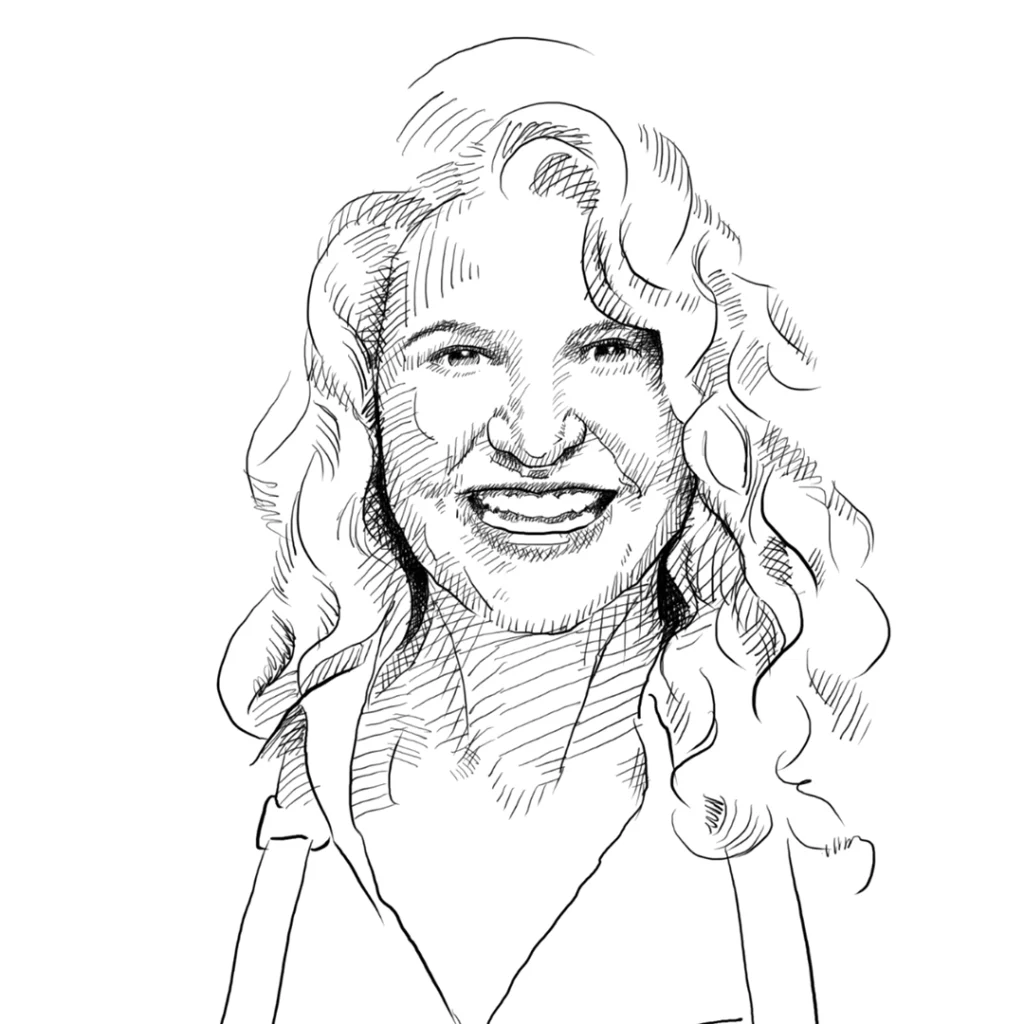
Michy’s, Michelle Bernstein’s long-gone but groundbreaking Miami restaurant, earned national acclaim for cooking that felt comforting, personal and distinctively Floridian.
Her serrano and blue cheese croquetas, served with a fig marmalade just sweet enough to mellow out the blue’s funk, were like American cheese sticks going out on a date with Spanish tapas. Sweetbreads “Milanesa,” a nod to a popular dish from her late mother’s native Argentina, expertly paired fried sweetbreads with black-eyed peas, bacon and a
cider gastrique.
On Wednesdays during the summer, Michy’s would host an all-you-can-eat Southern-style fried chicken feast—sides included her watermelon-tomato-feta salad, fluffy biscuits, tangy cole slaw and creamy mashed potatoes and gravy— for no reason other than that Bernstein loves crispy chicken (she’s a dark-meat fan).
That sense of culinary storytelling has defined Bernstein’s career, and it shows why, in a state with no shortage of food-world stars, she stands apart as a true Florida culinary culture keeper.
Born and raised in Miami in a Jewish and Latino household, Bernstein, 57, grew up at tables that married Ashkenazi comfort foods with bold Latin flavors and ingredients, all meant to be shared. It’s why her food has always seemed more autobiographical than just fusion for fusion’s sake.
Several high-end South Florida kitchens helped shape her early career, but it was Michy’s, which she opened with her husband and business partner, David Martinez, in 2006 that cemented Bernstein’s place on Florida’s culinary map. The restaurant’s influence extended far beyond Miami, earning Bernstein the James Beard Foundation Award for Best Chef: South in 2008.
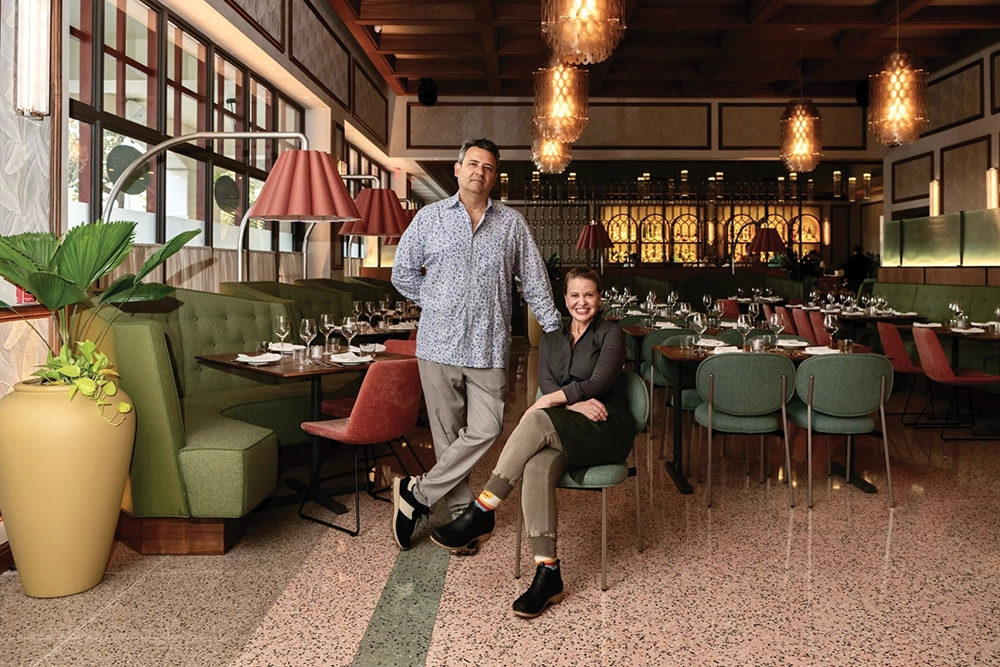
Since Michy’s, which closed in 2014, the powerhouse chef’s current culinary endeavors include Cafe La Trova in Little Havana, Sweet Liberty in Miami Beach, several locations of La Cañita, a revival of her beloved Sra. Martinez in Coral Gables and a full-service catering company.
Instead of leaning on trends to dictate her menus, Bernstein has always cooked from familiarity—foods rooted in memory and shaped by Florida’s interwoven cultures. Take, for example, her surprisingly light fettuccine carbonara “My Way,” a former Michy’s standout, with crispy pancetta, English peas and Saint-André triple-cream cheese, or her rich oxtail paella, a current hit at Sra. Martinez, with buttery bone marrow. The beloved recipes tell stories of Bernstein’s heritage, travels and memories through classic techniques and local ingredients.
That philosophy carries throughout her establishments, including Cafe La Trova, where food, live music and cocktails converge in what feels like an immersion in old-school Havana nightlife. At the award-winning Sweet Liberty, Bernstein channels playful high-low Americana through a Miami lens with bar bites like caviar onion dip, aguachile oysters and grilled Mexican street corn. And Sra. Martinez, which reopened in 2024 after a 12-year hiatus, reconnects diners with a Spanish-forward chapter of Bernstein’s story that locals never stopped missing.
Jessica Namath: Protector of Public Lands
The activist spearheaded a statewide campaign to stop overdeveloping state parks.
By Eric Barton
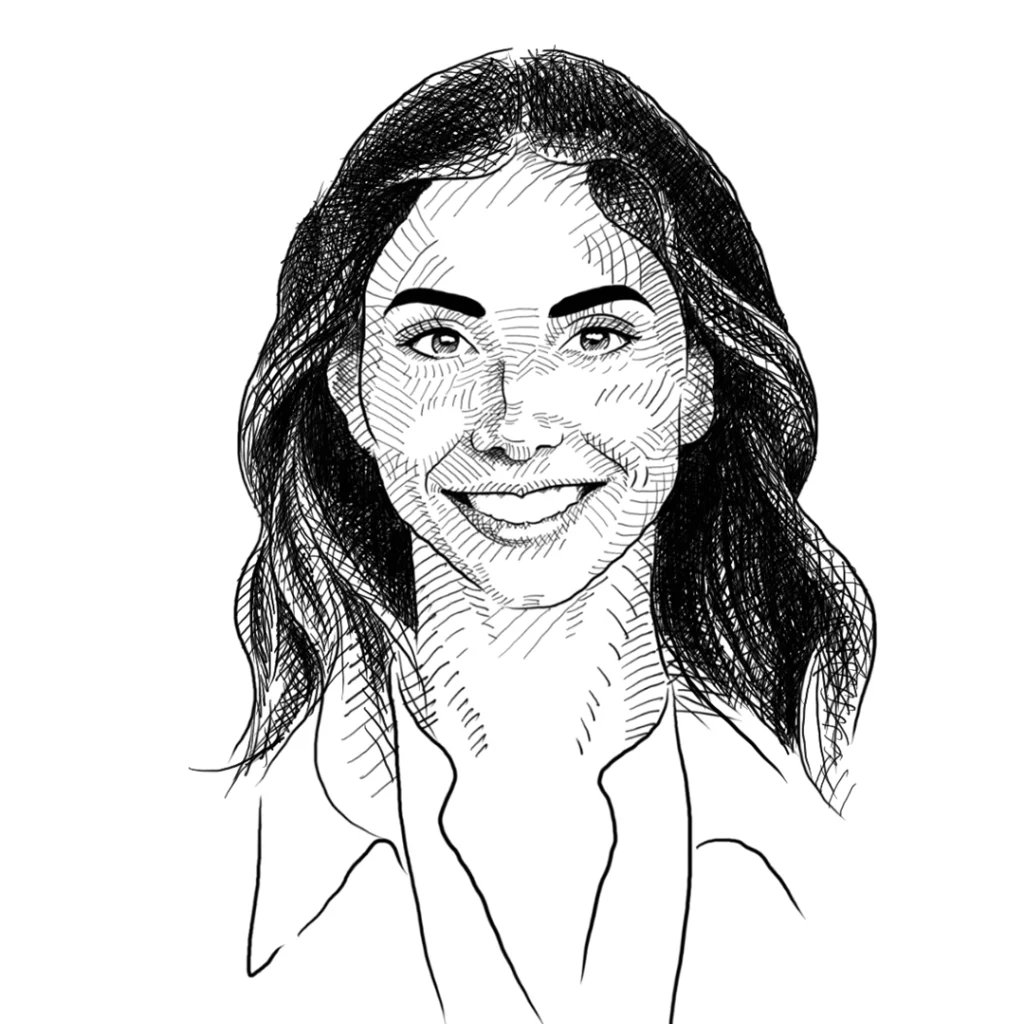
Jessica Namath stood confidently behind the lectern at a Tequesta City Council meeting, boasting the same bravado her father, Joe Namath, had once shown on the football field. Let’s ban smoking in public parks and beaches, she argued. She figured: How could anybody disagree? At the end of her speech, one of the council members asked, “Anyone else here with you?”
Namath turned around. Nobody. She was alone. Which is exactly why her idea failed. That was a little under a decade ago, and it was an unglamorous beginning for Namath’s time as an environmental advocate. Since then, Namath, 40, has helped gather crowds of people to protest the infamous Alligator Alcatraz detention facility for immigrants. She’s at the forefront of the opposition against a data center that would be built on wetlands in Wellington. And it was Namath who helped mobilize the protests that got Gov. Ron DeSantis to drop plans to hand wide swaths of state parks to developers.
Her passion for the environment came about because her famous father, who was retired from football by the time she was born, raised her on the Loxahatchee River, where the sandbars were her playground, the running bait-fish her pets, the tides and the changing current her constant.
“If you paddle up the river far enough, it’s like going back in time,” Namath says. “It’s one of those areas where you feel like you can still protect and preserve it.”
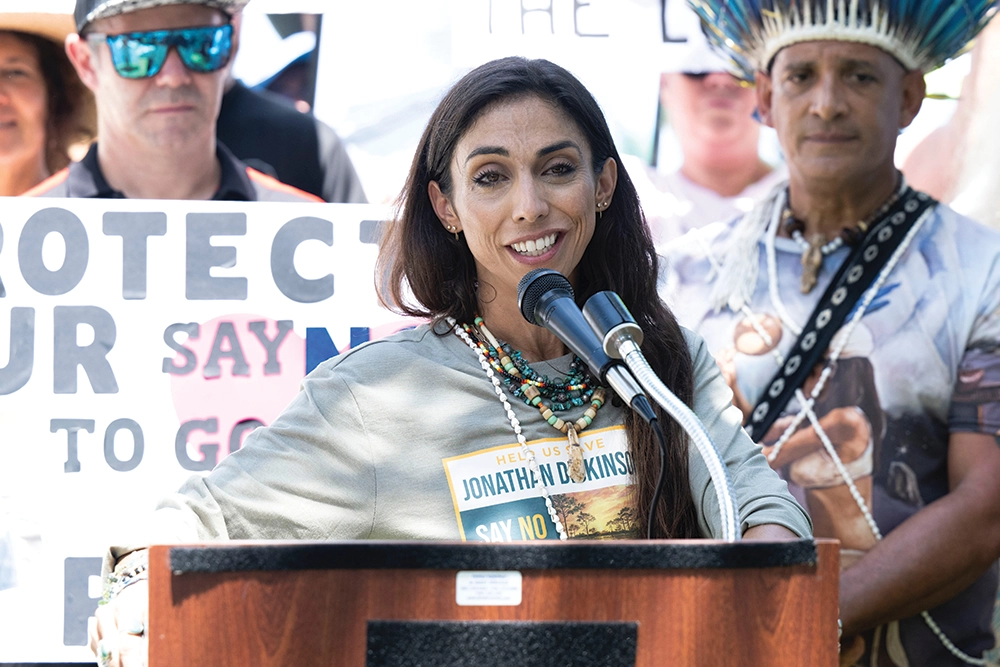
The mother of four served on a Tequesta environmental advisory committee and ran unsuccessfully for the council. But it was her fight against the state’s effort to turn parks into golf courses that earned her recognition. She started a Facebook group page, now called Floridians for Public Lands, which quickly gained tens of thousands of followers and today has just shy of 50,000 members. That page is a big reason throngs of protesters rallied, which led to a bill passed in March 2025 that will protect Florida’s state parks from outside development.
It’s one of those areas where you feel like you can still protect and preserve it.
—Jessica Namath
During the height of the frenzy, Namath was asked if the stress of it all weighed on her. Reflecting on the many times she stood at a lectern solo, she’d say, “Oh this is a blast. I’ve lost so many battles over the years, and this was a pleasure.”
Even with that win, Namath doesn’t have plans to slow down. Just like the river currents she could count on as a kid, she knows there’s another threat to the water and the parks and all that she holds dear, just around the corner. She says of the river, “It’s really a battle against time to protect it.”
Amari Marshall: Mover and Shaker
The professional choreographer has traveled the globe, spotlighting Florida’s many styles of dance.
By Helen Bradshaw
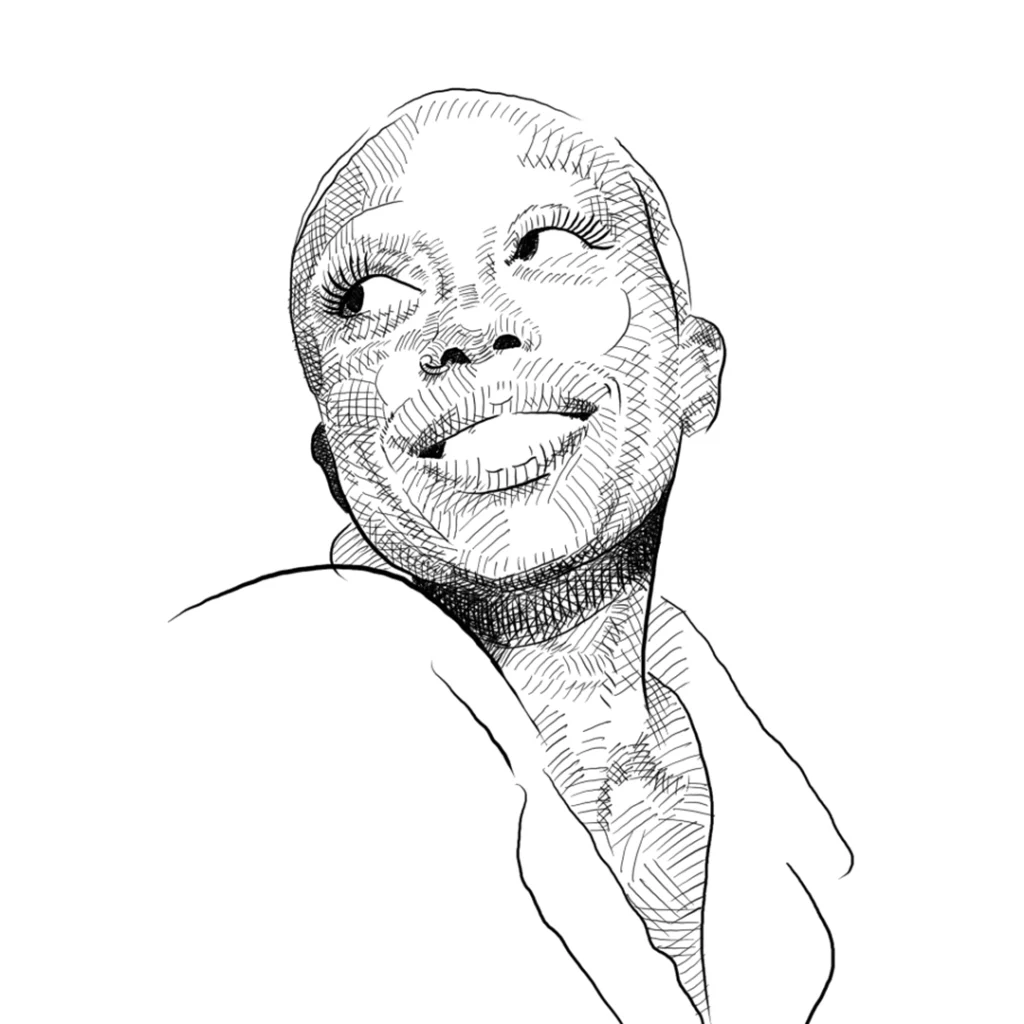
It’s hard to look away when Amari Marshall is on a stage—which is an impressive feat considering she’s often dancing next to Beyoncé.
But long before she became dance captain for the musician with the most Grammy Awards of all time, Marshall found her footing in the Bold New City of the South. In her hometown of Jacksonville, she took her passion for dance to the next level through her church.
“There was a traditional West African dance team there, and me and my sister joined,” Marshall, 32, says. “My parents love music, but (for me and my siblings) dance was the one that was really screaming loud,” she says. So her parents listened—they formed Systematic Dance Crew, a dance troupe in Jacksonville where their children and their friends could perform.
And when the team had the opportunity to perform at BET’s Wild-Out Wednesday competition in 2009, they did their hometown proud. “It felt like David and Goliath,” Marshall recalls. “You have this team from Jacksonville, Florida, going up against someone from New York and … we actually won the championship.”
The Wild-Out Wednesday win gave Marshall the confidence to pursue a career in the dance industry. In subsequent years, she danced professionally with Janet Jackson and Lady Gaga, modeled for Nike campaigns and choreographed on multiple tours for Beyoncé.
Most recently, Marshall brought a Sunshine State spin to the stage on Beyoncé’s Cowboy Carter Tour—the highest-grossing country tour of all time, according to Rolling Stone.
It felt like David and Goliath. You have this team from Jacksonville, Florida, going up against someone from New York and … we actually won the championship.
—Amari Marshall
“For Beyoncé, Southern country experience is through the Black Texas lens, versus (mine is) from the Black Floridian lens mixed with all these different cultures too. Because you have a huge Filipino community, a huge Indian community, a huge Caribbean community, all these different people that I grew up with.”

After 12 years away from her hometown, Duval County has called Marshall and her global talent back. While she continues to showcase her own art in A-list shows across the country, she’s also investing in Jacksonville by offering free community classes for budding performers.
Marshall never lost her fluency in Floridian dance, a culture that spans the entire state, from the jazz and funk-centric rhythms of South Florida to the swaggy shoulders of Duval County. No matter where she performs, Marshall recognizes these calling cards of movement onstage as subtle signals of shared roots. Now, she gets to explore them every day by teaching the future generation of performers—whether it’s with the woo, crumping, line dancing or another style woven into Florida’s cultural fabric.
“Anytime you go to a function by any type of Floridian, you’re always going to see dance,” she says. “Dance is a medium and a language that we all share.”
Billy Corben: Caught on Film
The fearless filmmaker exposes and documents some of Florida’s most scandalous secrets.
By Craig Pittman

Miami documentary director Billy Corben and his Rakontur partners Alfred Spellman and David Cypkin could have been archaeologists. They’re that adept at digging up dirt.
The Rakontur auteurs use their films to tell the stories behind some of Florida’s wildest scandals, touching on everything from politics and religion to drugs and sports. They’re one of the keepers of Florida culture—the scandalous division.
Their hits include “Cocaine Cowboys,” on the real-life smuggling stories that inspired the “Miami Vice” TV show; “God Forbid” on the Miami pool-boy sex scandal that felled Liberty University’s Jerry Falwell Jr.; and “Screwball,” about the Miami steroid peddler who supplied baseball superstar Alex Rodriguez and others. All feature scenes of unhinged behavior, often accompanied by sprightly salsa music.
“Florida is our muse,” says Corben, a former child star who began writing scripts and directing when he was in middle school. “Miami is our inspiration.”
The level of corruption just keeps growing, he said, resulting in even wilder stories for them to tell. Spellman jokes that whenever someone finishes a prison sentence in South Florida, “your first call is to your mama, and your second one is to us.”
Corben, 47, says he and his partners are now working on a new system for delivering their filmed output directly to their fans. Some of them would be their hits, of course, but some would be content produced exclusively for their customers. The way he talks about it, it sounds like a cross between the Criterion Channel and Jimmy Buffett’s Coconut Telegraph. The dedicated YouTube channel is supported by ads and sponsors, Corben explains. That way, they won’t have to wait for an outlet to give them a green light for a film. They can just create whatever they want.
One of the projects they’re working on for their new delivery system, Corben said, is called “City of Progress,” about a huge scandal that blew up in Hialeah involving a corrupt cop who was cleared by the state attorney’s office and even promoted before he was exposed by the Miami Herald and prosecuted by the feds. At this rate, Rakontur should go on forever because they will never run out of Florida stories to tell.
Julie Wraithmell: Guardian of the Flock
The lifelong avian enthusiast ushers in a new era of the Audubon Society.
By Helen Bradshaw
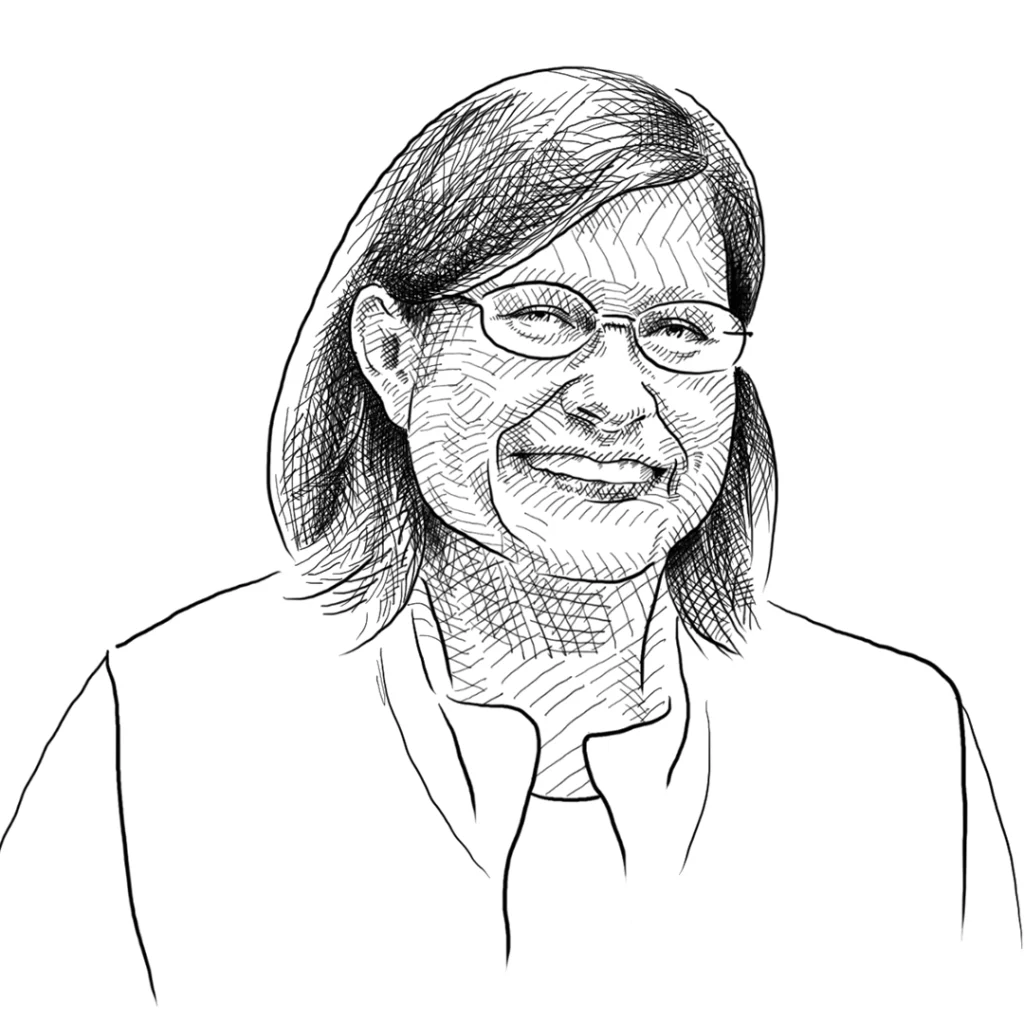
There was a reason Julie Wraithmell loved a Seminole County Little League game when she was a kid, and it wasn’t tee-ball. “I remember being relegated to the outfield because I just wasn’t that great to begin with. But I was fine with it because in the winter, the flocks of American tree swallows sweep through,” she says. “It’s like being in the middle of a tornado. I would stand out in the blustery outfield with metallic blue and white flashing jet fighters zooming all around me. Of course, I missed the ball. Because who cares about a ball when you’re in the middle of that?”
Now, serving as the executive director of Audubon Florida, she still looks at Florida’s birds with the same wonder. To her, a Mississippi kite is a “summer thunderstorm,” and a flamingo is a “feathered Floridian comeback story.” She treats every bird—all members of an avian community to which she’s dedicated her career—with the same reverence.
The history of the Audubon Society is a history of Florida, founded out of a fight to end the plume trade. It spans from the founding women of the Audubon Society lobbying to protect birds before they could even vote to the hiring of the state’s first wildlife wardens, who were murdered by poachers while protecting wading birds. Wraithmell, 50, is the most recent guardian in a 125-year-long line of fierce Floridian bird stewards.
It is a rapidly growing state, and a lot of the landscapes that make us special require intentionality to make sure that we don’t lose the very thing that makes Florida special.
—Julie Wraithmell
Throughout her career, Wraithmell has ushered in major milestones, like leading the creation of the Great Florida Birding & Wildlife Trail. And she’s also seen heartbreaking setbacks, like the Deepwater Horizon oil spill that swamped the Panhandle coastline. But it’s the everyday work to connect the government, scientists and passionate citizens that most defines her legacy.
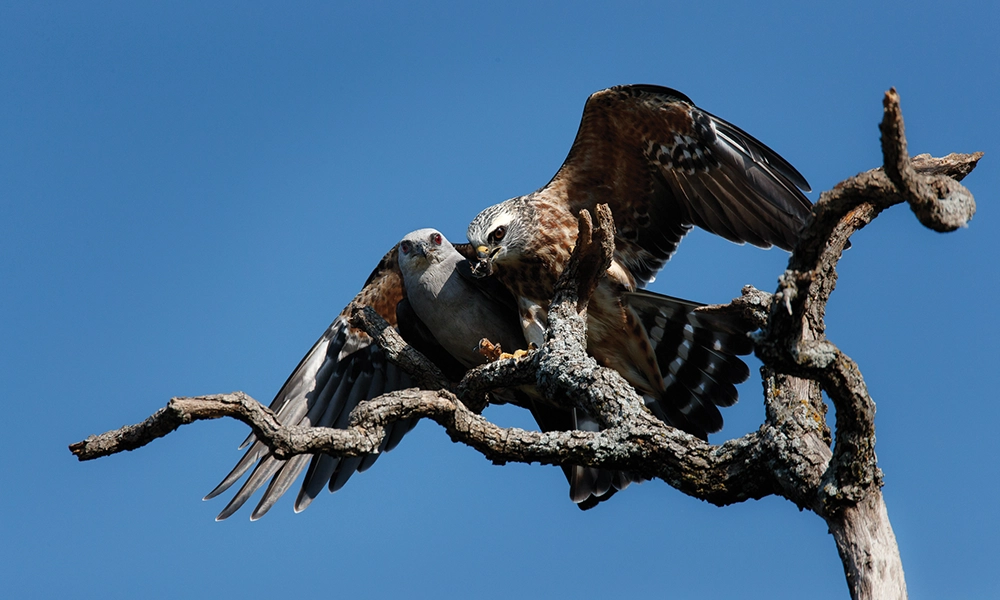
“It is a rapidly growing state, and a lot of the landscapes that make us special require intentionality to make sure that we don’t lose the very thing that makes Florida special,” she says. “Science in a vacuum without the ability to influence the policies that govern is powerless.”
Wraithmell goes on to note, “Folks like to think of Florida as a place of sinkholes and hurricanes and pythons and hanging chads and internet memes. But we’re also a place of cowboys and astronauts and the site of the country’s first National Wildlife Refuge and the world’s largest ecosystem restoration. And we’re the crucible in which Audubon was founded. I think that’s the foundation of the country’s entire wildlife ethic.”