by | December 8, 2025
The Last of the Gladesmen
A part of Everglades culture is disappearing, leaving behind the echoes of Old Florida.
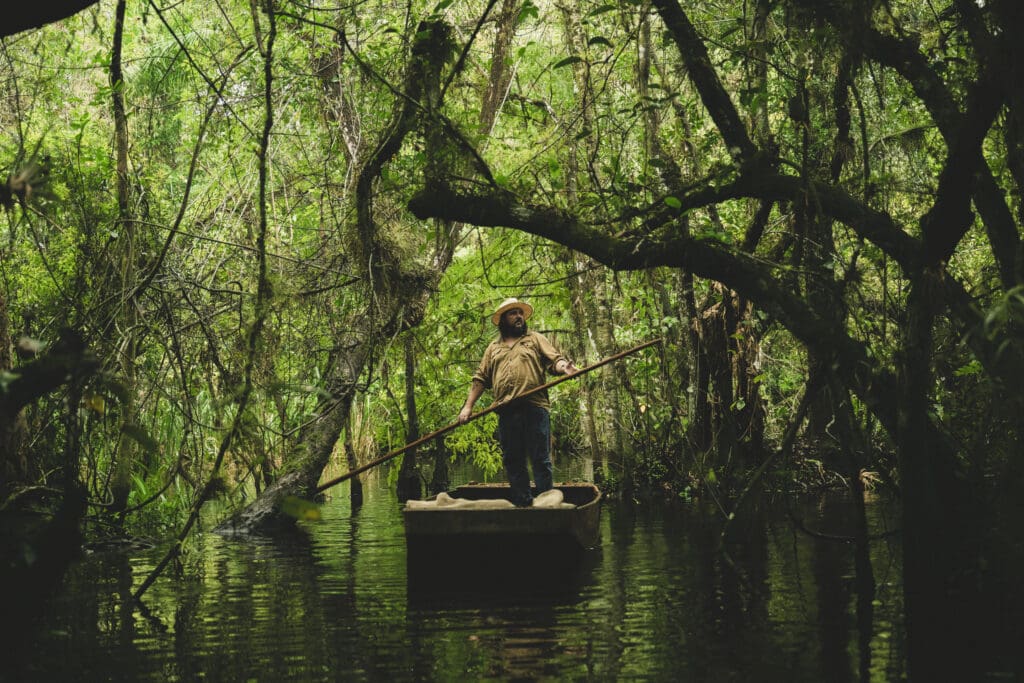
Gliding through the quiet channel, my guide stands at the stern of a shallow draft boat, navigating with nothing more than a long, hand-carved oar and his intuition. Each row’s gentle splash stirs memories of a Venetian gondola ride, but this tour is far from anything you’d find in Venice, Italy—or nearby Venice, Florida, for that matter. Instead of palazzos or piazzas, I’m flanked by pond apple trees and algae. No stack of gelato in sight, only the snout of a gator poking up through the waters.
My guide—not a gondolier, but a Gladesmen. Low-hanging branches scrape against my scalp, a necessary exchange as the red mangrove tunnel repels the onslaught of mosquitoes and no-see-ums that swarm the launch site. By the time the canopy opens onto the river’s wide northern headwaters, the bugs and the sounds of the highway disappear, leaving us in the tranquil Turner River, stretching 8.5-miles from just north of the Tamiami Trail in the Big Cypress National Preserve to Chokoloskee Bay in Everglades National Park.
This excursion through Big Cypress National Preserve is unlike any ecotour in the area. Jack Shealy, a fourth-generation Gladesmen, wades through the same fresh water habitats he explored as a child. Unlike the Seminole and Miccosukee Tribes that share these swamps, the Gladesmen are a community that formed when pioneer families, like Shealy’s, developed a shared culture and ideology while living within one of the Southeast’s most inhospitable regions over a century ago.
I joined Jack for this traditional pole boat ride to learn more about the history of a forgotten Florida lifestyle that’s disappearing faster than the Everglades itself.
The Last Generations
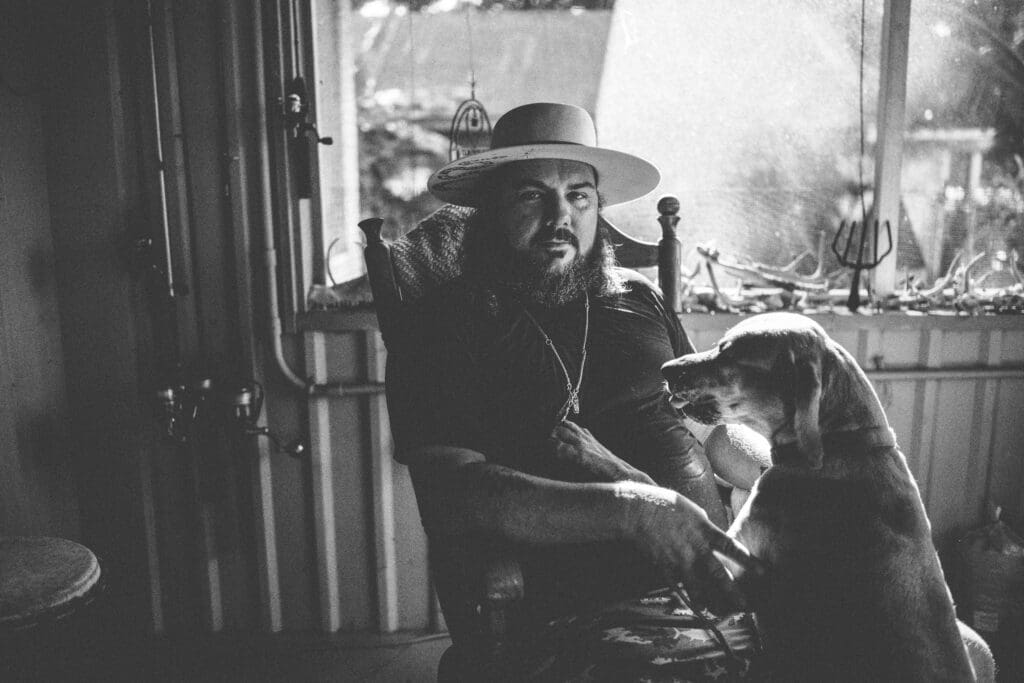
“Our kids know that we’re Gladesmen. Growing up, I did not know that,” says Jack, stopping midthought to point out a small green heron watching us from the tree line. Although his father and uncle rarely used the term, Jack grew up living the traditional Gladesmen lifestyle—one that is quickly disappearing—which included frog gigging, hog hunting and fishing here along the Turner River.
“We were called a lot of different things—rednecks and swamp rats—but Gladesmen was not one of them,” Jack says.
The first Shealy members to become Gladesmen moved to Chokoloskee Island, on the edge of the Everglades and Ten Thousand Islands, in the late 1800s—though it was Jack’s machinist grandfather who purchased their current homestead in Ochopee. Set back from the highway, the compound is now home to three generations of Shealys living in separate houses tucked among bald cypress trees. Like other Gladesmen families, they live off the land sustainably and coexist peacefully with the neighboring Seminole and Miccosukee tribes.
Many Gladesmen have left the unforgiving environs, particularly after the formations of Everglades National Park and Big Cypress National Preserve set restrictions and regulations on how locals like the Gladesmen could access and utilize the landscape. The families who stayed had to find new ways of living on the small patches of property they retained.
Jack’s grandfather allocated 30 acres for the Trail Lakes Campground in 1961, which now accommodates primitive tent camping, RV sites, air-conditioned cabins and traditional Native American chickee huts—raised wooden platforms perched above the mangroves and shaded by a thatched roof of palm fronds. Their site in Ochopee further evolved to include Everglades Adventure Tours, offering kayak, canoe, hiking and pole boat excursions—and the Skunk Ape Research Headquarters.
We were called a lot of different things—rednecks and swamp rats—but Gladesmen was not one of them.
—Jack Shealy
Jack, his wife and two sons live on the property with his father, Dave, and his uncle. They live one mile east of the smallest operating post office in the United States, which Jack’s grandmother used to manage.
Gliding through the Turner River, Jack reflects on how much has changed in the 42 years he’s called Ochopee home. The waterway itself was once the site of Turner’s River Jungle Gardens, a tourist attraction with airboat tours and animal exhibits that helped educate the public on the fragility and importance of protecting the habitat.
Beyond the river, the entire Everglades region has suffered for decades due to man-made water diversions from roads and drainage projects, according to Steve Davis, chief science
officer for The Everglades Foundation. Restoration of the ecosystem is not one but many individual projects that focus on localized areas.
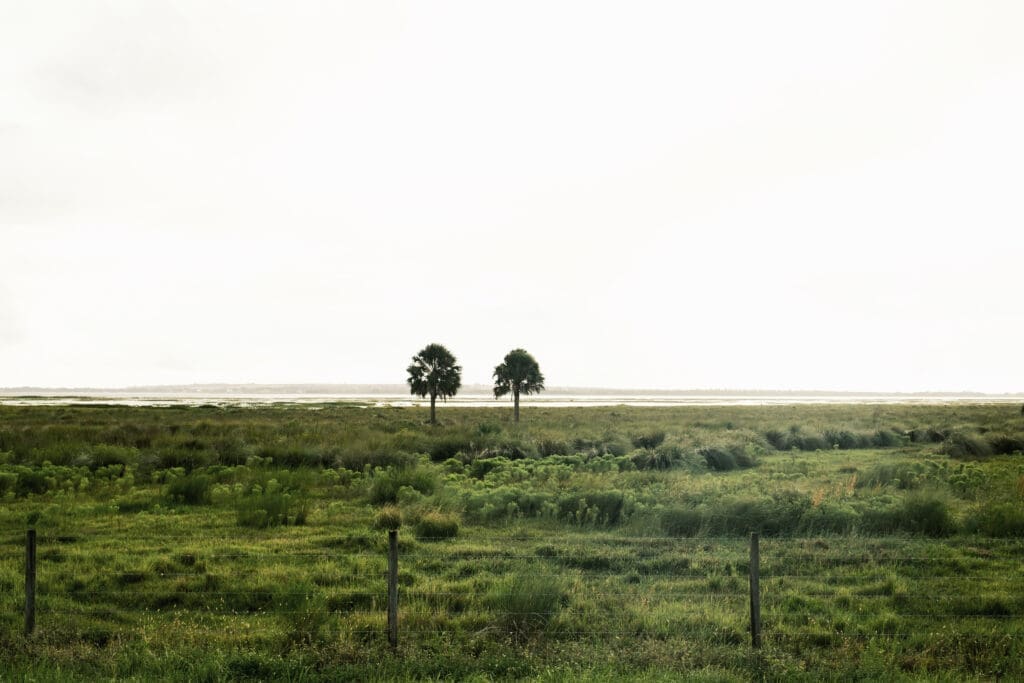
“When those projects accumulate across the landscape, we get larger and larger benefits,” says Davis, noting that Everglades National Park has shown substantial improvement because of restoration projects, like those reconnecting natural water flow beneath the Tamiami Trail.
“Western Everglades restoration was a project that was only authorized last year,” Davis says. “It will take time for that project to continue to be built out to where we’ll start to see some benefits in Big Cypress National Preserve.”
Until then, local families like the Shealys often see only the negative ecological impacts accumulated over decades, especially those that have altered their lifestyle. Not only is Turner’s River Jungle Gardens gone, but so are most of the small game the family once depended on, due to human hunting and decades worth of habitat disruption via infrastructure development, invasive species and climate change.
Even the rectangular pole boat that moves through the water is a relic of the past that not even Jack grew up using. The vessel, made out of plywood and fiberglass, looks as basic as its accompanying pole oar—no paint job and zero pizzazz. The pole boat is as utilitarian as they come, so much so that Jack brings portable chairs to spare visitors from sitting on the dirty, unfinished hull. And, yet, despite years of exposure to the swamp, it’s dependable, efficient and sturdy: the very hallmarks of the Gladesmen lifestyle.
Everglades Adventure Tours is the only company offering private guided pole boat eco-tours, and Jack is the sole guide with Gladesmen heritage leading the experience. He encourages visitors to do their research before booking tours advertised as authentic.
The allure is literally as clear as day: Reflecting the bright blue sky, the calm waters of the Turner River invite daydreams of a life spent leading vacationers on paddle tours and reciting tales of the frontiersmen who wrestled alligators. The swamp feels tolerant if not welcoming; not a bird, bug or cold-blooded reptile among the sawgrass seems to mind our presence, so long as we kindly share the space and keep to ourselves.
Through his pole boat tours, Jack wants to educate and engage earnest locals and visitors curious about this traditional lifestyle. He teaches them about true Gladesmen: “people that have a multi-generational ethnography of living here, on and with the land, that practice the values of family and sustainable harvest of resources here for sustenance.”
However, many people traveling across the Tamiami Trail or Alligator Alley—roads that cut through the Everglades—won’t learn of the disappearing Gladesmen culture unless they decide, like I did, to investigate the legend of the equally elusive Florida Skunk Ape.
Monsters and Memories
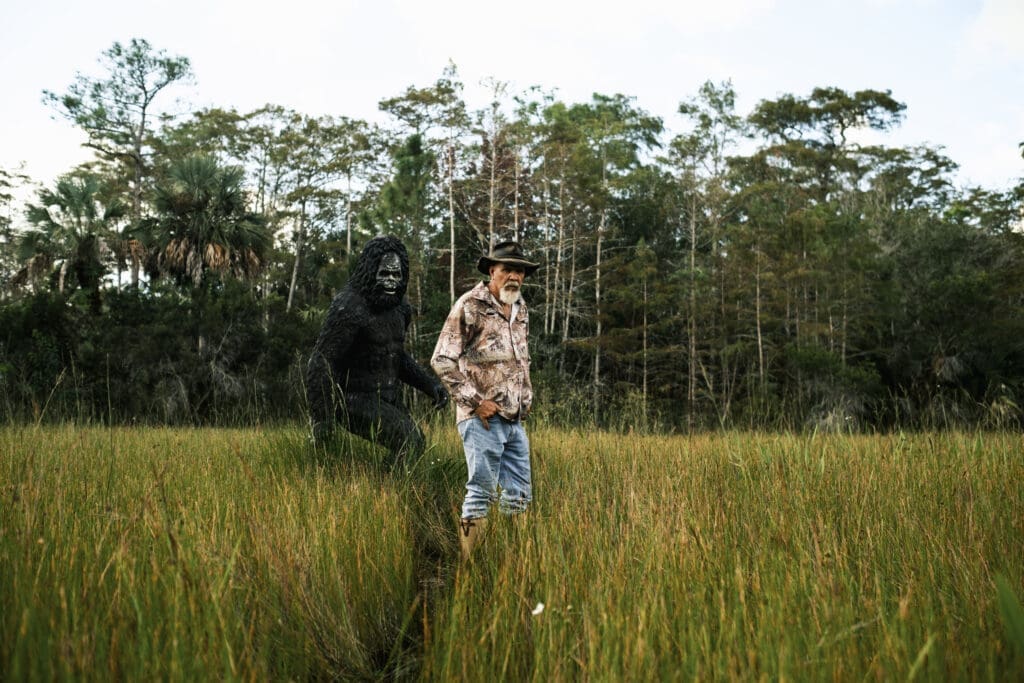
“I swear when I stepped out of the car, there was somebody or something down there. It went from the edge of the road and walked back,” Dave Shealy said.
I see only a single dark green trash bin when I look down the unpaved roadway, but I don’t doubt his claim. The Shealy patriarch has lived in Ochopee for 62 years and has seen everything from the creation of Big Cypress National Preserve and the demolition of former Seminole homes to the introduction of Texas cougars and the removal of Burmese pythons. He’s one of the few that claims to have documented the Skunk Ape, which is believed to be a large bipedal species similar to Bigfoot with alleged sightings as far north as the Panhandle.
He says he first saw the Sasquatch-like creature at the age of 10 while exploring the swamp with his older brother. Despite carrying a gun, the Shealy boys hot-footed it back home without a passing thought of harming the beast. Dave captured its image on a disposable camera decades later in 1997, and in 2000, caught the Skunk Ape on video—the footage of which is featured on the Smithsonian’s website.
Dave claims that the Skunk Ape mythology, while circulated locally for centuries prior, wasn’t as widely discussed until his photos spurred conversation. He opened the Skunk Ape Research Headquarters intending it to be a 24-hour attraction where travelers could search for the eponymous anomaly, or at the very least, view “Big Mamma,” the Shealys’ 13-foot captive Burmese python, for $1.
Over the years, the Skunk Ape Research Headquarters expanded to include casts of the Skunk Ape’s footprints, a field guide listing the alleged sightings by other locals and visitors and, until her death in 2025, a massive reticulated python called Goldie that lived at the attraction for over two decades.
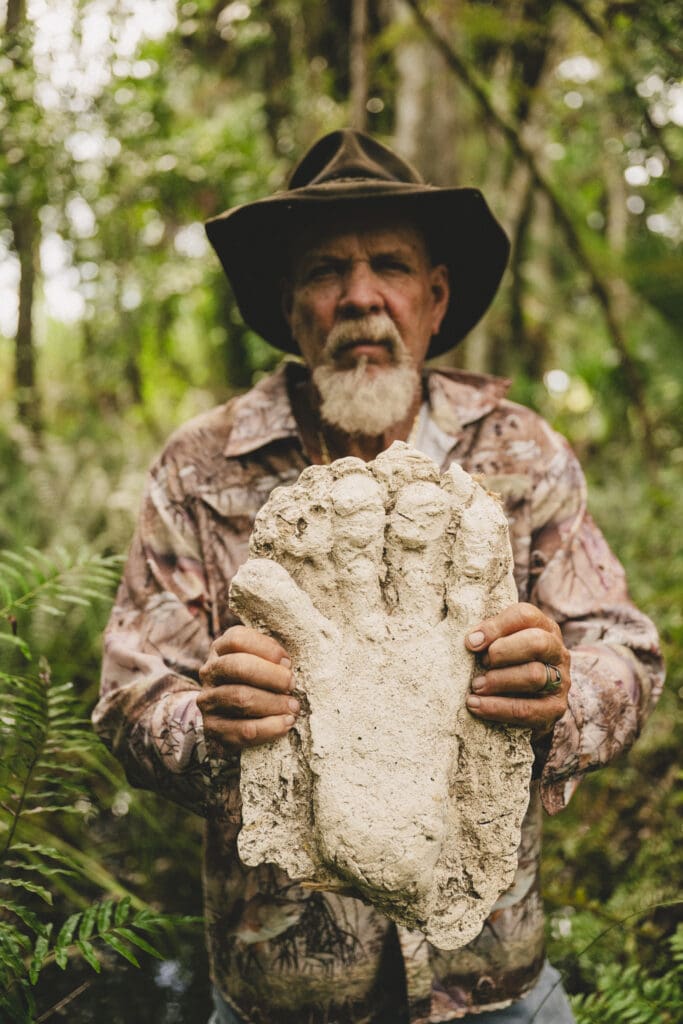
Although Dave sold the company to his son Jack in 2009, his business with the Skunk Ape is far from over.
“Am I completely retired? No. Skunk Ape hunting is like being a cop: It’s never over,” Dave says as he scans the trees for movement. He points to pond apples ripening on the branches, mentioning that they’re one of the tree-climbing Skunk Ape’s favorite fruits and that sightings in this area are prevalent.
Dave still explores the Big Cypress National Preserve’s prairies, estuaries and hardwood hammocks primarily on foot. He’s encountered—sometimes painfully—rattlesnakes, crocodiles, bull sharks and black bears and recalls his last Skunk Ape sighting around 2005.
“I’m easing through the palmetto thicket and noticed the frond shaking hard ahead of me,” he says, gesturing across the prairie. “Then, boom! I see it stand up.”
The scientific community generally suggests that Skunk Ape sightings are misidentified as bears standing on their hind legs. But, in this instance, Dave specifically noticed that the wild creature lacked the pointy ears and sloped nose of a Florida black bear. It also had the Skunk Ape’s hallmark moldy scent.
Am I completely retired? No. Skunk Ape hunting is like being a cop: it’s never over.
—Dave Shealy
“It moved away from me pretty fast and never dropped back down like a bear would,” he remembers. “But the biggest thing about this particular sighting was, as soon as it moved away, I saw two other things moving through the palmetto. They were smaller; I think it might have been some baby Skunk Apes.”
We continue our drive through the dirt roads of Big Cypress National Preserve, our heads swiveling from side to side in hopes that the Skunk Ape would reemerge. Nothing, save for a sunbathing alligator and the occasional wading bird, does. It’s been 20 years since Dave’s last Skunk Ape sighting, but he still believes the creature roams the swamp and wishes others believed too. “I would like to see some recognition, park signage or inclusion in the regulations for the preserve,” he says. “I’d like the Skunk Ape to become known as a symbol for the conservation and wise use of natural resources.”
His son Jack, however, sees a different future for the Skunk Ape Research Headquarters, one that uses the creature’s popularity to spread the word about a vanishing Gladesmen culture.
A Smithsonian for Gladesmen
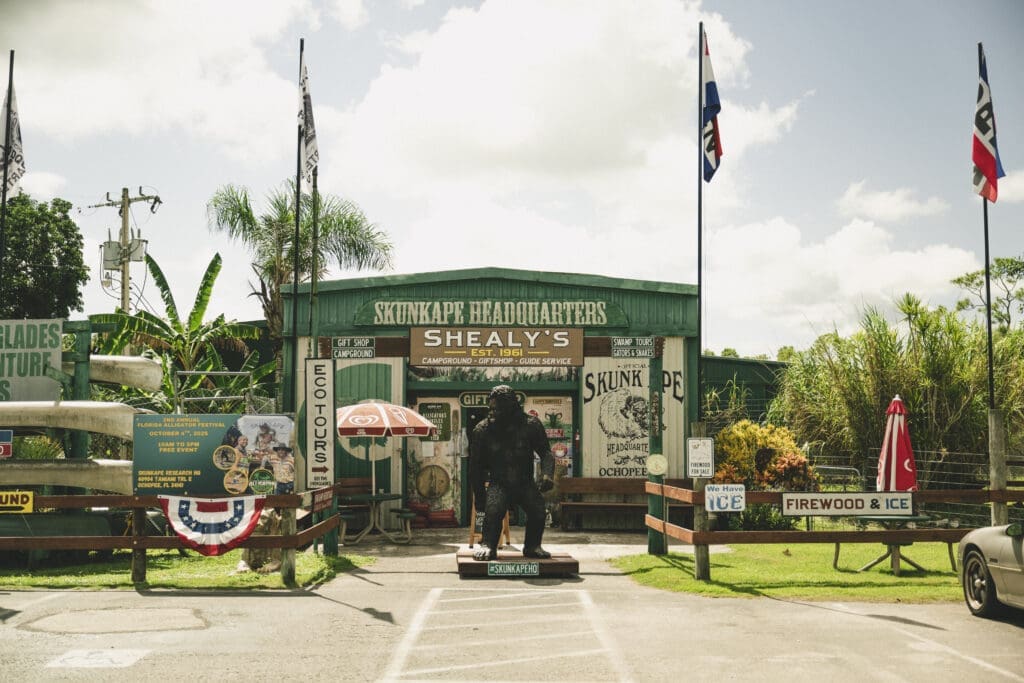
Located along Highway 41 in Ochopee, the Skunk Ape Research Headquarters, which sees about 100,000 visitors annually, is the quintessential Florida roadside attraction: quirky enough to stoke a driver’s curiosity and convenient enough to pull into if only for a quick bathroom break or stick of jerky.
Sasquatch statues flank the shacklike facade advertising swamp tours, dangerous reptiles and a campground. An air-conditioned gift shop stocks Skunk Ape stickers, shirts, hats and shot glasses, while the adjacent animal exhibit houses alligators, a red rat snake, a snapping turtle and a Burmese python.
The cryptid community, unsurprisingly, journeys to Ochopee craving firsthand reports of Skunk Ape sightings. While the novelty of Florida’s mythical beast draws in most visitors, Jack has noticed an increase in ecotourism interest.
But his long-term business goal? Jack envisions a Gladesmen heritage museum on the property that preserves and promotes this piece of Florida.
“The history of the moonshiners and the alligator hunters,” Jack suggests. “The history of the Everglades and Tamiami Trail. The evolution of the airboat and the swamp buggy. There’s enough to build a whole museum around the Gladesmen heritage and now, more than ever, we need a place for it.”
Jack brings me behind the scenes into his workshop, where he holds an impressive collection of Gladesmen artifacts: Frank Dininger’s alligator hunting boat, Glenn Simmons’s blade skiff, a vintage hand-cranked airboat and even Loren “Totch” Brown’s gator skiff, shown on the cover of his historical Gladesmen memoir, “Totch: A Life in the Everglades.”
“This thing belongs in the Smithsonian, dude,” Jack says of Brown’s skiff. “I’m saving and saving; I have one cabinet just for the evolution of frogging and alligator hunting lamps.” It’s easy to envision a Gladesmen museum on the Shealy property as a living snapshot of an Old-Florida lifestyle that combines Jack’s museum exhibits and family memorabilia with interactive stations like game cleaning rooms and trolley rides.
“It’s a no-brainer,” Jack insists. “It’s going to win. It’s just a matter of getting it done with one set of hands.”
Rare and Rebounding
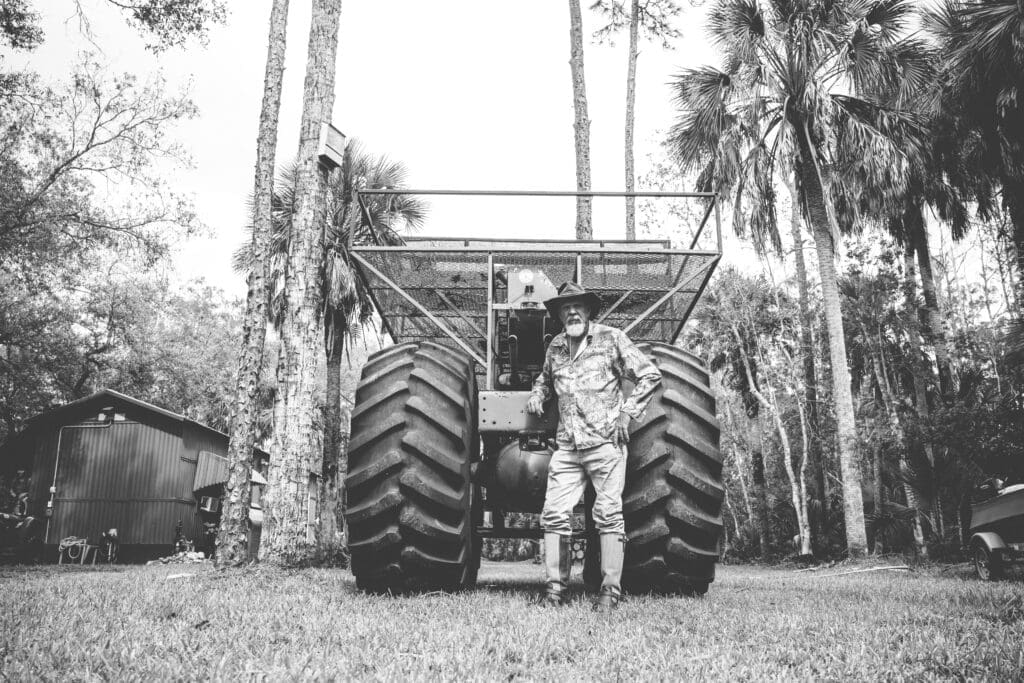
Dave idles the airboat’s engine at his property’s edge, pointing to the distant tree hammock seen in his Skunk Ape video. He wants to take me deeper into the wetland but legally cannot.
“It’s a story with a happy ending … but it’s not. It’s not been happy,” he says.
Unlike the Gladesmen, the Miccosukee and Seminole tribes have special exceptions granted by the National Park Service related to their traditional use and occupancy of Big Cypress National Preserve. The Army Corps of Engineers did an ethnographic study of Gladesmen cultural sites and recommended they be preserved, but it wasn’t sufficient enough for properties like the Shealy’s to gain official designation. Instead, they must wait a decade for reevaluation.
“It’s sad when I walk in the woods and look behind my house and know that I’ll never be able to airboat again,” Dave says.
Dave acknowledges both the need for conservation and what he believes are contradictory methods to achieve it. For instance, he’s prohibited from riding his airboat into the backcountry for fear of habitat destruction but notes that the development of roadways and state-run RV camping sites for Big Cypress National Preserve has damaged the ecology and endangered the ecosystem.
If your way of life is your identity, and then the things that are connected with your way of life are taken away, your identity is taken away.
—Jack Shealy
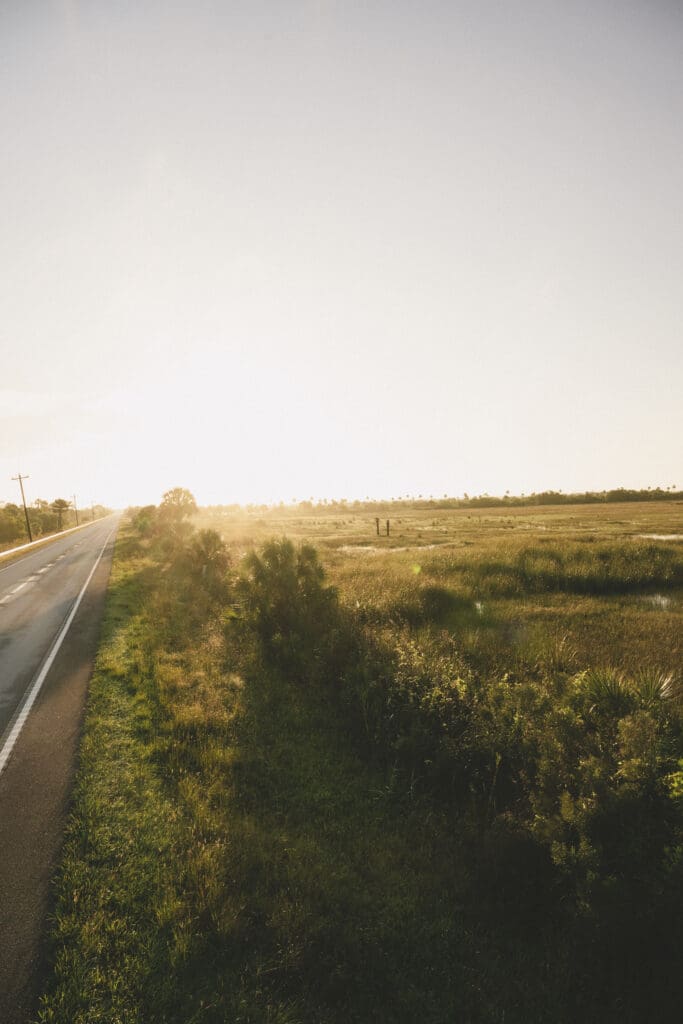
And if you ask his son Jack about the most dangerous part of the Everglades, he’ll point to Alligator Alley, the stretch of I-75 connecting Naples to Miami. “There’s nothing this thing hasn’t killed. Every species of wildlife, everything that lives on Earth, has died on that highway,” Jack says.
Davis, the Everglades Foundation scientist, agrees that the area’s development has played a role in ecological damage, especially Alligator Alley.
“The road itself has cut off water sheet flow, and the Tamiami Trail, in some areas, is still kind of a dam across that part of the ecosystem,” Davis says. “When you also add in sea level rise, there have been changes to the extent where mangroves have infiltrated farther inland with reduced flows. There are also canals farther north of Big Cypress that have diverted water away from part of the preserve. That’s what the Western Everglades restoration project hopes to resolve.”
But at the heart of it, Dave feels that he, his family and his culture are being overlooked and undervalued.
“When they made up the rules, they cut my family out,” he says. “A lot of people sold their homes. A lot couldn’t take it.”
Someone made an offer was made on the Shealy property 20 years ago, but Dave couldn’t abandon his family’s home, even as their livelihood was forcibly altered. He knows of very few Gladesmen families still in the region and doubts there’ll be future generations. He uses the Skunk Ape Research Headquarters as a platform to talk about the Everglades and his family’s struggle.
Jack’s ambitions also prioritize his family’s past and future. Along with supporting his own wife and children, he financially supports his father and uncle.
“I’ll be honest,” Jack tells me as we unloaded the pole boat. “I just want to not live in fear of trying to keep our lifestyle. I worry about access to wildlands and regulations and things changing over time, because I’ve seen how much they’ve changed in my lifetime. If your way of life is your identity, and then the things that are connected with your way of life are taken away, your identity is taken away.”
Most visitors to Ochopee, unaware of the Gladesmen, arrive eager to spot the rare and rebounding: the bloom of a ghost orchid or the flash of a panther. And while alligators abound, there is no guarantee of spying other species. I came to the swamp in search of the Skunk Ape, but instead I found a family clinging to hope and their withering roots.
Like the Everglades, the fate of the Shealys and their Gladesmen culture hangs in the balance. Will enough people outside of the swamp start to care enough to help save it? For his family’s sake, Jack sure hopes so.
“This place is meant to sustain life. Thousands of years of human history proves it,” says Jack, as he plucks a mango from a tree behind his workshop. “This place has changed, and I feel like not talking about it is the worst thing to do. If you’re not acknowledging it, you’re not really doing your job as a steward of the land.”