by | September 1, 2026
Eat Your Way Through Miami’s Latin and Caribbean Neighborhoods
Follow Miami's Latin and Caribbean migration stories through fritas in West Miami, Nicaraguan feasts in Sweetwater, Venezuelan arepas in Doral and Caribbean kitchens dotted throughout.
Miami’s immigrant history is written as clearly on its menus as it is on a map. Follow the scent of grilled carne asada and fried cheese, and you’ll land in Sweetwater, where Nicaraguan families rebuilt lives and businesses in a city nicknamed Little Managua. Go on the hunt for a Cuban frita, and the trail will lead west from tourist-packed Calle Ocho to a family counter in West Miami. Head south, and Homestead’s taquerias tell a story rooted in the farmworkers who have long sustained South Dade agriculture. In North Beach, empanadas, medialunas and soccer chants spill from Collins Avenue storefronts; in Doral, arepas and cachapas draw locals to low-slung shopping plazas that have become gathering places; across north Miami-Dade County, the Caribbean flavors take over, from smoky Jamaican jerk chicken to citrusy Haitian griot.
The best-known immigrant food stories in Miami are often defined by two established neighborhoods: Little Havana and Little Haiti. Both remain essential, but the county’s culinary geography is larger and more fluid than any tidy enclave map suggests. Some communities built visible cultural centers then expanded outward; others have formed corridors of restaurants, bakeries and markets across municipal lines. To better understand the migrations that built modern Miami—and for the city’s most authentic eats—start at Calle Ocho, then keep driving.
Haitian Tradition
And a Table for Organizing
Haitian migration reshaped parts of Miami, particularly beginning in the 1970s, when newcomers fleeing political repression and economic hardship revitalized an area once known as Lemon City. It became Little Haiti, a culture center of Creole-language media, churches, markets, music and restaurants. Over time, Haitian life also expanded north into North Miami and Miami Gardens.
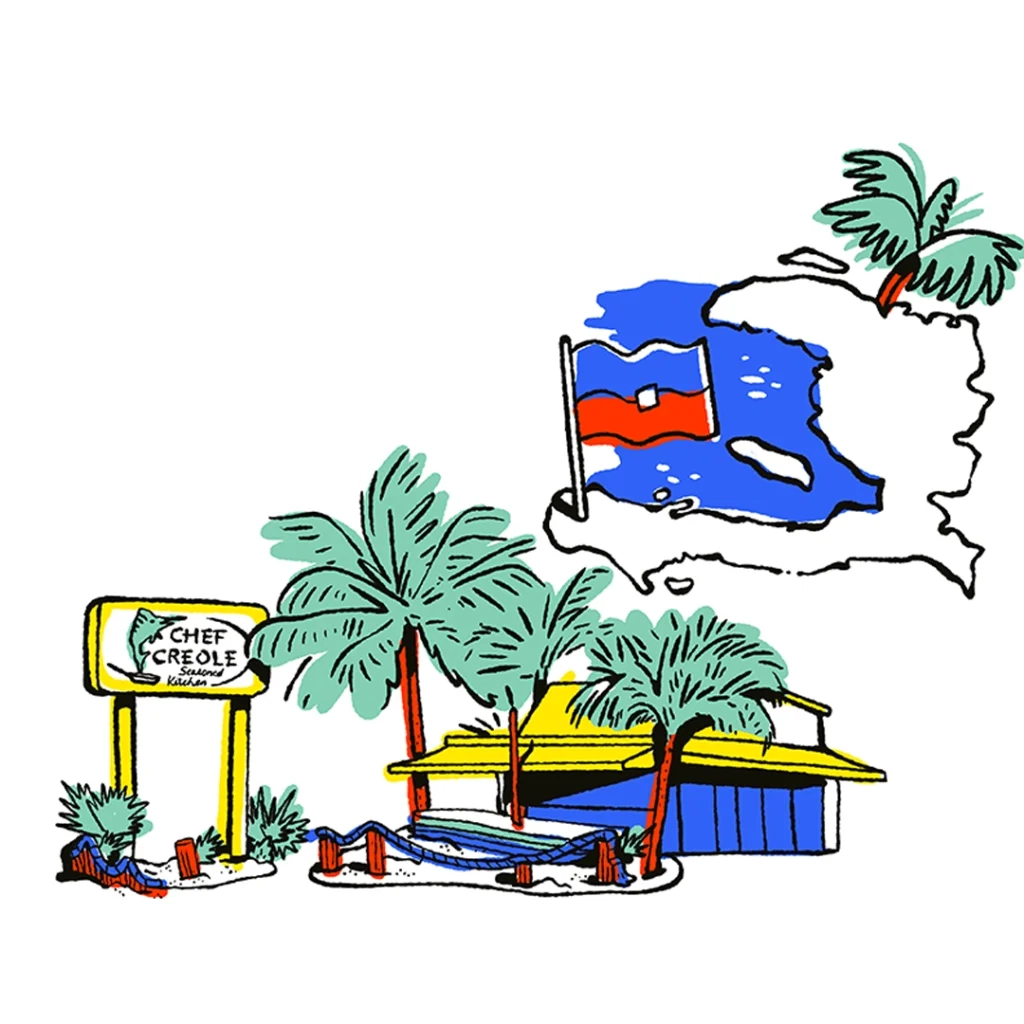
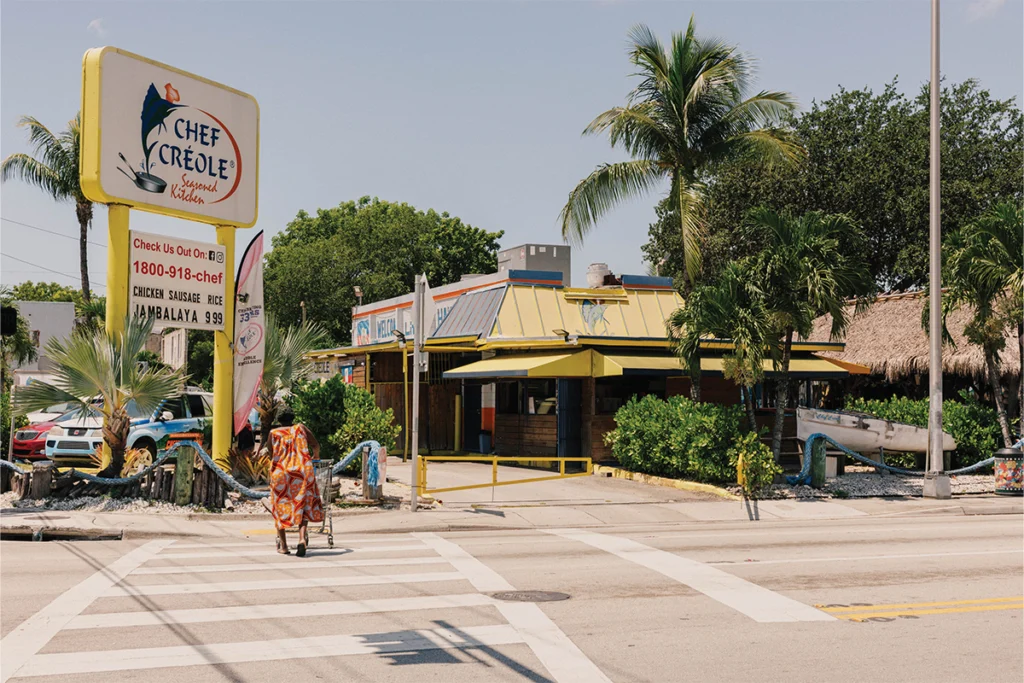
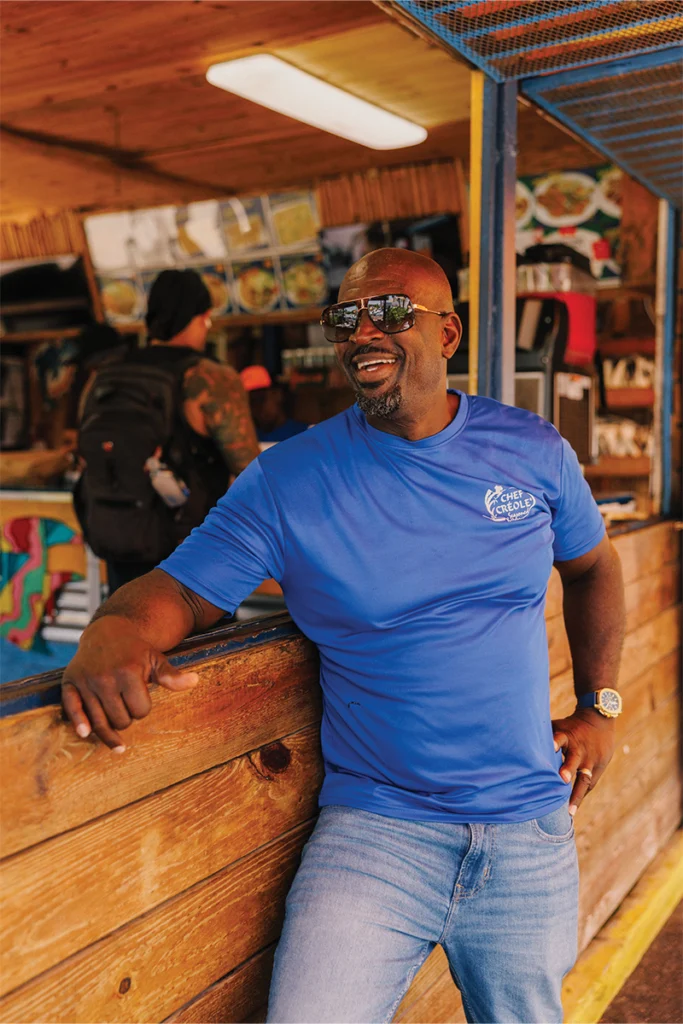
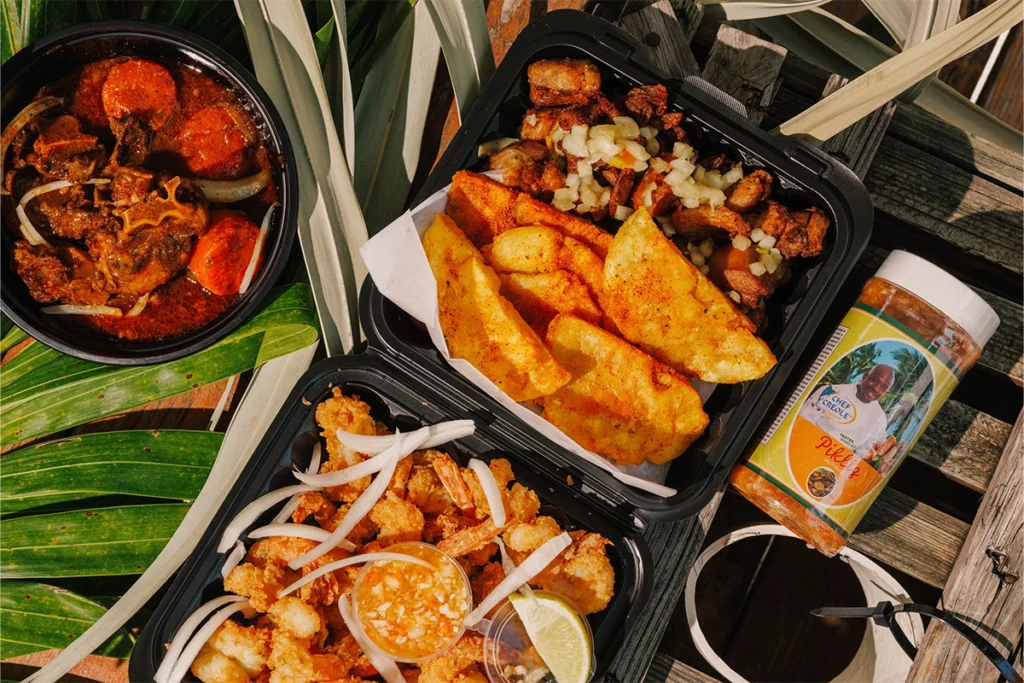
Chef and restaurateur Wilkinson Sejour, 56, has not only witnessed this change, but his restaurants have evolved alongside it. Born in the Bahamas to Haitian parents and raised in Miami, Sejour opened the first Chef Créole in Little Haiti in 1992. His food is rooted in Haitian Creole tradition but deliberately reflects the wider Caribbean world he knew growing up.
While other cultures have adapted their cuisines for Miami’s diverse palates, Haitian food has resisted change because Haitians treasure their traditions, says Sejour. Still, he describes his restaurant’s cuisine as roughly “80% Creole,” with touches of Cuban, Dominican and Trinidadian seasoning folded into a proprietary blend. The goal is not to blur the food’s identity but to make the flavors travel.
Take pikliz, Haiti’s fiery pickled cabbage condiment. Sejour wanted his version to bring in new diners who had not already developed a tolerance for heat. “I want more flavor than intensity,” he says. So he lowered the fire and amplified the
seasoning. That philosophy helped Chef Créole grow beyond an initially Haitian customer base. Sejour recalls radio advertising bringing more Black American diners to try the restaurant’s fried fish; later, he courted Latino customers too. New locations widened the brand’s reach across Miami’s
overlapping Black, Haitian and Caribbean communities.
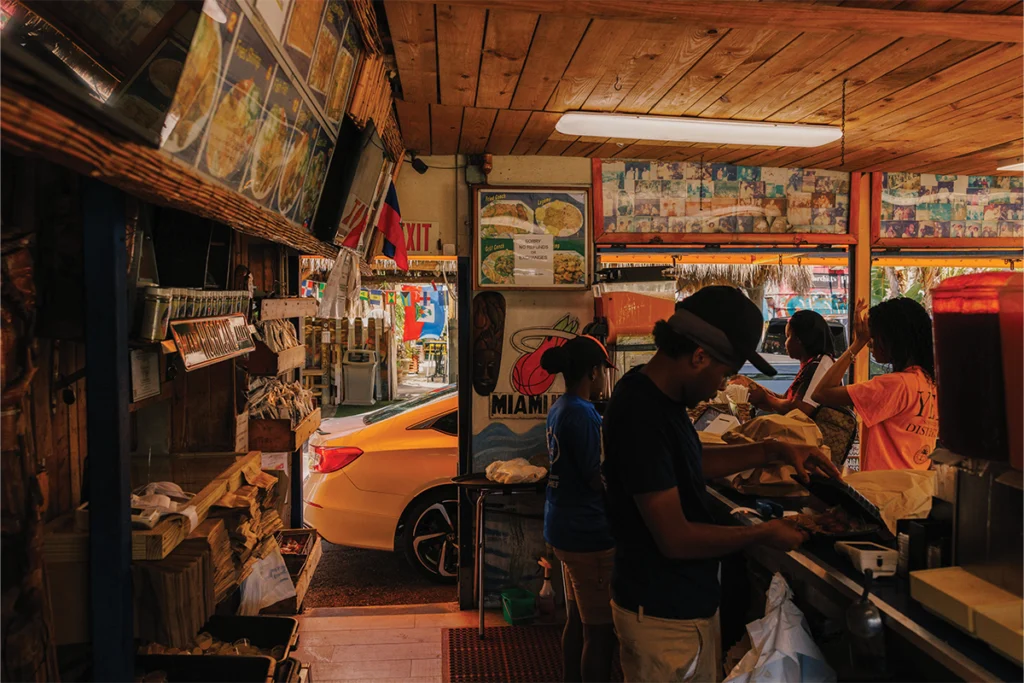
At Chef Créole’s 54th Street location, the restaurant invites visitors in with a hand-painted “Welcome to Little Haiti” sign and an island seafood shack ambiance: A weathered boat rests out front, thick nautical rope lines the property, palm fronds frame the yellow-and-blue building and a thatched tiki hut shades outdoor tables.
Hungry customers can go big with a whole snapper so large Sejour says it needs a party platter, or order other Haitian and Caribbean staples like griot, oxtail or stewed conch. Yet he is just as emphatic about the humble side dishes, like his rice, velvety bean sauce and even the french fries. “You’ve got to make the basics great. My rice needs to be the star,” he says.
For Sejour, his Creole food also acts as a tool for civic action. As locals organized against the proposed Magic City Innovation District, which many worried would displace Little Haiti’s residents, Sejour says he fed neighbors, rented buses and transported them to city hearings. That gave rise to the idea for his on-site entertainment center at the 54th Street restaurant, where Chef Créole now hosts events and cultural celebrations, like Unity Fest in honor of Haitian Flag Day.
Chef Créole has grown into what immigrant restaurants so often become in Miami: not just a place to eat, but a space in which a community can recognize itself.
Cuban Comida
Head West Past Calle Ocho
Little Havana took shape as Cuban refugees settled west of downtown after the 1959 revolution, building businesses, institutions and a public life around Southwest Eighth Street, also known as “Calle Ocho.” But over generations, Cuban Miami has pushed beyond the neighborhood’s boundaries, stretching into West Miami, Westchester, Kendall and north into Hialeah, home to the largest concentration of Cubans in the country.
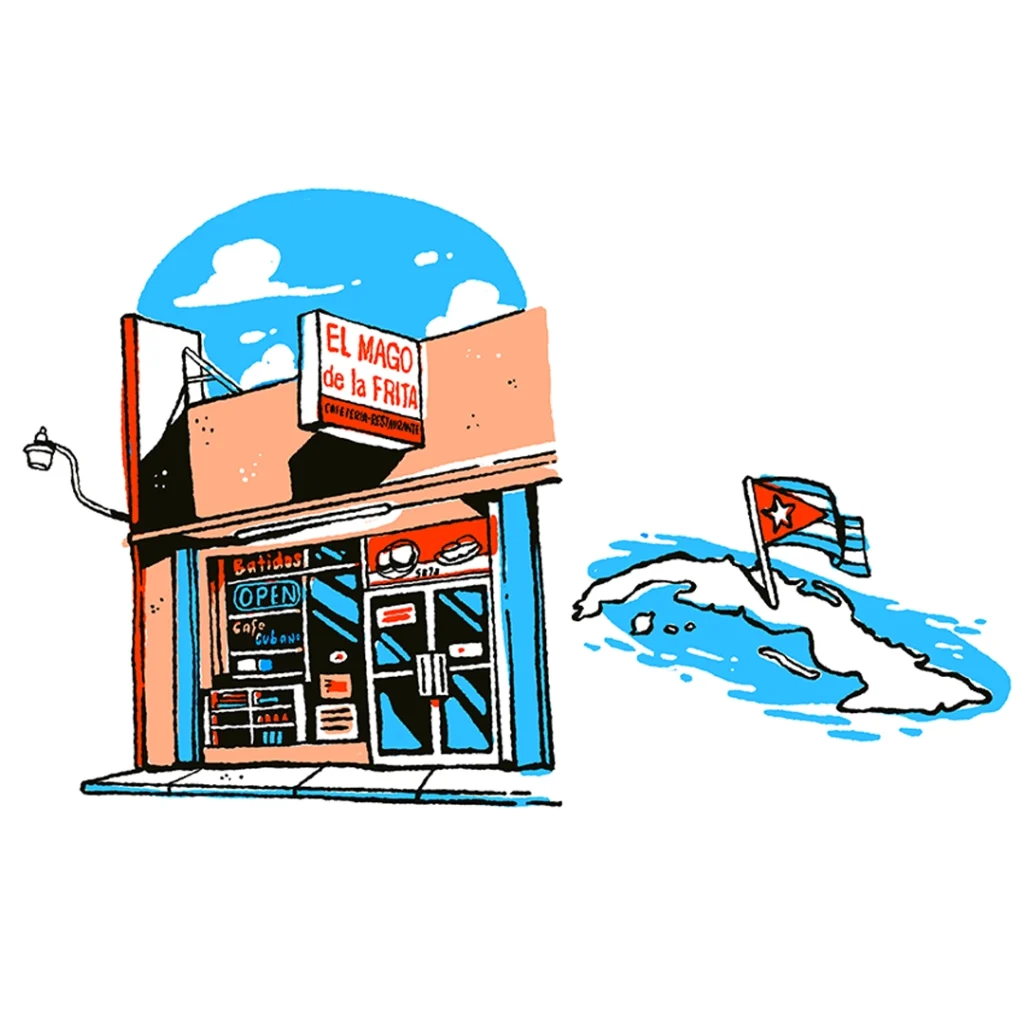
So yes, the Cubano sandwich won’t disappoint. But save room for a frita too. The Cuban-style burger is a Miami classic: a seasoned meat patty (often a beef and chorizo or pork blend) tucked into a soft roll and finished with crisp shoestring potatoes. At El Mago de las Fritas in West Miami, the dish carries a family history that predates the restaurant’s 1984 opening.
Martha Cárdenas, 59, the daughter of founder Ortelio Cárdenas, 87, known as El Mago, or “the wizard,” says the frita tradition came through her mother’s family. An uncle had started a business in Cuba in the 1950s, bringing the concept to Miami. Her father learned from him before opening his own tiny restaurant. More than 40 years later, you can still spot El Mago himself working at the Cuban diner every day or simply seated on a bar stool at the red lunch counter like a regular.
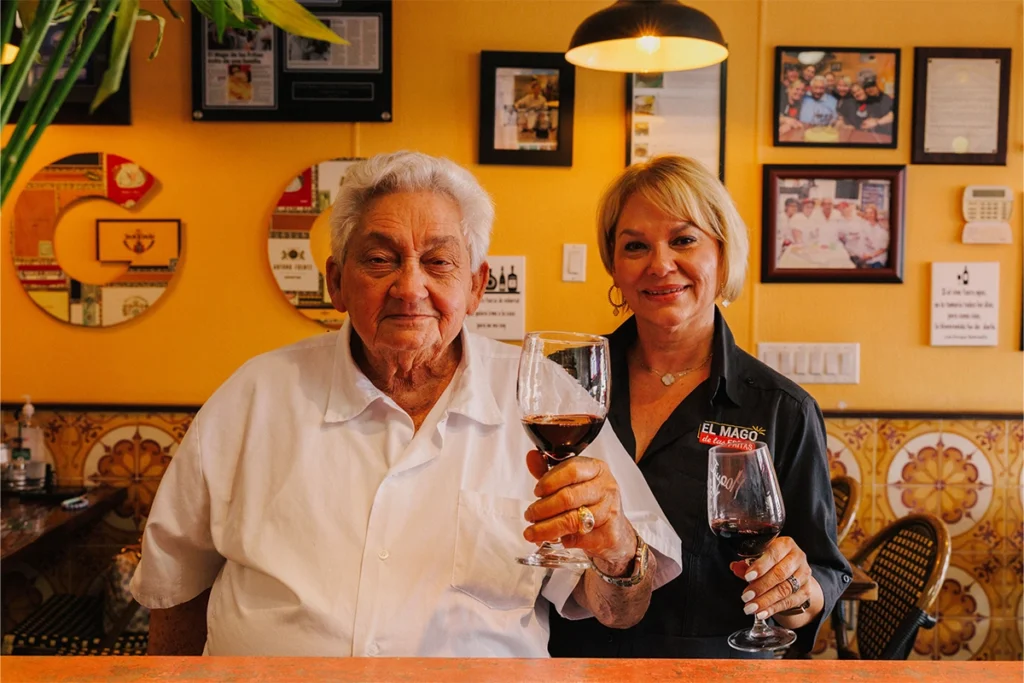
The framed photos, clipped articles and proclamations on the wall tell the rest of their story. In 2020, West Miami named the short stretch of 58th Avenue next to the restaurant after him, with a street sign proclaiming the block Ortelio “El Mago” Cardenas Way. Their frita counter has drawn visitors from around the globe—Martha recalls some from as far as Asia and Africa—as well as political dignitaries including former President Barack Obama.
Martha considers the frita more than a Cuban import.
“I think it’s become an iconic dish from Miami,” she says, noting that it can be difficult to find in other American cities or even in Cuba today.
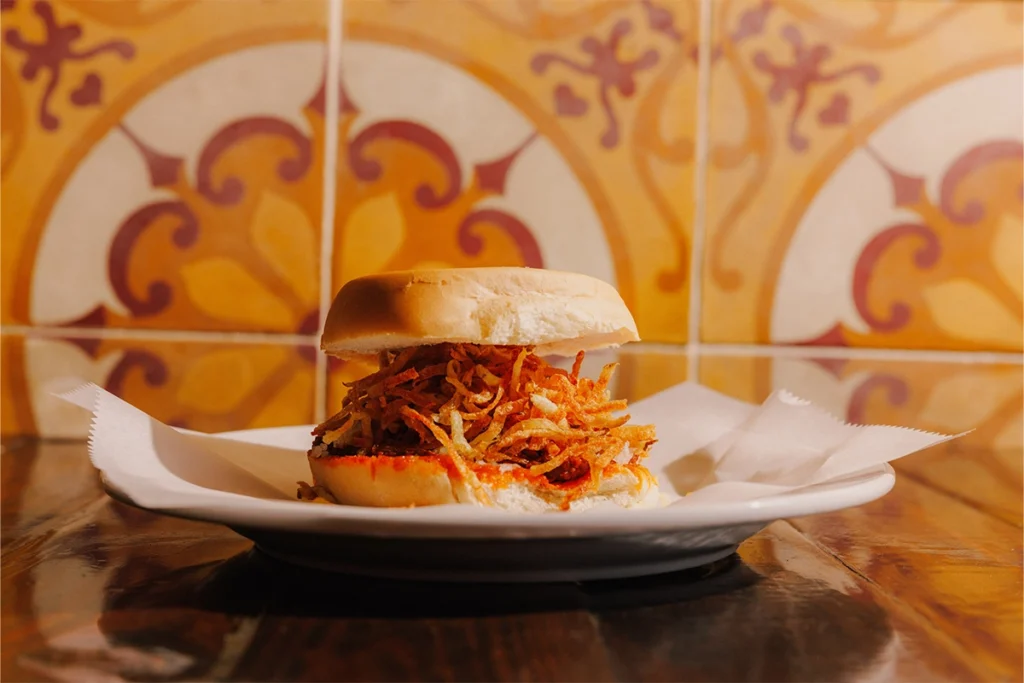
Just as a younger generation of Cuban American chefs have introduced their own modern takes on the cuisine, El Mago has adapted too. Martha says her father introduced American cheese, which was not part of the original Cuban version, as an add-on in the ’80s. There are now variations with fried eggs, bacon and Swiss cheese, double and triple patties, even a chicharron-topped creation that they offered for their 40th anniversary. But one thing hasn’t changed. “The original recipe remains the same,” she says.
Little Managua
From Fritangas to White Tablecloths
For many Nicaraguans arriving during the upheaval of the late ’70s and ’80s, western Miami-Dade became a landing place. Sweetwater earned the nickname “Little Managua” as families and businesses took root near Florida International University.
The most casual and beloved type of Nicaraguan restaurant is the fritanga: a counter-service experience of dishes like carne asada (grilled, citrus-marinated skirt or flank steak), gallo pinto (rice and red beans), queso frito (squares of salty, fried white cheese), tajadas (plantains) and ensalada de repollo (tangy cabbage salad). Scattered throughout Sweetwater’s strip malls, Nicaraguan spots like Fritanga la Chavala and Carne Asada Tortilleria Nicas announce themselves before you ever step inside: brightly colored awnings, signs that shout “carne asada” in block letters and window posters promising plates piled high with queso frito and tajadas.
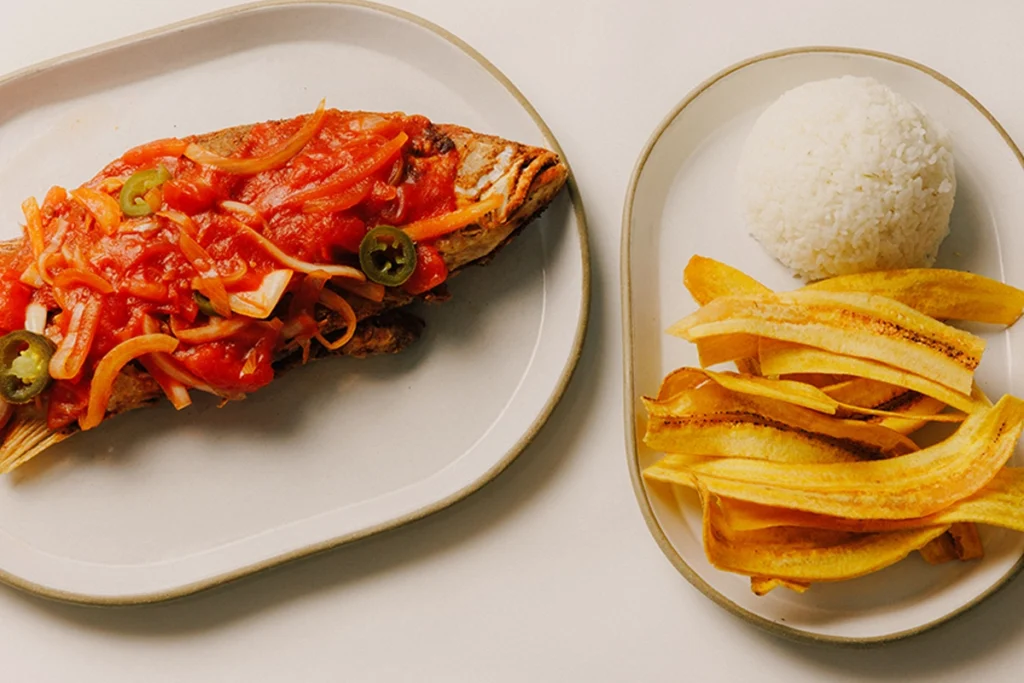
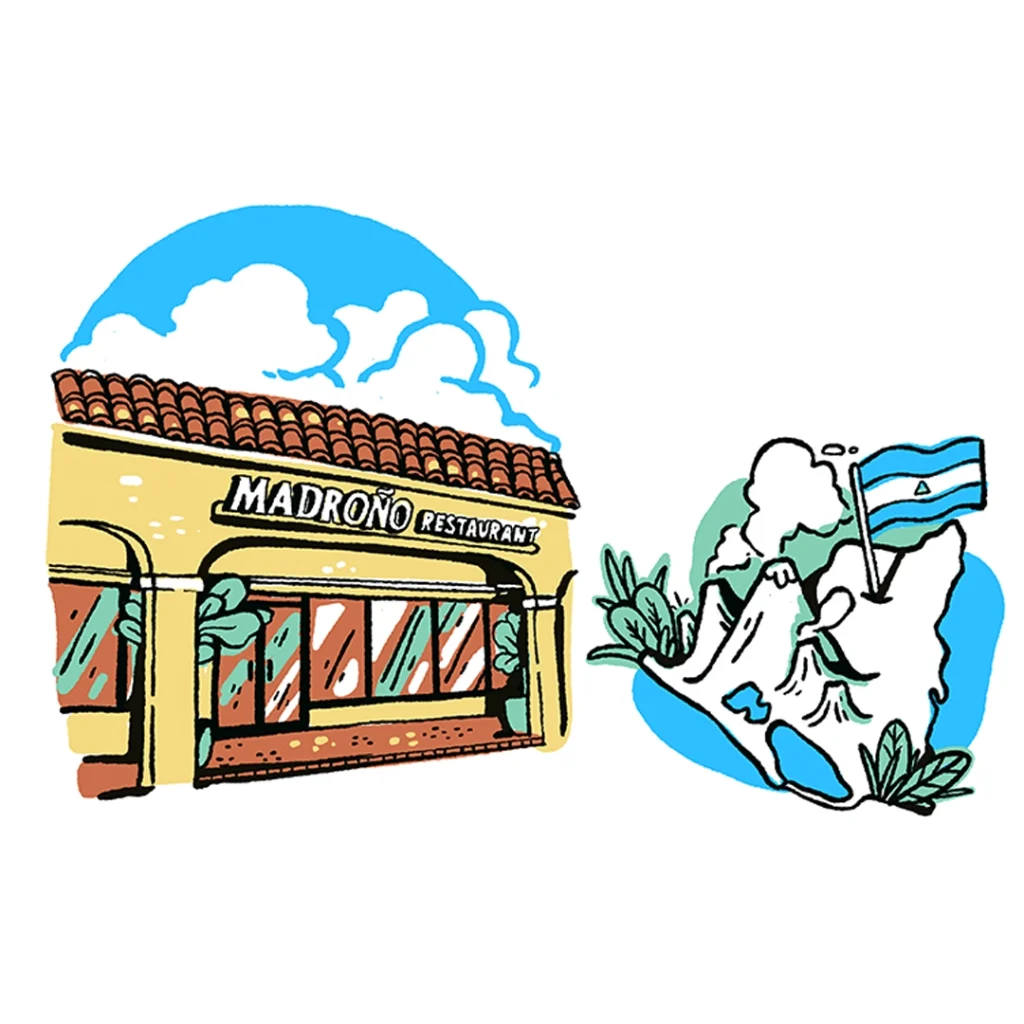
But Madroño Restaurant in Sweetwater approaches Nicaraguan cooking with a more refined mindset: white tablecloths, table service and dishes cooked to order. Every entree—the most popular of which may be the chargrilled tenderloin churrasco Nicaragüense—comes with a generous spread of traditional condiments, gallo pinto and other sides that turn any meal at Madroño into an instant feast.
Manager Ramón Gutierrez, 39, son of chef-owner Martha Mejía, 62, says his family’s journey began, like that of many other immigrants, with civil war. His grandmother moved relatives out of their town and eventually sent one son ahead to the United States. That uncle found work at a Nicaraguan restaurant in Miami, established himself and began helping other family members immigrate and find jobs.
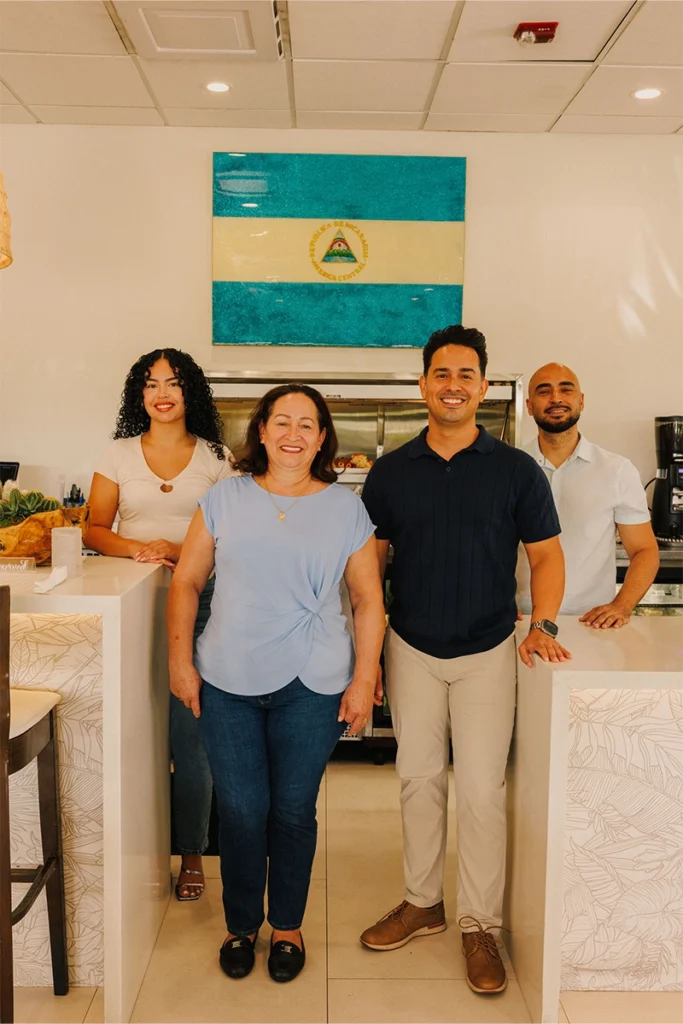
Restaurant work became a ladder. Gutierrez’s mother butchered meat at a local Nicaraguan restaurant and later became head cook at another. His uncle learned the front of the house. Eventually, they decided to combine those skills and open a place of their own: Madroño, which debuted in 1998 and has been a local favorite ever since.
Gutierrez notes that for a long time, Nicaraguan cuisine was known only for its fast-food style fritangas, and even Nicaraguans themselves seemed to stick to the basics. Now, “we can be a sit-down restaurant, we can be a food truck, we can be a fusion,” he says. These days, you can find clever creations like queso frito-topped burgers and even a Miami barbecue truck, Slab Daddy BBQ, which serves its smoked meats with sides like plantain chips and Nicaraguan-style slaw.
At Madroño, the business remains as family-run as it gets. Mejía still leads the kitchen. Gutierrez handles the numbers, his brother shapes the guest experience and his younger sister focuses on desserts. “We want to show Nicaraguans what they can do, and we want to show other people what Nicaraguans can do and what we bring to the table,” Gutierrez says.
Little Bahamas
Miami’s Oldest Caribbean Roots
Long before Miami became the unofficial capital of Latin America, Bahamian settlers were helping build the city. Black Bahamians established deep roots in Coconut Grove in the late 1800s, bringing construction know-how, agricultural skills, churches, businesses and a way of life adapted to the subtropical landscape. In West Coconut Grove, now formally designated as Little Bahamas, Charles Avenue became an early Bahamian-built street and Grand Avenue a major corridor for Black enterprise during segregation.
Today, that history exists under intense pressure from rising land values, redevelopment and displacement. Shotgun houses behind the main drag are protected as historic landmarks, and modest cottages, churches and the area’s first Black library hint at what the Grove was like before luxury condos and polished storefronts began pressing in.
Local cultural advocate and West Grove native Anthony Witherspoon, 71, is trying to keep that heritage connected to the area’s culinary identity and economic opportunity. Through the Little Bahamas of Coconut Grove Revitalization Trust Fund, he has championed food, arts and events as tools of preservation.
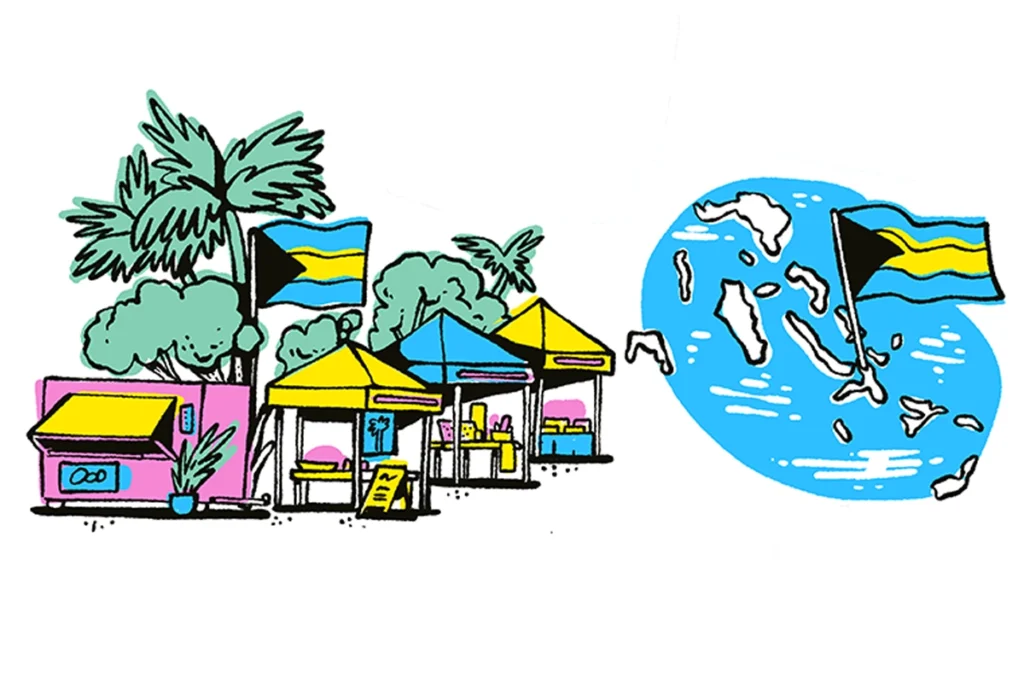
Witherspoon previously operated a food truck yard called Taste of Coco-Bahamas along historic Grand Avenue west of the Grove’s trendy commercial center, but now a small condo is going up on that lot. He’s working to bring a new Bahamian culture festival to another open lot next door starting in the fall. The recurring event will bring together local vendors, food, art, live music and even Junkanoo performers.
While the festival menu is still taking shape, when it comes to Bahamian cooking, you can always count on conch, a sweet and chewy sea snail that’s considered the national dish of the Bahamas. Festivalgoers can expect citrusy conch salad, deep-fried conch fritters and breaded cracked conch.
“The cuisine we’ll offer will be Caribbean, from Bahamian to Jamaican and Haitian, and there will also be barbecue and Southern soul food because there were more than Bahamians that came to the Grove. There are a lot of people from the South that came here too,” Witherspoon says.
The vision goes beyond a festival. For Witherspoon, the economics are inseparable from the culture. “By prioritizing local vendors, we ensure that the economic gains remain within the community, supporting small businesses and creating job opportunities,” he says, building a place “where people can come together, share meals and build stronger connections.”
Little Buenos Aires
By the Beach
North Beach, the quieter northern stretch of Miami Beach, acquired its Little Buenos Aires identity as Argentine immigrants clustered around modest apartments, bakeries, cafes and restaurants, with arrivals to the area increasing during periods of political and economic instability back home. Now, within a span of a few blocks along Collins Avenue, you’ll find empanadas, milanesas, syrup-glossed medialunas and parrillas perfumed by beef over fire.
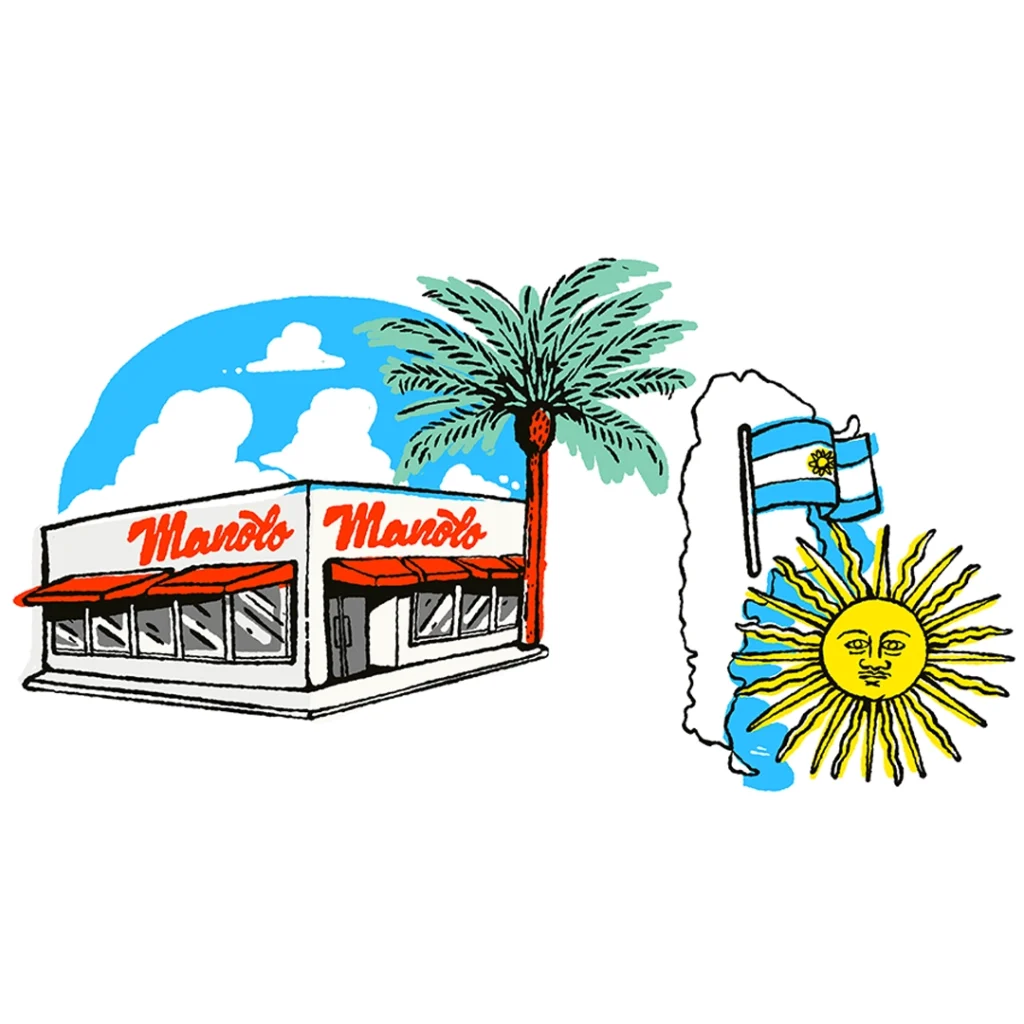
One of the most iconic neighborhood establishments, Manolo is part bakery, part restaurant and—when Argentina plays soccer—part unofficial stadium. During major tournaments, fans in sky-blue-and-white Messi jerseys pack the sizable dining room and spill out into the street by the hundreds, turning the restaurant into a public square for a diaspora. “It’s like our designated meeting spot where we all unite,” says Gala Morales, 33, who grew up in North Beach after immigrating from Argentina as a child. “It’s a place that feels fueled by passion and love for the Argentinian culture.”
Matthew Golod, 20, whose parents arrived from Argentina in 2002, agrees.
“Having a place like Manolo where I can express myself as an Argentinian and be in a community with other Argentinians and have a good time is really awesome,” he says.
Golod adds that Manolo’s famous churros, especially the ones filled with dulce de leche, are among the best he’s ever had. “I usually get them when I go there to watch a futbol game with my other Argentinian friends,” he says.
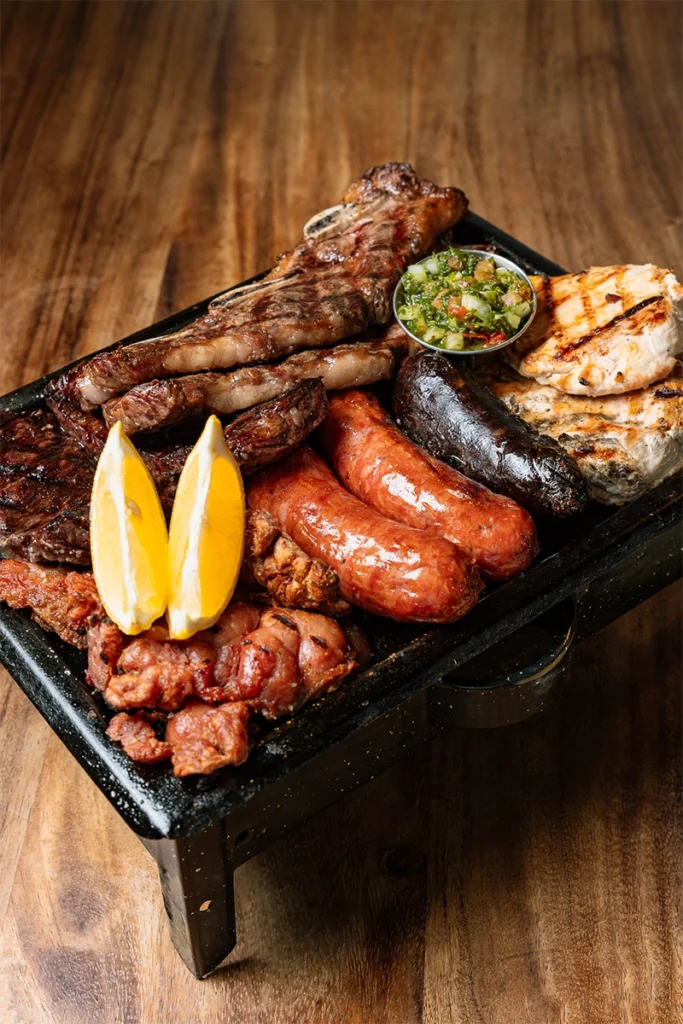
Meat lovers might prefer to settle in for a full parrillada at New Campo Argentino, a North Beach steakhouse where mixed grill platters arrive laden with the beef cuts and sausages central to Argentine asado culture. Here, entraña (skirt steak), tiras de asado (short rib), morcilla (blood sausage) and provoleta (grilled provolone cheese) are all traditional favorites.
After a trip to Buenos Aires, Miami resident Walter Gomez, 48, fell in love with Argentinian food and asado culture, and New Campo Argentino has since become his go-to. “I really enjoy North Beach. It’s such a hidden gem for food,” Gomez says. He recommends trying the choripan, a sandwich made with grilled chorizo served on a baguette.
Mexican Miami
Follow the Farmland South
To understand Miami-Dade’s Mexican food story, drive south. Homestead, Florida City and the surrounding agricultural belt developed deep Mexican roots through the migrant workers who have long planted, harvested and packed South Dade crops. Casita Tejas grew directly from that history.
The family behind the downtown Homestead restaurant traces its local roots to the late 1960s, when the founder’s parents, Mexican migrant workers, arrived in Homestead. Their son grew up there, later meeting and marrying a woman from Texas in the mid-’80s.
“Our family was among the original migrant families.”
—Abigail Godinez
Both came from Mexican families with ties to Texas, and in 1987 they opened Casita Tejas, bringing together their Tex-Mex cooking traditions. Inside, the restaurant declares that heritage proudly: Festive Mexican folk art banners strung across the dining room ceiling add vibrant flashes of color above the tables.
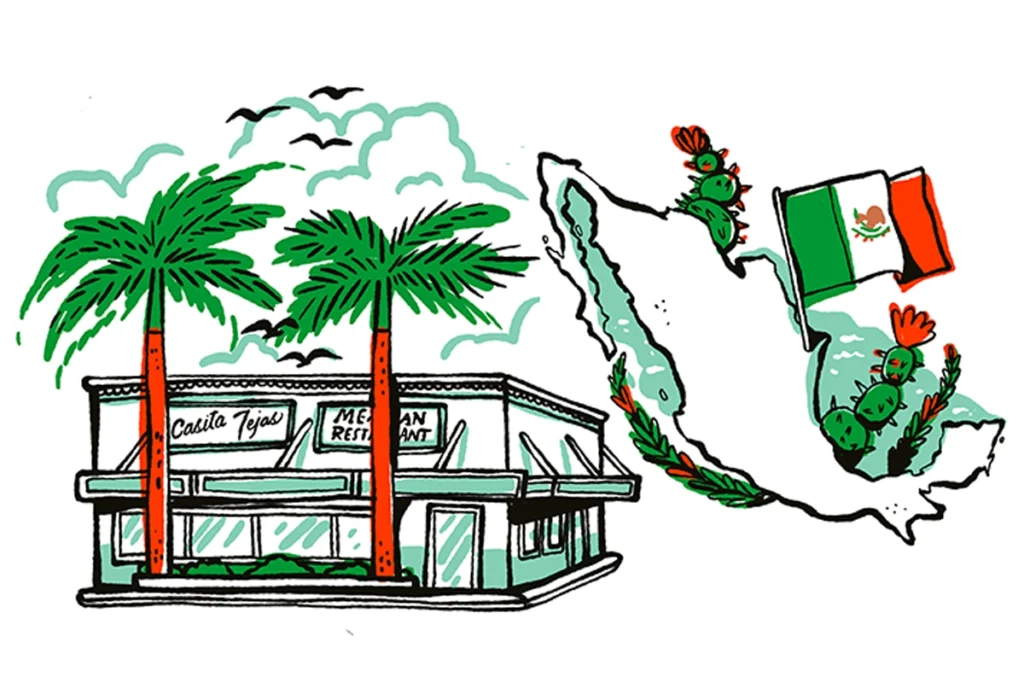
Casita Tejas was one of only two Mexican restaurants in the area at the time it opened, says Abigail Godinez, 40, co-owner and the founders’ daughter. Nearly four decades later, there are dozens of other Mexican eateries in South Dade.
Many of Casita Tejas’s original recipes have remained unchanged since opening. Among the house favorites is the burrito norteño, an oversized flour tortilla filled with grilled steak, rice, cilantro and onions, then covered in a tomatillo suiza sauce and melted Monterey Jack cheese. Fajitas arrive at the table still hissing on a sizzling skillet, and their whole fried snapper comes straight from The Keys. For the family, the restaurant’s longevity is inseparable from its beginnings. “Our family was among the original migrant families,” says Godinez, who remains involved in the restaurant’s day-to-day operations. “It’s important for us to give back to our community. Whether that’s catering for the local schools or other programs, just being present in the community is very important.”
The restaurant’s nearly 40-year history is also measured in people. Many employees have stayed for 10, 15 or even more than 20 years. “They’ve become like family,” she says. “I mean, they are family.” Longtime customers return not only for familiar recipes but for familiar faces, sometimes seeking out a particular server who has taken care of them for years.
“Other than the food bringing people back, I would say it’s the staff,” Godinez says. “We have customers that drive here because they have a waiter or waitress that they love.”
Rebuilding and Rejoicing
In ‘Doralzuela’
Doral’s Venezuelan food scene grew from a simple need that became something larger: a taste of home for new arrivals and eventually one of Miami-Dade’s defining immigrant corridors. As migration accelerated from the late 1990s onward, and then surged amid Venezuela’s political and economic crisis, restaurants, bakeries, markets and professional businesses helped earn the city its “Doralzuela” nickname.
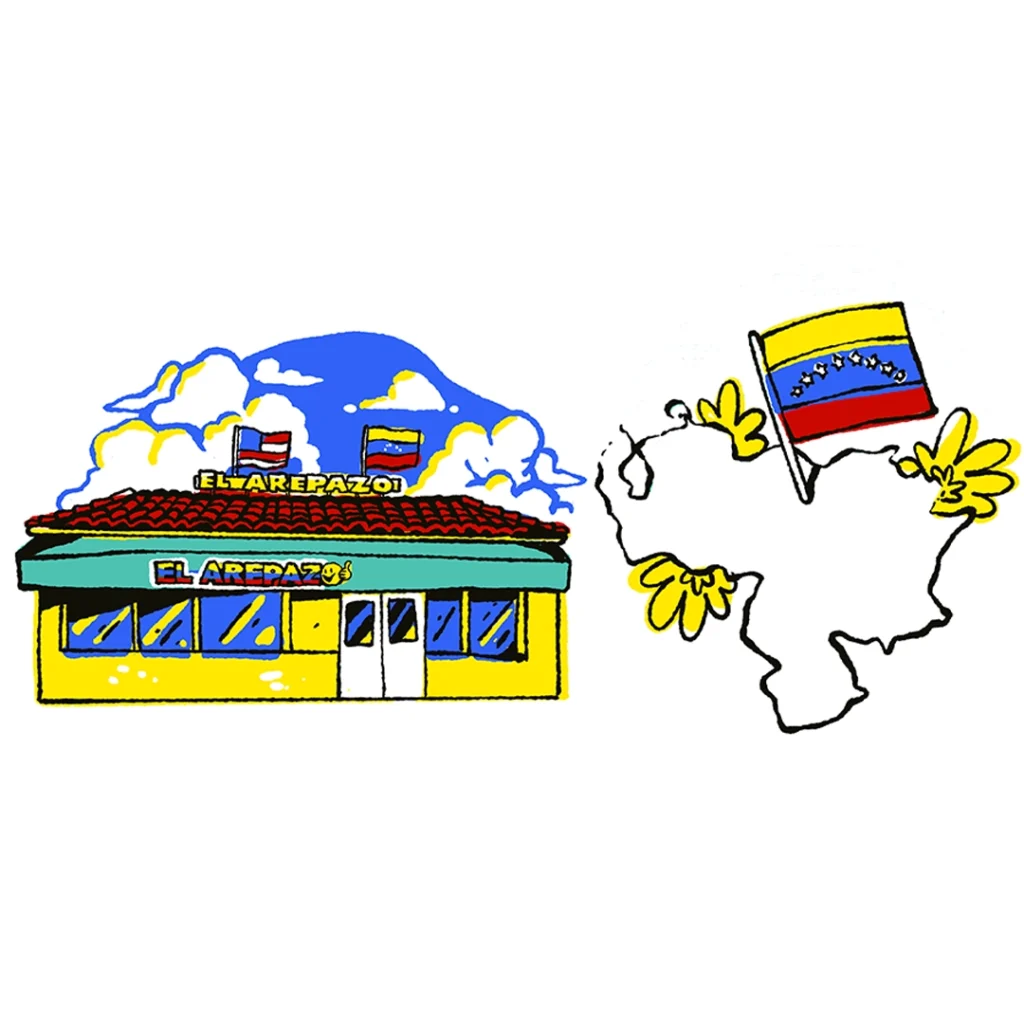
At long-running hubs such as El Arepazo, the famed casual eatery attached to a gas station, Venezuelans have gathered for years to celebrate, mourn and debate events an ocean away. Here, the yellow, blue and red stripes of the Venezuelan flag fly high on the restaurant’s rooftop. In 2026, these gathering places have carried unusual emotional weight. The community has faced political change after the fall of former Venezuelan President Nicolás Maduro and the shock of catastrophic twin earthquakes back home.
At Saman, owner and founder Jay Blanco, 40, sees the same need for connection. Blanco came to the United States as a child and opened the Doral restaurant a decade ago, carrying forward a tradition his parents started with a restaurant in Venezuela in 1977. The name “Saman” refers to the sprawling tree in South America that, for Blanco, symbolizes gathering, family and community.
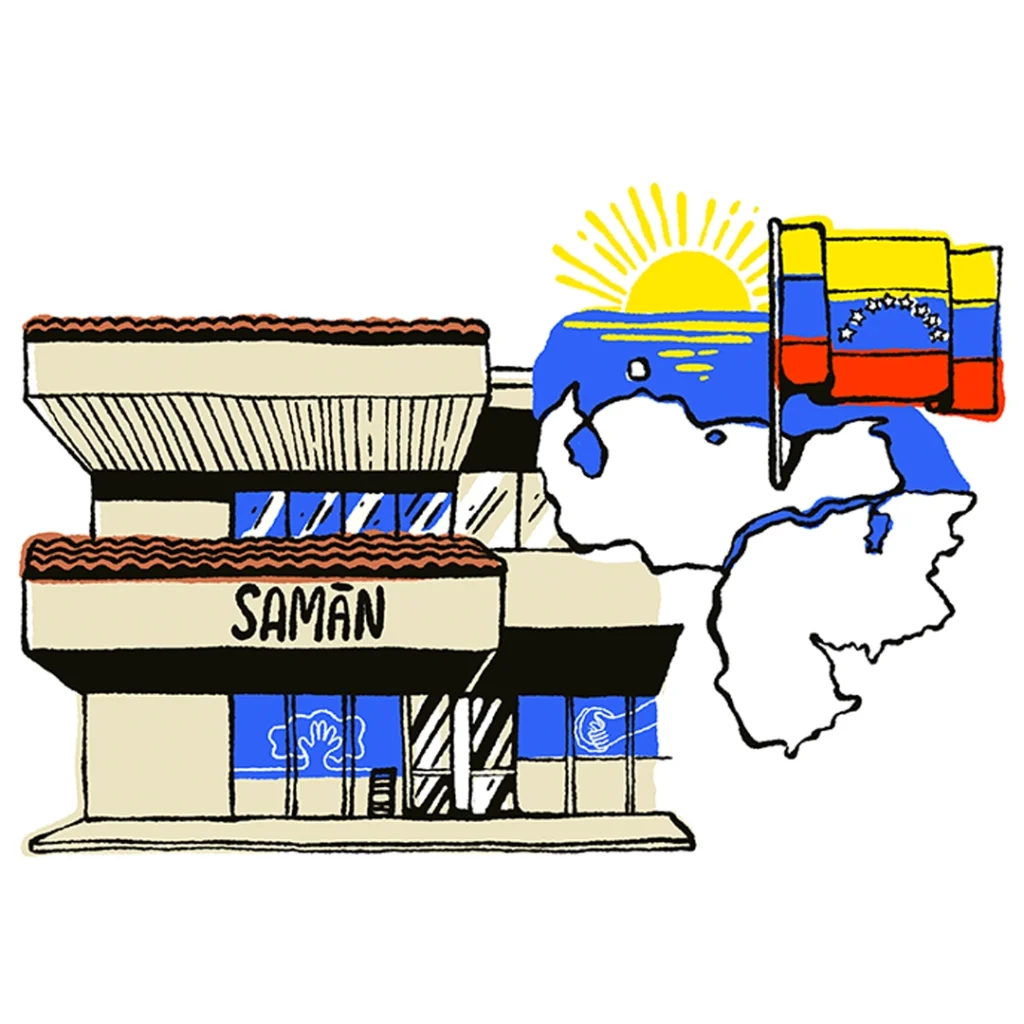
“Doral was the perfect place to open because Doral has become one of the cultural capitals for Venezuelans in the United States,” he says. Blanco remembers when many Venezuelan restaurants primarily served immigrants looking for the flavors of home. Now, he says, Colombians, Cubans, Argentinians and Americans eat alongside Venezuelan regulars.
“I feel that instead of competing, we have pretty much collectively helped put Venezuelan cuisine on the map,” Blanco says of Doral’s entrepreneurs.
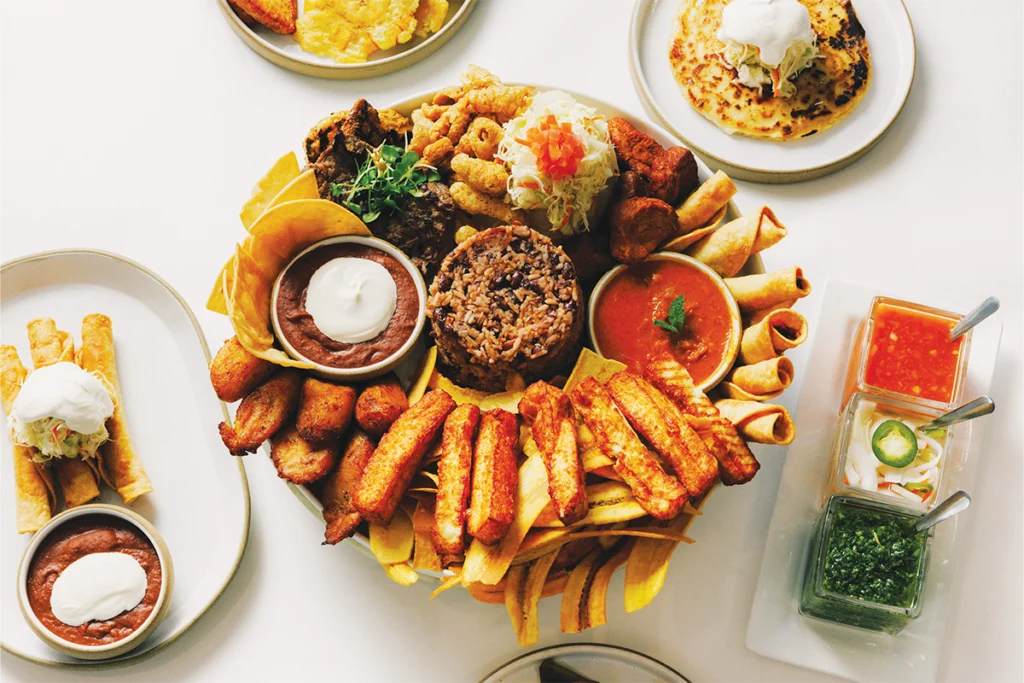
That’s why Saman’s menu goes beyond arepas into breakfast, grilled meats and bowls. For a first taste of Venezuelan cuisine, Blanco recommends Saman’s sampler of all the street food staples: arepas (round patties made from instant corn flour, enjoyed plain or stuffed with fillings), cachapas (corn pancakes, usually filled with cheese), tequeños (fried cheese sticks wrapped in a sweet dough) and tostones (crispy fried green plantains).
The Pabellón Bowlsito is also a specialty at Saman. Served as a bowl instead of the typical platter, it’s a streamlined presentation of the Venezuelan national dish built around shredded beef with rice and beans and served with sweet plantains, cheese and arepas.
When events in Venezuela take a dark turn, Blanco sees neighborhood restaurants’ purposes expand into places to watch soccer games, drink afternoon coffee and reconnect—and places to find people who understand.
Open Invitation
At the Table
A slice of American cheese alters a Cuban frita, but the family recipe at its core stays preserved. A Nicaraguan restaurant places white tablecloths underneath a cuisine too often reduced to the fritanga counter. A Haitian chef softens the heat of pikliz to invite outsiders in, then turns his restaurant into a staging ground against displacement.
Perhaps the city’s food culture is not so much a melting pot as it is a spice cabinet, as Chef Créole’s Sejour suggests.
“Miami’s like going into a kitchen and you have all these different seasonings,” he says. “That’s the beauty of it.”
For more of the food scenes shaping Florida’s cultural landscape, click here.
About the Author
Lyssa is a Miami-based food and travel writer who covers South Florida restaurants, cruising and Florida travel. Her work has appeared in U.S. News & World Report, Business Insider, Parade, Time Out, Resy and beyond.