
by | July 13, 2026
Why Florida’s Forgotten Coast Wants You to Forget All About It
This Panhandle coastline wants to stay just like it is.
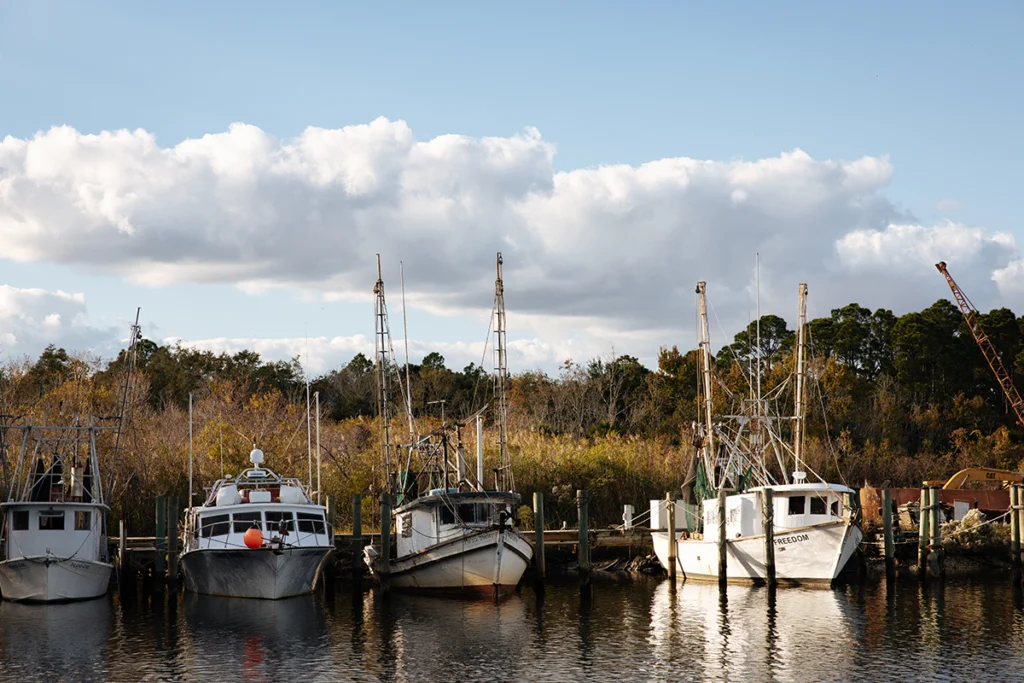
Those of us who love the Forgotten Coast would prefer it stay forgotten—forgotten by condo builders, resort developers and fancy folks who want to erect beige palaces on the quiet sands of the northern Gulf; forgotten by tourists whose idea of Florida is a powdered sugar beach within shouting distance of a cocktail waiter and peacock blue water untroubled by jellyfish, stingrays and sharks.
Alligator Point, the Saints (George, James, Teresa and Vincent), Apalachicola, Carrabelle, Dog Island, Eastpoint and Lanark live mostly on the down-low, certainly compared to the orgy of bars that is Panama City Beach or the manufactured nostalgia of Seaside or the high-rises of Destin. The Forgotten Coast is made up of working waterfronts and home to the finest bivalves on the planet. Our stretch of the Gulf of Mexico is not as jewel-pretty as it is farther west. There are few sleek hotels and no throbbing nightclubs. The Blue Parrot on St. George and Apalachicola’s nearly 120-year-old Gibson Inn are happening joints—and by “happening,” I mean they’re great places to drink a beer and down some oysters.
In the mid-19th century, cotton and timber were barged down the Apalachicola River and put on ships bound for Boston, Liverpool and New York. These days, only two of the more than 50 cotton warehouses that once lined Apalachicola’s Water Street survive, but the fine big houses, some dating from before the Civil War, with their wide verandas and widow’s walks, testify to the big money the port once generated.
Those of us who love the Forgotten Coast would prefer it stay forgotten.
-Diane Roberts
Aside from the oysters, the Forgotten Coast’s greatest gift to Florida—and the world—is Dr. John Gorrie. Born in 1803 on the Caribbean island of Nevis and trained as a physician in New York, Gorrie moved to Apalachicola in 1833. It was hot and yellow fever outbreaks were common. Gorrie invented a way to cool patients’ dangerously high temperatures by hanging an ice-filled basin over the sufferer’s bed. A grateful state eventually honored the father of air conditioning with his own museum in Apalachicola on Sixth Street.
Between Heaven And Hell
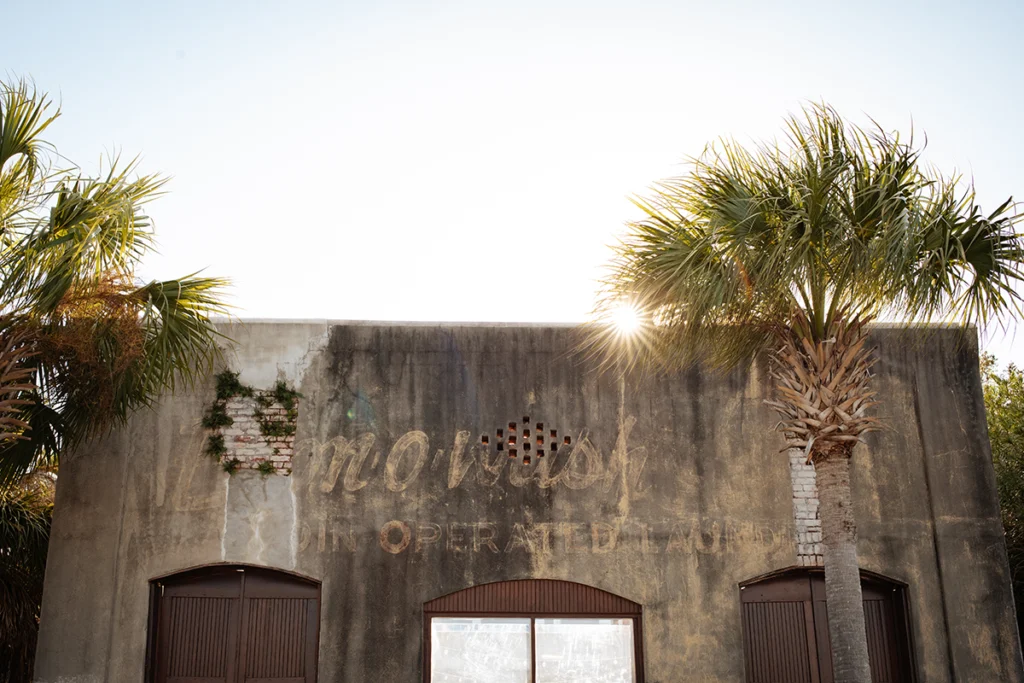
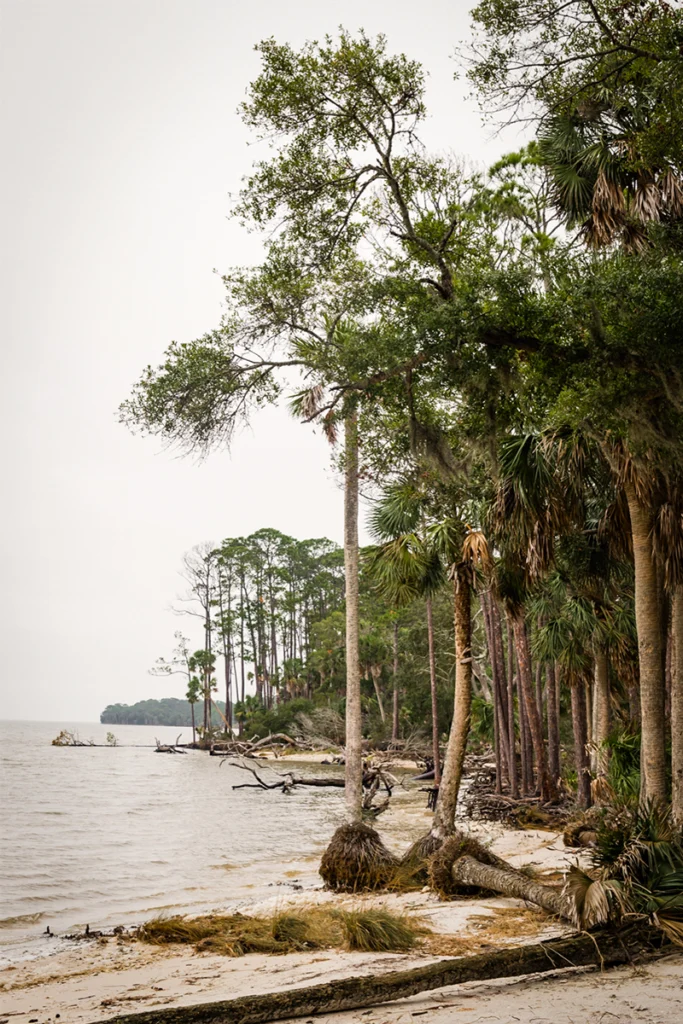
My family used to spend summers at St. Teresa, a loose collection of unglamorous, perpetually sandy cottages full of furniture too good to throw out but too shabby for the Tallahassee house. St. Teresa is technically on St. James Island, a 20-mile stretch of sandhills, pines and wetlands bounded by St. George Sound and the Carrabelle, Crooked and Ochlockonee rivers. Most people drive right past St. Teresa without knowing it’s there: All you can see from Highway 98 is a tangle of trees punctuated by unpaved driveways with six or eight mailboxes fixed higgledy-piggledy to posts and wooden arrows with family names painted on them.
The Saints stay fairly quiet. St. Teresa is hidden, and St. Vincent Island, a wildlife refuge, is accessible only by ferry from Indian Pass, and much of St. James is part of the more than 187,700-acre Tate’s Hell Wildlife Management Area. According to legend, in 1875, a farm boy marched off into the swamp with his hunting dogs and a shotgun, determined to kill the panther that had been feasting on his livestock. Things did not go well. He got lost, the panther ate his dogs and a snake—probably a water moccasin—bit him. After a week, he stumbled out somewhere near Carrabelle, where a couple of locals found him and asked what had happened. All he managed to say before he dropped dead was, “My name is Cebe Tate and I just came from hell!”
If you’ve ever done time in a North Florida swamp in the summer, you will understand what he meant by “hell.”
St. George Island, on the other hand, is often described as heaven. Its beaches regularly rank in the nation’s top five according to those whose alleged job it is to rank beaches. The area was inhabited for millennia by Native people, then owned in the late 18th century by British loyalist traders, then used in WWII as a B-24 bombing range and amphibious training center. Pretty much nobody lived there until a new bridge connected it to the mainland in 1965. Then—as is always the way in Florida—developers swooped in. To salve their consciences and further line their pockets, they sold the state land for what would later become St. George Island State Park. You can rent yourself a mansion in a nearby gated enclave calling itself The Plantation, but camping in the park will only set you back $25 and all the glory of the island is yours. Watch the dolphins stage a ballet in the waves by day or, by night, gaze at the Milky Way stretching across the blue-black sky like a sequin-spangled scarf.
St. George remains mostly uncrowded and serene. Property sharks occasionally swim in, touting their “vision”: a proposal to, say, build a bunch of shiny new bungalows or dredge the sea bottom for a marina, but the long-term residents, affordable housing advocates, conservationists and people who make their living from the sea fight back, saying they “don’t want to be Panama City Beach,” (sorry PCB) with all the traffic and the stress on the ecosystem. It’s not that Forgotten Coasters don’t welcome visitors. They simply want their patch to be true to its noncorporate, funky and eccentric self.
Bay Of Bivalves
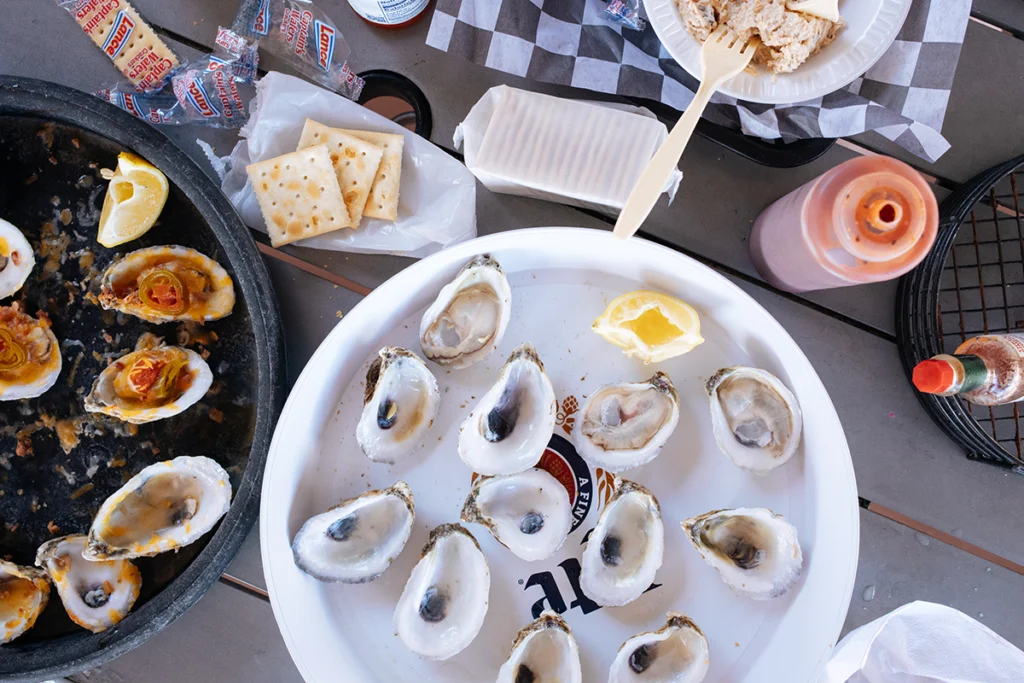
One March day, I drove down from Tallahassee to have lunch with a couple of my cousins at Up the Creek Raw Bar on Water Street, where you can eat overlooking the Apalachicola River. Sadly, the season had ended on Feb. 28, so there were no briny, silver-white bay oysters. We made do with grouper and fat Gulf shrimp. It’s hard to believe, but wild Apalachicola Bay oysters were once plentiful and absurdly cheap. My father liked to tell how during the Great Depression, his family would buy a bushel for 20 cents and roast them over an open fire. Before the 1980s, Apalachicola supplied 10% of oysters in the U.S. and 90% of Florida’s oysters. But low freshwater flows, increased predation and overharvesting led the Fish and Wildlife Conservation Commission to close the bay in 2020 for five years to let it recover. The short season this winter seemed to be a success, and the plan is to reopen it again in October.
After lunch, we hit the street to revel in Barkus, Apalachicola’s canine Mardi Gras. Dogs paraded as pirates, princesses, mullet, cowboys and crabs. It was a pandemonium of friendly woofing and tail-wagging. A pair of French bulldogs was done up as octopuses; a dachshund sporting a velvet hot dog bun, complete with a squiggle of fake mustard, wobbled around trying to lick everybody on two and four legs.
I like a dressed-up dog party as much as the next person, but what I really wanted to do was get to Richard Bickel’s gallery on Market Street. Bickel is an Emmy Award-winning artist and photojournalist who has captured Santeria ceremonies in Cuba, street musicians in Jodhpur, shoe sellers in Port-au-Prince and, most importantly (to me), local people: the oyster shuckers, fishermen and upriver folk. His images convey the dignity, sorrow and lightning flashes of joy: lake baptisms, mud-bogging competitions and small-town festivals. One of my favorites is of a dude in shades holding a large and sinister-looking member of the species Ictalurus punctatus. Next to him stands a small girl in a tiara, covering her mouth in horror. The caption says, “Little Miss Blountstown Having to Kiss the Winning Catfish.”
It’s not that Forgotten Coasters don’t welcome visitors. They simply want their patch to be true to its noncorporate, funky and eccentric self.
-Diane Roberts
The sun was sinking toward the western water. I needed to head back to Tallahassee. Happily, there was still time to pick up some shrimp and bay scallops at Lynn’s in Eastpoint. I drove across the river, the marshes green as a tree frog as the light began to turn the pink of a postcard sunset, hoping this part of Florida could hang on to its secret joys for a little while longer.
To read an archive of Diane Roberts’s column, Capital Dame, click here.
About the Author
Diane is an eighth-generation Floridian, educated at Florida State University and Oxford University. Her work has appeared in The New York Times, The Guardian and the Tampa Bay Times. She has also authored four books, including “Dream State,” a historical memoir of Florida.


