by | June 25, 2026
Florida-Made Hawaiian Shirts That Look Good and Do Good
Okisani's Passion for Conservation is Best Displayed on a Button-Down
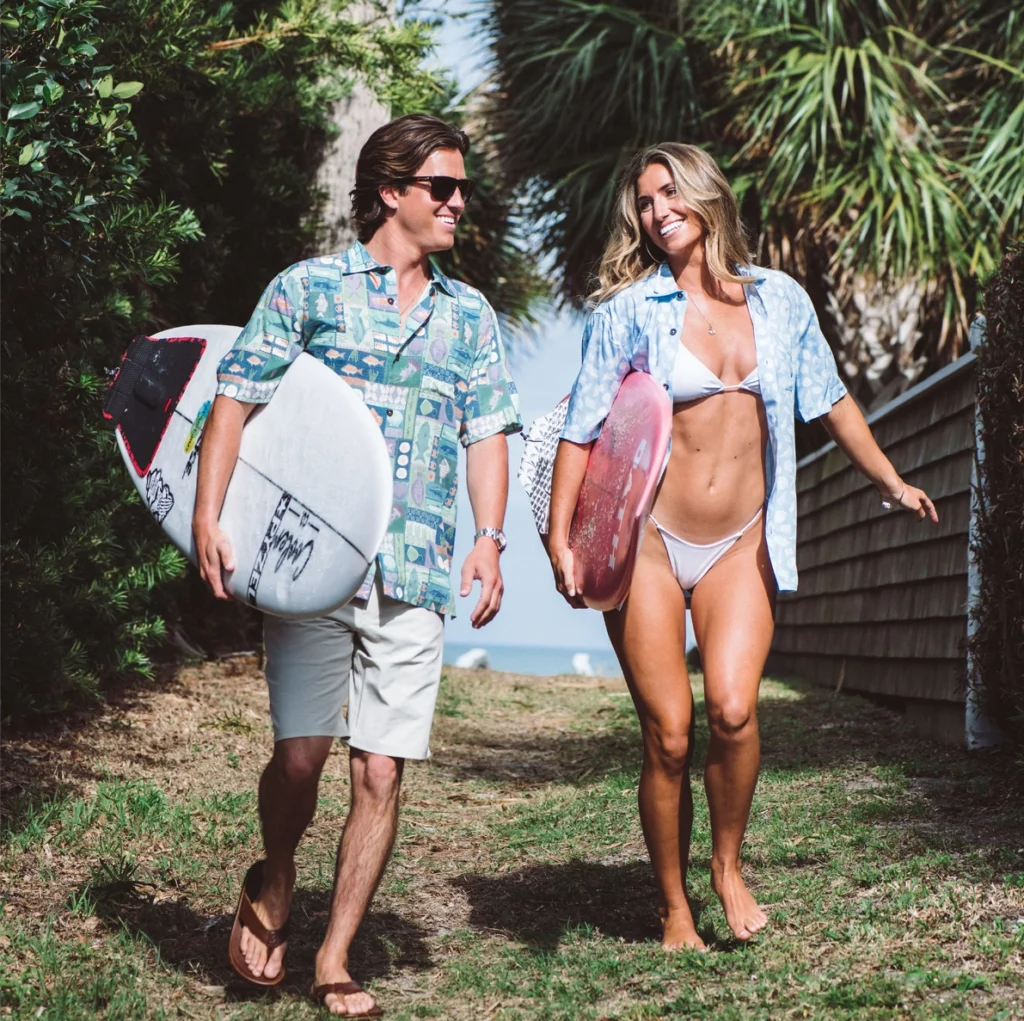
Models Cole Volpe and Molly Kirk. Photography by Kristen Penoyer.
A classic Hawaiian shirt, with its tropical motifs and breezy fabric, feels tailor-made for Florida living. But when Panama City Beach-based teacher John Mizell received one as a gift, something felt slightly off.
“I wore it. I started to love it. I was getting all these compliments, so I started buying more,” Mizell says. “But I’ve never been to Hawaii.”
Realizing the irony of wearing a shirt peppered with the flora and fauna of a state far from home, Mizell thought, “Why not Floridian shirts?”
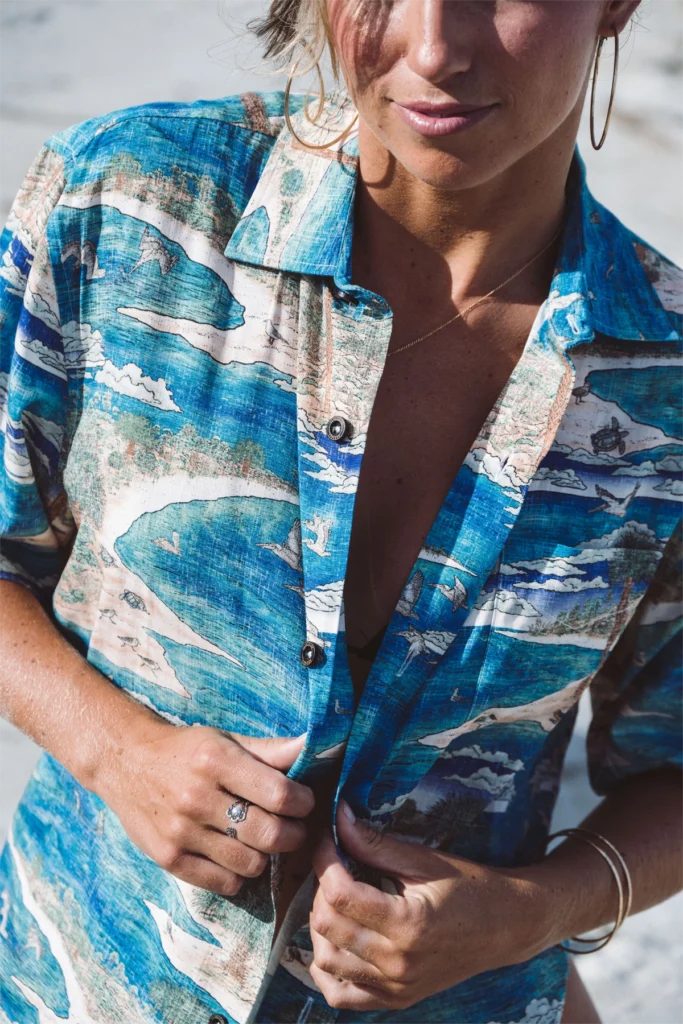
That simple question sparked the birth of his Florida-focused clothing line, Okihasi. Named for the Seminole words for water (oki) and sun (hasi), Okihasi has been weaving the stories of Florida’s rich native biodiversity into its shirts since 2020—fulfilling Mizell’s vision for Aloha-style patterns with a deeper connection to the plants and wildlife they depict. Each shirt is made with viscose, a breathable fabric formed with bamboo cellulose, and features vibrant illustrations of the state’s wild spaces: Florida scrub, pine flatwoods, sunshine mimosas, salt marshes and more.
John, a Florida native and descendant of Morgan Bonaparte “Bone” Mizell—a raucous Florida cowboy whose portrait by Western painter Frederic Remington helped define the image of a “Florida Cracker”—studied biology at the University of Central Florida in 2003. As a student, he participated in research studies everywhere from South Africa to Florida’s Kissimmee Prairie Preserve, observing the catch and release of the endangered grasshopper sparrow. His admiration for his home state’s unique ecosystems took root in the classroom, where he’s spent the last 16 years teaching high school environmental science—both in Florida and abroad.
I wore it. I started to love it. I was getting all these compliments, so I started buying more.
-John Mizell
One of the biggest lessons Mizell learned, however, took place outside of the classroom. He recalls growing up around orange groves in the small Central Florida town of Montverde in the ’90s.
“Slowly, the development started taking over Highways 50 and 27. Now the area is unrecognizable compared to when I was a kid,” he says.
The Butterfly Effect
As population growth and sprawl continue to engulf the state, the need to protect its natural resources and native habitats becomes increasingly urgent.
“If there isn’t a regulation or some type of community agreement that we’re going to preserve a resource, then we’re going to overuse it,” he says. “Then we might overuse it to the point where it completely degrades or we completely lose it.”
Mizell channeled his passion for conservation and education into a creative outlet alongside his wife, Tara. Drawing from her expertise in graphic design, the couple sketched patterns based on state parks they frequently visited, highlighting local animals and vegetation. As the ideas evolved, Mizell began working with a larger team of artists to transform these early wildlife sketches into digital illustrations.
One of his early inspirations was the Atala—a tropical butterfly presumed extinct after its host plant, the coontie shrub, was overharvested. In 1979, botanist Roger Hammer discovered a small Atala colony near Miami, and as Floridians reintroduced coontie in their landscaping, the Atala population recovered. The once-rare butterfly now flutters through state parks, botanical gardens and across Okihasi’s shirts.
Over time, Mizell expanded the line’s geographic footprint, introducing landscape patterns from across the state. The Florida scrub pattern depicts gopher tortoises moseying down sandy paths and winding through saw palmettos and clusters of prickly pear cactus. The dry prairie shirt features the Florida grasshopper sparrow both resting and in flight near common blue violets and grass pink orchids. Critters like the sand skink and painted lady butterfly accent the floral vignettes. This motif came to life with the help of Hammer, also a renowned South Florida photographer and author, who offered recommendations to Mizell for the dry prairie design, even sending some photos to guide early sketches of the pattern.
Better than a Billboard
As Okihasi’s designs expanded to include landscapes across the state, they also began telling a bigger story of how Florida’s wild places are connected. That caught the attention of the Florida Wildlife Corridor Foundation, which collaborated with Okihasi to sell a new shirt design inspired by the Red Hills region—a vast swath of reddish soil and longleaf pines stretching from Tallahassee to South Georgia. The pattern will coincide with the release of the organization’s upcoming documentary on the area, set to release in the fall of 2026.
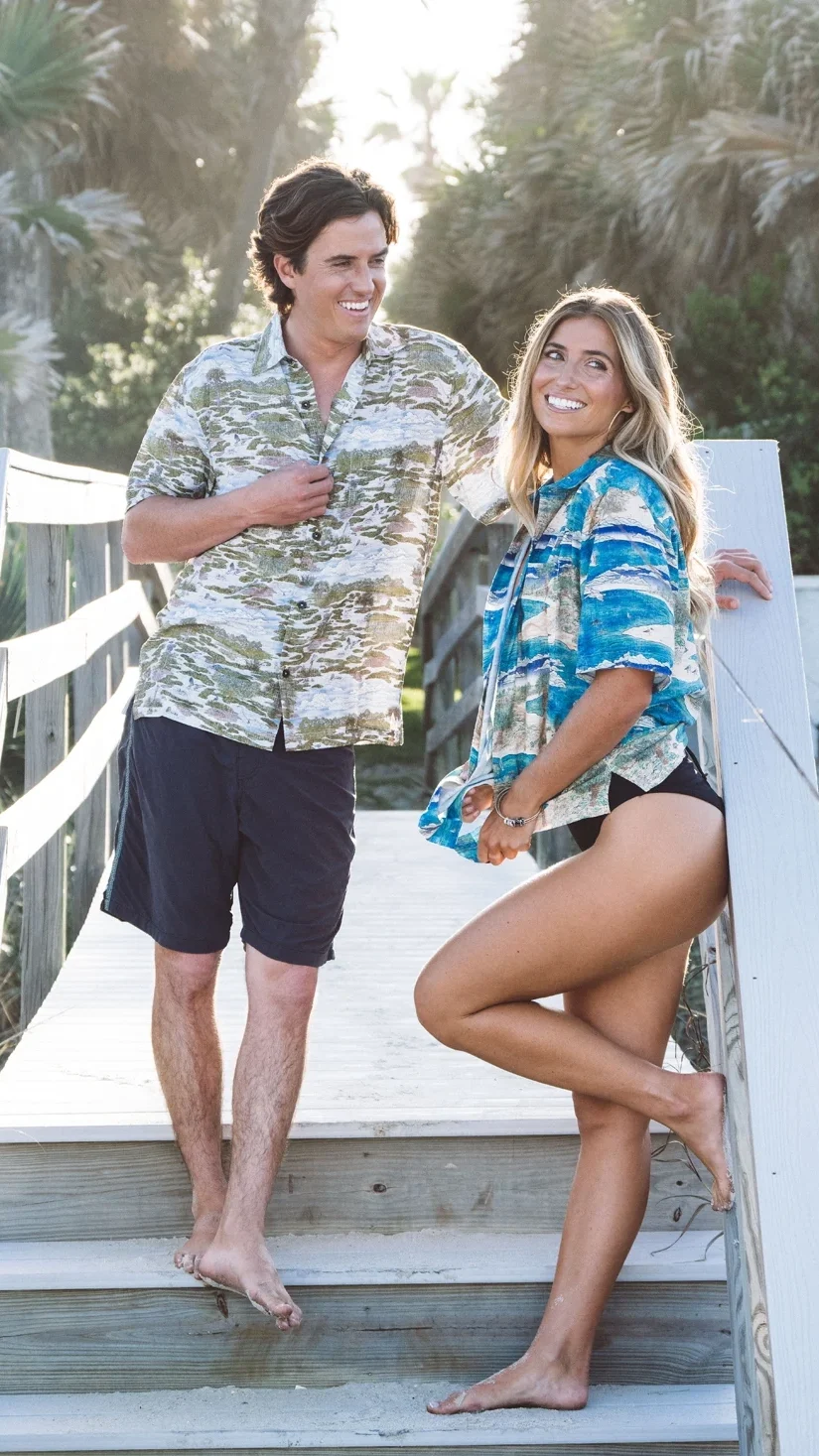
The film will follow a group of Florida’s elected officials trekking through the area, which is home to near-threatened species like the Northern bobwhite quail and the threatened Eastern indigo snake. Mizell plans to feature these key species on the shirt, as well as the trekkers’ route, to spotlight this singular ecosystem.
“All those landscapes that (Mizell) features on his shirts are literally connected through a network called the Corridor that we are trying to protect,” says Mason Gravely, the Florida Wildlife Corridor Foundation’s impact campaigns manager. “I just think what he’s doing to build that brand and bring awareness through what we wear—almost like a billboard that you can wear on your body—is amazing.”
The collaboration will be one of the four or five new pieces Mizell rolls out annually. His most recent shirt design, released in April, spotlights the Florida springs and their hallmark species: the manatee. In addition to selling his merch-with-meaning online, Mizell hosts Okihasi pop-ups at expos around the state and farmers markets near Panama City Beach. He’s also secured retail space at an REI store in Palm Beach Gardens.
“There are organizations that are working on trying to expand the awareness of our natural areas and how limited they are,” Mizell says. “Hopefully, I’m helping with that a little bit as well.”