by | March 16, 2026
These Native Cooks Are Tending the Fires of Tradition
On the Brighton, Big Cypress and Miccosukee reservations, Native people keep Florida’s oldest culinary traditions burning bright—one batch at a time.
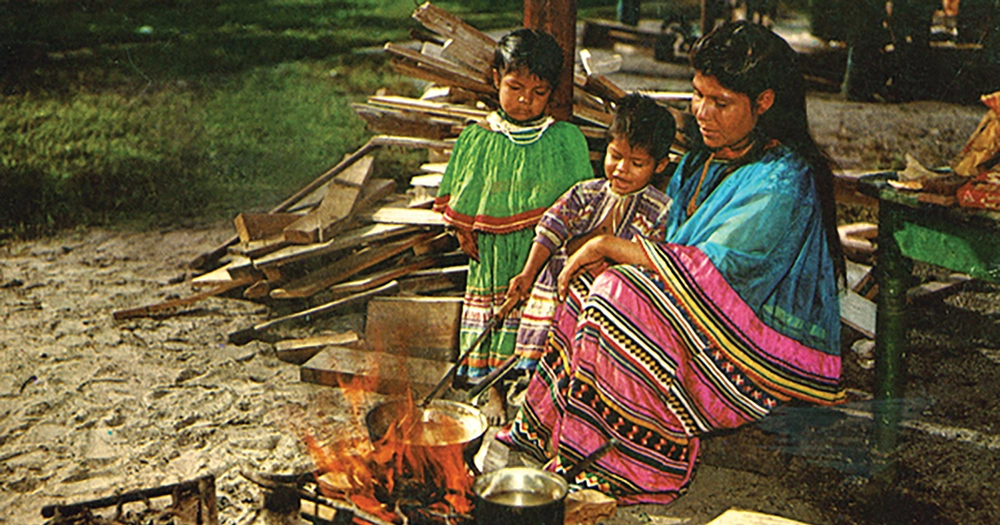
A postcard printed in 1954 depicts a Seminole woman and two young children cooking at a campfire, with a pot bubbling at their feet. A pile of scrap wood lies behind them. It’s Susie Billie in that photo, and nowadays some name her the grand matriarch of the Panther Clan.
The woman wears an ankle-length dress that’s striped and patterned in the traditional Seminole patchwork style. A blue cape covers her shoulders. The children also wear splendidly colored clothing. The boy, Bobby, stirs the pot with a long spoon to keep his fingers out of the raging fire. His mouth is open, almost as if he’s midsentence, asking if the food is ready. The girl, Martha, is looking on, because she’s probably already learned this lesson.
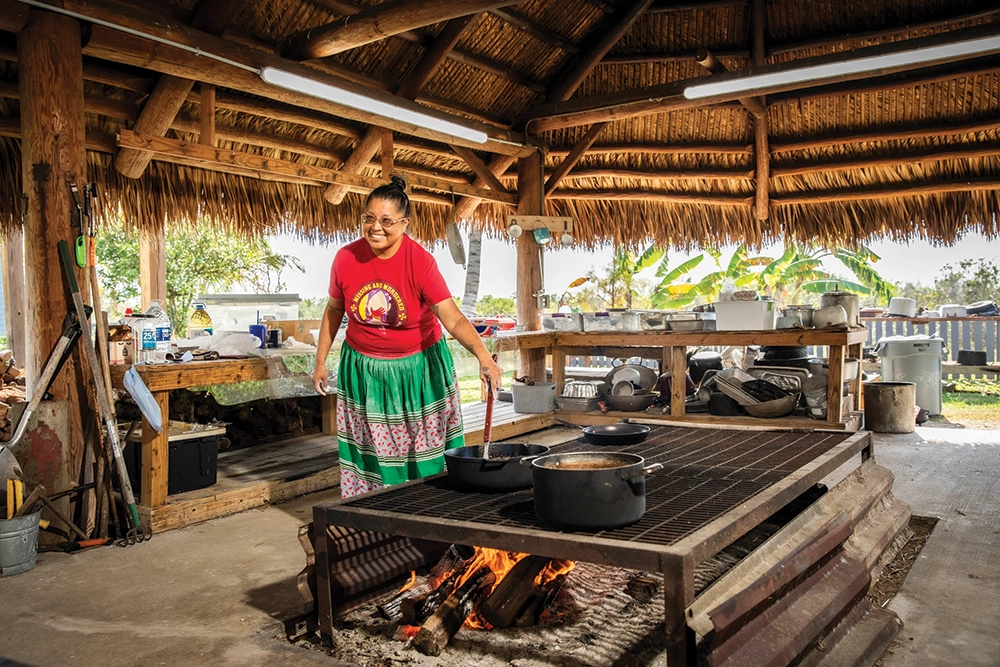
It’s hard to tell what’s in the pot Billie is stirring, but there’s a good chance it’s sofkee, a dish that, more than any other, tells the story about Native Americans in Florida. Sofkee resembles grits and is often flavored with salt and maybe tomatoes to make something savory. Guava can be added to make it sweet, while corn starch can make the dish more sustaining. Sofkee can be made like a stew for dinner or thin like gruel in the morning, or it can be sipped all day by somebody busy at work. It is food eaten on the run by the hunted, by the survivors.
In my lifetime, I’ve seen once-foreign foods spread to even small American towns: Thai, Vietnamese, Colombian, Bosnian. However, it’s unlikely you’ll see sofkee on a restaurant menu. Few restaurants in North America serve traditional Indigenous foods. The only Native American restaurant I have visited is a fry bread place in Phoenix.
So I set out to find the original foods of Florida. What I found isn’t a simple answer. It’s not some menu you could just re-create at home tonight. Some Indigenous chefs define Florida’s Native foods as the ingredients that existed before Western colonization—the meats and vegetables in the Americas prior to 1492. And some see it as what it has become since: a fusion of tradition and what’s available— Florida’s only Native food.
The Food Born of Survival
“Kind of harsh” is how Moleana Hall describes growing up on the Big Cypress Reservation in the ’70s. They’d eat sofkee most days, maybe fry bread too. The government delivered boxes of deer meat, wild boar and canned bread to the reservation every month or so. These childhood experiences hardened her in a way that makes her deeply proud now at 50 years old.
“It taught me how to not rely on anything. What we have, the telephones and internet, I can do without,” she says. “It brought me up to be a tougher person. To be a strong woman and go out and achieve.”
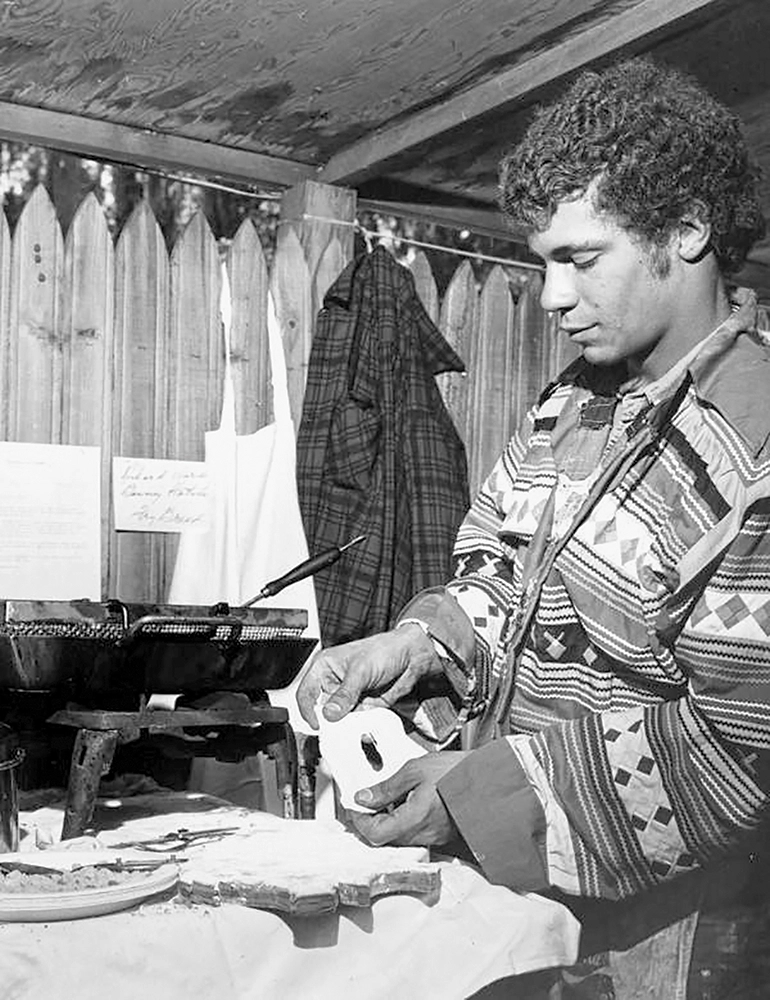
As a kid, Hall took the long school bus ride to Clewiston every morning. Her grandmother raised her before she passed away, and then it was on to Aunt Lydia, then a few couches of other family members. Hall got pregnant at 15 with the first of her seven kids—eight if you count the nephew she raised. She got married and divorced and married again.
The constant was sofkee and fry bread and sometimes gopher tortoise soup, the way her grandfather would make it in the shell. It wasn’t just that these were the recipes of her ancestors, but they were eaten as an antidote to hard times. During the Seminole Wars in the 1800s, the U.S. Army descended on the peninsula, aiming to eliminate the Natives, managing only to chase them into the swamps. The corn stew eaten by Native people for a millennium soon got thickened with corn starch and became sofkee. European flour became fry bread. The Seminole Tribe of Florida proudly say they’re an unconquered people, and whether you believe their food helped that happen or was a necessity of difficult times, sofkee and fry bread represent their resolve.
It brought me up to be a tougher person. To be a strong woman and go out and achieve.
—Moleana Hall
Just like there aren’t many Native American restaurants, it’s not easy to find an expert on Native foods. But there is Sean Sherman, a member of the Oglala Lakota Tribe. Sherman grew up on his grandparents’ ranch on the Pine Ridge reservation in South Dakota. He went on to become a chef in Minneapolis before getting burned out on the industry and heading to Mexico in 2007. There was a community of Native people there, Huichol mostly, in the small town of San Pancho, and he had an epiphany. “It just got me thinking. I saw the connection to Indigenous people down there and Indigenous people up here.” What connected them more than anything was food.
When he came home, he hosted pop-up dinners with a simple idea: cooking modern dishes with only ingredients that existed “before colonizers arrived.” Not the exact dishes of 1491, but a modern version of what his ancestors ate.
Sean Sherman shared his recipe for turkey and mushroom stew—read it here
He has a restaurant now in Minneapolis, called Owamni, built on that premise. He won three James Beard Awards: one for his cookbook “The Sioux Chef’s Indigenous Kitchen” in 2018, one for leadership in 2019 and one for his restaurant in 2022. Recently, Sherman published his second book on the foods of Indigenous peoples, “Turtle Island: Foods and Traditions of the Indigenous Peoples of North America.” The book includes a recipe that uses ingredients found in Florida prior to European colonization. An ethnobotanist helped Sherman discover what ingredients were available to Indigenous people living in the Sunshine State: seafood, shellfish, alligators, birds, venison, bears, cattails, nettles, seagrapes, hearts of palm, sunflowers and hickory nuts. The Seminole Wars turned all of that into flour, corn starch and canned meat. Sherman says, “When we’re being hunted, things change pretty quickly.”
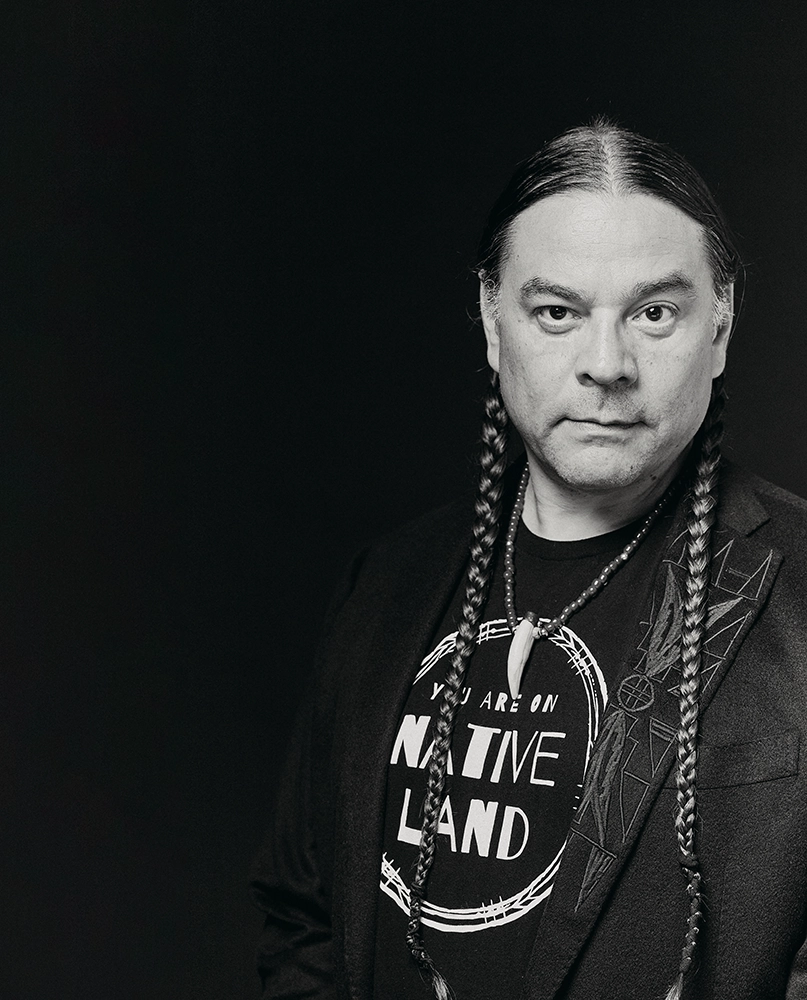
Sherman also runs a nonprofit aimed at highlighting the ingredients considered traditional to Indigenous cultures and histories.“We’re just trying to dismantle what colonization did to our lifestyle.” Just catching their breath is how Sherman describes tribes today, scars of genocide still raw.
Sally Osceola has a different way to think about where she came from. Osceola grew up on the Miccosukee and Hollywood reservations, back when a kid could make the Everglades a playground—biking and canoeing and fishing for dinner. She’d watch her grandfather turn gopher tortoises into soup and learned early on how to stir a pot of sofkee. “Thinking back on it now, life then was really nice,” she says. “It was easier, simpler, to how it is now.”
She met her husband, Aaron Bartlett, at the old Hollywood Hard Rock before ownership built the 450-foot glass guitar hotel. Even though Bartlett is not affiliated with any tribes, both he and Osceola shared similar experiences. Bartlett is from Chokoloskee, an island in the swamps south of Naples. His family has been there for two centuries now. He grew up with the Seminole Tribe of Florida, who also call that wild place home. Bartlett played in the Everglades and even stirred the occasional pot of sofkee himself. People there tell stories about the Calusa tribe, who once lived on the island. “They were the gatekeepers,” he says.
Now, Osceola and Bartlett tell those stories to their kids. While we don’t have many restaurants dedicated to serving Native dishes in Florida, we do have people working very hard to make sure the recipes and traditions don’t go away.
The Next Generation of Native Cooks
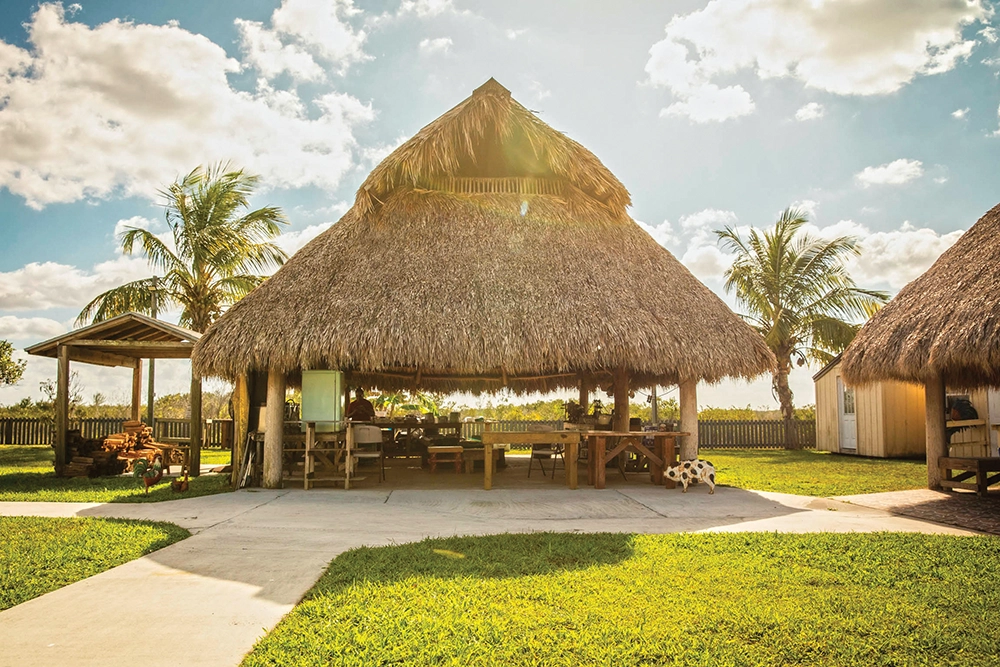
On a recent day at the elder center on the Brighton Reservation west of Lake Okeechobee, one of the chefs asked Charlotte Gopher for her pumpkin fry bread recipe. She makes it in big batches, and if her family and friends and neighbors don’t eat it all, she’ll post on her Facebook page that she’s got extra. I asked her for the recipe.
“Oh, um, I’ll have to think about it. Hold on. One, two, three … OK,” she says, before working it out: three cups of self-rising flour, a small can of pumpkin puree, a cup of sugar, a cup of warm water. Work it into a consistency of regular bread dough, let it sit for an hour, pinch off little balls, roll flat and fry in vegetable oil.
Gopher is one of many mothers, grandmothers, fathers, grandfathers, aunts and uncles on Florida reservations who have not been hired by anyone to teach Native foods but are doing it anyway. The dishes are mostly taught by doing, showing their kids and their neighbors’ kids, telling them stories as they go along.
We’re just trying to dismantle what colonization did to our lifestyle.
—Sean Sherman
Eight years ago, Gopher retired from her career as a compliance officer at the Seminole Indian Casino. Last May, she returned to work in a different capacity by becoming the site manager for Brighton’s elder center, where she oversees 17 employees. Gopher looks after the older members of Brighton by ensuring their utilities and phone services are taken care of and remaining bills are paid. One thing she does that’s not in the job description: teaching the center’s cooks how to make fry bread.
But Gopher grew up there on the reservation, so she feels like she has an obligation to do it. People know her for her work in establishing the Pull-Out Program, which partners with local schools to teach children with Seminole heritage the language and traditions. After her mother passed away, Gopher also took over running the Brighton Field Day Festival held every February. “Tradition is not Monday to Friday, 8 to 5,” she says. “It’s every day, 365.”
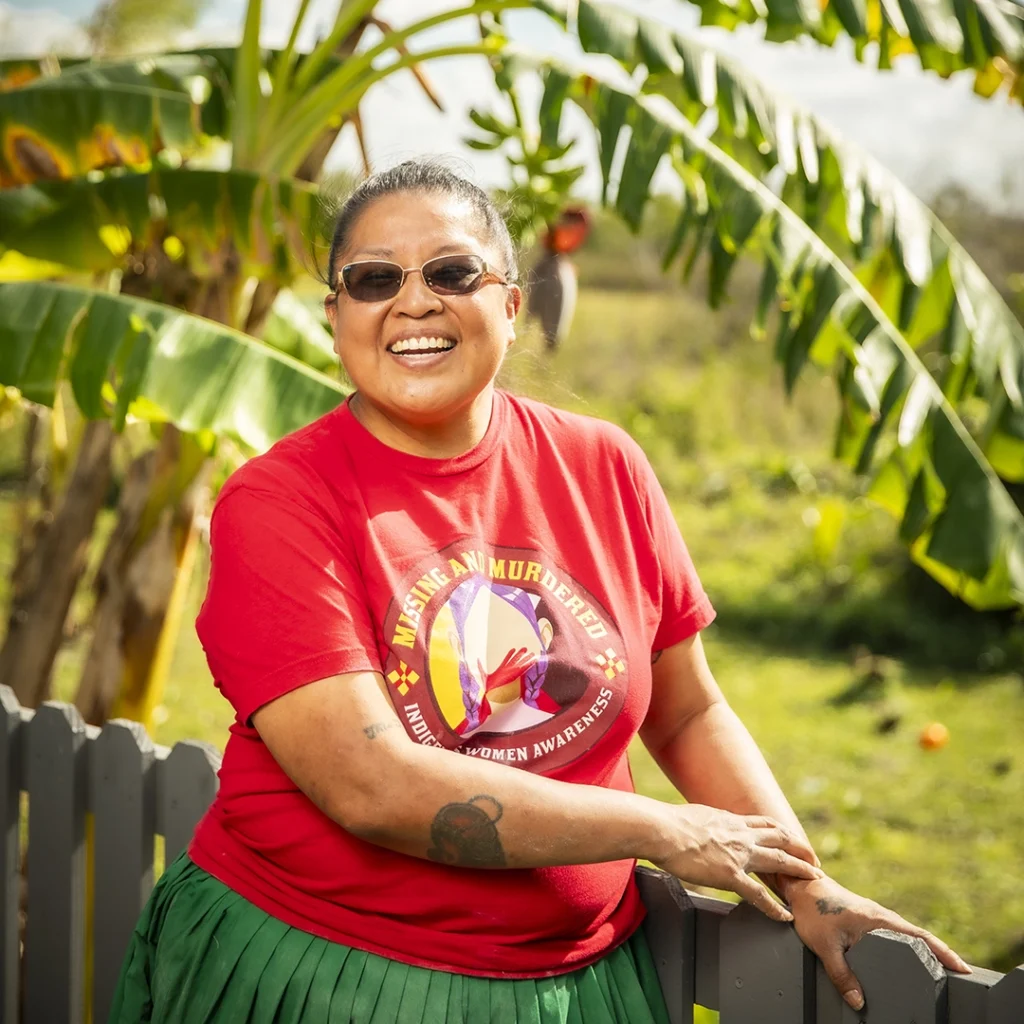
On the Big Cypress Reservation, Hall shares Gopher’s view of tradition, which eventually translated into a small business. It started five years ago when the casino asked Hall to start selling some of the food she was always giving away to her neighbors on location. She sketched up a menu of the dishes people often asked her to make, and soon that one event turned into a food truck called Aunt Mo’s Kitchen. One dish is what her uncle called a Walking Taco: fry bread served sandwich style with pulled pork, brisket, pork chops, or a hot dog. When I asked about the line she’ll see at the truck when she shows up to an event, she said, “I’m supposing that the food is good.”
Sally Osceola wants you to try this fry bread recipe at home
The menu isn’t what the Native people of Florida ate centuries ago, but Hall says frying bread still reminds her of watching her grandparents do it. There’s a photo of her grandmother shearing bark off a tree with a machete to harvest swamp cabbage. Recently, she taught her grandkids how to harvest saw palmetto berries—colloquially known as bolitas—being careful not to cut themselves on the leaves as sharp as her grandmother’s knife. Hall also warned them to look out for the rattlesnakes and water moccasins that may hide in the sandy soil.
“There was a time when everything didn’t come from a grocery store,” she recounts to her grandchildren. “We would go out in the fields so that we could have something to eat.”
My kids are picky eaters, but one thing they’ll always eat is sofkee.
—Sally Osceola
Osceola now lives in Everglades City with her Chokoloskee-born husband. They run a business together called 3 Birds Tribal Treats, which makes and serves Italian ice and kettle corn at festivals. But at home, she makes sofkee from a recipe using baking powder, flour, salt and water. The meal resembles a dumpling soup and can be eaten at any time of the day. It’s for get-togethers, birthday parties or anytime somebody has a cough.
“My kids are picky eaters, but one thing they’ll always eat is sofkee,” Osceola says. It’s not that she thinks hers is that special; she’s partial to the one her grandmother would make.
Gopher tells stories, too, when she’s making Indian Burgers—fry bread stuffed with ground beef. She’ll reminisce with whoever’s helping about how her family used to roast freshwater yellow-belly turtles or gopher tortoises directly on the fire, still in their shells. That was special occasion food. “Just out of the blue,” Gopher says, “someone would say, ‘Hey Mom, can you cook gopher soup?’ And she’d say, ‘When I have it.’”
Often, Gopher wakes up early before anyone else to fry bread, stuffing it with eggs and griddled bologna. She’s lucky: “They’re probably one of the few kids their age who will eat the traditional foods. Nowadays most kids, they’re like, ‘Let’s go to McDonald’s.’”
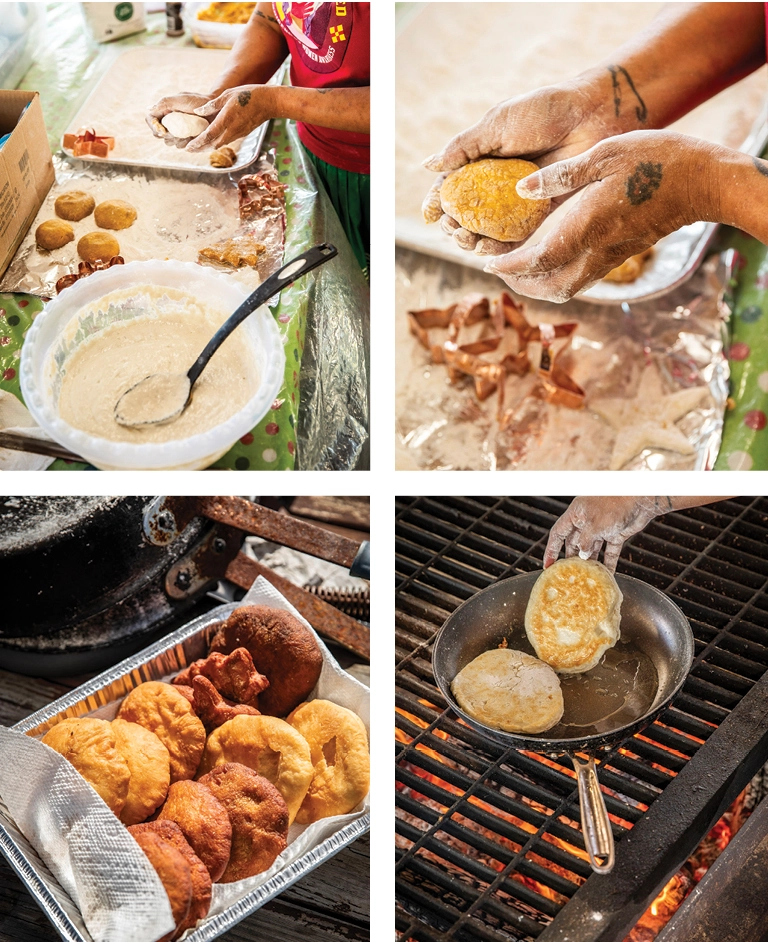
Gopher learned many of the recipes she uses now from her aunts and other family members. There’s comfort, she says, in knowing these dishes have been passed down that same way all this time. “To this day, my aunt will still tell me, ‘You should’ve done it this way.’ I’m like, ‘OK, sure.’ I’m 57 years old and I’m still learning from my elders.”
She never makes a small pot of anything. She’ll do a big batch of corn starch sofkee some mornings and then post on Facebook: “This is what I have tonight.” Bring your cups, she’ll write, but if you don’t have one, she’ll give you that too.
For more stories about Florida cooks, click here.
About the Author
Eric has been a journalist in Florida for two decades, including stints at newspapers in Fort Pierce, Stuart and Sarasota. His role at Flamingo includes everything from interviewing chefs to first-line editing on cover stories and penning our monthly culinary newsletter, Key Lime.