by | March 3, 2026
Lisa Unger’s Latest Novel is Something From Florida’s Dark Side
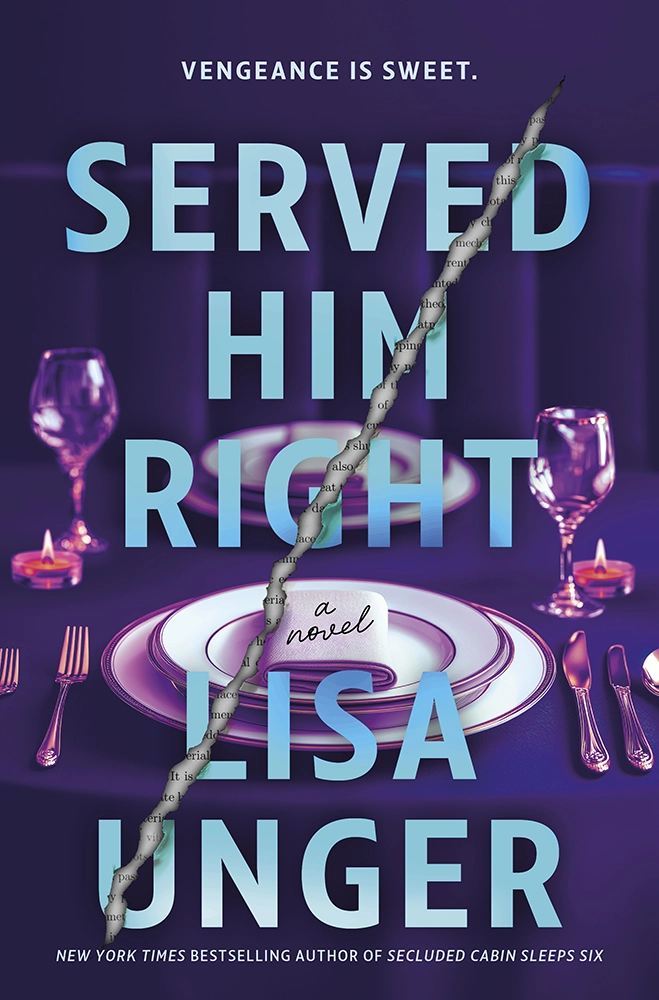
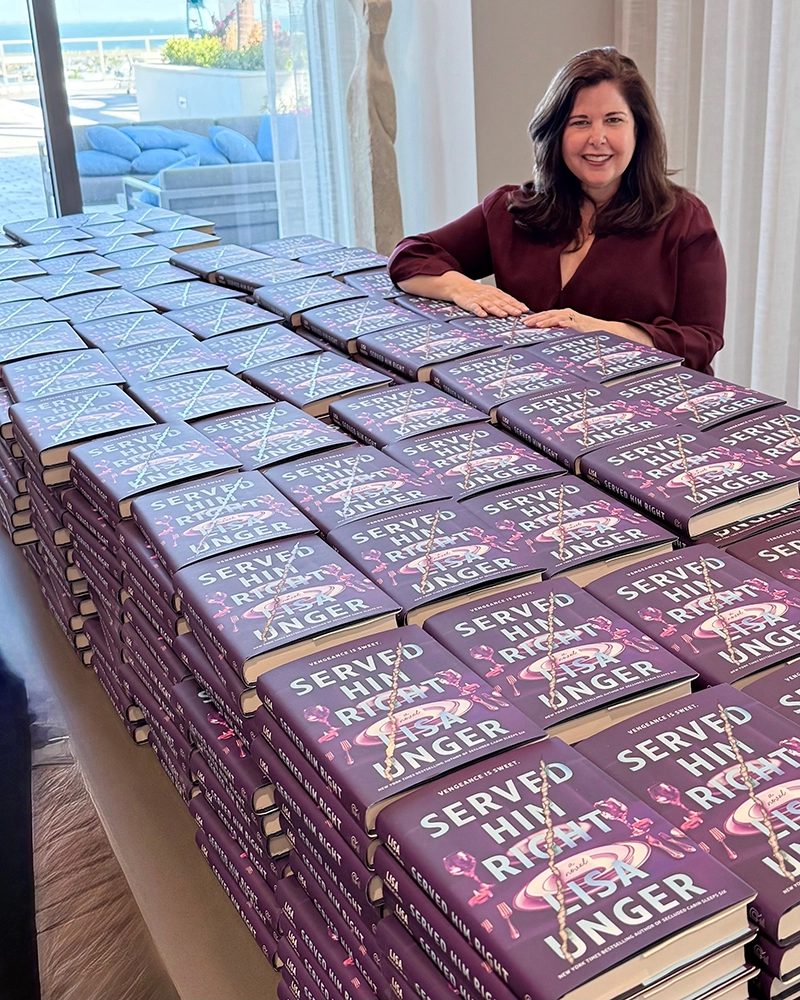
Thriller novelist Lisa Unger's "Served Him Right" is rooted in revenge.
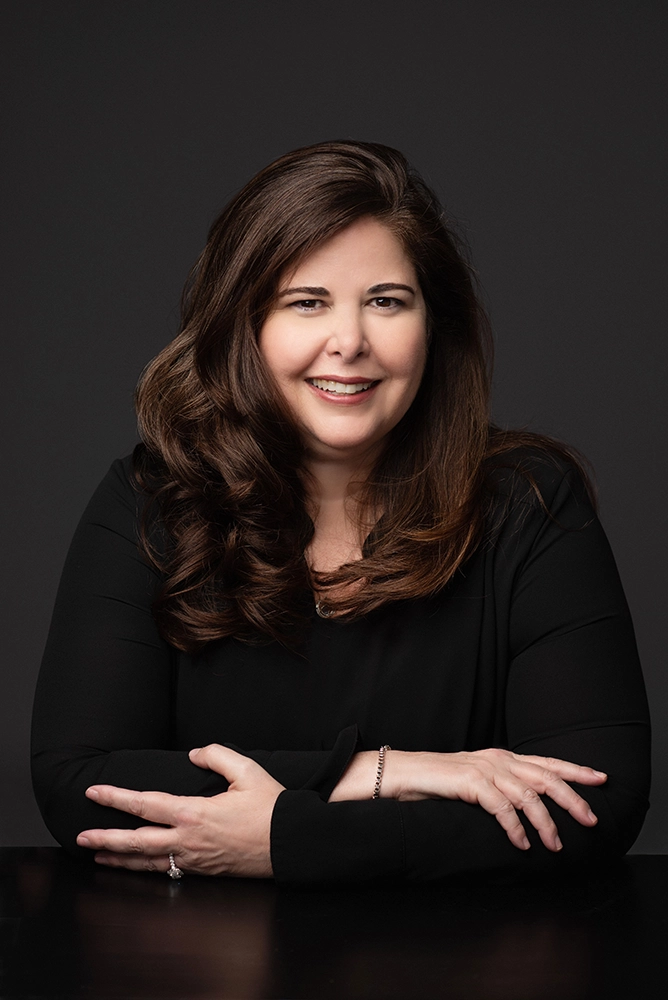
In 2004, international bestselling author Lisa Unger and her husband, Jeff, spontaneously waded into the swamp and cypress forest of the Everglades with little preparation and no expectations. As new residents of the state, the couple discovered an entirely unknown-to-them side of Florida as they walked through wildlife-infested waters.
“It was unbelievably beautiful and peaceful and weirdly not scary at all,” Unger tells Flamingo one morning over Zoom. “But maybe that was because I was like, ‘Okay, I’m in here. The chances of me getting dragged away by a gator or bitten by something are probably small.’” As a psychological thriller writer with more than 20 titles to her name, Unger doesn’t shy away from a potentially dangerous situation.
Her most recent novel, “Served Him Right,” explores another untamed wilderness, but with a side of revenge. When Ana Blacksmith breaks up with her cheating boyfriend, she and her close circle of friends gather for an ex-orcism brunch—or what was meant to be a tongue-in-cheek celebration of her newfound freedom. But when news arrives mid-meal that Paul, her former beau, was murdered, all eyes fall on Ana. And, to top it off, as she and her sister scramble to defend themselves, one of their brunch guests falls mysteriously and deathly ill. The twisty thriller has roots in botany and the power of plants, unfolding around a strong sense of sisterhood, the balance of justice and revenge and a touch of untamable darkness.
A couple of months before the novel’s release on March 10, Unger sat down with Flamingo to chat about her writing process, the complexities of her characters, a specific criminal case that inspired “Served Him Right” and the darker side of Florida, which she bravely embraces.
“You know me,” Unger laughs. “Show me the Everglades, and I’ll just walk right in.”
How does Florida inspire your work?
LU: There’s a wildness to Florida that cannot be contained, right? If for one second we just stopped building and laying concrete and putting up skyscrapers and everything that we use to try to keep Florida at bay—if we ever stopped—it would just take itself back. It would reach out these sort of black fingers and reclaim its wildness. We’re always trying to tame it, but it’s always asserting itself in some dark way. Like how you go for a walk in the park and there’s an alligator lying on the bank. It’s all this kind of darkness that sort of just is there, even though there’s this tremendous brightness and this tremendous beauty—blue skies and towering cumulus clouds and all of it. It’s just kind of a vibe that I perceive, without getting into any of the crime, politics, all of that. So far, it’s really just the energy I pick up.
What do you consider the untamed wildness of our state?
LU: There are the storms and all of it. It’s an unpredictable, extreme environment. I don’t think it’s bought and sold that way, but it definitely is that. There’s a lot of beauty here, but there’s also a lot of things from which you have to protect yourself. I mean, if you think about my other home—which I always think of as my forever home—New York City. It’s the same. I mean, it’s not an organic environment in the same way that Florida is. But it’s still this place of extremes. You know, tremendous beauty, tremendous wealth, tremendous poverty, tremendous crime. It’s all this juxtaposition of things. It definitely fascinates me. How do these things coexist, and what is the friction there?
There’s a wildness to Florida that cannot be contained, right?
—Lisa Unger
In your acknowledgements at the end of “Served Him Right,” you touch on a real criminal case that inspired the novel—the Leongatha mushroom murders, a triple-homicide in Australia in 2023. Is this what started the idea for the book?
LU: This is kind of par for the course for me. I am a news and information junkie, always taking in (information). Maybe it sparks something, and usually it leads me to kind of a swath of research. I’m not going to say too much about the case, because it is a tiny spoiler in the story. Reading that article about this crime that took place on the other side of the world, it wasn’t so much the actual substance that inspired me, but the idea that you would sit down to a meal with people that you trusted—an event that was meant to nourish, not just in terms of what you were taking into your body, but in terms of the relationship of the people that you were sharing the meal with. Instead of being nourishment, it was poison. The way that amatoxin works is that you feel okay (at first). Death cap mushroom is delicious by all accounts, right? It’s earthy, and you wouldn’t detect it as, “Oh, it didn’t taste right.” You would eat it, and maybe eat a lot of it, and you would walk away from the table feeling okay. And later you would become sick. And then for a time, the onset of symptoms would subside. So you would think you were okay. And by the time you do seek medical attention, it’s probably way too late. The toxin has worked its way into your system, and there’s no antidote for that—you just have to hope that your body survives the ravages of the toxin. And I found that very interesting.
What did the research process look like for your latest novel?
LU: At the time, I was very, very much obsessed with plants, our relationship to plants and our relationship to the earth, and how complicated it is. There were books (that inspired me). “Entangled Life” was one of them; “The Light Eaters” was another book. Another book, “The Most Delicious Poison.” That one especially was interesting to me because he talks about our relationship to plants as how very often the same substance that can heal us, that might find its way into medicine for whatever—a heart condition, let’s say—and then another dose of that medication will kill you, or that it might be toxic to plants, insects and animals, but not to humans, or vice versa. It’s this really complicated relationship that we have with nature and plants, and it’s really misunderstood. When people look at nature, they think of it like … it’s like a green blob, right? You look at a forest, and it’s a green place, but every tree and every different kind of tree is a different species. Is a different family. There’s a mycelial network, which was only very recently discovered, where basically most trees within a certain mileage are connected to each other through this fungi network—the mycelial network—and they communicate with each other. It’s this really fascinating life system that we don’t explore very often. We have this as humans; we know that nature nourishes us, that we depend upon it. We also distrust it. We build shelters from it. It’s these really complicated relationships that we have with plants. So that was the other thing that really inspired “Served Him Right.” It’s never just one thing. It’s got to be multiple things. And I also have to be obsessed with something. At the time, I was very obsessed with this idea of plants and herbs and how they heal and how they communicate with us. That’s the short answer.
Your books explore the inner lives of your characters with complexity. How do you approach that in your first stages of writing, and how do you keep that process genuine?
LU: I approach my characters much the way I approach anybody else I meet. If we start hanging out, I’m going to know a lot more about you in six months. I’m going to know where you came from. I’m going to know what you like and what you don’t like. You’re going to tell me things about your family. I’m going to infer things about you from that. And so I approach my characters in the same way. Every single one of them is real to me, and they come to me on the page, and I don’t know that much about them. All I knew about Ana was that she was wild and unpredictable, and I had no idea what she was capable of. And then Vera, whom I saw initially, is being just very tightly controlled, but only because there’s something kind of wild and dark within her that she had caged through order. That’s what I knew about the sisters going into it. And then they evolved for me on the page the way they evolved for my reader. They evolved for me in the writing, as is the story, and that’s how I’ve written every single model and every single short story. That’s just my writing process. It only exists in the writing. There’s no thinking, there’s no strategizing, there’s no like, “Oh, I want to write a book about this.” If I had (thought), “I want to write a book about the death cap mushroom,” it would never happen. That’s not how it works for me. Everything has to mingle, and then something organized has to grow. I approach every character with empathy. When approaching somebody with empathy, they reveal themselves, and that’s how I preserve the inner lives of my characters. They’re real to me, and hopefully they’re real to you.
Every writer has a different process to get to know their characters.
LU: Yes, and some writers outline copiously to great effect. I think you don’t really get to choose. Some people have character sketches and they maybe create a vision board. There’s no wrong way to do it. There’s only the way you access the work as a writer. Everybody’s process is different.
Florida, for all its wildness, is a delicate place. It needs our care. The planet needs our care. We’re not separate from nature.
—Lisa Unger
As the author, who would you say is the villain in “Served Him Right”?
LU: I don’t generally think about my books in that way, which is weird to say as a thriller writer … I don’t think that there are that many true villains. I think there are people that run into the fire instead of away from it to save rather than protect themselves. That person might be a hero, but in another place in their life, maybe they’re abusing their kids and their wife. On the other hand, there’s a villain—somebody who does something awful—but maybe he is also a great father to a little girl, and you never see that side of that person. Which of those things is real, right? There are people that we admire, people that we fear, of course, there are people that are unwell, deranged, and they’re also terrifying in their own way. But in this book, I’m not sure that I could define a clear villain. We could say that it was Paul. But we’re only ever seeing Paul from the perspective of women who have powerful reasons to dislike him, right? So we never really see him. We only see him through these other characters. You could maybe think of Ana as having a little bit of a villainous streak. And even Vera. Certainly, Lysander is very layered. Agnes makes some very dark choices, but they all have their reasons. I don’t know that I could clearly define the villain of the story, even thematically, because I just think life and the world and people and their choices are far too layered for that type of simplicity.
Do wildness and darkness go hand-in-hand?
LU: I love that question! I think they absolutely do. When we construct a society … our structures, our houses, our buildings, to protect us from the wild, from nature, from the elements—we do that because there is an unpredictability and a darkness to nature. There’s a distrust of nature. You know there’s a nourishment that comes from swimming in the ocean, but there’s a darkness there, too. You know that every time you step into the ocean, there’s a risk to your physical health, one way or the other. Whether it’s bacteria or a shark or whatever it is, you know there’s a risk—same with any kind of foray into nature. There is that wildness and that unpredictability that we try to protect ourselves from.
What do you hope readers gain from “Served Him Right”?
LU: I hope that people look at nature in a different way. That’s what I hope. I hope that people understand that we are all connected, and that we are connected to nature in a really intimate and direct and constant way, even though we have constructed lives that take us away from nature and keep us separate from nature, keep us in distress of nature. And that, though nature is unpredictable and wild and there’s tremendous darkness to be found there, it’s also our relationship to the planet. We’re indivisible from the planet. You are not separate from the trees in your yard. You’re not separate from the forest. You’re not separate from the ground beneath your feet. The planet and humanity survive hand in hand. This is something we know in Florida, because our environment is so delicate. You know our karst topography, the water table, the endangered species, the Wildlife Corridor; all of these things we know in Florida. Florida, for all its wildness, is a delicate place. It needs our care. The planet needs our care. We’re not separate from nature.
For more interviews with Florida authors, click here.
About the Author
As a born-and-raised Floridian, Emilee loves to write, read and talk about the Sunshine State. She graduated from Florida State University with a degree in editing, writing and media. Now, Emilee uses her skills to edit our print issues and online content, as well as write our weekly e-newsletter, Fresh Squeezed.