Will the Florida Orange Survive?
As Florida’s citrus industry barely hangs on, the iconic fruit may struggle to remain the symbol of the sunshine state.
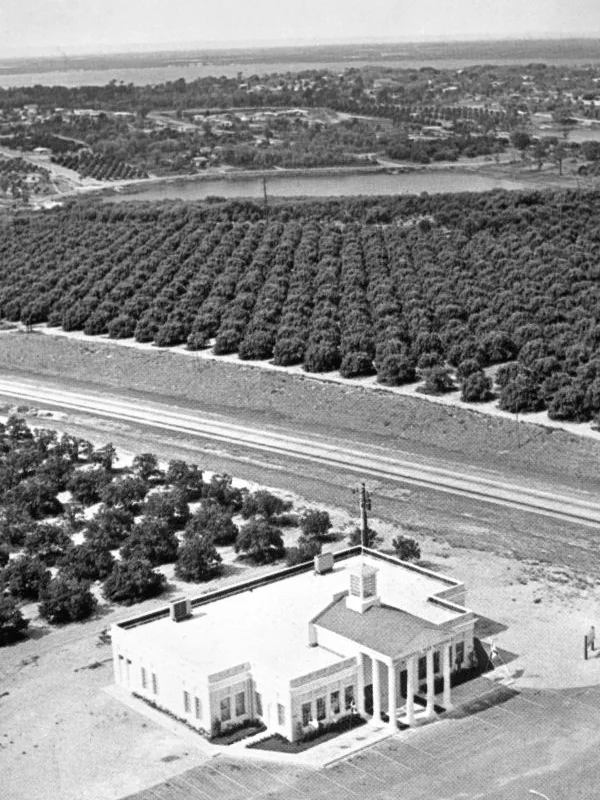
Last summer, Benny McLean, a third-generation orange farmer, took his aunt Mabel Claire up to the top of the Citrus Tower that has loomed over Clermont for seven decades. Mabel Claire had lived her 90 years in the tower’s shadow but had never seen the view from the 22-story edifice, erected with 5 million pounds of concrete and steel in the heyday of Florida citrus to showcase the state’s booming industry.
Before Disney World opened and changed the entire tourism terrain of Florida, the tower was a must-see attraction. I remember reading about it in a tourism brochure that my family obtained shortly after we moved to Florida in the 1970s.
The tower opened in 1956, when Florida tourism was still largely built around springs, gardens, roadside attractions and its natural beauty. As many as half a million people a year stopped there as they drove Highway 27, then a major north-south artery, as though they were on a pilgrimage of sorts. It cost a dollar for adults to ride the elevator to the viewing deck, where all of Central Florida opened beneath. Not highways and turnpikes, not theme parks or outlet malls, but row after row after row of lush, verdant groves blanketing the rolling hills around the glistening waters of lakes Minneola and Minnehaha. At the time, Lake County boasted more citrus than any other county in America: 100,000 acres, or the size of 76,000 football fields.
McLean’s high school graduating class of 1960 snapped a group photo on the observation deck. He remembers seeing a sign that read: “If you see a rooftop, you get your money back.”
You could smell Florida before you felt the warmth of its sunshine and laid eyes on its turquoise waters. The scent of billions of orange blossoms hung in the air, their heady fragrance unmistakable. Marjorie Kinnan Rawlings, one of Florida’s greatest literary chroniclers, described orange blossoms in her memoir, “Cross Creek”: “For a month or six weeks, we shall be giddy by day with them and at night drown in a sea of perfume.”
The orange blossom was declared the official state flower in 1909. Orange juice became the official state beverage in 1967, and in 2005, Florida made the orange its official state fruit.
Commercial groves stretched through nearly half of the state’s 67 counties and helped create an image of Florida as a place of fertility, warmth and abundance. They bore the promise of the fruit that had become inseparable from the very idea of Florida.
That version of Florida, however, has been vanishing. Rapidly.
First came a series of devastating freezes, including five in the 1980s, and repeated outbreaks of citrus canker, a bacterial infection that makes trees weak and unproductive. Then came a tiny insect that dealt the industry its biggest blow.
The Asian psyllid, native to South and Southeast Asia, arrived in Florida in the late 1990s and was first detected in 1998. Seven years later, scientists confirmed the disease it carried: Huanglongbing (HLB), known more commonly as citrus greening. Scientists believe the bug injects bacteria into the tree that spread through its sap, multiply and disrupt the tree’s immune system, keeping it in a constant state of defense. Over time, that damages the tree’s vascular system—the internal plumbing that carries nutrients—and leaves the tree starved, causing it to produce small, lopsided, bitter fruit that often drops prematurely. Eventually, the disease kills the tree.
Growers like McLean were forced to sell off their dying groves to developers, and acres and acres of trees were bulldozed to make way for houses.
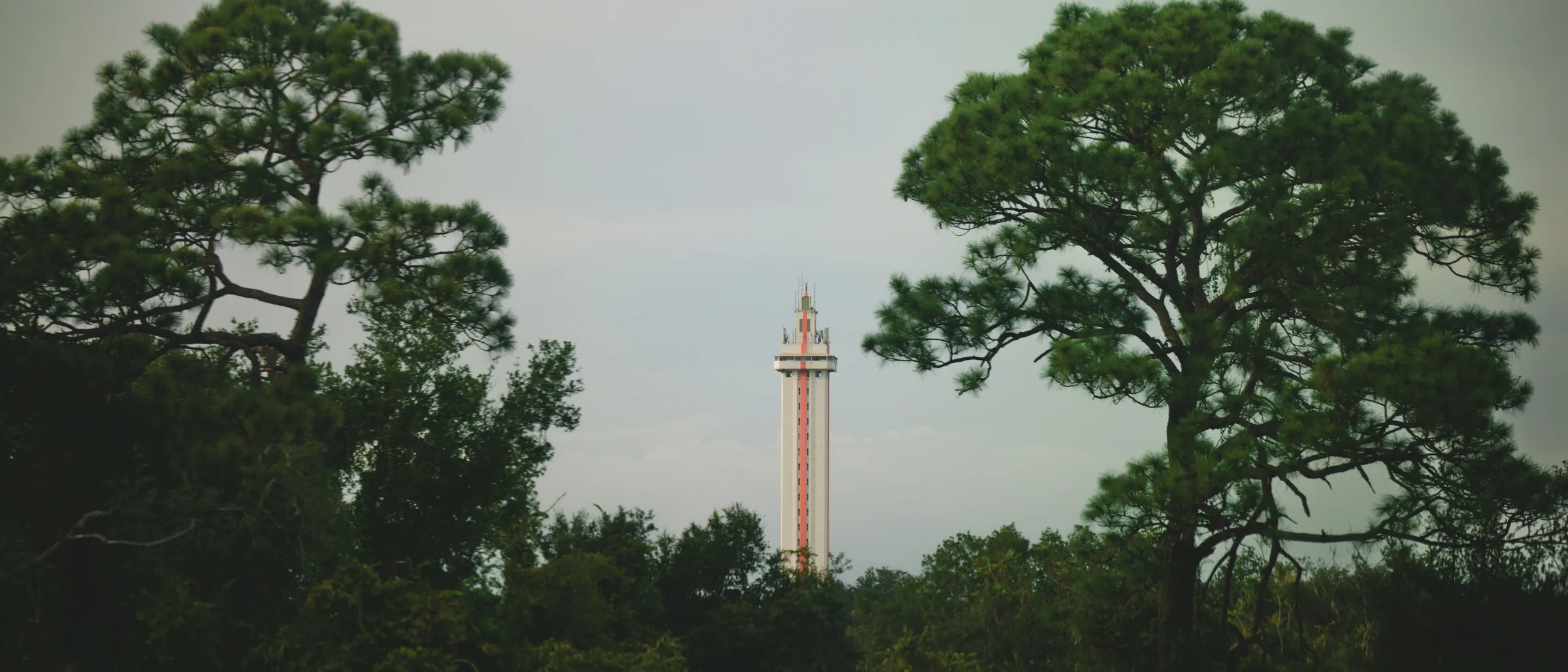
It’s possible that the only oranges Mabel Claire saw on her birthday outing last year were the young trees planted at the base of the tower in honor of what once was. The joke these days is that you get your money back if you can spot an orange tree from the viewing deck. Except there’s little humor in it for Floridians whose lives have been enmeshed in the industry, like McLean and his sons, who had fully expected they would be farming oranges until they died.
I visited the tower in 2015, when I first met the McLeans, and again this past February. I could tell what a difference 11 years had made. All I could see on this last trip was the concrete and asphalt of strip malls, big-box stores and paved four-lane roads, and the big green logo of a Publix grocery store. Later, I learned that only 3,404 acres of citrus remained in all of Lake County. The rest had been gobbled up by subdivisions and shopping centers.
The same story has, alas, repeated itself in other Florida counties where citrus once dominated. And while the industry’s biggest boosters remain optimistic about the future, everyone agrees that citrus will never reign here the way it once did.
We’re at the edge of no return, if I’m being honest.
“It’s really sad,” McLean tells me. “It’s one of those things that you don’t ever get over.”
His son Matt, who in 1999 launched Uncle Matt’s, the first all-organic orange juice from Florida, says the collapse of the citrus industry is heartbreaking. “We’re at the edge of no return, if I’m being honest,” he says. “The agrarian culture and way of life in Clermont and Lake County is all but gone. We continue to pray for a cure and hope for the best.”
The fruit that is the color of sunlight and the face of Florida to the rest of the world was once hallowed and revered. Now, the orange may be facing an uphill battle to retain its iconic status and to even stay viable in the state.
A Shocking Decline
In 2015, I was a reporter at CNN and dispatched to Clermont to write about the disease killing millions of citrus trees. Even less was known about the disease then. Scientists were furiously working to find a prevention and a cure.
The McLeans showed me around the groves they still owned back then, oranges hanging from trees like shiny gems. They are simple people, dressed in blue jeans and golf shirts emblazoned with the Uncle Matt’s logo. Matt McLean’s grandfather grew citrus, as had his father. Orange juice ran like blood in their family, as it did for many other multigenerational Florida citrus farmers. As a boy, Matt ran up and down Sugarloaf Mountain Road, through rows of sun-kissed citrus trees. He is 54 now but still can clearly remember sultry summer days spent working in the groves, planting trees, yanking weeds and picking fruit.
He had not always wanted to go into the citrus business, but the lack of organically grown oranges inspired him to do something about it. Uncle Matt’s grew rapidly and Matt was proud that his company’s products were made with the juice of all-Florida organically grown oranges.
“We were farming 1,500 acres with over 35 different growers in three different counties,” he tells me. “We didn’t import one gallon of juice for Uncle Matt’s. It was all grown by us, farmed by us and sold by us.”
But the McLeans, like every other grower in Florida, were scratching their heads about how to save their groves from greening. They feared dark days were on the horizon. The uncertainty was killing them.
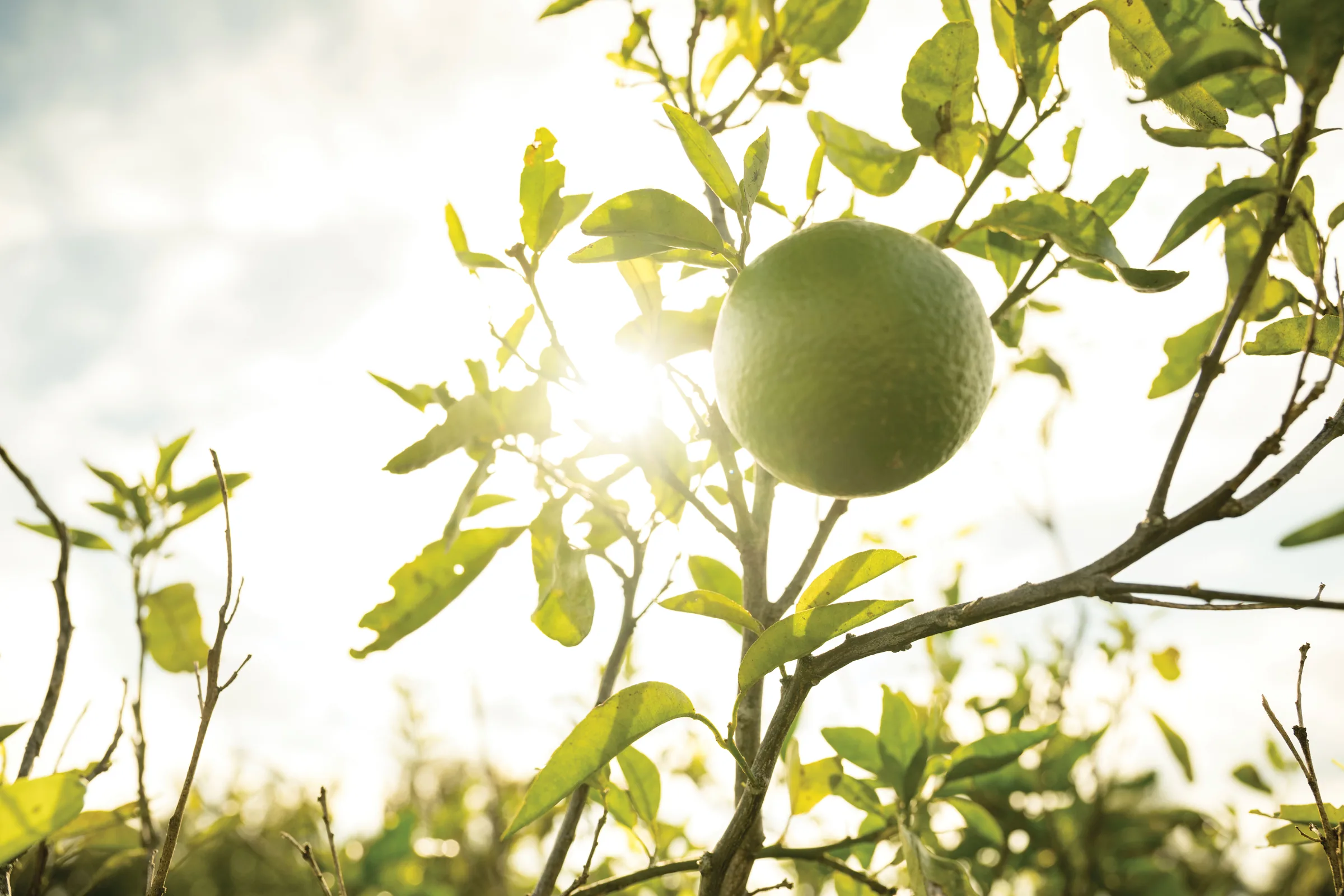
By 2015, citrus greening had become an existential threat, infecting roughly 80% of citrus trees in Florida, where high humidity creates conditions ripe for greening. Federal assistance that year helped growers replace about 570,000 trees lost to the disease, according to the USDA.
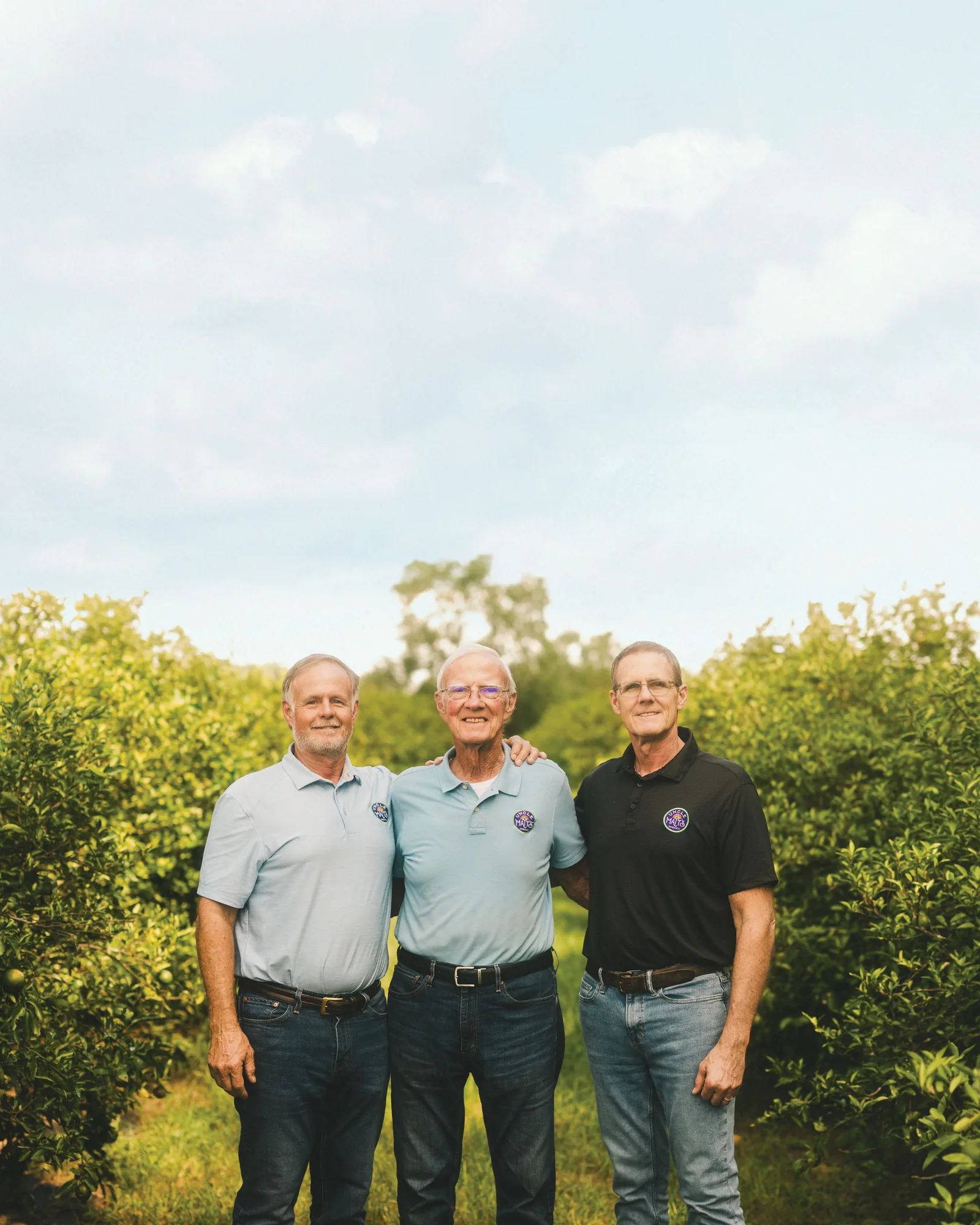
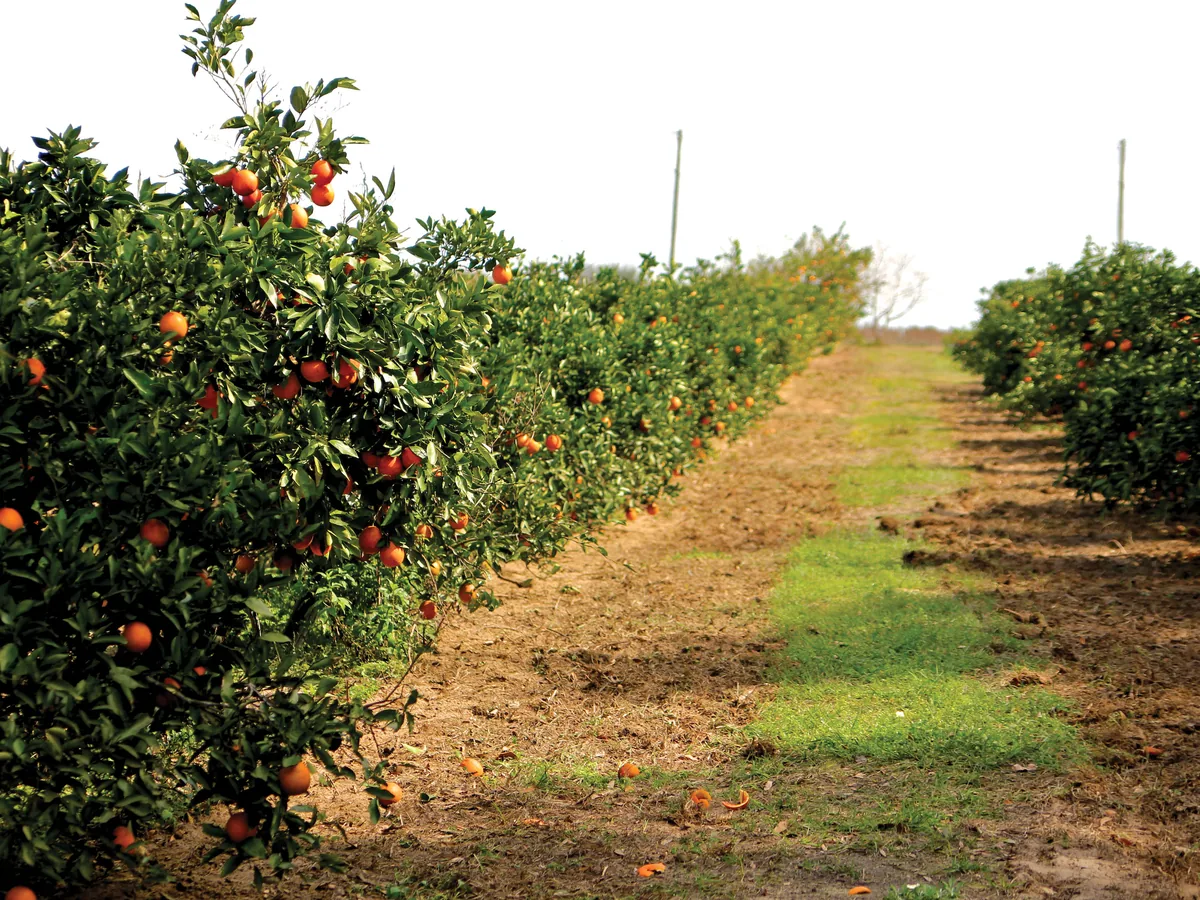
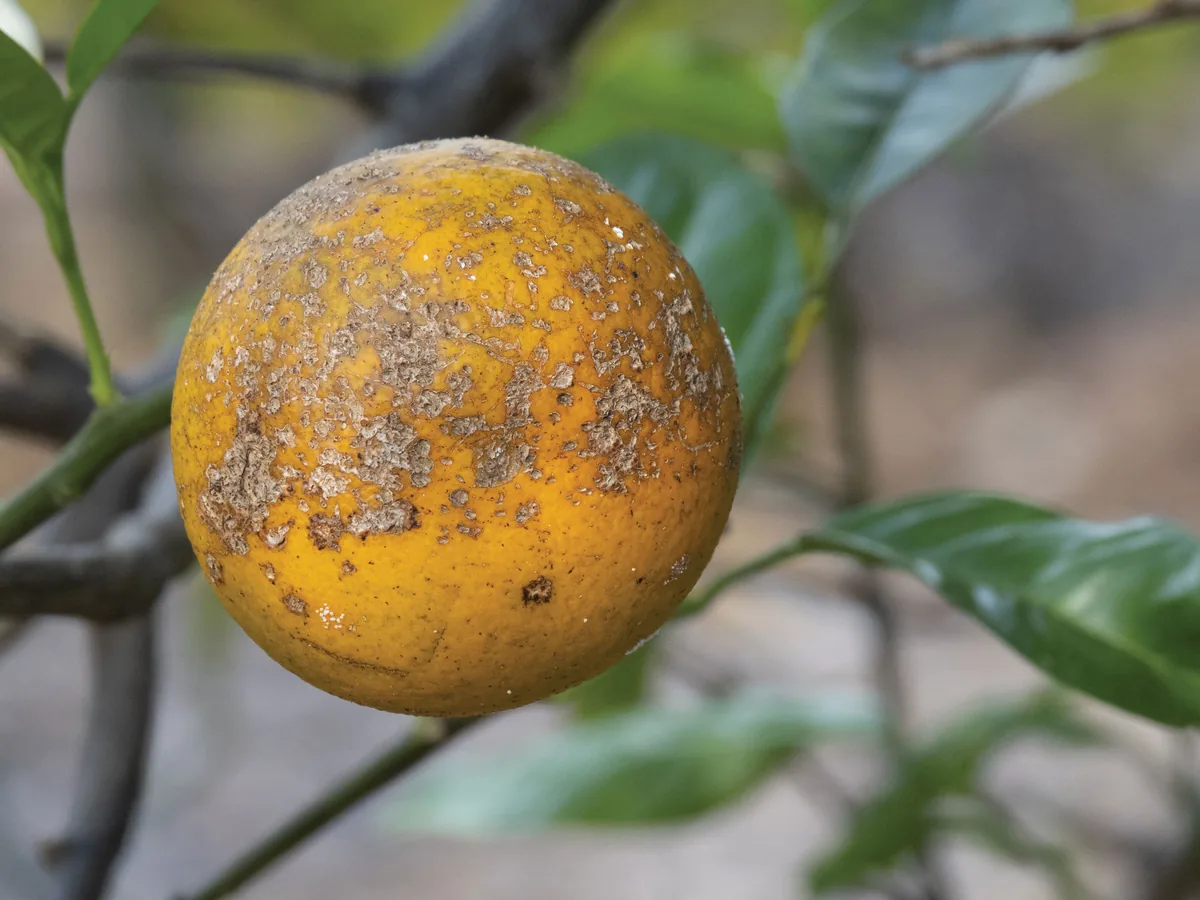
Benny McLean, flanked by sons Ben (left) and Matt, in the family’s Clermont grove; Benny McLean’s Lake County orange grove; an orange diseased with citrus greening. Lake County grove photograph courtesy of McLean Photography; diseased orange courtesy of Adobe Stock / Lynne.
By the end of the year, Matt had to abandon his all-Florida claim and was forced to import juice to bottle Uncle Matt’s. There simply wasn’t enough juice from Florida oranges to keep the business going. That’s how fast citrus greening disease was spreading through the groves. Eventually, things got bad enough that he was forced to sell the company he had birthed and nurtured.
He ended up buying back his company years later, at the height of the pandemic, from Dean Foods after declining sales forced the dairy giant to file for bankruptcy. But this time around, Uncle Matt’s would have to be different. The company launched a new product called Ultimate Immune, a drink that, like orange juice, gained popularity during the COVID years when health concerns became front and center for Americans.
“Orange juice got back onto the breakfast table and back into the refrigerator,” Matt says.
But Uncle Matt’s juices were no longer made with Florida oranges. Instead, the juice was coming from groves in Texas, California, Mexico, Brazil and even Morocco. Uncle Matt’s 2.0 opened a bottling plant in Texas to be more centrally situated. Today, the company has nothing left in Florida save its headquarters, still in the same office complex off of Highway 50 in Clermont. And of course, its heart.
I never thought I would have to leave the state for supply. I was a proud Florida citrus grower.
“It’s very disappointing from a personal perspective knowing my roots run deep in Florida,” Matt says. “I never thought I would have to leave the state for supply. I was a proud Florida citrus grower. Today, we travel the globe to find the best organic growers to help fuel our growth. It’s much different than what I envisioned in 1999, and I would not have expected this to be the outcome.”
The drop in Florida’s citrus production has been nothing less than shocking. The biggest year on record was 1997-1998, when the state produced 304.5 million boxes of oranges, grapefruits and tangerines, according to the United States Department of Agriculture. Florida generated three-fourths of the nation’s citrus, amounting to more than one box for every American. That number plummeted to 14.6 million boxes of citrus (of which 12.2 million boxes were oranges) in 2024-2025, a 95% plunge, an extraordinary collapse. For every 21 boxes of citrus Florida produced at its peak, it now produces just one.
None of the major orange juice brands on American grocery shelves are 100% Florida-grown anymore. Yet despite the sobering statistics, polls show most Americans still equate oranges and orange juice with Florida. And that is not likely to change. At least not for a while.
The Good and the Ugly
Florida’s citrus story originated in the 1500s when Spanish settlers and missionaries planted orange trees that flourished in Florida’s warm, sandy soil. By the late 1800s, citrus had become a major commercial industry, and Florida began cementing its image as the land of oranges. Railroads made it possible to ship fruit up north, and innovations in packing and processing turned citrus into a year-round industry for Floridians.
Florida historian Gary Mormino told me that during World War II, Florida citrus assumed new importance as a part of the nation’s wartime food supply, providing essential vitamin C to the troops. Then came the innovation of frozen concentrated orange juice in cans, which revolutionized the industry. All anyone had to do was “mix with three cans of water and stir.”
That, says Mormino, had to be the most perfect sentence in the English language pertaining to Florida.
“The war is over. Prosperity is reigning. Orange juice is cheap,” Mormino says. “Poor mothers are overwhelmed. They had three, four, five children. They don’t have time to squeeze fresh juice anymore. And what has arrived as kind of a savior in some ways is the can of frozen orange juice.”
Hollywood superstar Bing Crosby’s smooth baritone voice promoted Minute Maid frozen orange juice on radio and television commercials for three decades. Some of the ads showed Crosby’s own family drinking reconstituted orange juice, not only at the breakfast table but while camping and even playing golf. Years later, in the 1970s, former beauty pageant queen and Florida Citrus Commission ambassador Anita Bryant famously said on television commercials: “A day without orange juice is a day without sunshine.”
Perhaps one of the biggest ways the state marketed its oranges was through the crates they were packed in. They served as little billboards for the industry and often featured colorful lithographed paper labels depicting swaying palm trees, flamingos, beaches, sunshine and, of course, oranges.
“Was there ever anything so beautiful and so simple?” Mormino asks. “If you were in the store, you might not see what’s inside the orange crate, but with that orange-crate label—well, it was very, very good advertising.”
The crates went into stores and homes across America. They were like postcards for people who had never stepped foot in the Sunshine State and could only dream about a land that was lush, warm, exotic, abundant. Cardboard boxes eventually replaced the crates, which became prized collectors’ items recognized today as folk art. The Museum of Florida History exhibits 700 such orange-crate labels. What most of America did not know, of course, is that behind the wholesome, sometimes dreamy image of the oranges and orange juice was a cruel reality.
That orange-crate label … was very, very good advertising.
“A romantic fruit with the ideals of the yeoman farmer, but with baggage,” Mormino says. “I mean, it would be a mistake not to mention the brutal treatment of people who had to work the groves, overwhelmingly African American.”
In “The Warmth of Other Suns,” the highly acclaimed book chronicling the exodus of 6 million Black people from the segregated South, author Isabel Wilkerson turned the picturesque landscape of the groves inside out, a far cry from Rawlings’s sensory descriptions. Wilkerson wrote about how the grove owners protected the trees from freezes with fires, tires and oil heaters, while Black pickers worked dangerous jobs climbing ladders and were paid according to how much fruit they picked. Citrus represented prosperity for white grove owners but racial oppression for the workers.
Black Floridians formed the backbone of the state’s booming industry in the days of Jim Crow, when other employment opportunities were severely restricted by segregation. Over time, as those opportunities expanded and the agricultural labor force changed, growers increasingly relied on migrant workers, including workers from Central America and the Caribbean.
One of the first stories I reported as a young journalist in the early 1980s focused on migrant workers who picked fruit and vegetables in Immokalee. It was hard work under the hot sun for very little pay.
I had been inspired to write it after watching Edward R. Murrow’s 1960 documentary, “Harvest of Shame,” which exposed the plight of farmworkers, including those who picked citrus.
That same year Coca-Cola acquired Minute Maid, and within a decade, it was the single largest citrus producer in Florida. In 1970, NBC produced the documentary “Migrant: An NBC White Paper,” which showed Minute Maid workers living in dilapidated houses with no running water. “Right now,” said one of the women interviewed, “I don’t see no future.”
“No doubt, it was a tough business,” Mormino says. Citrus in Florida was a study in contrasts. On the one hand was the beauty of the groves and the fantasy of Florida seen through oranges. On the other was the ugly reality of exploited workers on whose backs the citrus empire was erected.
By the end of the 20th century, Florida’s citrus industry had reached extraordinary scale. Citrus became Florida’s defining agricultural product and a powerful symbol of the state itself. The staggering decline that followed has left Florida with a most unusual cultural legacy: Oranges remain everywhere in the state’s imagery and mythology even as the groves that created that identity are vanishing.
Queen When Citrus Was King
Perhaps the person who most wants to save Florida citrus is a woman who has never owned groves but has spent her entire adult life promoting them.
Brenda Eubanks Burnette grew up in South Florida, the daughter of a man who sold cars for a living and a woman who worked in the paint department of a Sears department store. She entered the 1978 Miss Winter Haven beauty pageant for college money and ended up filling in for that year’s Miss Florida Citrus Queen at an event at a citrus-processing plant. That was Burnette’s first real exposure to the industry.
Encouraged by folks she met, the young beauty entered the Florida Citrus Queen contest and won in her second attempt in 1981. At 21, she was queen when citrus was most definitely king in Florida. She was lavished with a $1,000 wardrobe, a car and appearances all over the world, all to promote Florida fruit. She went on TV shows to demonstrate citrus recipes. She visited hospitals and schools in hot-rolled hair, raspberry-colored lips and high heels to tout the health benefits of orange juice.
The highlight of her travels, she recalls, was a three-week trip to Japan to promote grapefruit. She presented a Japanese baseball team with a fruit basket and kissed the manager on the cheek.
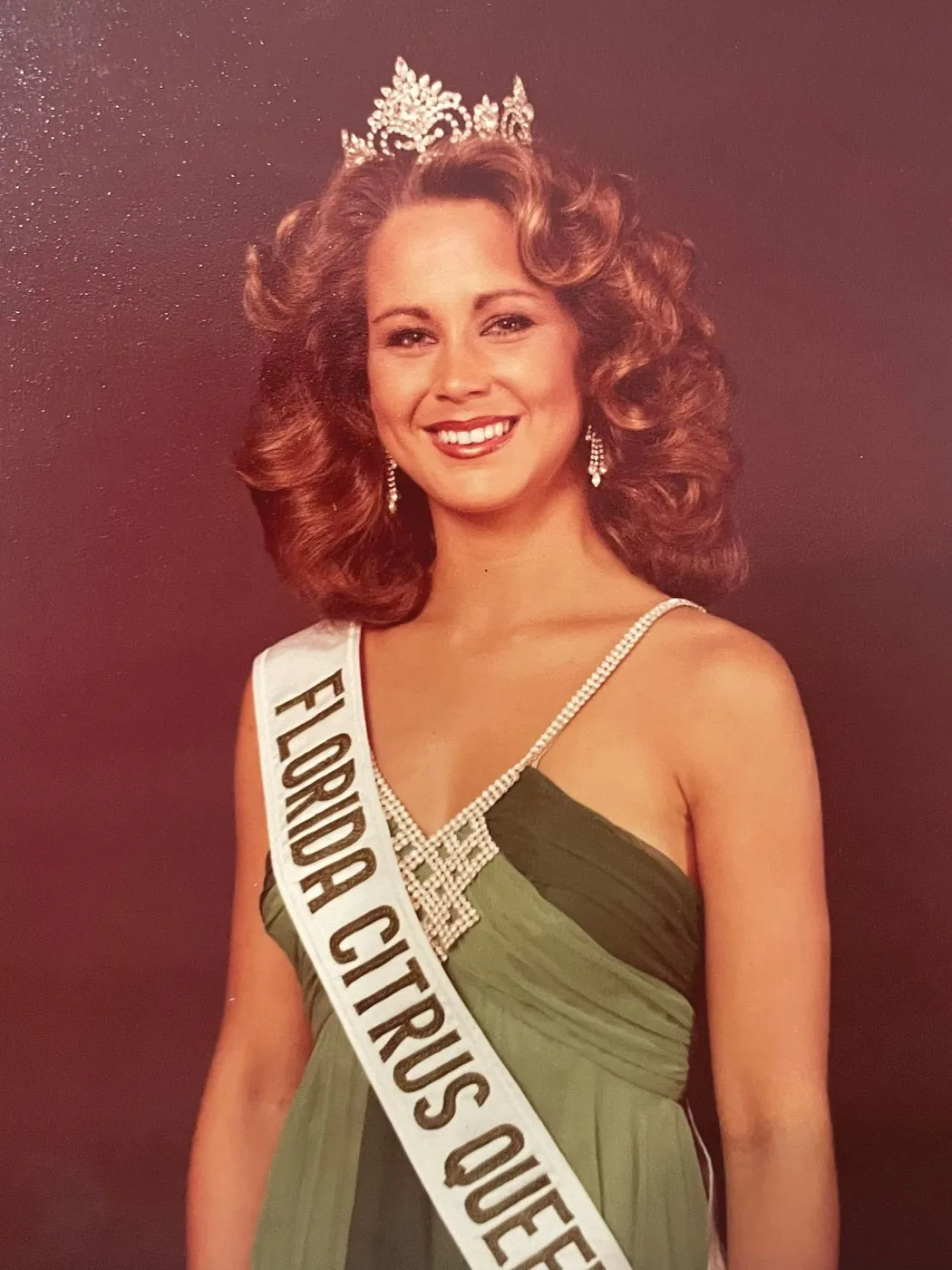
“You know, I’m a Southern girl and that’s what we all do here,” she says. “I didn’t realize in Japan that was considered very risque. That photo hit all of the national papers throughout Japan.” Burnette’s trip turned out to be an enormous marketing success. Japanese ships would arrive at Florida ports carrying Toyotas and leave with crates of citrus.
Burnette went on to become a spokesperson for the Florida Department of Citrus, then the executive director of the Florida Citrus Showcase, where she organized the Florida Citrus Festival. She headed the Hall of Fame after it separated from the showcase in 2008.
In the years of the industry’s decline, Burnette became its preserver. She writes the “Pieces of the Past” column for Citrus Industry Magazine, researching the people, traditions, businesses, labels and stories that might otherwise disappear. She wrote books on citrus-crate labels and helped establish the Citrus Crate Label Tour, an outdoor museum inspired by North Carolina’s quilt trail.
Visitors can view large reproductions of historic crate labels placed in communities that were once major citrus centers. The idea, says Burnette, is that people drive from sign to sign and learn about a way of life that has all but disappeared. The trail began in Polk County and has expanded to Lake, Manatee and Indian River counties with nearly 100 crate-label signs.
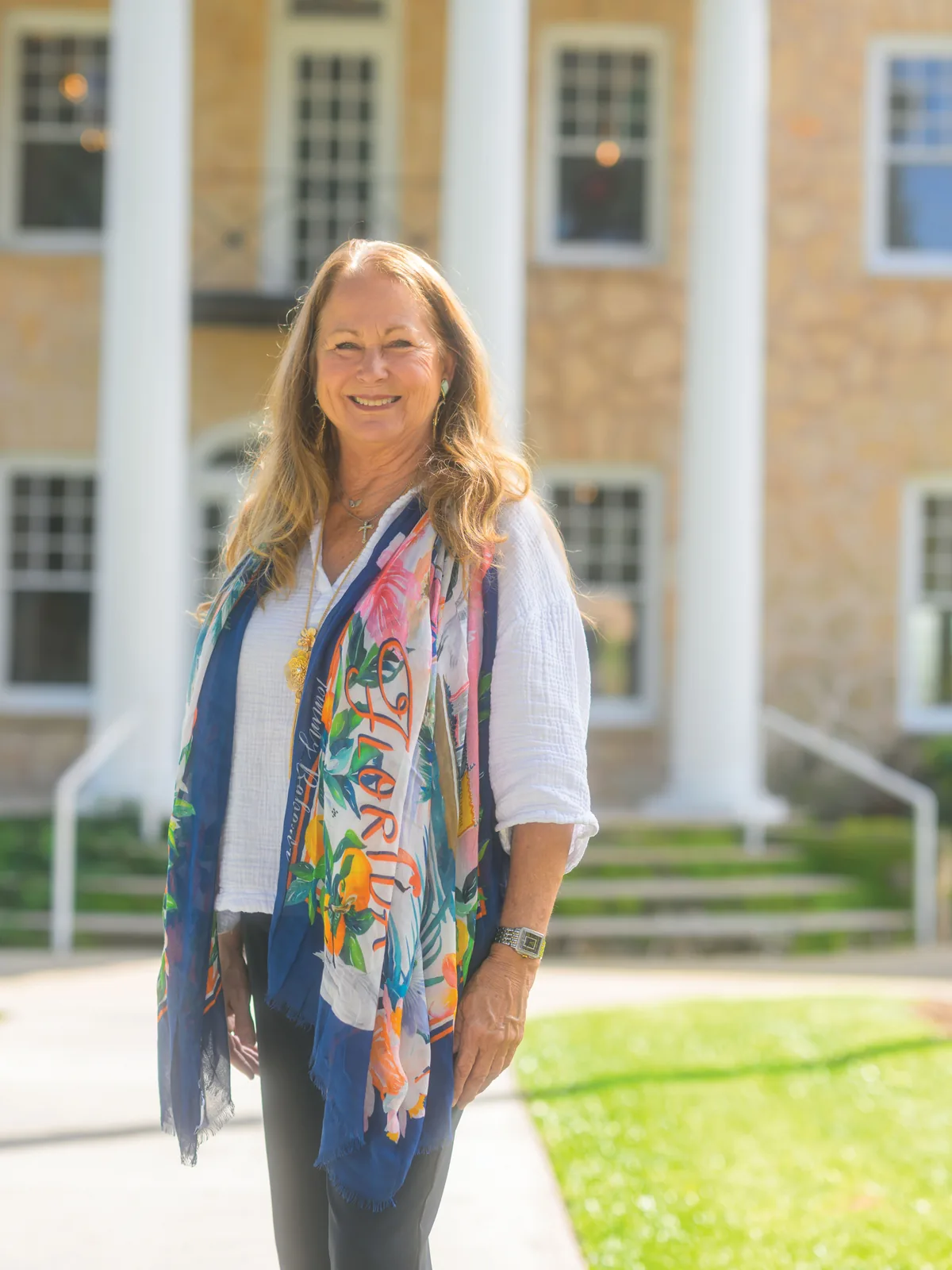
I see Burnette as a living bridge between the era of prosperity for Florida citrus and the years when it has been dying. She was once the face of Florida citrus and is now one of its keepers of memory. “I have lived it and seen it,” she says, fighting tears. “It’s hard to watch.”
It Can Never Be the Same
I taught at the University of Florida between 2018 and 2023 and drove from Gainesville to Atlanta and back every few weeks. Crossing into Florida on Interstate 75 meant a stop at the welcome center and a free cup of Florida orange juice.
The free juice has been a hallmark of the welcome centers since 1949. Motorists traveling to Florida on interstates 10, 75 and 95 first see oranges on the license plates of the locals. Their second orange encounter might be the free cup of juice.
It’s a small but beloved gesture. So much so that when budget cuts in 2019 prompted Visit Florida, the state’s official tourism marketing organization, to discontinue offering it, a public outcry ensued, and disappointed drivers as well as politicians bashed the decision. It was “shortsighted,” people said, to eliminate the greatest icon of Florida. Orange juice began flowing again the following year.
But the industry struggled. Between 2004, the year before citrus greening was first detected, and 2025, Florida went from 748,555 acres of citrus trees down to 208,183 acres, a vast majority of the loss due to citrus greening.
There is still no viable cure, although recent research by University of Florida scientists has offered glimmers of hope by asking a different question: What if instead of trying to kill the disease, we were able to make precise changes to the DNA of citrus trees that could help them withstand it?
A company called Soilcea licensed technology developed at the University of Florida and began experimenting with different genetic changes that might help citrus trees resist greening. The company created thousands of genetically edited trees and identified three promising changes, which it combined in a single tree that it called CarriCea T1.
CarriCea T1 has been tested in Florida groves and cleared the regulatory hurdles for commercial planting in 2026.
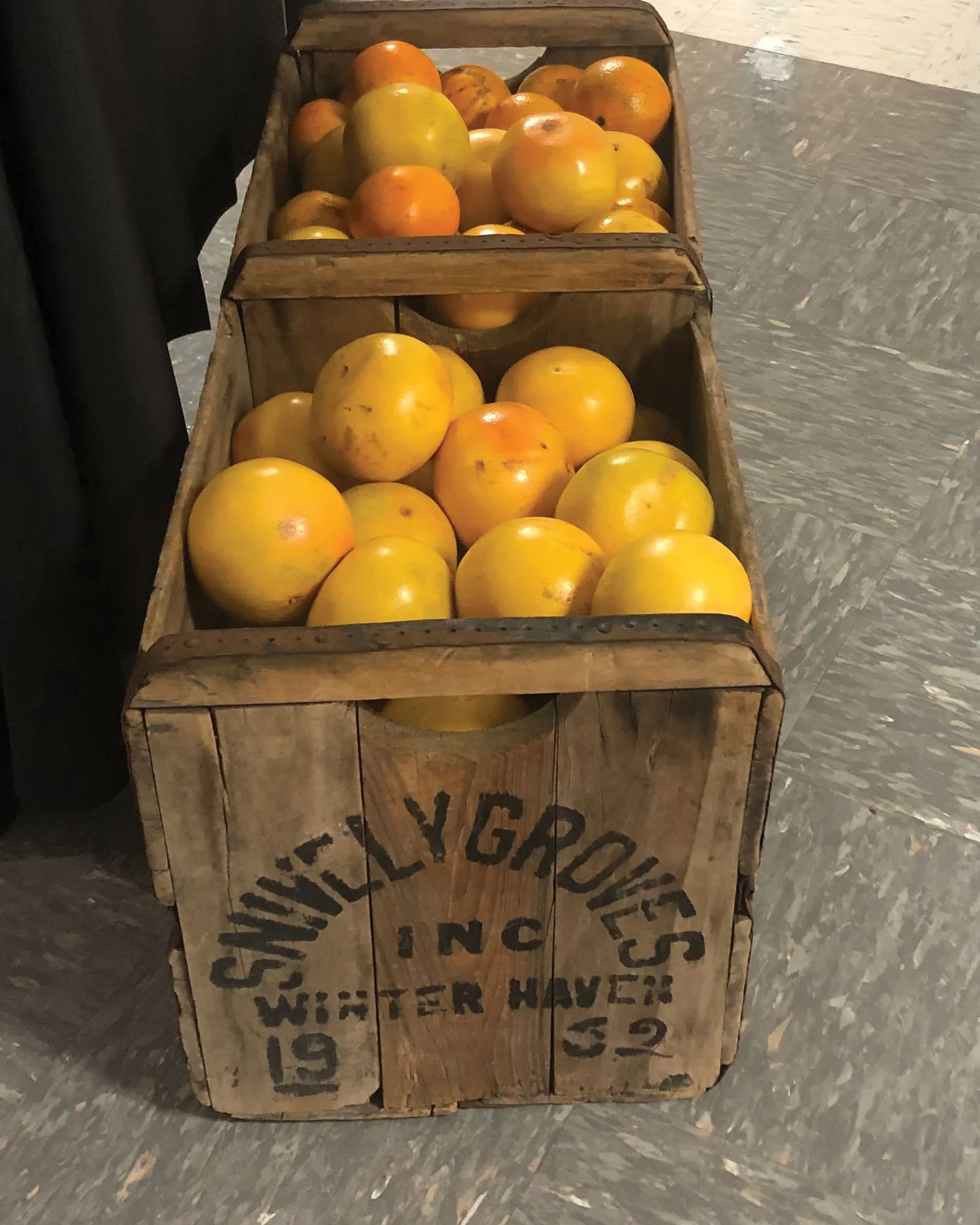
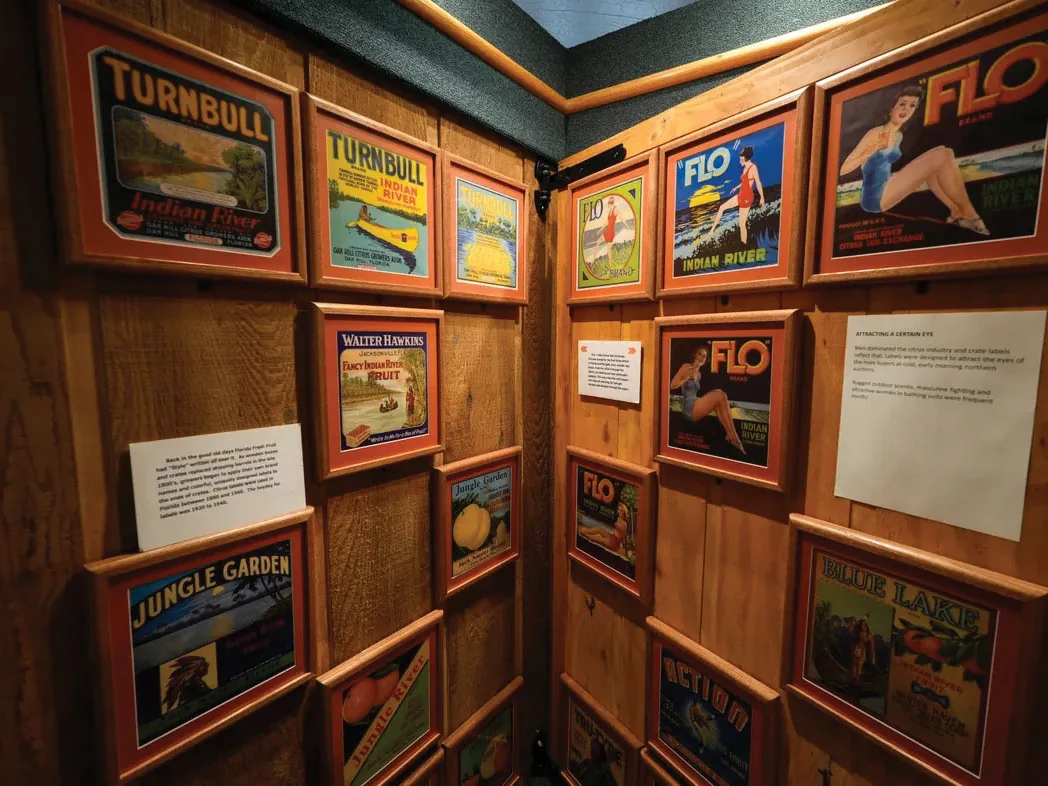
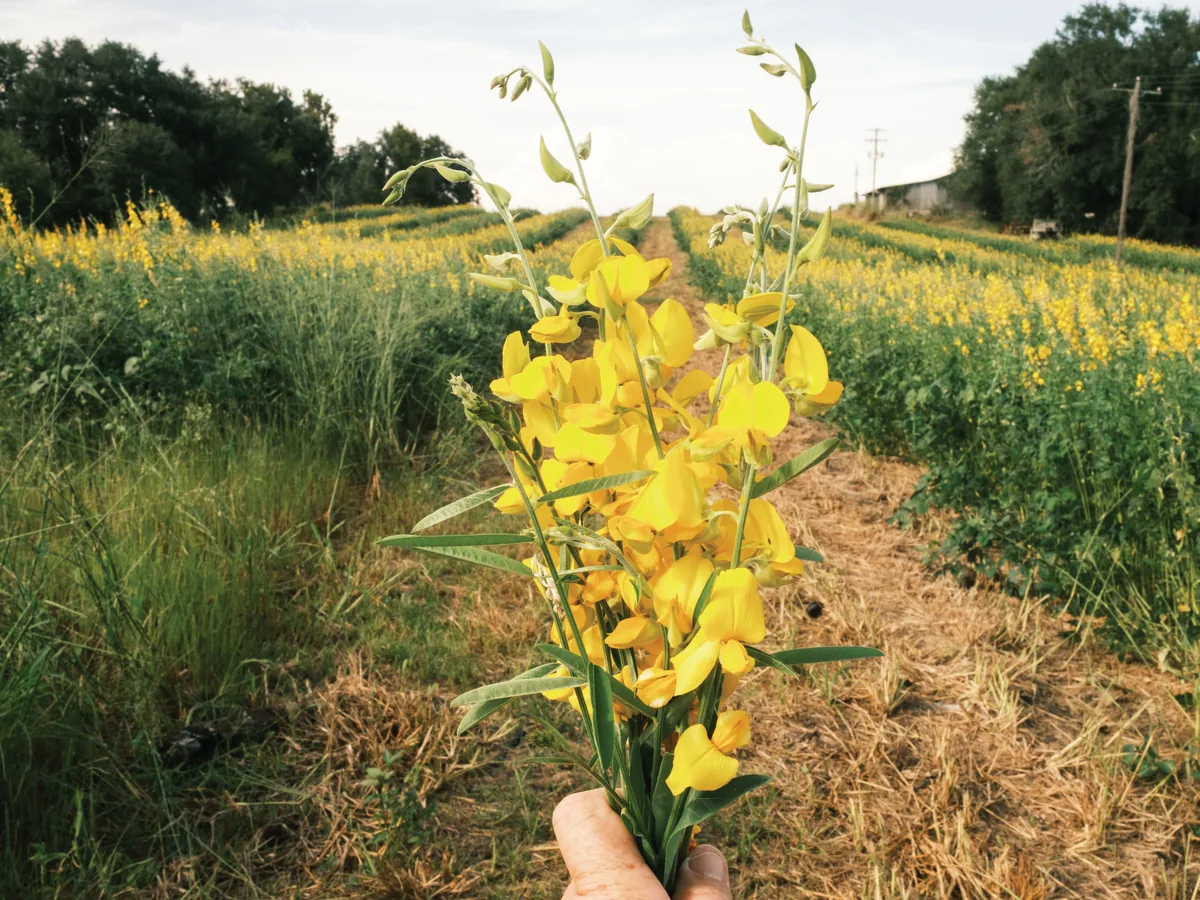
A display at Vero Beach’s Indian River Citrus Museum; vintage crate labels; sunn hemp planted before citrus preps the soil by raising nitrogen levels. Crate and label photographs courtesy of the Indian River Citrus Museum and Brenda Eubanks Burnette.
Scientists don’t know how the trees will perform over time.
Still, it’s good news for longtime grower Dan Richey.
“Will we continue to have a viable citrus industry? I would say absolutely, yes,” says Richey, president and CEO of Riverfront Packing Co. and a former chairman of the Florida Citrus Commission.
Don’t stop believing. … Keep putting those trees in the ground, and let’s bring it all back.
He acknowledges the industry has lost too much to ever return to where it once was, even with the latest innovations in disease-resistant trees or maybe even a cure for citrus greening. “It’ll be different,” he says, “but it will be here, and it will remain a pillar of the state of Florida.” Shannon Shepp, the executive director of the Florida Department of Citrus, is equally hopeful. She says orange production in the 2025-2026 crop of nearly 13 million boxes was the first increase after years of decline, despite a late January freeze that damaged a lot of trees.
She has a message to Florida growers: “Don’t stop believing. … Over hundreds of years, we helped build the state of Florida, and we’re still here. Folks want us to be here. Florida is what people believe in when they see orange juice. Keep putting those trees in the ground, and let’s bring it all back.”
U-Pick and Never Forget
No matter what happens in the future, Benny McLean, now 85, lives with a forever changed landscape around his house atop Sugarloaf Mountain in Clermont, a few miles from the Citrus Tower. He sees developers and subdivisions encroaching where once there were clay roads and orange blossoms. He told me about a recent plan to build 3,500 more houses nearby.
When I visited the McLeans this February, the few trees in front of the house Benny built for his family in 1973 were all infected with citrus greening and had just been damaged by temperatures well below freezing. On a chilly day, under ample sunshine, I walked with Benny and his sons down rows of Sugar Belles, leaves curled and brown and hanging from ashen bark, their fruit green and small. They were sure not to survive.
The trees stood like sad metaphors of what had happened in Benny’s family, in his beloved hometown of Clermont and across Florida.
Would Benny’s great-grandchildren be able to conjure the life he and his sons once led? I wondered. Would oranges continue to serve as shorthand for Florida?
The growers, packers, promoters and chroniclers of the citrus industry I spoke with all seemed to think the orange held too iconic a status to just dwindle away, no matter what lay in store for the citrus industry. What could possibly replace it on Florida license plates, billboards and souvenirs?
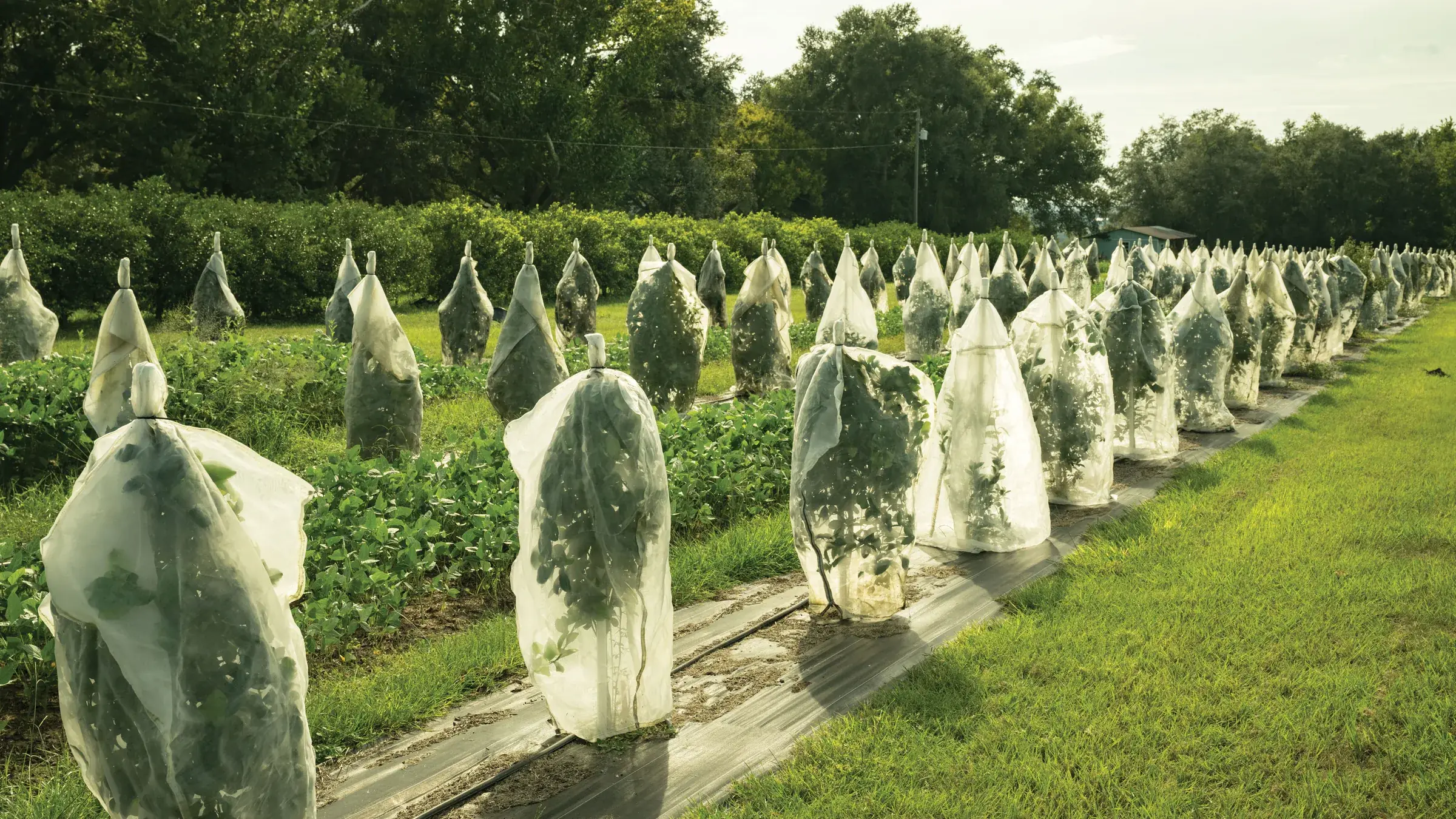
Benny had spent a lifetime in the groves and now his family had but 10 acres of trees left. An eternal optimist, he is replanting 6 acres with oranges, tangerines and grapefruit and plans to protect his trees against the Asian psyllid with individual screens. Matt says his father’s enthusiasm is refreshing, given the tremendous loss his family suffered. “It will keep Dad young and preserve our citrus heritage on the property where it all began for me,” he tells me.
Benny hopes his organic certified orange grove will serve as a buffer between him and the new homes that have been planned within a mile of his property. But he tells me that mostly, he is doing it because orange juice still courses through his veins.
“I’ve been doing this all my life,” he says. “I can’t change. I don’t think I’m smart enough to do anything else.”
He hopes to turn his grove into one that’s U-pick, where people can walk among the trees, smell the blossoms, pick an orange, drink fresh juice and take home a bag of fruit. Those kinds of groves once were abundant here in Lake County, an integral part of the Florida experience. Now Benny’s grove will be an anomaly, yet another reminder of the lost days of citrus.