Share This Story
When photographer Melissa Borges looks at Florida through her camera lens, she doesn’t aim for the pretty, comfortable scenes. She sets out to capture images that tell a story—ones that make Floridians face the harsh realities of our impact on the wild. She also loves swamps.
“The more you look, the more things you find,” Borges says. “It’s not in-your-face beauty.”
Born in Brazil and raised in Texas from the age of six, Borges’s love affair with the Sunshine State started as a student at the University of Miami. Having been scuba certified since age 11, Borges’s decision to attended a college just miles from North America’s only barrier reef seemed like a natural fit.
Since graduating one year ago with a degree in marine science and biology, Borges is turning her knowledge and passion for her adopted state into action. A dive master and instructor living in Key Biscayne, she leads curious divers through the underwater world she’s come to know so well, documenting it all with cameras passed down from her father—also a photographer and scuba diver.
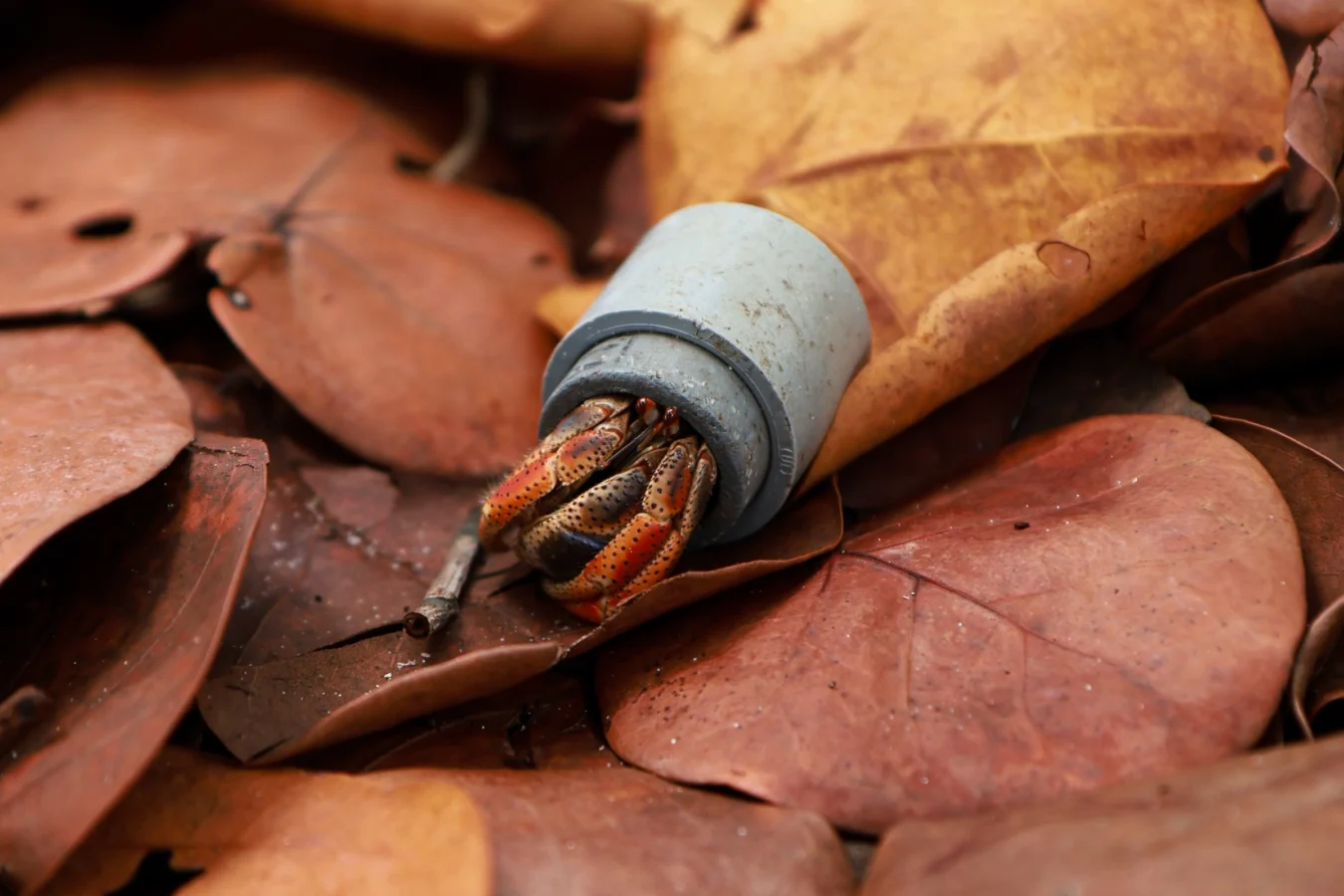
Flamingo recently sat down with Borges to chat about the photo she took of a hermit crab that won the Readers’ Choice award in our conservation photography contest, The Coquinas. She shares about the moment she captured the image, her love of the grittier side of Florida, how photographers have a unique responsibility and what really happens to the trash you throw out your window. The following are excerpts from our conversation.
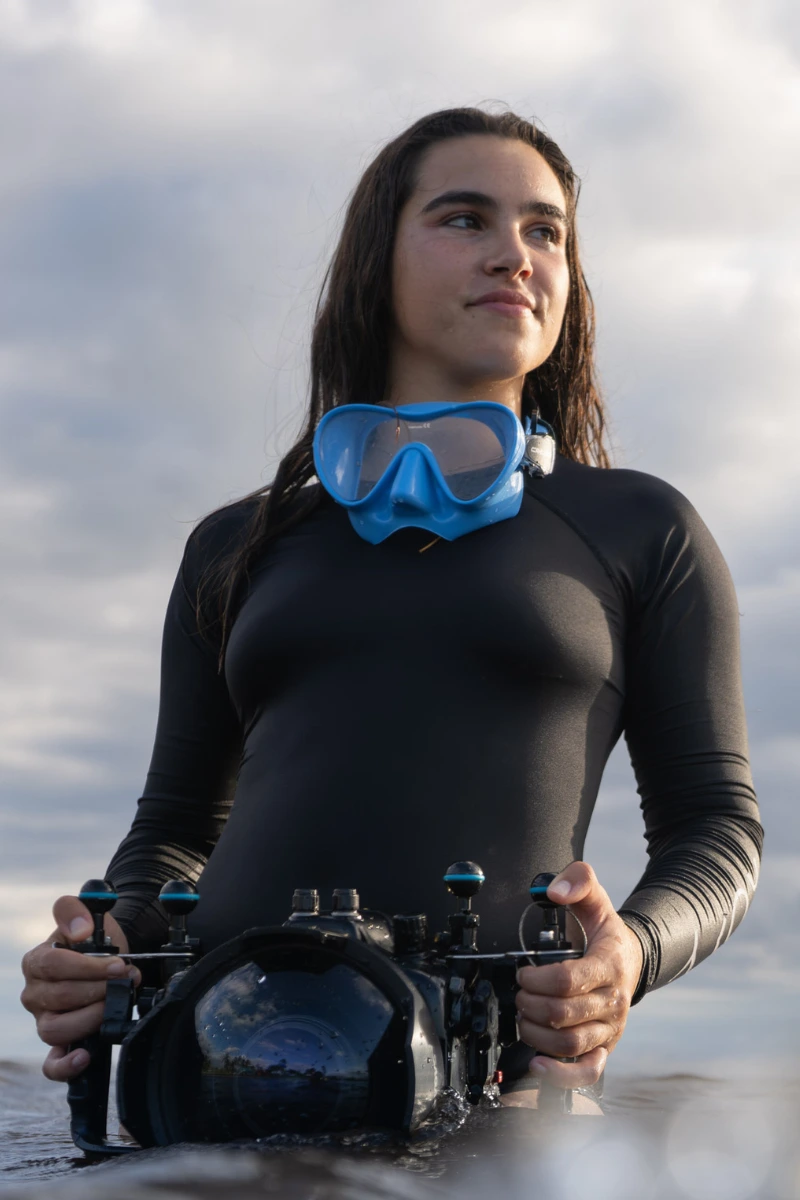
Photographer Melissa Borges, also a dive master, uses her underwater skills to photograph wild Florida beneath the surface. Photography courtesy of Melissa Borges
Flamingo Magazine: What kind of photography are you most drawn to?
Melissa Borges: I’ve done a lot of work around here in Miami capturing sea turtle hatchlings and public events and just really trying to bridge science with the non-scientists and to get people to understand and learn more about the local ecosystems here in Florida and Miami.
What makes Florida’s natural environment distinct?
MB: In Florida, you really have to dig deep because it’s not the most beautiful place when you first see it. You know, it’s very flat, muddy, swampy, sometimes full of mosquitoes, kind of stinky. But you have to just really notice things. I remember somebody said that it takes a soul to love wild Florida, which I thought was a really beautiful quote because while a lot of it is just pristine beaches, a lot of it is also swamps and places that are kind of gritty, and that’s what I love about Florida. The more you look, the more things you find. It’s not in-your-face beauty. It’s more of a subtle, behind-the-scenes thing that you really have to tune in to.
What places in Florida have shaped your relationship with the natural world?
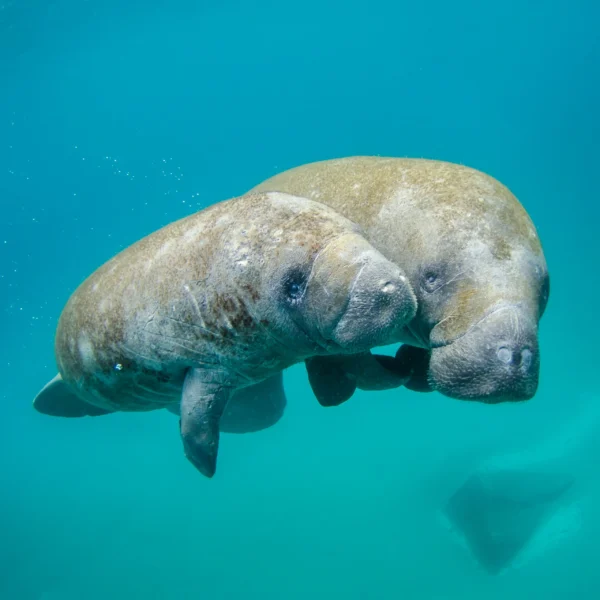
MB: The biggest thing has been here in Miami, because it is such a strange mix. Seeing the interaction between how many people live in a hub like Miami, and how so many just don’t realize that they’re so close to very pristine and beautiful nature. Like off of Miami Beach, I’ve seen manatees right on the shore, which is just crazy. It’s really amazing to see how the wildlife here is able to live in all of these corners despite so much development and so many people living here. But I think it’s a really beautiful contrast, and that more people living in Miami should get to know the place they live.
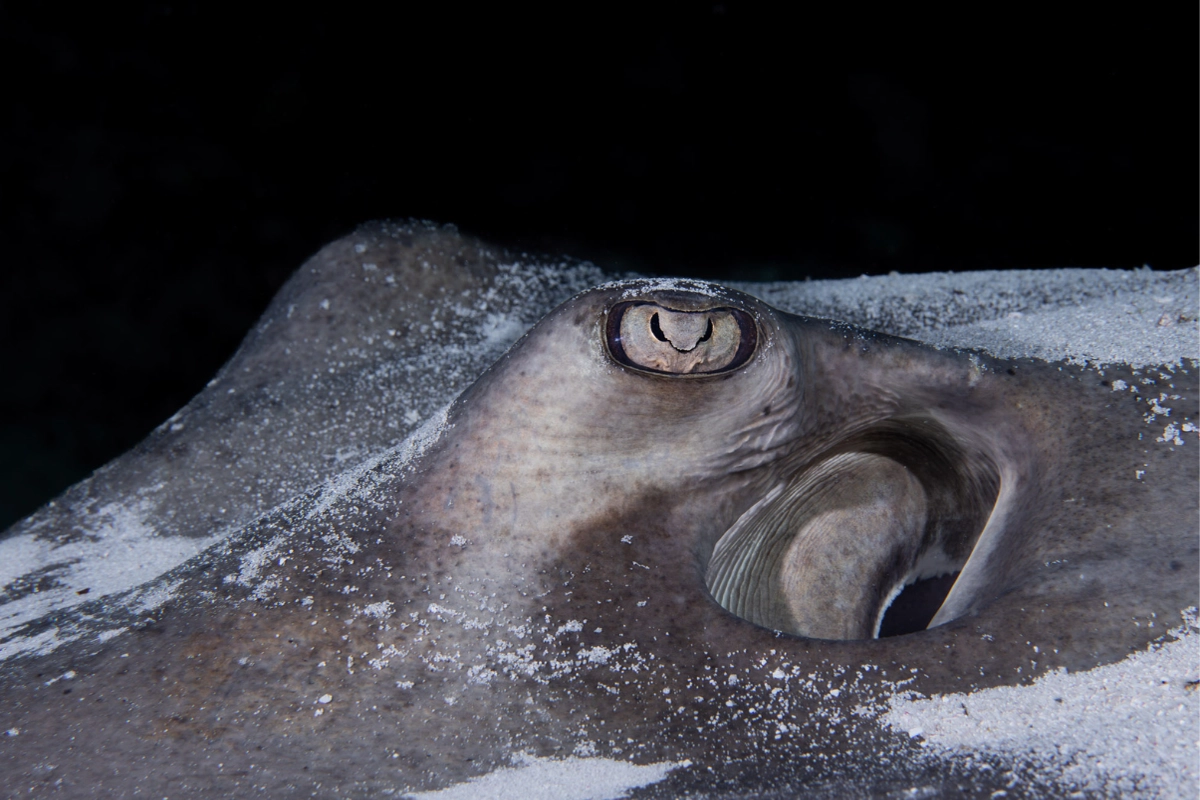
Borges snaps an up-close shot of a Southern stingray. Photography by Melissa Borges
Where were you when you took the winning photograph?
MB: I was here in Miami at a place called Virginia Key Beach Park. It’s on an island about 10 minutes away from downtown. It’s one of the last pristine natural places here. It has beautiful mangroves and beaches and is pretty secluded, and there’s all kinds of wildlife over there: raccoons, iguanas, sea turtles, manatees—anything you could imagine.
I was there for a beach cleanup with a local nonprofit Miami Waterkeeper with some of the local community and local kids. We bring the kids to the beach, and we sort of teach them about the local ecosystem, and we have them do some hands-on work by testing the water quality.
At what moment did you notice the hermit crab?
MB: While the kids were out taking water samples, I was walking along the mangrove trees that are near the beach, and I saw a hermit crab, which was pretty normal to see. But I looked closer and I noticed that the hermit crab didn’t have a shell. Instead, it was just a piece of plastic. It looks like a PVC pipe of sorts, but I saw that and I was like, “oh my gosh!” So I ran. I had my camera on me, and I was really glad I got to capture this because it’s kind of a shocking image to see an animal who naturally relies on shells and other natural things from the ocean having to use a piece of plastic because that was the closest thing the crab could find.
Why do you feel this photograph is important for people to see?
MB: You know we always hear that our oceans are being polluted. There’s plastic everywhere. Plastics right now are a hot topic, with us hearing about microplastics and how they’re really affecting us. But people who don’t go to the beach often or don’t really have access, they don’t get to see this. And so, I really like to use this image to show people how serious an issue this is. It’s so serious that these animals are having to resort to plastic, a man-made substance. I just think about the issue of single-use plastics and how much of it ends up on our beaches.
What does this photograph mean to you personally?
MB: I had taken a few conservation pictures before, but this was the first time that I was able to capture it affecting wildlife, and since then I’ve been able to be in a few other situations. I’ve been in many situations where I’ve had to save animals from trash or unhook a sharp fishing line—really awful things—and I was never able to capture those. So this was like, oh, I got it. I finally have proof of what I’m seeing.
What happened to the crab after you shot the photograph?
MB: I wasn’t going to switch out the shell because they’re very sensitive, and it’s a thing you have to let the crabs do on their own. Inside the shell, it’s like a very sensitive part of the crab. It is basically just a muscle. And so, if you take a crab out of its shell, there’s a possibility of it going into shock, or that part might get damaged, or it might dry out, or it might get exposed. It can really harm the animal.
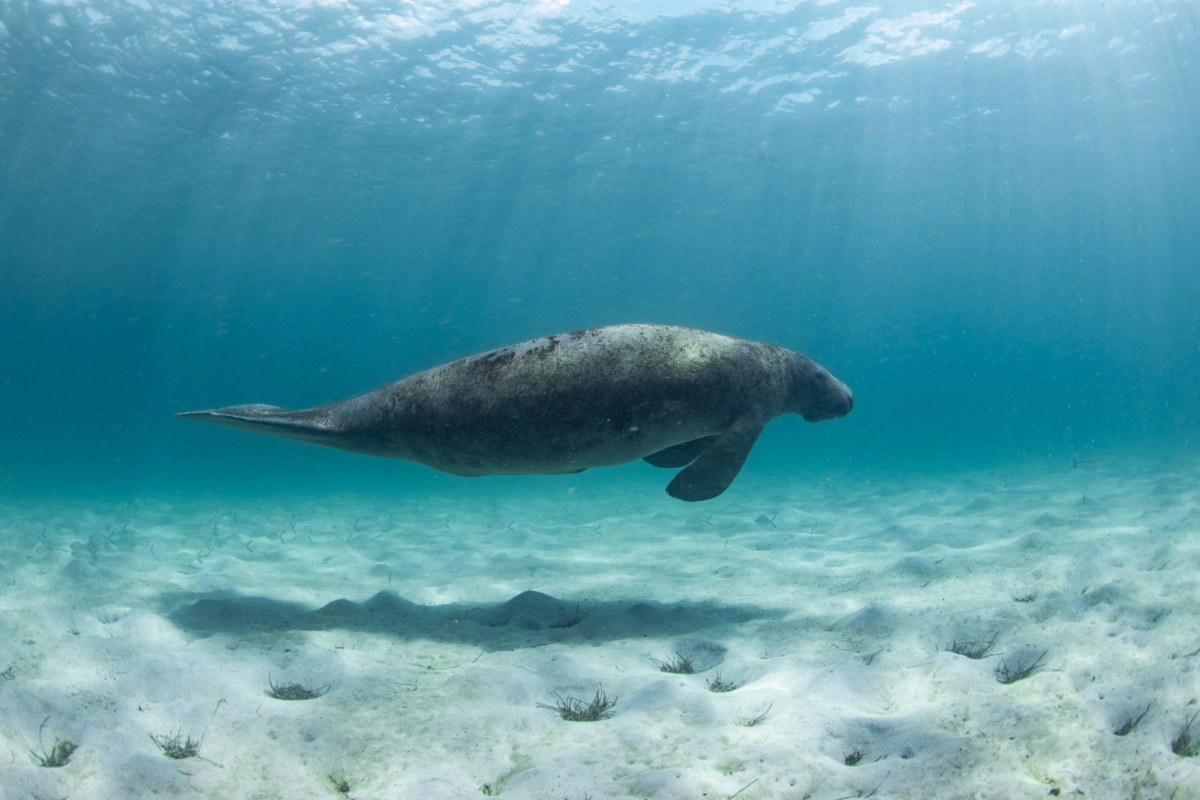
Borges says she has seen manatees along the shore in Miami, just minutes away from the bustling city. Photography by Melissa Borges
When you’re photographing Florida’s wildlife or landscapes, do you think about the threats facing those places?
MB: A lot of the time, the pictures I have taken are actually of animals or wildlife or plants that are in the middle of an urban place. Living here in Miami, I see it constantly. You know, the hermit crab is just one example, but all the time I see roadkill. I see birds, raccoons, all these things that have been killed by humans. I think about it a lot, mostly because it’s just everywhere. It’s really hard to escape. Even when I’m scuba diving in the middle of nowhere, I still find trash. I still find fishing line.
Especially in the Everglades right now, there’s a lot of self-development. Alligator Alcatraz, which was happening a few months back, was a really prominent issue of conservation.
What conservation issues in Florida concern you the most, and why?
MB: I’d say the biggest thing is coral reef restoration. That is something that is very near and dear to me. I studied it in college, and it’s still very present. There’s proposals to do some building here in Key Biscayne. They wanted to turn it into this big marina. The issue with this on-water development is that it brings up a lot of sand, and the sand ends up smothering the corals. Not a lot of people know, but the Barrier Reef in Florida actually used to be the third largest in the entire world. And since the ’80s, we’ve lost (nearly 90%) of all of those corals. If we don’t have corals, then we’re going to lose all of these fish and all of the turtles that live there. That means a collapse of the marine food chain.
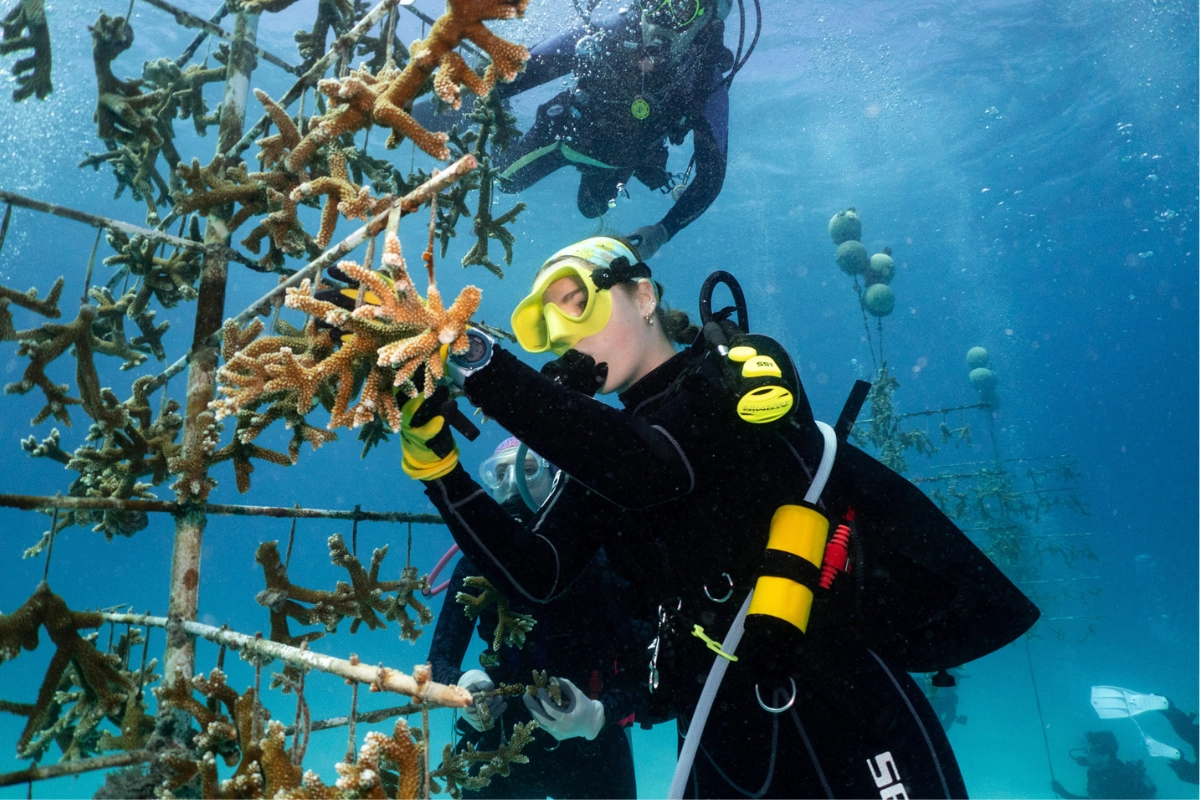
Borges emphasizes the importance of photographing Florida beneath the surface. Photography by Melissa Borges
What responsibility, if any, do you think conservation photographers have?
MB: You can take a pretty picture and just post it, but you can also take a picture and use it to highlight the issues that are going on in this region. I think it’s our responsibility to turn those pictures into conversations like, “Oh, look at this picture of the Florida panther, but do you know that the Florida panther is endangered and getting run over?”
Are there any Florida landscapes that deserve more attention?
MB: The underwater world of Florida needs to be explored more. There’s already so many pictures of the Everglades and all of these beautiful places like the springs and all of the forests in Central Florida, but underwater, especially down here in South Florida, there’s not a lot of pictures. I think corals are something that need to be focused on, and also the species that we have down here. We have groupers down here that are also endangered, like huge Goliath groupers, and sharks too.
What do you hope people take away from your photograph?
MB: I hope people can look at it and realize that the thing they threw out their car window actually can impact animals. It’s not just going away, it’s going into an ecosystem and staying there for good.
For more on Florida conservationists, click here.