by | July 8, 2026
The Restorative Focus in Every Cadence Design
This landscape architecture firm is elevating South Florida’s natural landscapes.
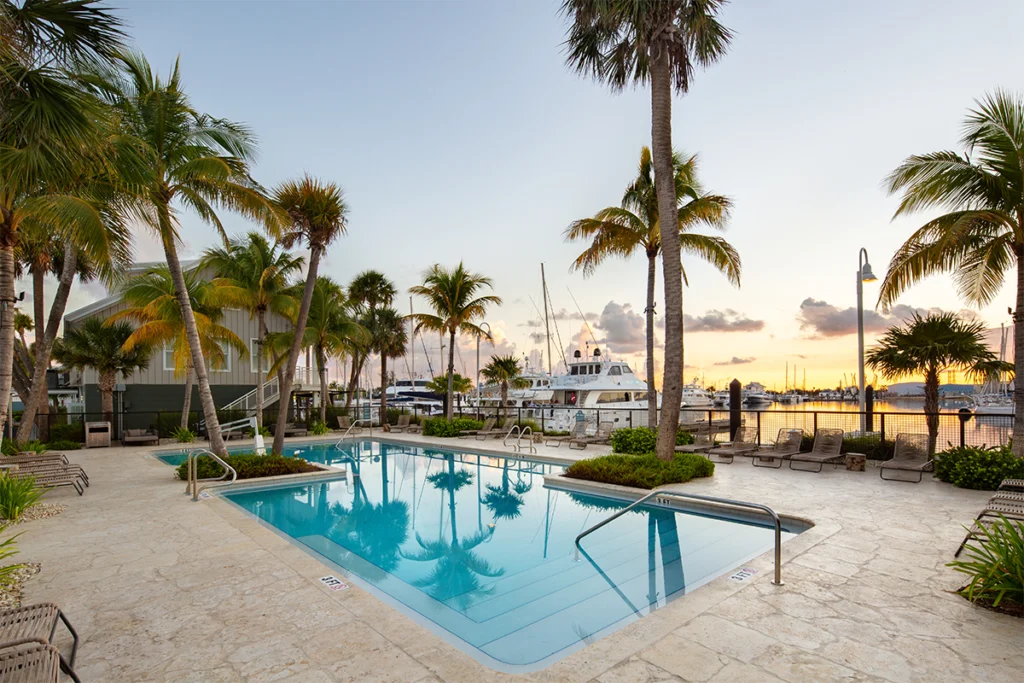
A particular kind of courage is required to confront South Florida—with its relentless sun, the waterlogged ground, the decades of development that have pushed nature to the margins—and try to make it whole again. Enter Cadence, a group of landscape architects who have built their entire identity on this restorative belief. For a firm whose projects range from Key West’s Perry Hotel & Marina to private residences across the state, its unwavering guiding principle is as philosophic as it is demanding: Let the land lead.
In practice, that means every project begins not with a rendering, but with listening—like with the upcoming 600-acre racing site and residential community developed by P1 Motor Club in west Port St. Lucie. On pace to become the state’s largest motorsports project ever, P1 Motor Club is marrying the thrill of the track with luxury sensibilities built to consider a life of racing and away from it. While the components of the community sound anything but natural (miles of asphalt, high-octane fuel, luxury condominiums), Cadence is working to ensure that a green approach, not a gray one, is at the forefront of the design.
P1’s ownership group, led by Florida native Molly McCoy Straus, 59, was adamant about restoring this part of South Florida to its original roots, a former citrus grove that had long been raked by modern desires. Hearing this, Cadence responded.
“We are going to bring back swaths of woodland,” says Cadence founder Rebecca Bradley. “The land was once a beautiful woodland, so we are bringing back habitats that have been lost for decades.”
Working with civil and environmental engineers, Bradley, 47, and her team are designing the outdoors to celebrate the area’s once-prevalent pineland flatwoods, scrubby pine flatwoods, hardwood hammocks and marshes—filling the land with trees like the longleaf pine, palmetto and live oak, recalling the landscape that was once there.
“It’s regenerating nature,” Bradley says, a concept tailored to actively restore and enhance ecosystems. After all, “Success doesn’t have to be at the sacrifice for the other things that matter.”
For the past 16 years, what has mattered to Cadence is creating meaningful outdoor living areas and, as its website so graciously describes, “harmonizing the built world with its environment.” In other words: connecting humans to outdoor spaces with intention.
Cadence’s office inside a mixed-use building in Fort Lauderdale’s Wilton Manors neighborhood buzzes with creative energy. Potted fiddleleaf figs, birds of paradise and evergreen palms add pops of green to the white-walled office, whose large windows give the six team members unimpeded views of urban life outside its doors. Projects on the docket include a local restaurant, a 100-year-old residential home in Boca Raton’s historic district, and, of course, P1 Motor Club. Oversized monitors share ideas as the designers meld math and science with nature and materials to create outdoor spaces worth experiencing. There’s a rhythm, a buzz, a pace to the work—there’s a cadence.
For the first time in its 16 years, Cadence is made up of an all-female staff. Admittedly, it’s by coincidence. And if you ask founder Bradley, it’s a happy accident that has truly shifted the firm’s movements.
“Women are often the nurturers and caretakers of all things,” says Bradley, whose team includes landscape architects and designers and Florida master naturalists who studied ways to promote environmental stewardship, conservation and education. “We have a group of women who are heavily invested in thinking about the health of our neighbors and community members, and our natural environment.”
Success doesn’t have to be at the sacrifice for the other things that matter.
-Rebecca Bradley
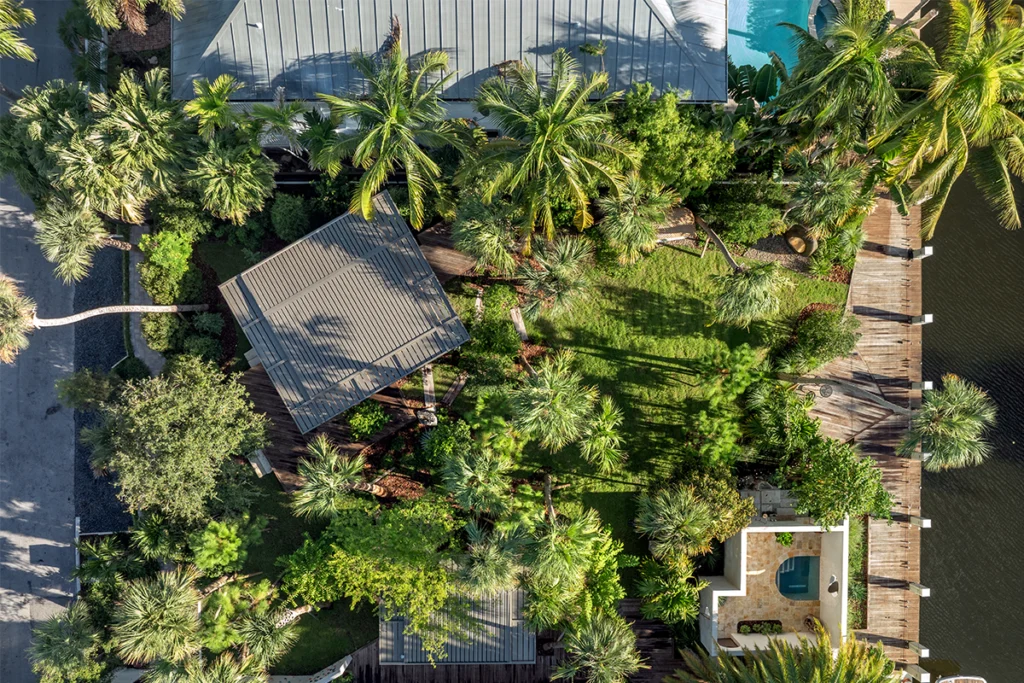
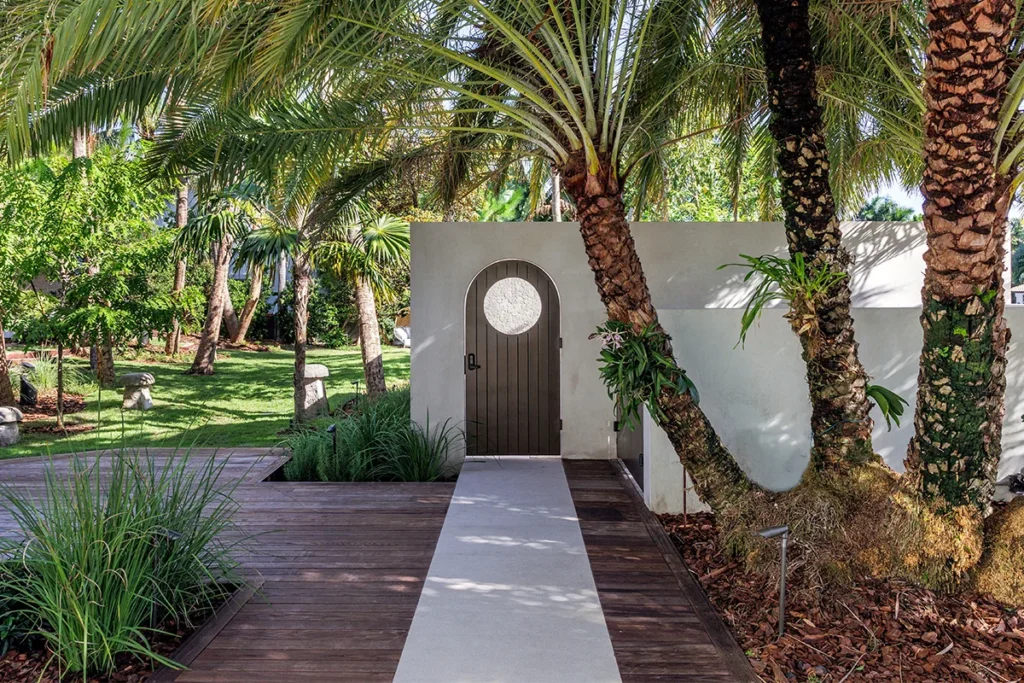
Bradley says a consistent comment among clients is that Cadence listens. When a recent client told Cadence that she wanted to walk out of her house “into wilderness,” Cadence read between the lines. Her Fort Lauderdale home in the upscale Nurmi Isles neighborhood was transformed by a tree canopy filled with towering palms and other native plants, beckoning guests to look up from the moment they step outside. Cadence also incorporated a cold plunge secret hideaway, in a nod to the client’s travels over the past two summers to Scandinavia, Italy and France, as well as two open-air garden pavilions for their kids to play, paint and wander the property.
At the end of the project, the client sent a thank-you note to Cadence, writing, “I never had anyone listen to me so intently. I know our home turned out the way it did because you listened.”
For Bradley, the process is as simple as it sounds. “If we’re not paying attention or listening, it would not have turned out as magical,” Bradley says of the Nurmi Isles project. “If you can stop and discern, you can produce human designs that are so special. And we work really hard at that.”
Bradley, who grew up in rural Louisiana, says the power of movement was especially important when she was a young dancer who choreographed performances. These days, she insists being a landscape architect isn’t all that different.
“You’re choreographing and moving people around in space and giving them opportunities to interact,” Bradley says. “That is what landscape architects do. You’re creating spaces for them to walk, to sit, to see things and connect with nature and others.”
Cadence has recently worked with The Nature Conservancy and Florida Wildlife Corridor Foundation—an 18-million-acre network of connected public and private lands, spanning Florida and going up to the Georgia and Alabama state lines—to create the Corridor Compatible Communities design guidelines. Essentially guardrails for sustainable development, the guidelines focus on protecting biodiversity, enhancing ecosystem connectivity and increasing resilience against climate hazards while accommodating population growth. The concept has taken on new urgency since Florida’s post-2020 population increase. More than a million new residents are shaping the state’s landscape, according to data from the latest census.
“What we have done in our state, especially in South Florida, is really build to the max,” Bradley says. “She’s really stressed, our state.”
To combat the stress, the Cadence team often reminds their clients of what was once here, encouraging homeowners and developers to plant and design their outdoor space with things that contribute to environmental and personal health.
“Nature-based solutions tend to be better than trying to engineer your way out of something,” Bradley says. “The only thing that is resilient in our world is the natural world. It knows how to bounce back.”
For more on Florida design and architecture, click here.
About the Author
Nila is an award-winning journalist and editor whose work has appeared in Condé Nast Traveler, Garden & Gun and The New York Times, to name a few. Simon has written for Flamingo since 2017, with profiles on tennis star Sloane Stephens, the unique South Florida community of Stiltsville and the state’s best wellness resorts.