by | February 6, 2026
Kenny Chesney’s Florida Love Story, Told Through His New Memoir
Cowriter Holly Gleason talks about working with Kenny Chesney on his memoir, "Heart Life Music"
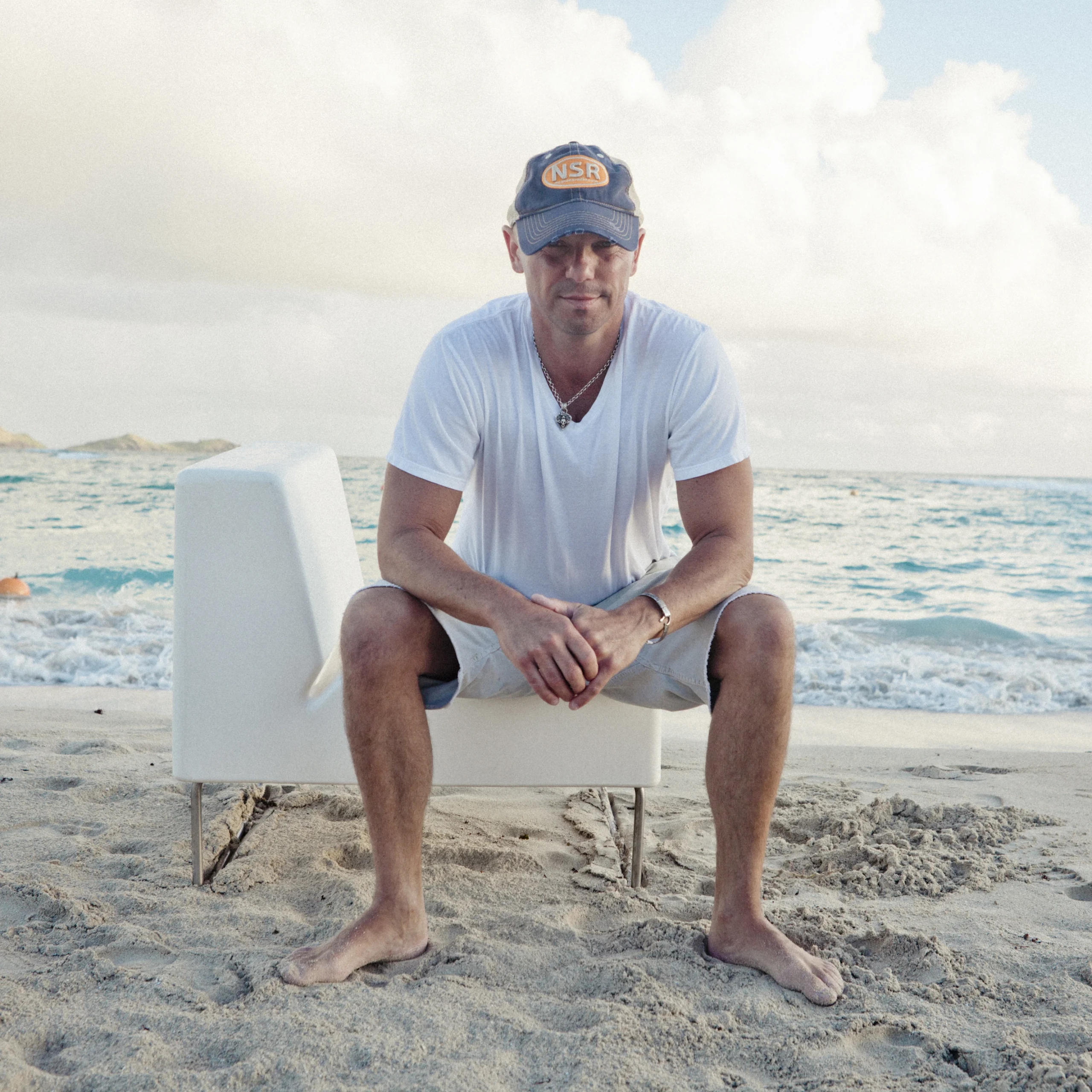
Pirate flags, cowboy hats and bright tents dotted the fields and parking lots surrounding Tampa’s Raymond James Stadium on April 20, 2024. Blue Chair Bay coconut rum flowed, beer pong balls bounced to the rhythm of country hits and tailgates merged into one massive party: No Shoes Nation. The Tampa Bay Buccaneers weren’t taking the field that Saturday night, but certified country star Kenny Chesney was.
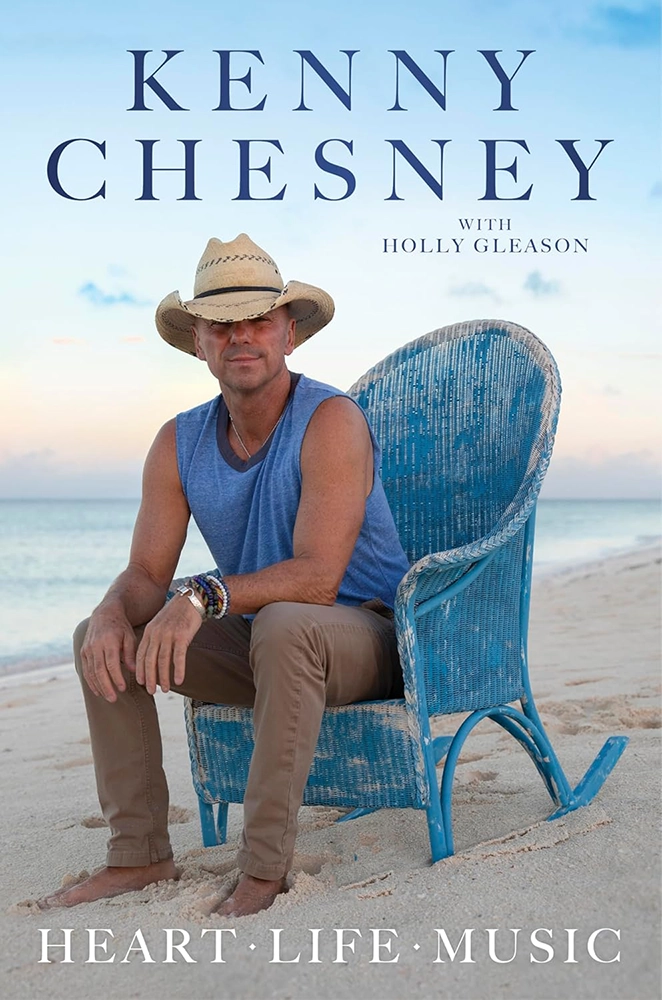
Though he’s from East Tennessee, Chesney feels a strong connection to the Sunshine State, one that he touches on in his recent memoir, “Heart Life Music.” Published Nov. 4, 2025, the book depicts Chesney’s rise to fame starting from his upbringing in a Tennessee small town, Lutrell, and ending with the 57-year-old musician’s induction into the Country Music Hall of Fame. Chesney writes, “Someone said to me, ‘Heart, life, music: How you feel in your heart should be how you live … and that’s what you should fill your music with.’ When I looked down at the words on those napkins, the pages in my journal, I realized, unknowingly, that’s what I’d done.”
The book makes its way down to the Sunshine State via some of Chesney’s biggest career highlights, from meeting Lynyrd Skynyrd—one of his biggest inspirations—in Jacksonville and playing his first big show in Orlando to signing away his life to music in Palm Beach, shooting music videos in Coconut Grove and making songs with Jimmy Buffett in Key West. Much of the writing of his book took place down South, too, with hours of interviews on the beach and mornings spent in Ernest Hemingway’s Key West home.
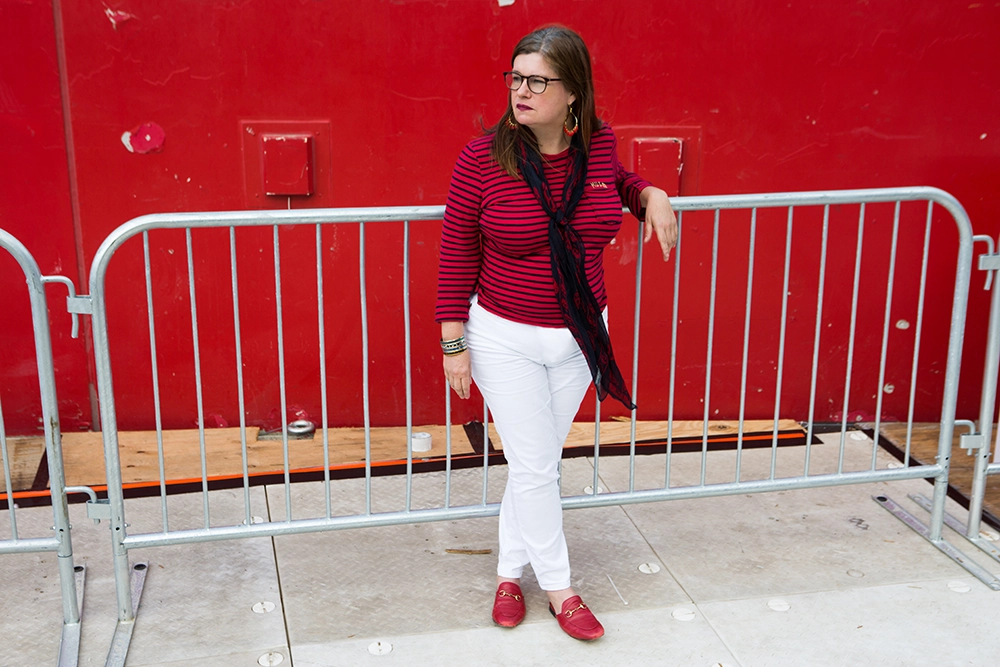
Chesney cowrote his biography with Palm-Beach resident Holly Gleason, a music journalist and industry consultant known for working with stars like Emmylou Harris and John Prine. Having spent some of her formative years in Boca Raton and Miami, Gleason understands the balance between being carefree and working hard that Chesney practices. It also helps that she’s been following his career since the early 2000s. “I always believed he had a book in him,” Gleason told Flamingo in a recent interview. “It was always a matter of when.”
Flamingo sat down with Gleason to talk about her writing process with the country star, Chesney’s humble beginnings, chart-topping songs and his love for the Sunshine State.
After 35 years of making music and touring most summers, why did Chesney want to write this book, and why now?
Holly Gleason: I always believed he had a book in him. It was always a matter of when. He was so busy living that I think it didn’t occur to him to do this. He’s also so humble, I don’t think he realized how much there was (to write about). And that’s the thing about why the book and why now. He wanted to empower anybody with a dream. It doesn’t have to be a dream of music. It could be a dream of sports, a dream of “I want to be a research scientist.” He wants people to see that you can do it. You don’t have to be a slave to the algorithm. You don’t have to be a social media thrill jockey. Keep taking the steps, keep getting a little better, keep trying to find the people who can help you get to where you need to be.
I think it was, “I want people to have another roadmap. I want people to see what works, because if you don’t see it, how can you imagine it?” For him, he was just so in love with music. It was a different world … You can dream outside the lines. It’s harder now, maybe a little bit, but there are still ways to do it. He wants people to know it is possible. He makes impossible dreams possible.
Chesney started as a dreamer in East Tennessee, became a songwriter in Nashville, and is now one of the most recognizable and revered voices in country music. What sets Chesney apart from other stars?
HG: It is about working hard. He’s from the country. People there work. But it’s also … he cares. Lots of people do what he does. But I don’t know that they commit the way he does. A lot of artists punch their chests, like “me, me, me.” And if you look, Kenny taps his chest and throws his arms out (during shows). He’s saying, “you, you, you.” He loves those fans, and he wants you to know he cares. He’s there to make you happy, and he’s there to make your load lighter. He knows that the world is full of a lot of hard things—like, we all face tough stuff. But he wants to be that source of positive energy.
He’s always worked hard to make sure there are affordable (concert) tickets. If you want to come, he wants you to be there. Come party with us. He’s very much about inclusion. He wants everybody to feel good and happy. He wants everybody, whatever it is, to be able to let go of it. That’s a big thing, and that’s something he gets from his mom.
Many of Chesney’s early years were spent hustling in Nashville, and I read that his time spent on Lower Broadway means a lot to him. How would you describe the Nashville he came to compared to the Nashville that exists today?
HG: One of the things I think he started to notice was that his Nashville was disappearing. The Nashville he came to was the Nashville Hank Williams came to. The one Patsy Klein came to. Loretta Lyne came to. Kris (Kristofferson) and Willie (Nelson) were busted songwriters, just like Kenny was. Drinking on credit on Lower Broadway. Hustling their songs to artists, being friends and getting into trouble. It was Willie being so forlorn he lays down in the middle of Broadway in a snowstorm and wants someone to run him over. That was part of the fabric of what country music is. But it isn’t anymore. Because what used to be playing songs for tourists was playing country music songs for people who were true believers.
Let’s talk about his songs. Chesney has 33 No. 1 hits on Billboard’s Country Airplay chart. Is there one that’s important to the book?
HG: I think there’s a really great story about “Back Where I Come From.” When (Mac Macanally) wrote that song, he didn’t think it would mean anything to anybody beyond the little town where he grew up. He was shocked when Kenny cut it right. And then there’s Kenny. It was never a single for Kenny, it was just something he started singing. Everybody’s hometown is that town. And everybody’s town has a water tank, or everybody’s got a place where they would go with a six pack of beer and four friends and pretend like they were so drunk, right? I mean, it is universal. Kenny, when he got down to the (Caribbean) Islands, and he was with all those people from all over the world, it occurred to him: We are more alike than we’re different. (He thought) “I want to do songs that they can see themselves in as well.”
Chesney’s known to work hard and play harder. I can’t help but ask, what was your writing process like?
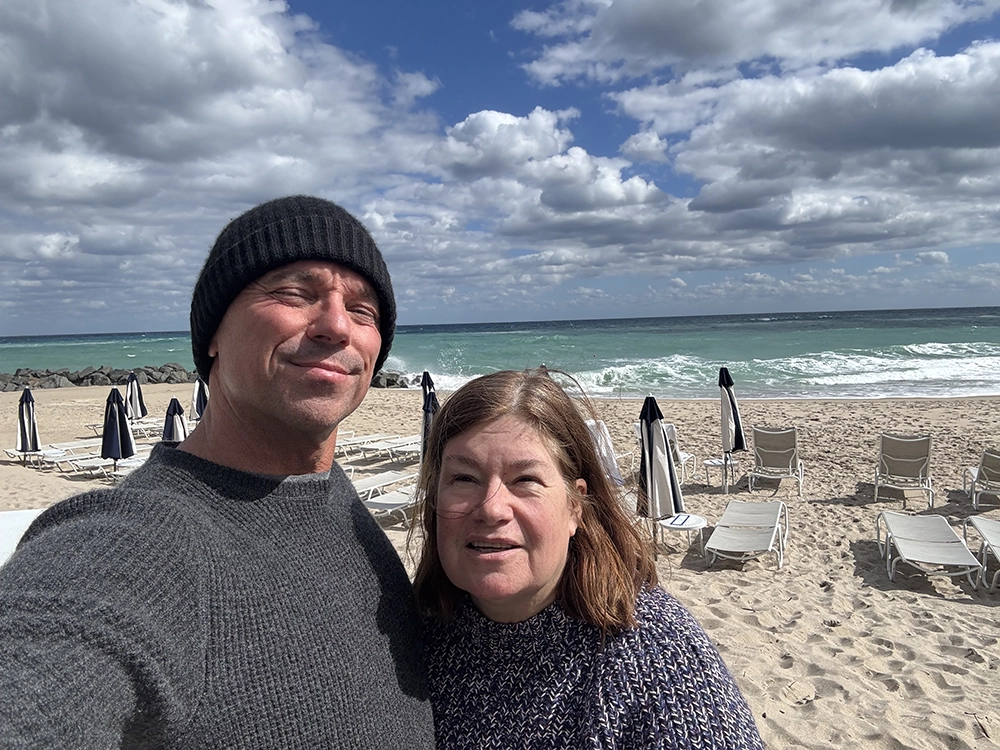
HG: It was a four-part process. We were in California, we were in Nashville, we were in Palm Beach … That’s where I live when I’m writing. In a little apartment, don’t get excited. I wrote a number one song called “Better As A Memory,” and I took all of the money after taxes at the bottom of the market … We (wrote) in Key West. All over. When I first started working for him, I gave him “The Old Man and the Sea.” I think he probably hadn’t read it since he was a kid, and he fell so back in love with it. That’s, I believe, his favorite book. And he got us (this experience). We went to Hemingway’s house (The Hemingway Home and Museum) before it opened, and they let me sit at Hemingway’s desk with Hemingway’s typewriter and they let me touch it. When you walk into that room in the morning, you feel him.
I wanted people to understand that this isn’t somebody who took a check and hired somebody to read a bunch of clips and write a book about them. Kenny went through every single edit I did. We would talk really early in the morning, between 5:30 and 6:30. He went through four (rounds of) edits. One of the things I was doing in Vegas was cutting the book down. We came in at about 128,000 words for a book that was contracted between 65 and 80,000. (Kenny’s) like, “Let’s just kill chapters.” And I said, “No, let me scaffold, because too much of this is too sweet and too rich.” One of the things we did in cutting was anything that didn’t tether to something larger. Those were the things we got rid of. Like the thing about him being a kid and loving Elvis. That didn’t make it.
Do you have any memorable stories to share from the process?
HG: We went to the Caribbean. We were at his house for several days, and we drove around. One of the things we did in most of the locations was drive around and talk about things that had happened. And then, unfortunately, I got trapped in Vegas for five and half weeks finishing the book. He was doing the Sphere, and he had to be there, and he had a few days off so we could do really intense work. We probably did between 80 and 100 hours of interviews. I did another 40 hours of interviews with other people. I would get on the phone and then call people and say, “Do you remember when this happened? Tell me your version of the story.”
Like, it’s an amazing story. He wanted the Florida stuff, like when Sean Payton wins the Super Bowl (with the New Orleans Saints in 2010 in Miami). Kenny remembers being on (Interstate) 95 and they’re on the (tour) bus. They decided they’d just go get ahead of the traffic and here comes the police escort. I didn’t know this, but Sean told me you get a presidential escort to the Super Bowl, the team. And so, Sean’s on the Saints one, and he starts texting Kenny to “look to your left.” And it was that. Sean set it up so they could get in the (line). They just fell in behind. So Kenny was literally part of the Saints’ entourage driving into the Super Bowl.
For more interviews with Floridian authors, click here.
About the Author
As a born-and-raised Floridian, Emilee loves to write, read and talk about the Sunshine State. She graduated from Florida State University with a degree in editing, writing and media. Now, Emilee uses her skills to edit our print issues and online content, as well as write our weekly e-newsletter, Fresh Squeezed.