by | February 6, 2026
Key West is the City That Refuses to Behave
Meet the cooky and cocky inhabitants of the Conch Republic, past and present
Too much of Florida is ersatz: Palm Beach cosplays as Newport, Rhode Island, while large chunks of Miami, Tampa, St. Pete and Orlando all channel an HGTV version of Mediterranean villas. Disney World? Please—even some of the trees are fake. Key West is not like that. Key West is what Florida could be if Florida had more imagination and fewer inhibitions. Key West is sui generis: Caribbean, Cuban, gay, literary, tatty, arty, a place of strange histories and animals misbehaving. Key West, like New Orleans, isn’t really American—and I mean that in a good way. Islanders will only begrudgingly acknowledge their United States citizenship, preferring instead to identify as citizens of the Conch Republic.
To be sure, Key West isn’t free from the outside world. Huge cruise ships will visit the island, stir up coral-killing sediment and disgorge tourists who hit the rip-off jewelry shops and tramp up Duval Street to Margaritaville, the Jimmy Buffett-themed home of sugary cocktails and over-battered shrimp. While I enjoy watching drunk college kids stagger around wearing semi-obscene T-shirts as much as the next person, I’d rather get away from the sunset ceremonies and stupid pet tricks of Mallory Square to wander Bahama Village—an enclave settled by Bahamians and descendants of Key West’s enslaved people. While gentrification has reared its well-coiffed head—driving up prices and driving out many whose people built the place—the Caribbean bodegas and rainbow-painted clapboard shotgun houses remain. Or I would head to Old Town—a fauvist dream of bougainvillea, banana trees, hibiscus-colored cottages, lacy woodwork and columned mansions shaded by thatch palms and royal poincianas.
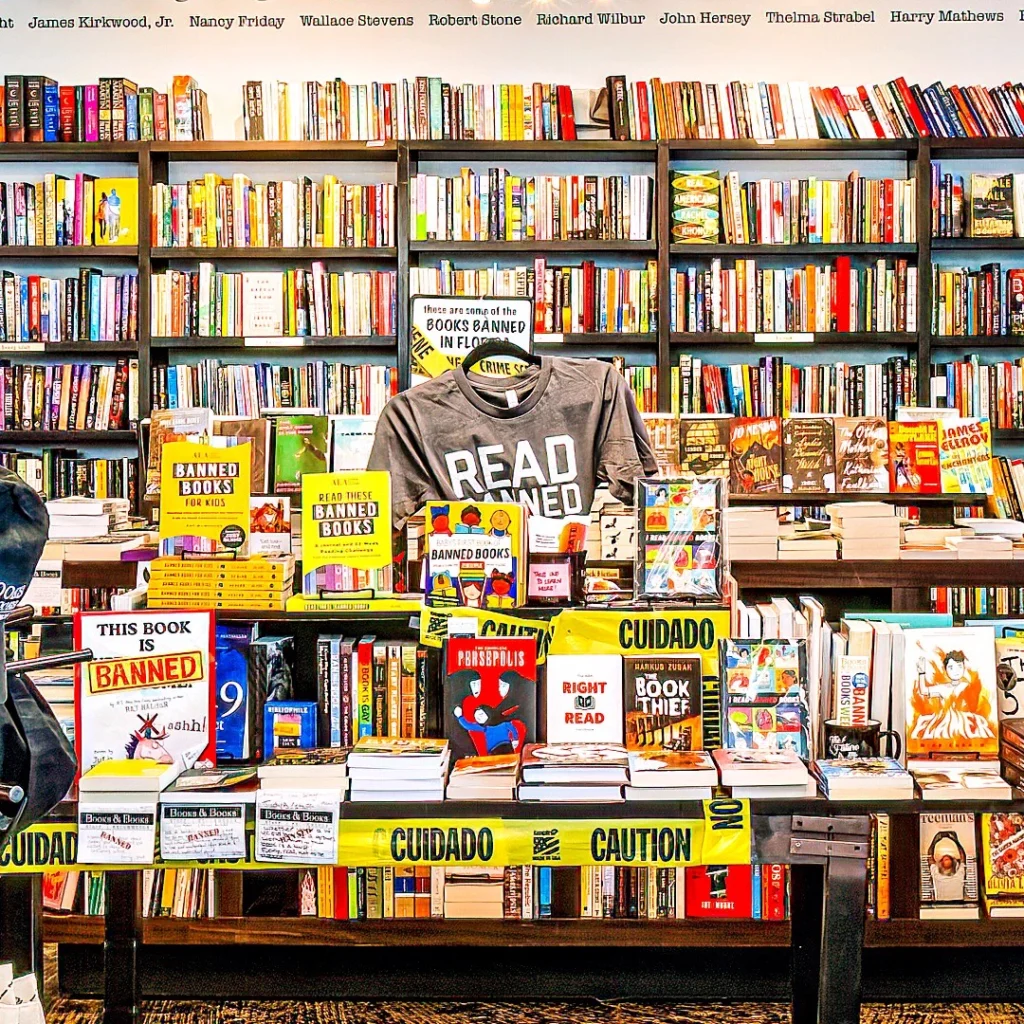
There’s also a really great bookstore, Books & Books. The Key West location, a child of Mitch Kaplan’s famous Coral Gables mother ship, is run by novelist and anti-book-ban campaigner Judy Blume. Books & Books is one part of The Studios of Key West, an art complex of galleries, performances and exhibition spaces that sponsor residencies for painters, poets, musicians and other creative types. The Studios operate as a sort of clubhouse for the local literary community, which has always been considerable in Key West: Robert Frost, Ernest Hemingway, Tennessee Williams, Elizabeth Bishop, Edmund Wilson, Thomas McGuane, James Merrill, Wallace Stevens, Joy Williams and Annie Dillard (this is by no means an exhaustive list) have lived on the island. The late Alison Lurie, a Pulitzer Prize-winning writer who was also a professor at Cornell, came here to escape Ithaca’s bitter winters. Lurie, who was also my landlady in London, once said to me, “I like being here at the bottom of the continent. The regular rules don’t apply.”
Cats vs. Cocks
If you fly in, you’re treated to a view of waters in jewel tones ranging from emerald to turquoise to lapis lazuli. But taking the Overseas Highway is even better—113 miles over open ocean punctuated by little islands. As a kid, I found the ride to be simultaneously terrifying and exhilarating. My family drove south almost every year, stopping in Miami to stay with cousins, visit historical sites and marvel at the Atlantic (our nearest saltwater source was the somewhat tamer Gulf of Mexico). My parents, both multigenerational Florida natives, were determined that my brother and I should learn about our state, and so our vacations tended to be relentlessly culture-driven. In Key West, we’d visit Harry Truman’s Little White House, the Audubon House, the Custom House, the Key West Lighthouse and, best of all, the Hemingway house. Tall-windowed and elegant, the abode was built in 1851 by Asa Tift, who made his fortune salvaging shipwrecks. Hemingway himself lived there from 1931 to 1939. My mother was a fan of Hemingway’s writing. I’m a fan of Hemingway’s cats.
Boozy sociability lives in the Conch soul, alongside the chickens and the kapok trees and the cats.
—Diane Roberts
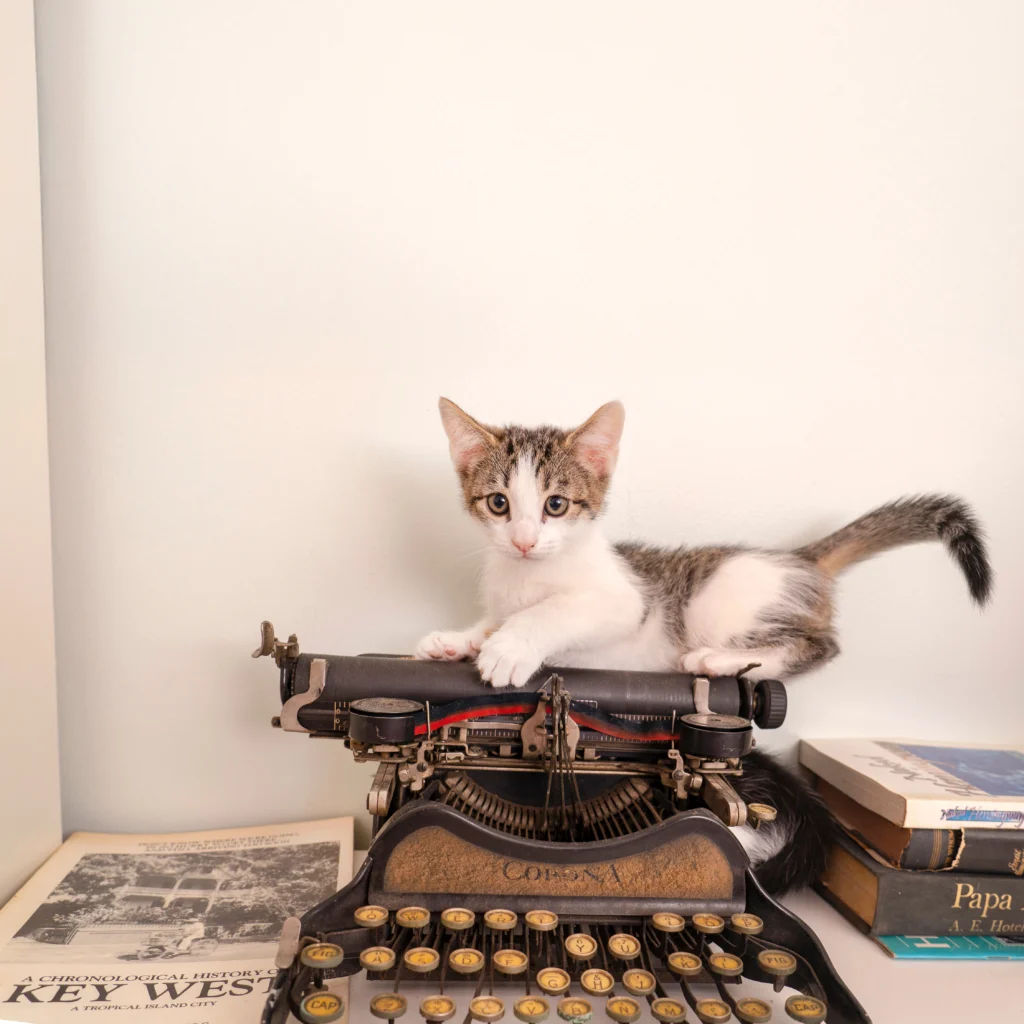
Here’s how the story goes: A sea captain gave Hemingway a polydactyl feline named Snow White. This version is hotly debated. Hemingway’s niece, Hilary, claims her uncle did not, in fact, keep cats in Key West; he supposedly kept peacocks at the home while the cats lived in Cuba. In any case, as her Uncle Ernest said, “One cat just leads to another,” and the house and gardens are teeming with dozens of them. Most of the cats are descendants of Snow White, with at least half of them sporting six toes and all of them regarding visitors with disdain. Cats lounge on the cool floors, sun themselves by the pool, stretch out on Hemingway’s bed and drape themselves on his typewriter. The cats mostly keep to their luxurious compound, but one evening, maybe 10 years ago, when I was strolling Whitehead Street, I came upon a mammal-poultry face-off. Four or five cats sat on the curb, glaring at four or five Key West street chickens. It was like the Jets confronting the Sharks in “West Side Story.” After a few tense minutes, the cats retreated. The chickens won.
The chickens usually win. Descended from birds brought over in the 1820s and roosters imported from Cuba for cock fighting, they saunter around the city like they own it, giving serious side-eye to everyone they meet (to be fair, side-eye is all they have). Some people, driven to the edge of madness by the roosters’ late-night crowing and the hens’ uncivilized bathroom habits, would like to see them end up in a stockpot. The chickens are officially local color. I like them.
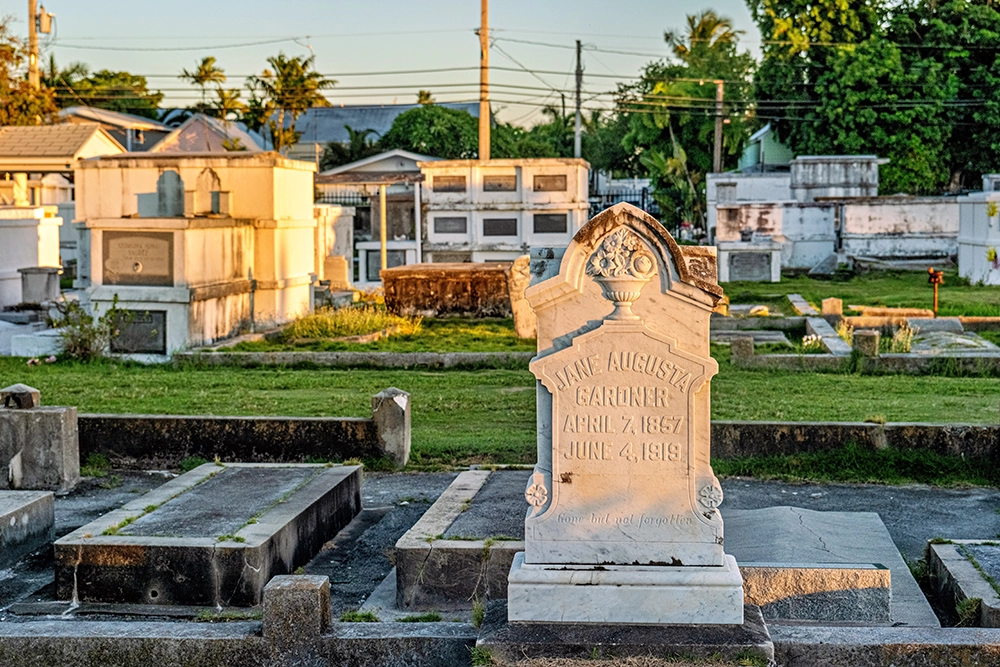
Giant reptiles are another matter. Call me a specist, but I am not a fan of iguanas. The spiky bastards are relative newcomers—some abandoned pets, some blown over from Mexico or the Lesser Antilles on storm detritus. They can grow up to 6 feet long and like to hang out in Key West’s gloriously strange cemetery. So do I. Established in 1847 after a hurricane washed out the old boneyard near Higgs Beach, the cemetery occupies 20 acres on the highest ground in town—an impressive 16 feet above sea level, and houses (if that’s the right word) up to 100,000 human remains below its green grass and in higgledy-piggledy tombs and mausoleums. Epitaphs are, to put it mildly, unorthodox. The memorial plaque for Steve Province, aka Dead Steve, quotes “The Hitchhiker’s Guide to the Galaxy”: “So Long and Thanks for All the Fish.” The most famous epitaph presides over the remains of B.P. “Pearl” Roberts: “I Told You I Was Sick.” Many of the headstones, funerary statues and obelisks are cracked and lurching from iguanas digging burrows under them. Showing no respect for the dead whatsoever, the iguanas mate among the graves, leaving their eggs behind. I’m sure there’s a metaphor lurking in there.
A Little Party Never Killed Nobody
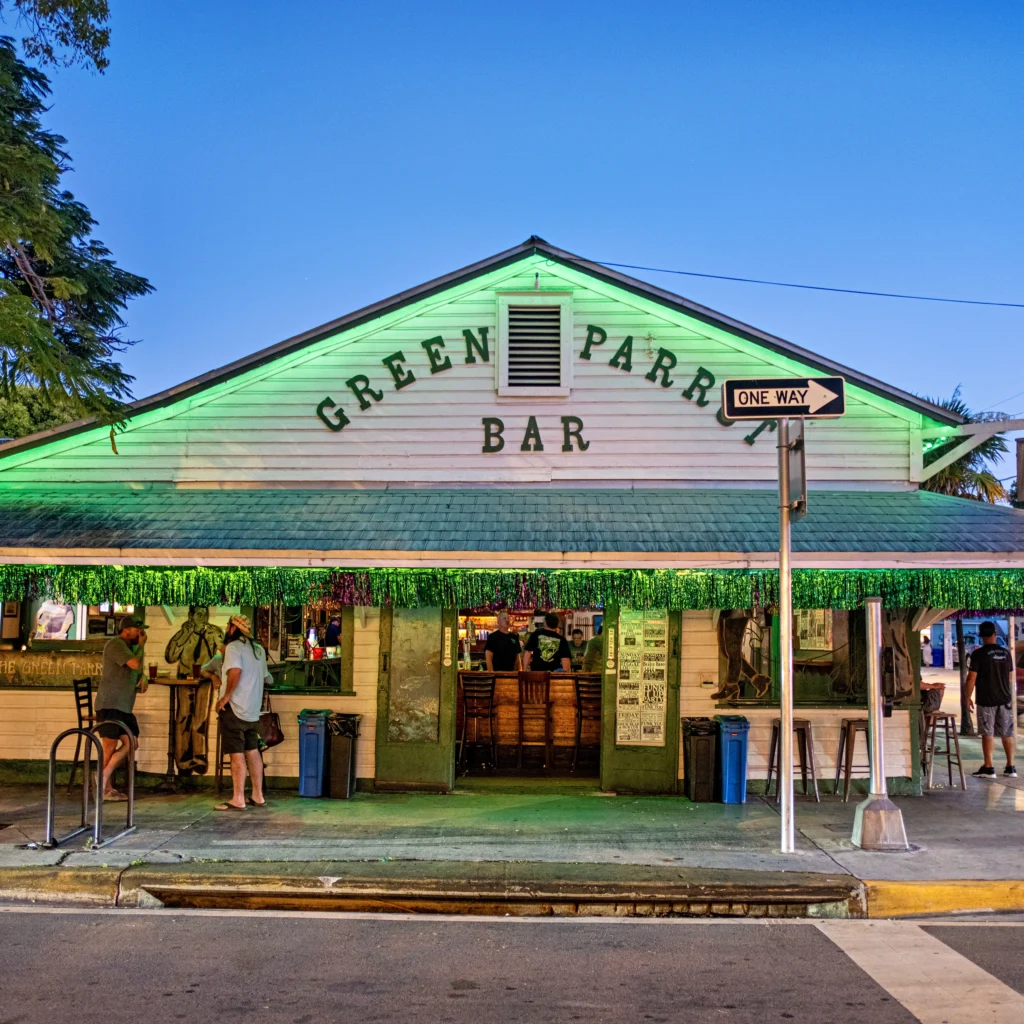
Anyway, from the fields of the dead to the fetes of the living, the sun was about to set. After the cats vs. cocks fight, I enjoyed some conch fritters from a convenient food truck. Somehow, they taste best in Key West—close to the source, I suppose. I followed a rooster stalking majestically down Whitehead Street and found myself drawn, as always, to the lights of the Green Parrot. Loud and aggressively un-chic, it’s a dive—an old-school saloon with live music, barkeeps who pour the rum with a heavy hand and a sign that orders “No Snivelling.” The Green Parrot’s presiding spirit is an unsettling, even sinister-looking, portrait of a child named Smirk, painted 50 years ago by former Parrot bartender Saul Paul Stewart. Don’t gaze too long upon Smirk, lest his serial-killer smile haunt your dreams. Instead, order a mojito—maybe two.
Boozy sociability lives in the Conch soul, alongside the chickens and the kapok trees and the cats and the unruly seas, all fueling the island’s cheerfully anarchic spirit. During one of the more frightening 2000s hurricanes (I can’t recall which exactly, but a storm predicted to hit Key West like a speeding Mack Truck), I saw a TV report live from Duval Street. This poor guy stood in his waterproof gear, clutching his microphone against the whipping wind and horizontal rain, shouting about the dangerous conditions. Behind him, you could see a couple of guys in shorts, soaked, carrying to-go cups. Turns out, the hurricane hit on International Talk Like a Pirate Day—one of the many fiesta days on the island’s calendar—and in Key West, nothing, and I mean nothing, interrupts the party.
For more on the Florida Keys, click here.
About the Author
Diane is an eighth-generation Floridian, educated at Florida State University and Oxford University. Her work has appeared in The New York Times, The Guardian and the Tampa Bay Times. She has also authored four books, including “Dream State,” a historical memoir of Florida.